

Edge notes
Find practical edge notes on router bits, chip clearance, finish quality and material choice for daily CNC routing.
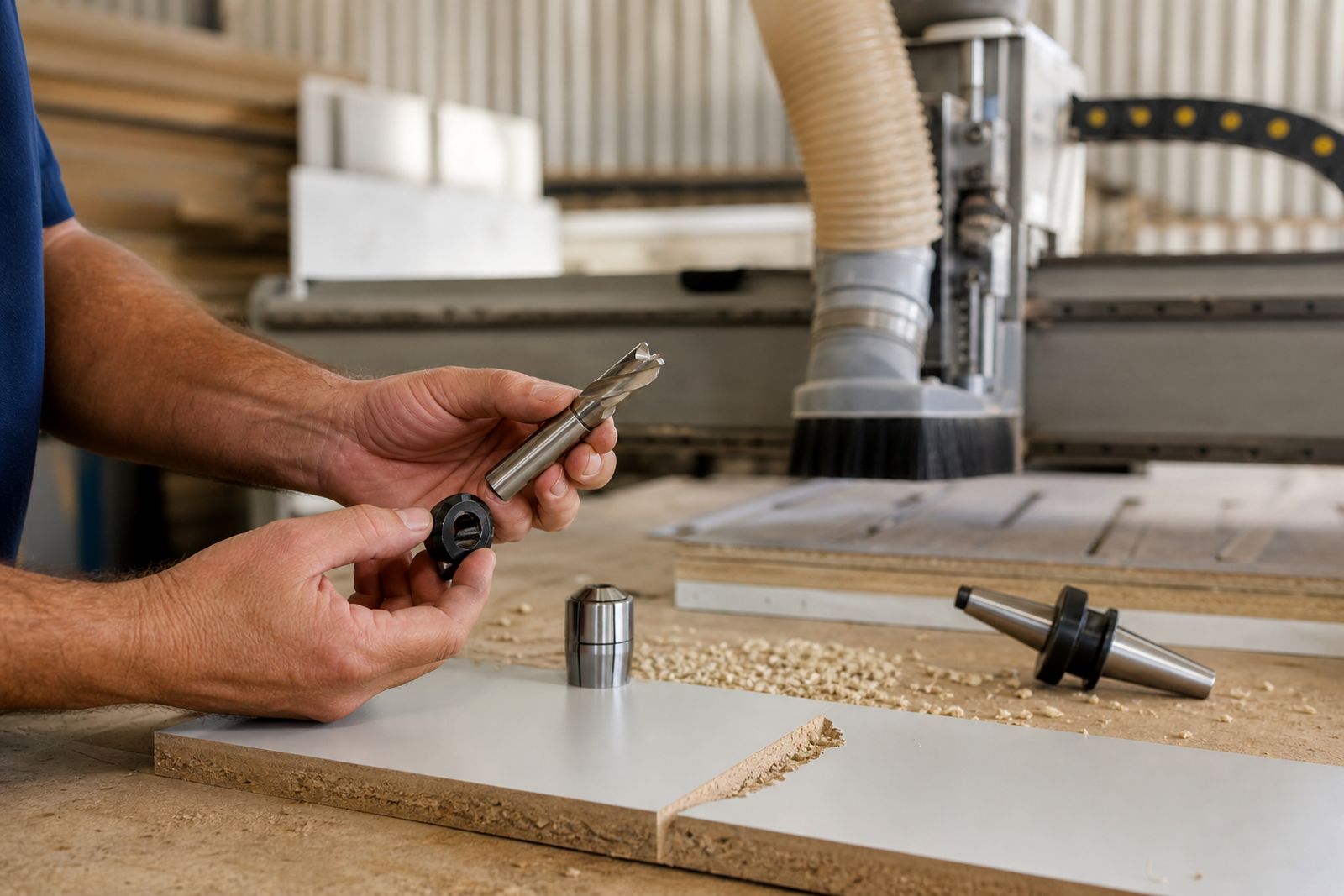
Choosing cutters for MDF and chipboard
For flat sheet materials like MDF and chipboard, spiral upcut bits give good chip clearance and avoid clogging, especially in coastal humidity. Downcut spirals are best for a cleaner top edge when finishing visible surfaces for cabinetry or signage. Compression spirals combine both: use these for double-sided laminates or melamine where you want clean top and bottom edges in one pass. Test cut with a chip load per tooth around 0.18 to 0.22 mm, adjust spindle speed to keep the chips warm but not burning, and always check for resin build-up which means your dust extraction needs attention.
Look for 2 or 3 flute cutters, 6 to 12 mm diameter for typical nesting and joinery. If you see burning or furry edges, reduce your spindle speed or increase feed, and clean or change the tool. Always keep the collet, nut and holder spotless to get the best life from your cutters, and avoid excess stick-out: less than 40 mm is ideal for most 8 to 12 mm shanks. Use climb milling for the finish pass to reduce tear-out.
Keep the edge honest
Good edge quality starts before the cut. Match the cutter to the material and the finish you need, then keep an eye on chip load, runout and dust extraction. For MDF, plywood and melamine, the right spiral helps keep the cut clean. For acrylic and PVC foam, a single-flute plastic cutter can clear chips more reliably. For aluminium, choose tooling made for that work and keep the setup stable.
Small setup errors show up quickly on the edge. Check collets, nuts and holders for wear or dust, and keep stick-out as short as practical. If the tool starts to burn, chatter or leave furry edges, stop and look at feed, spindle speed and clamping before you blame the cutter. For more setup notes, see runout ritual and collet torque notes.
Choose the cutter for the job
Edge work is easier when the flute style matches the material. Up-cut spirals clear chips well in sheet goods. Down-cut spirals help when you want a cleaner top edge on visible faces. Compression spirals are useful for laminated board where both faces matter. V-bits suit lettering and sign detail, while ball nose and tapered ball nose cutters are better for rounded forms and 3D work. Chamfer and slot cutters each have their place in joinery and finishing.
If you are unsure which cutter fits a job, send site photos and a short description through the contact form and ask for written tooling advice. CuTool also supplies carbide end mills, ER collets, nuts and holders for South African workshops, and can arrange regrinds through local partners when a tool is ready for attention.
Keep tools working longer
Tool life improves when operators treat cutters as consumables with a routine. Clean resin and dust from the tool and holder, use the right hold-down for the material, and avoid pushing a blunt cutter through a difficult job. Printable feeds and tool-life cards are available to help keep settings and wear checks close to the machine.
Across South African workshops, the same habits help in coastal humidity and Highveld dust alike: clear chips, check clamping, inspect the edge, and replace or regrind before the job quality slips. Showroom visits are by appointment through the contact form if you want to see sample cutters and talk through a job.
Edge notes

ACM nest order
Pierce order that keeps ACM panels flat for installs.
Read more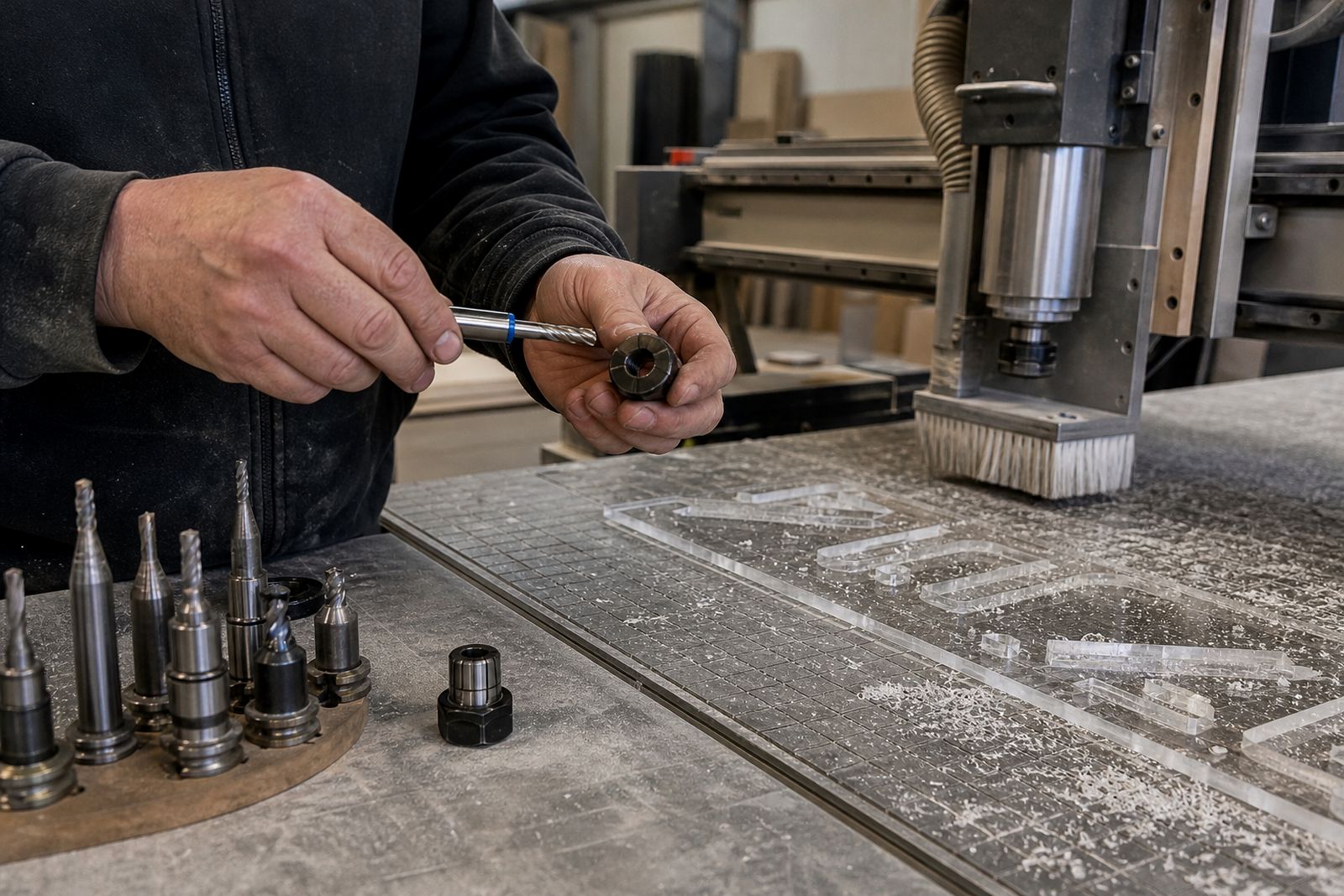
Acrylic melt notes
Feed and chip-break habits that keep letters cool.
Read more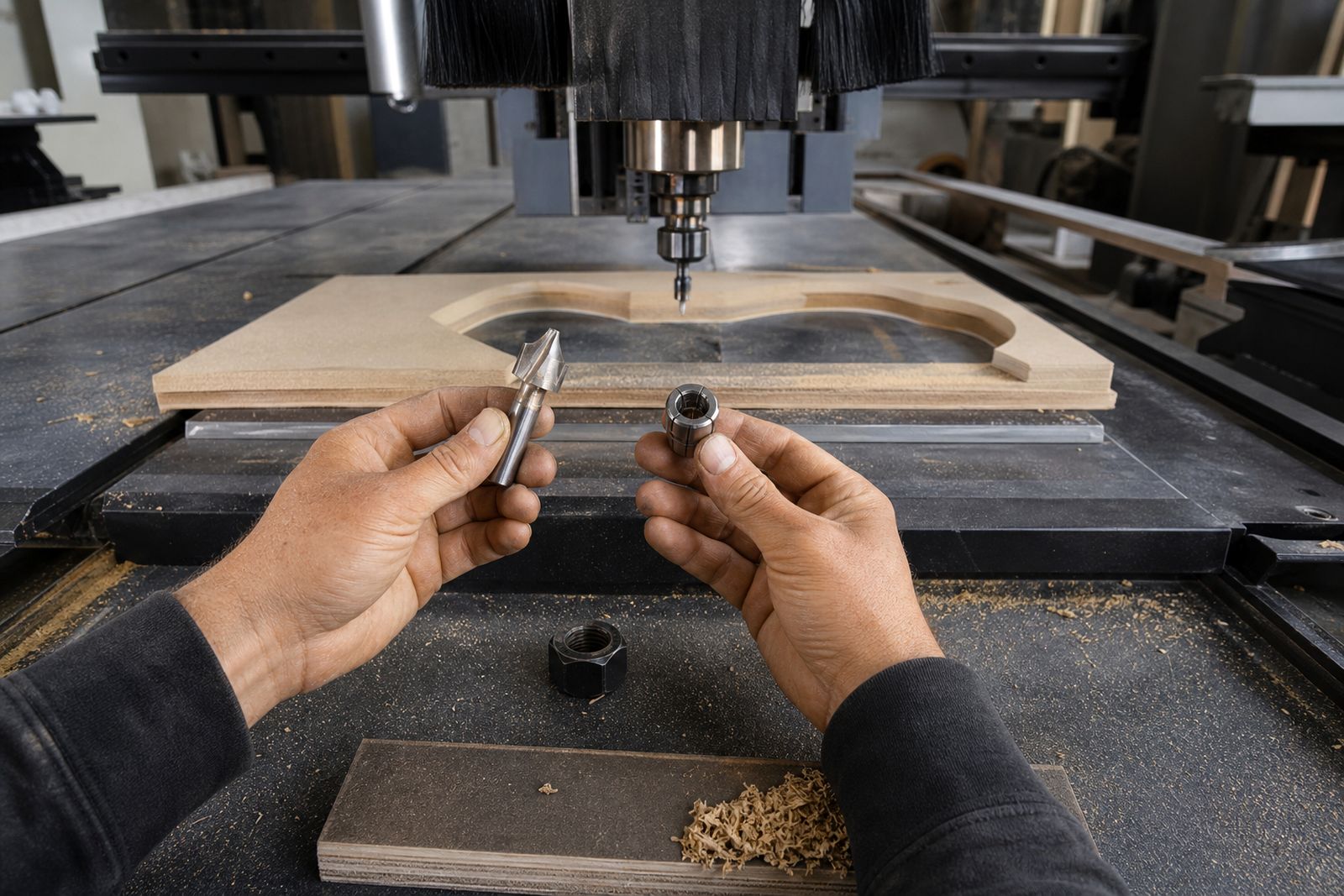
One-line tooling briefs
Put the tooling problem in one line before you widen the job.
Read more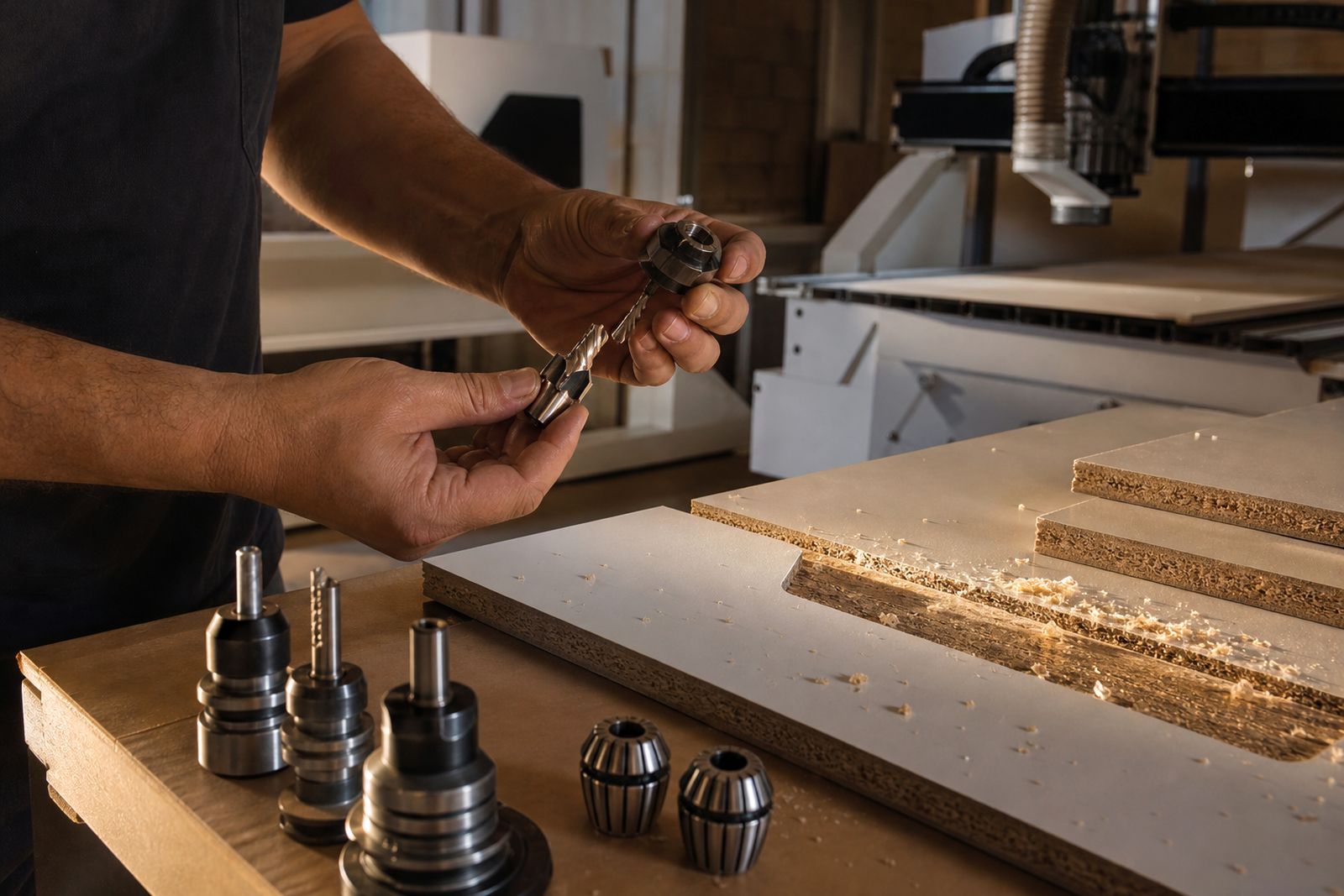
Chamfer before paint
Edge breaks that make paint and vinyl stick without hours of sanding.
Read more
Chip load before hype
Why chip load matters more than flute count on aluminium.
Read more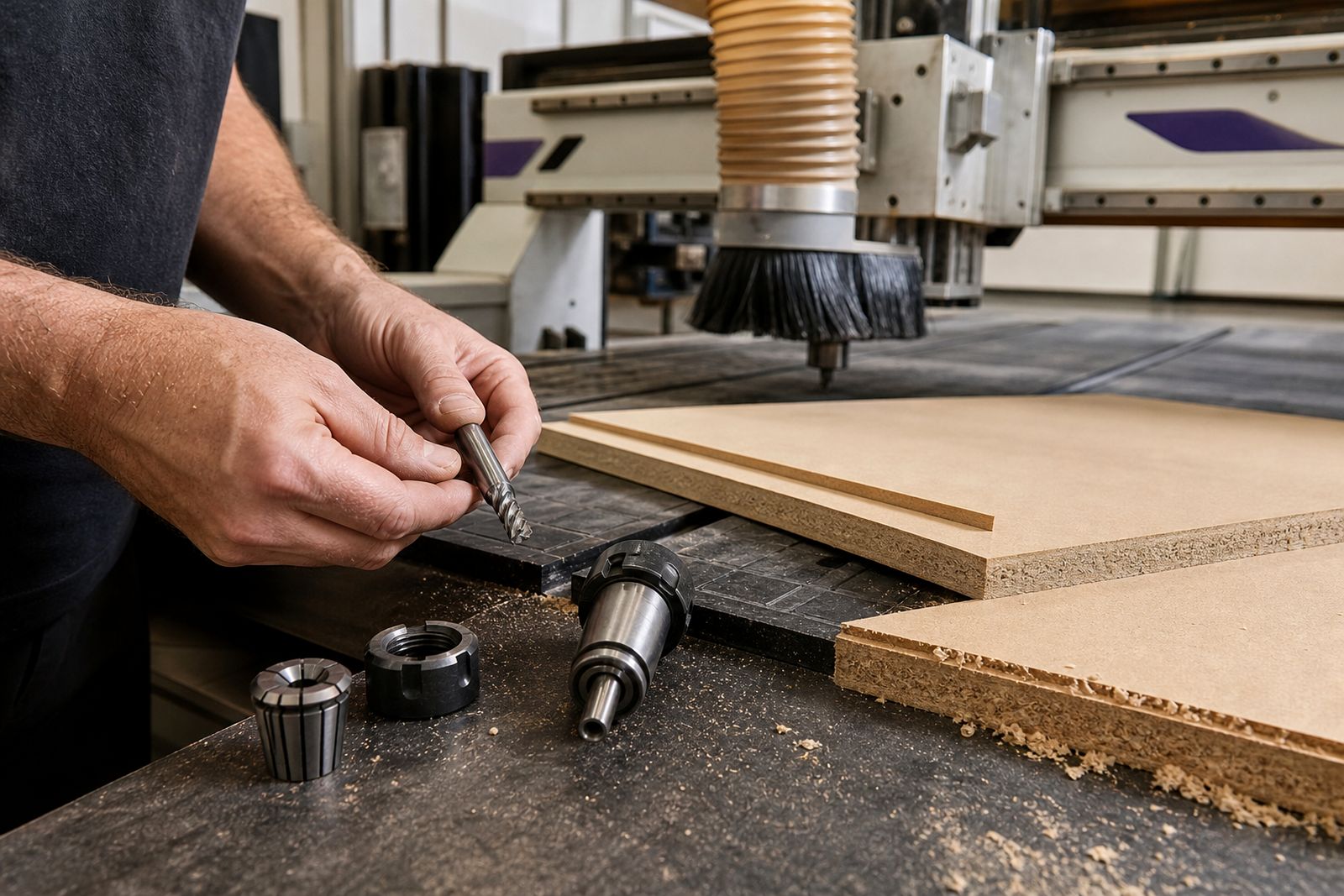
Climb vs conventional
Softwood edges that stay clean when climb milling is allowed.
Read more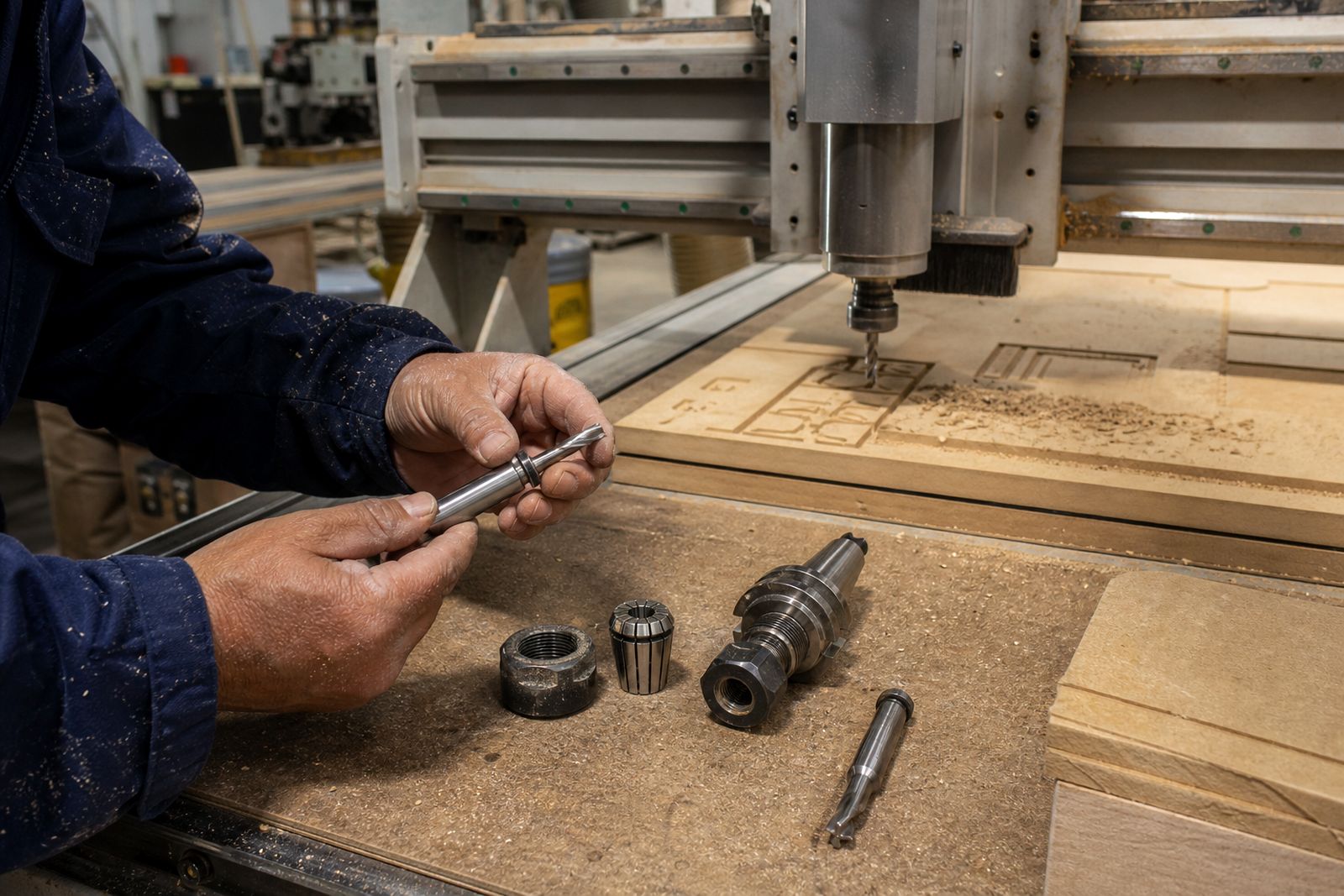
Coastal humidity bits
Storage and coating notes for Durban and Cape shops.
Read more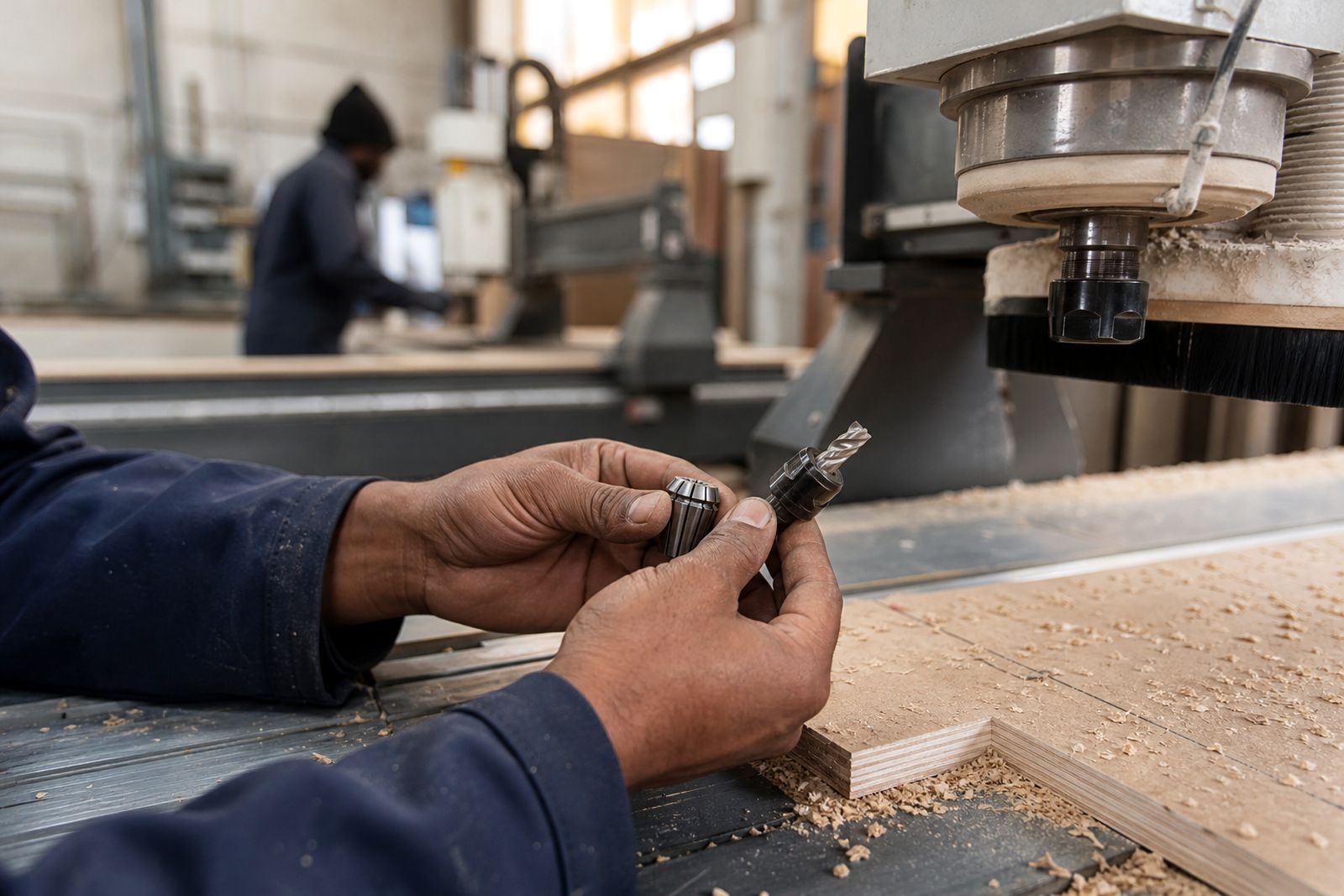
Collet torque notes
Tightening torque that keeps ER collets true on shared school spindles.
Read more
Compression before tearout
Laminate nests fail from the wrong spiral, not the wrong machine.
Read more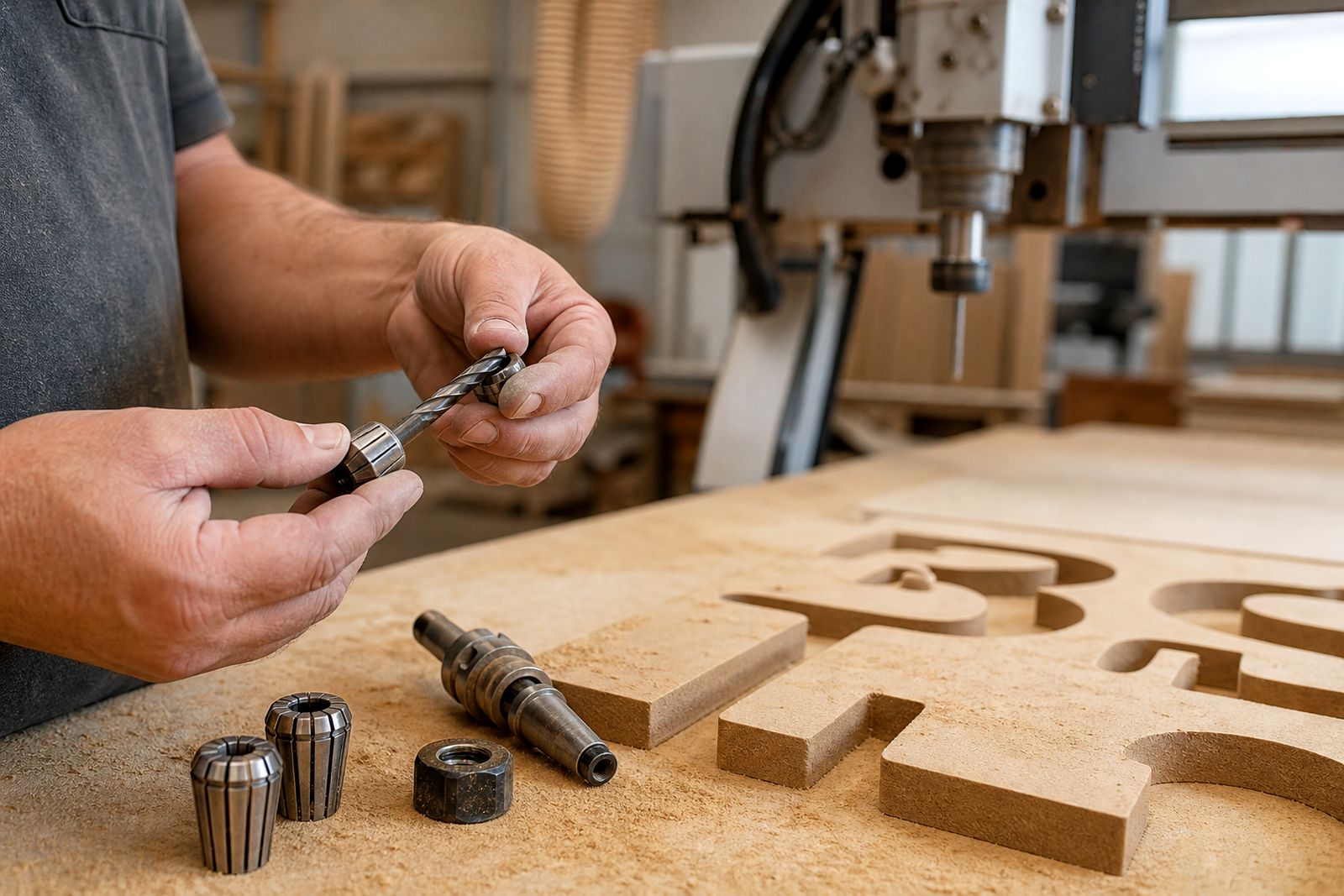
Feeds for MDF letters
Straight and spiral feeds that keep MDF letters sharp.
Read more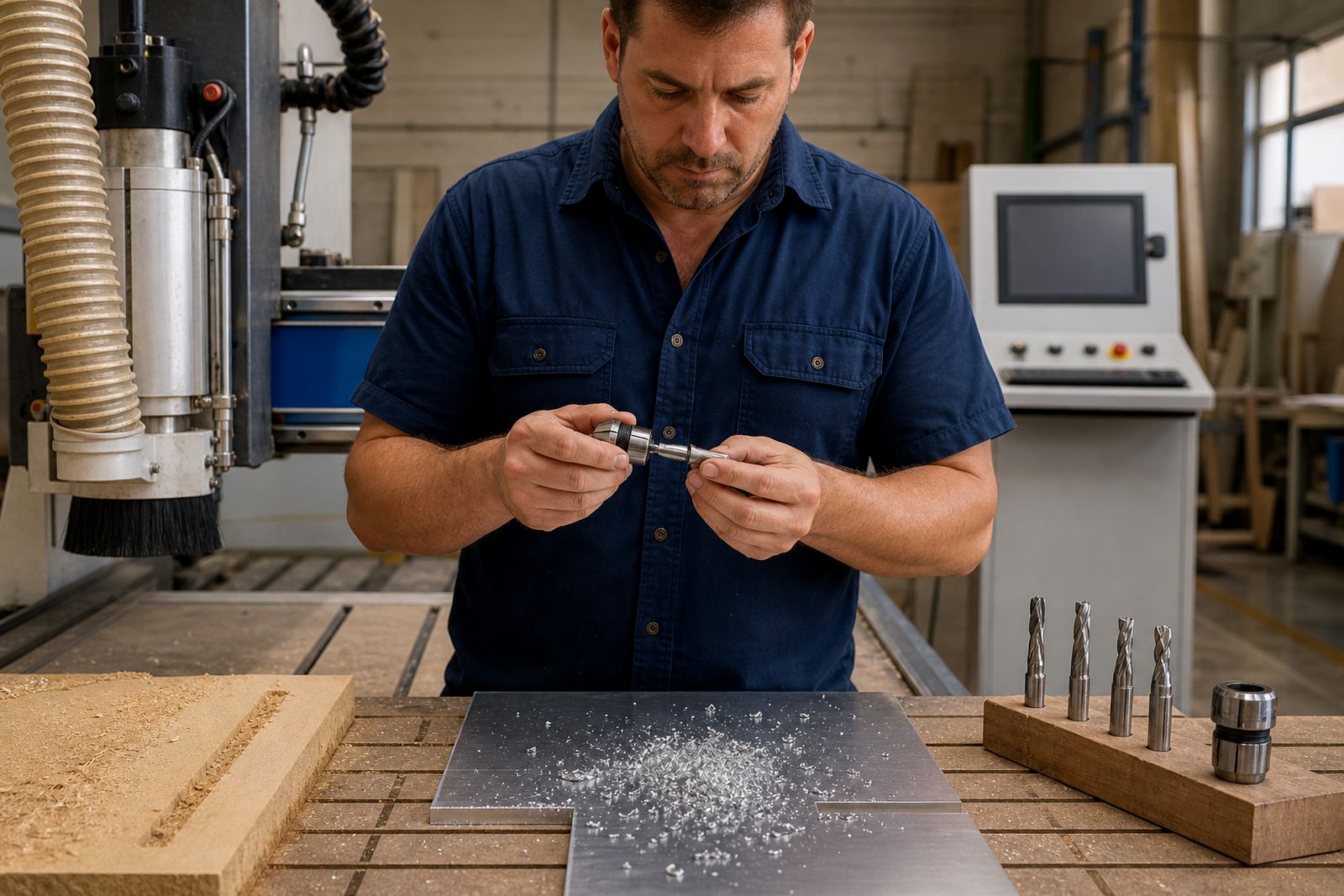
Flute count in practice
When four flutes help, and when they just rub soft aluminium.
Read more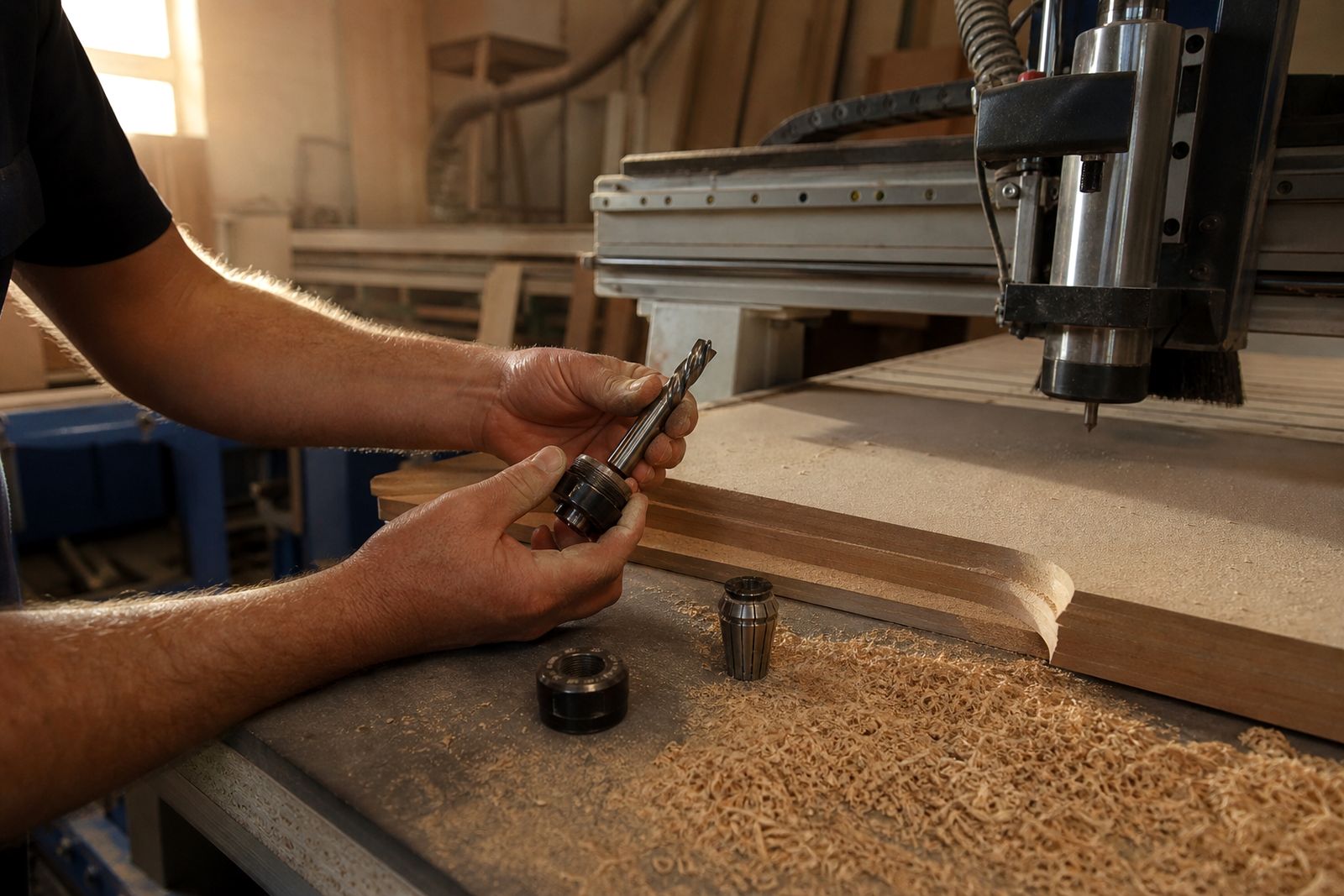
Friday install edges
Edge checks that still matter when the install is tomorrow morning.
Read more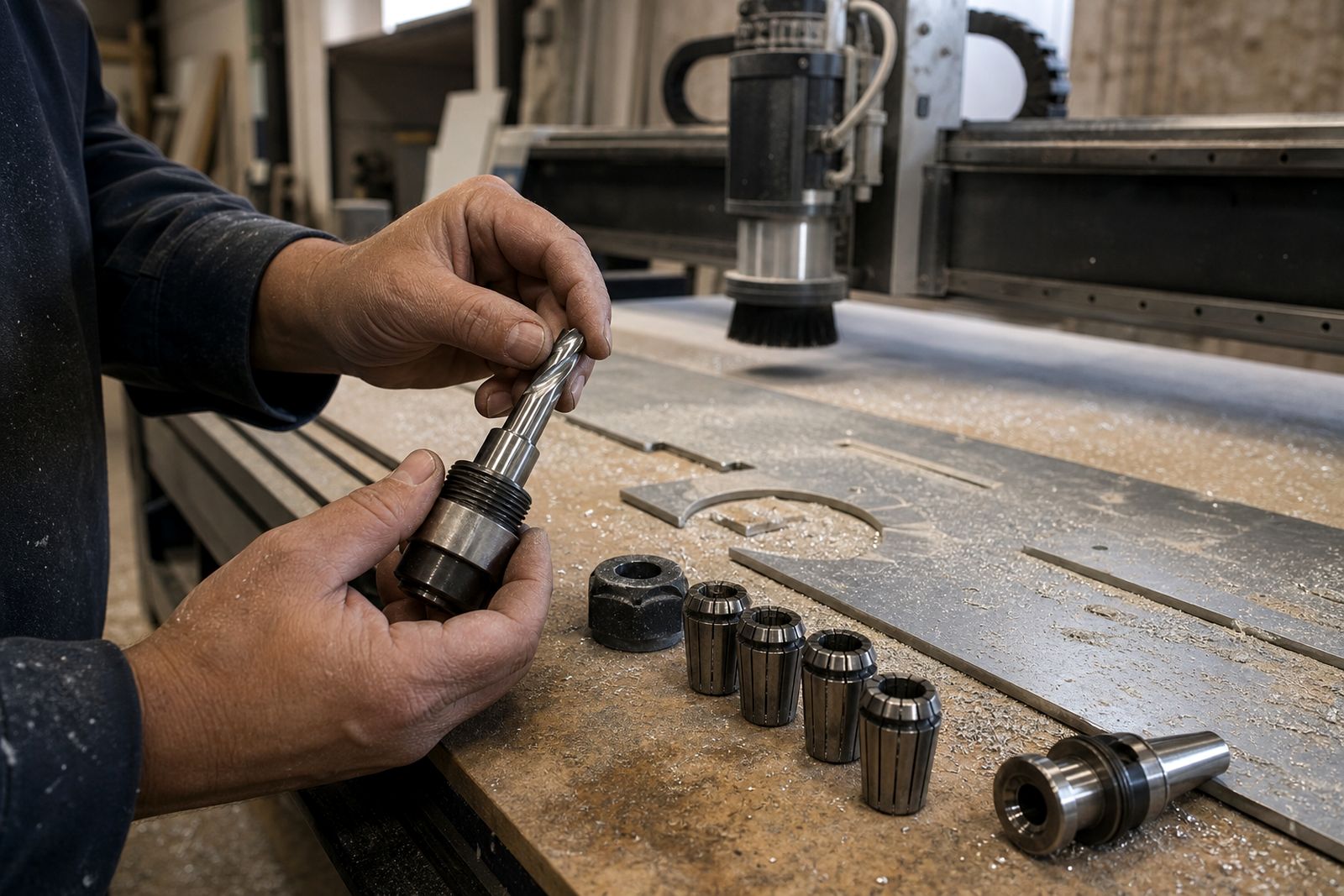
Highveld dust edges
Dust and coating habits for inland aluminium work. If you have spent time machining aluminium in the Highveld, you will know the dust gets everywhere.
Read more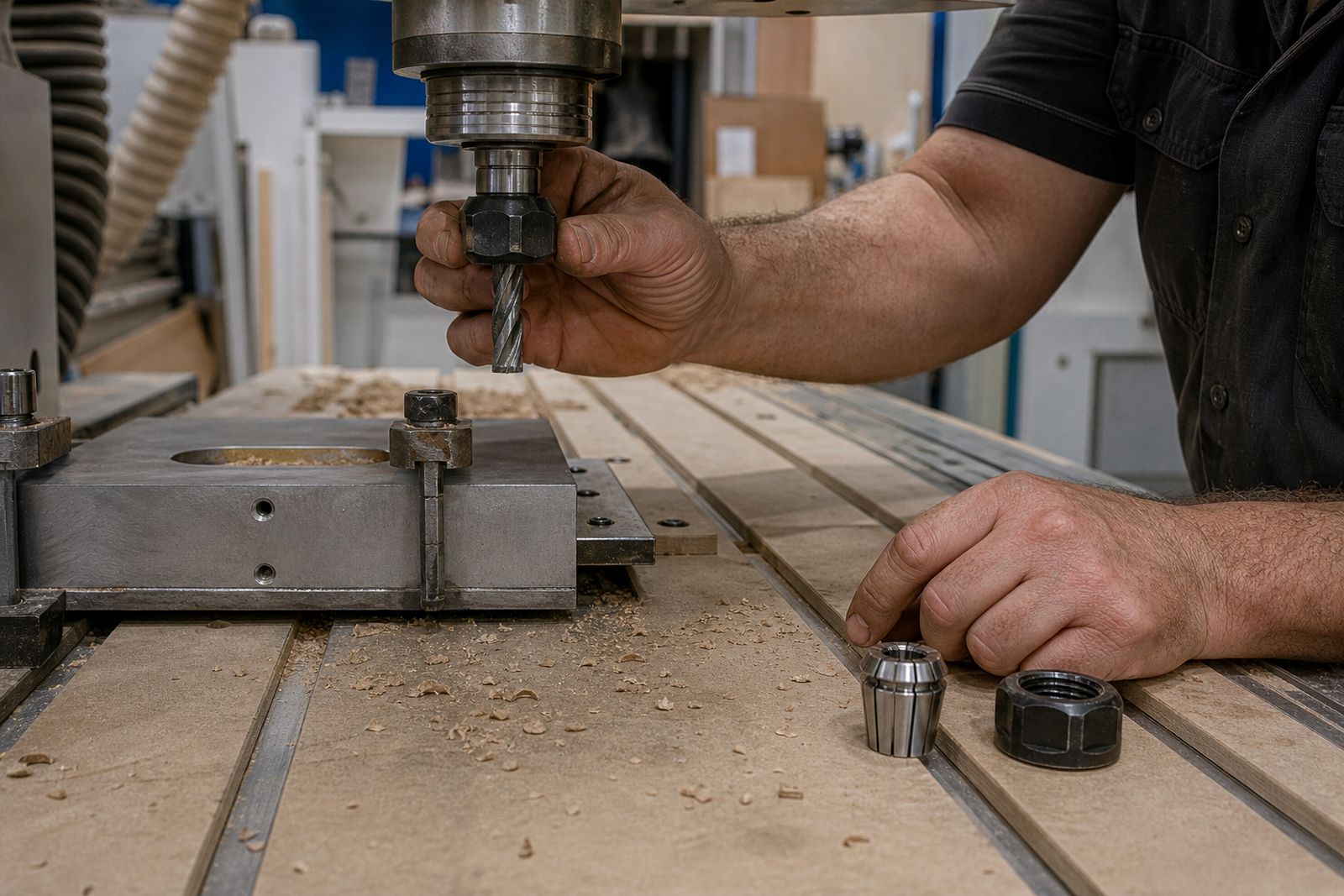
Holder clearance
Giving the holder room before the flute hits the fixture.
Read more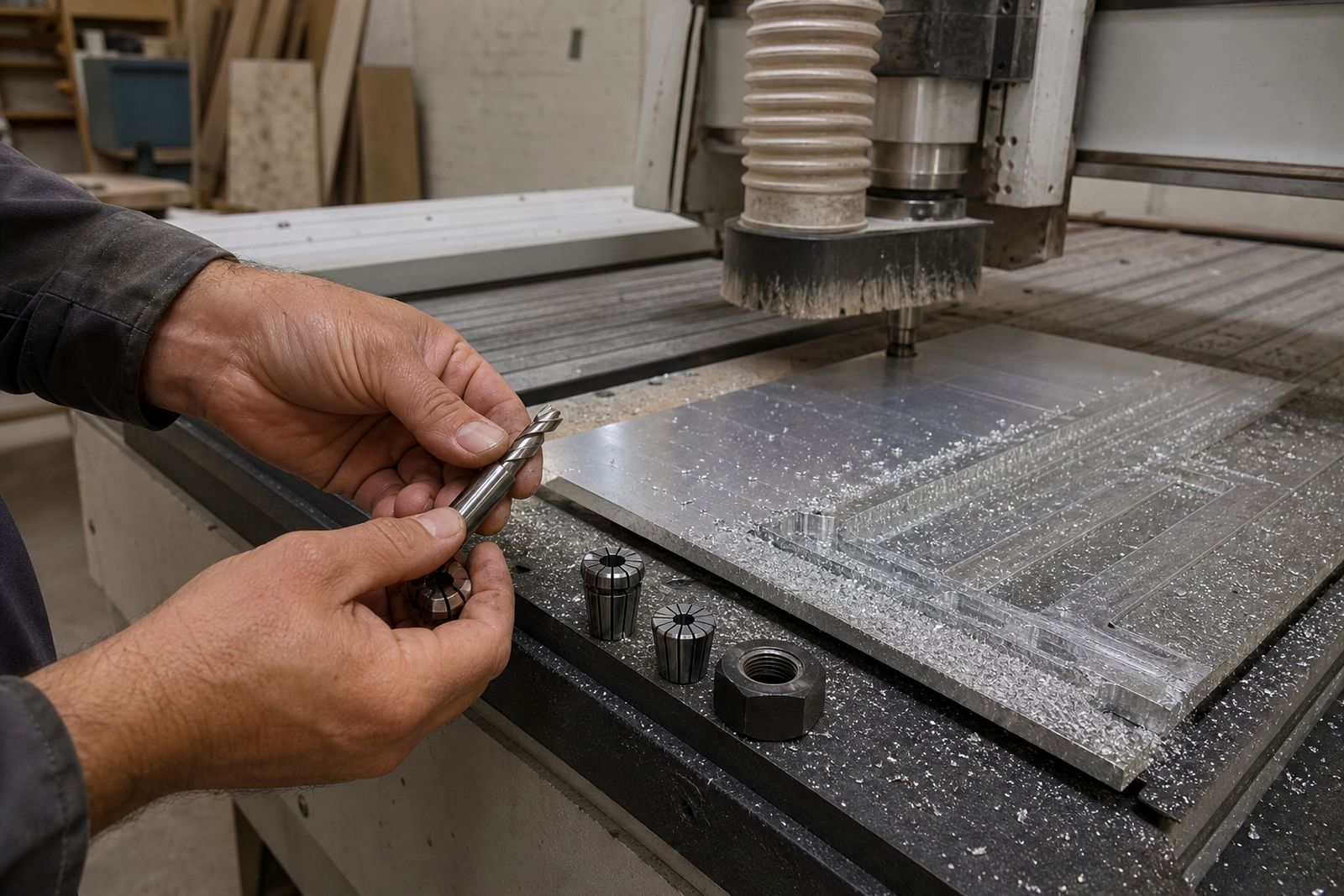
Mist vs dry Highveld
When mist helps, and when dry cutting is cleaner inland.
Read more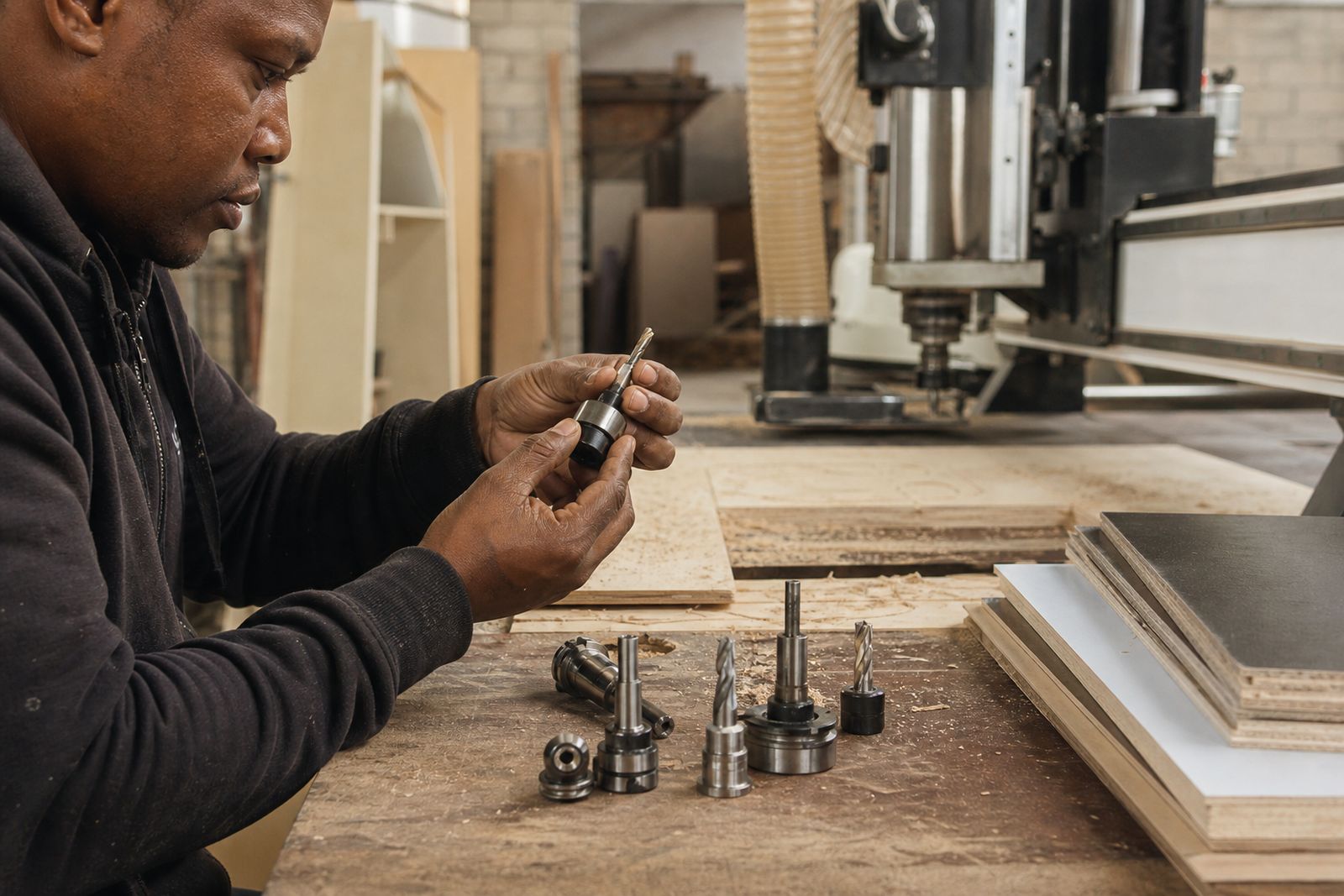
Nest order calm
A one-page nest order keeps sheets flat and parts where they should be.
Read more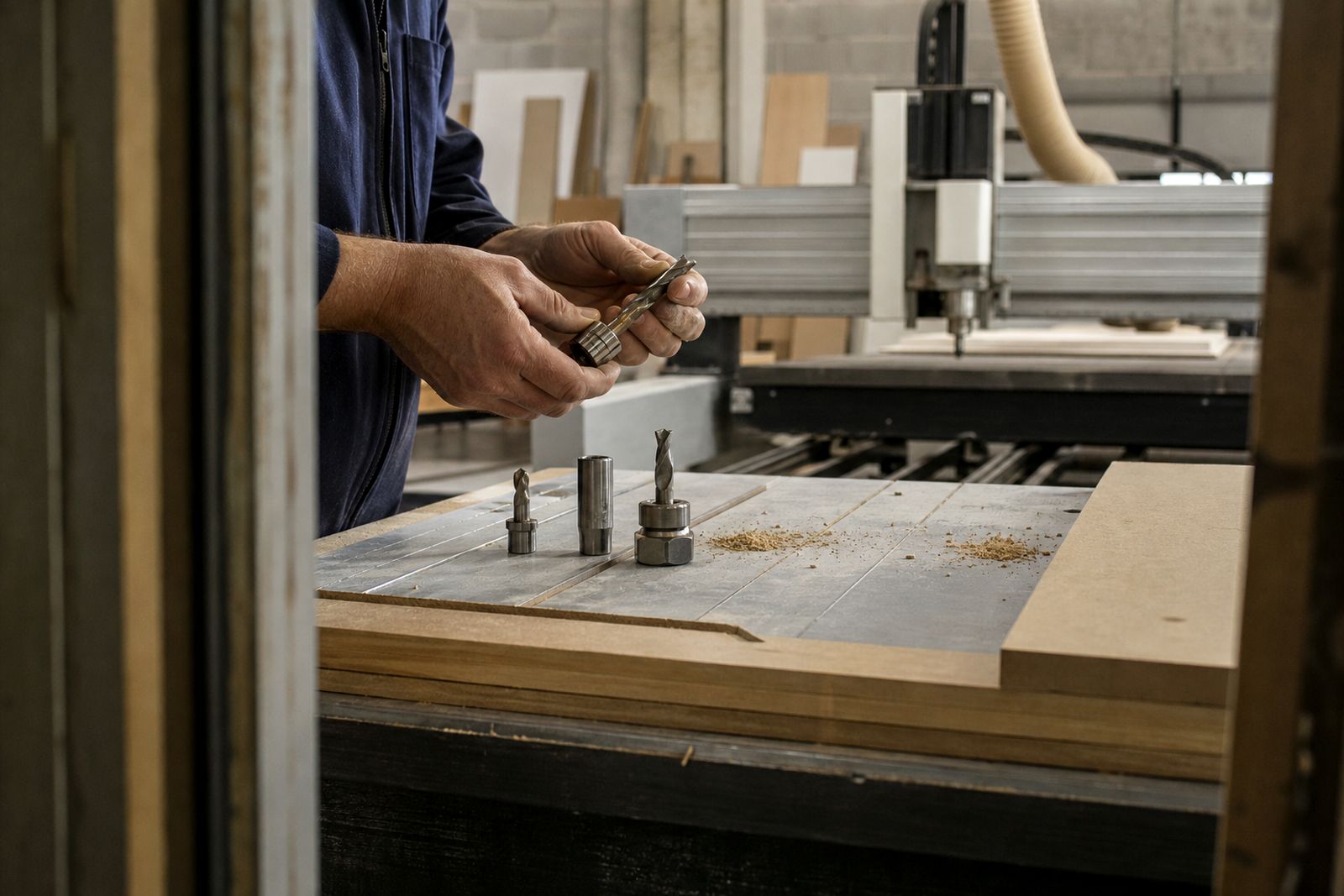
Regrind windows
When regrind still pays, and when you should stop.
Read more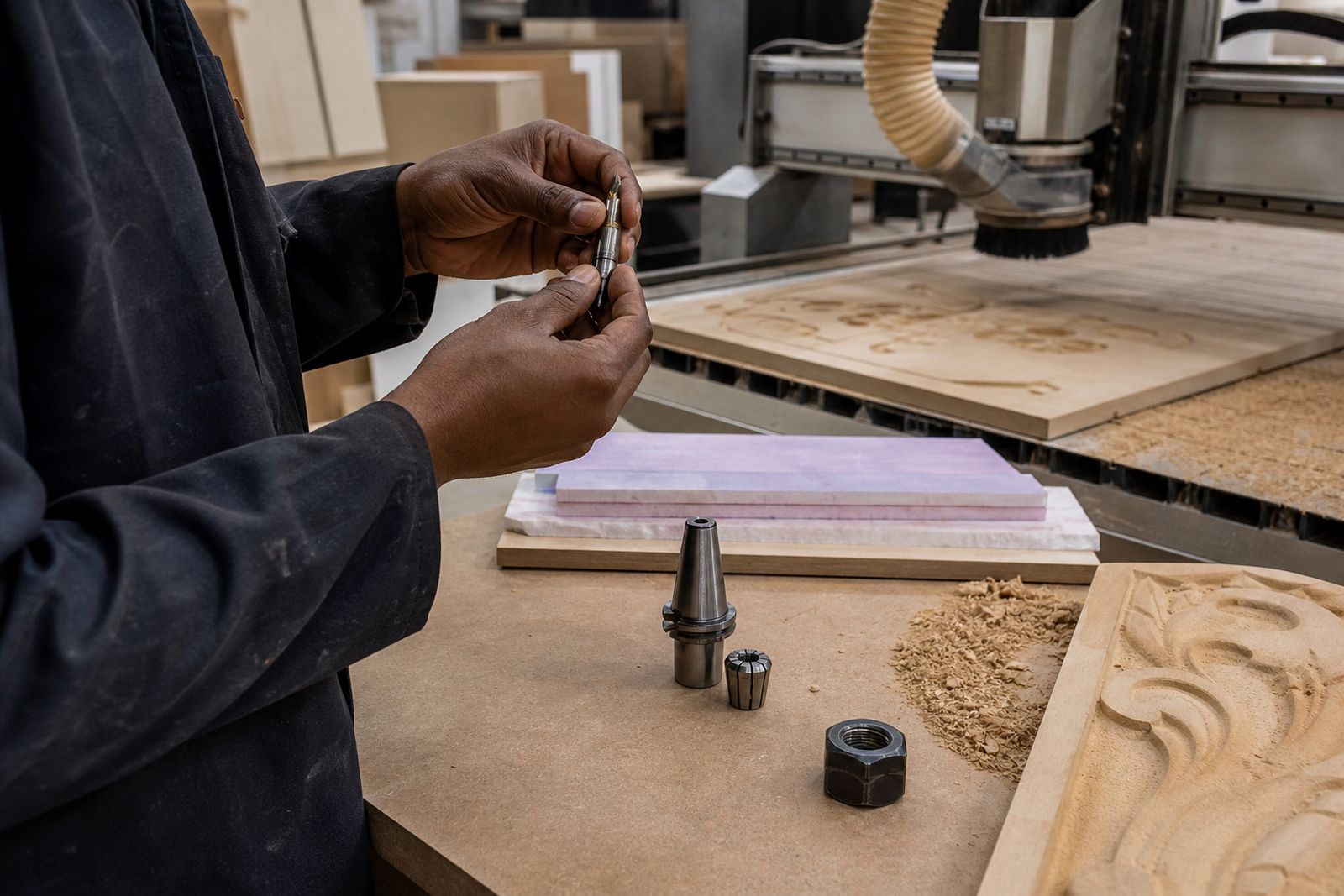
Relief stock prep
Foam and timber prep before the taper ball-nose starts.
Read more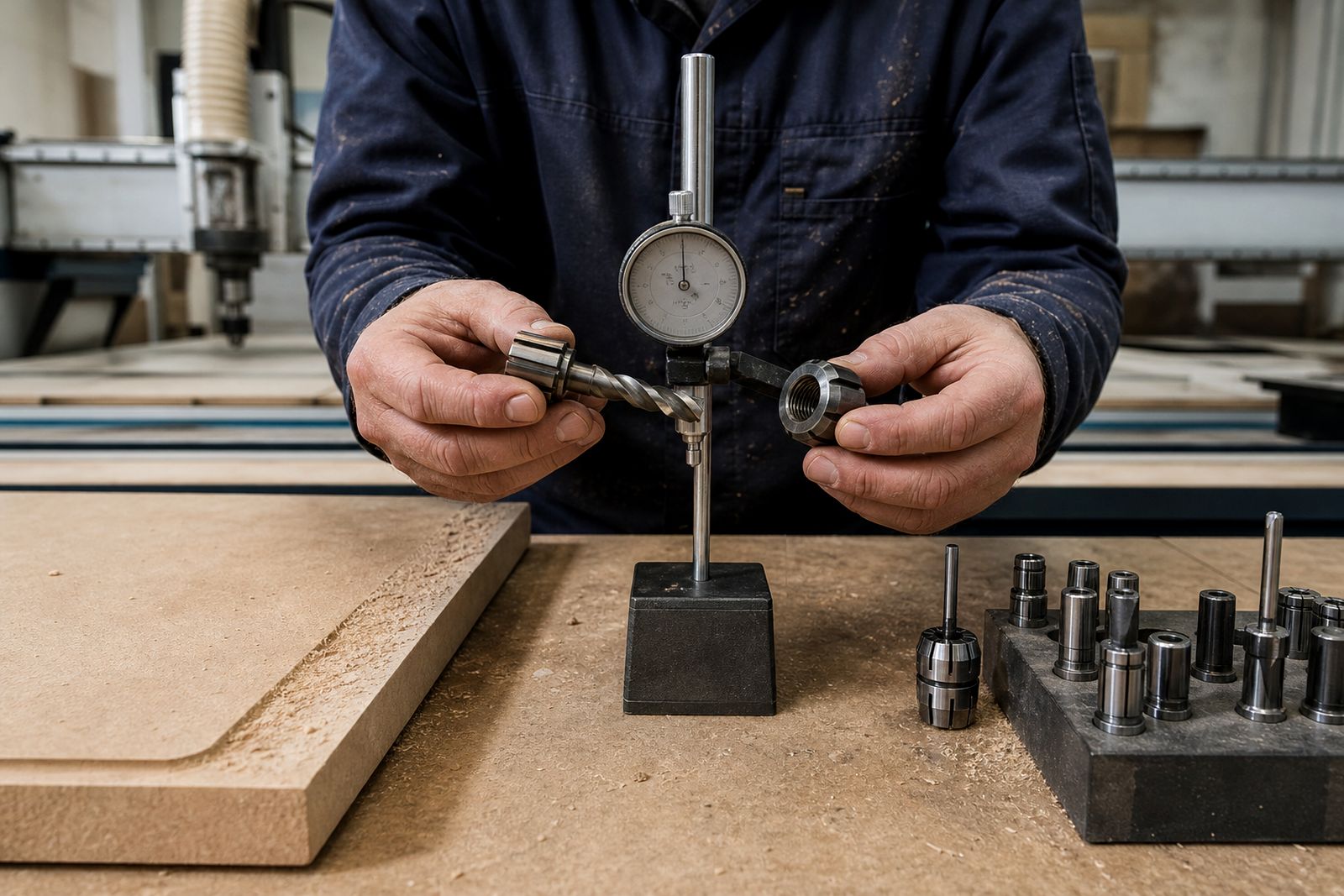
Runout ritual
A two-minute dial check that saves a week of bad edges.
Read more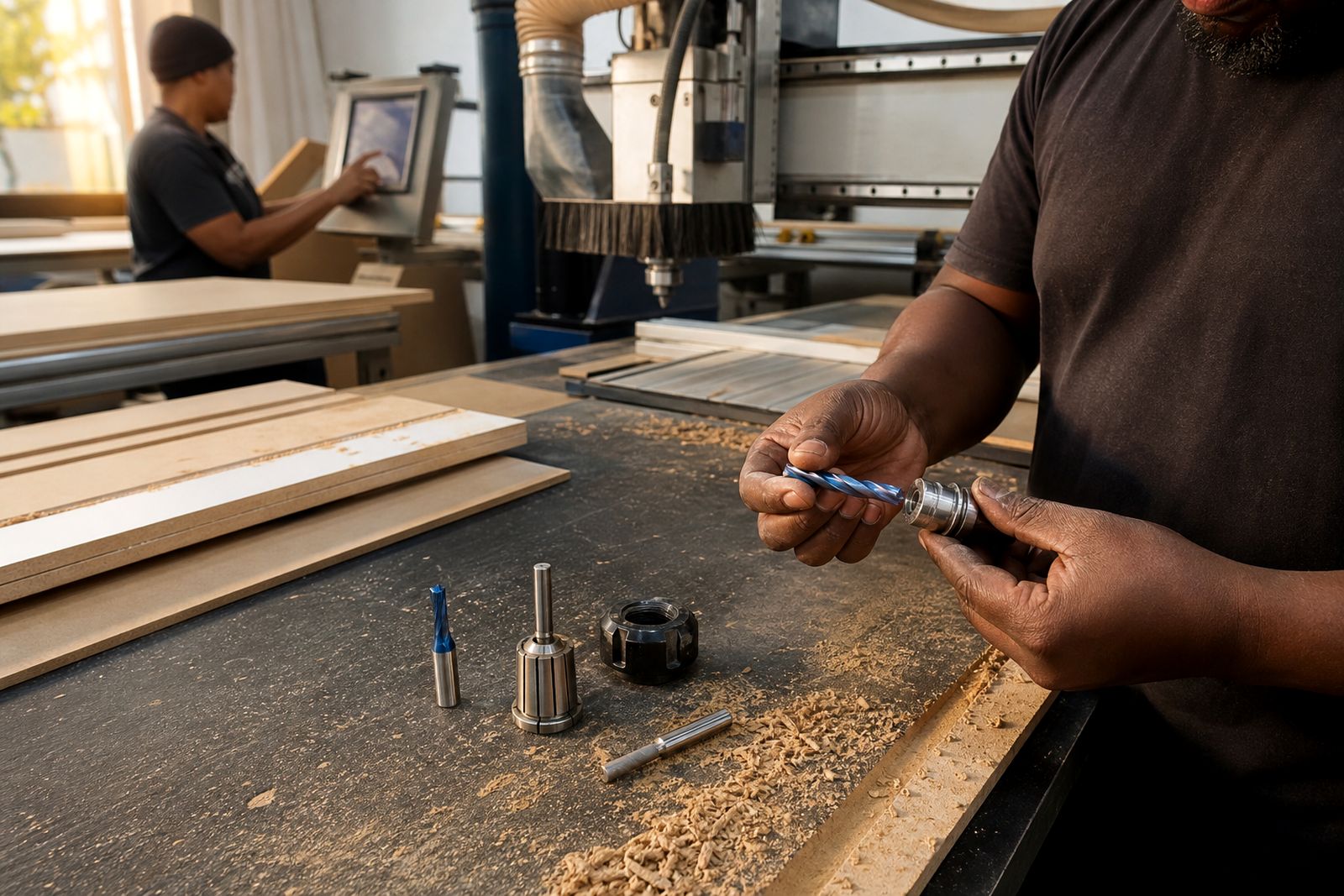
Shared spindle manners
School and hobby cells that share one spindle without chaos.
Read more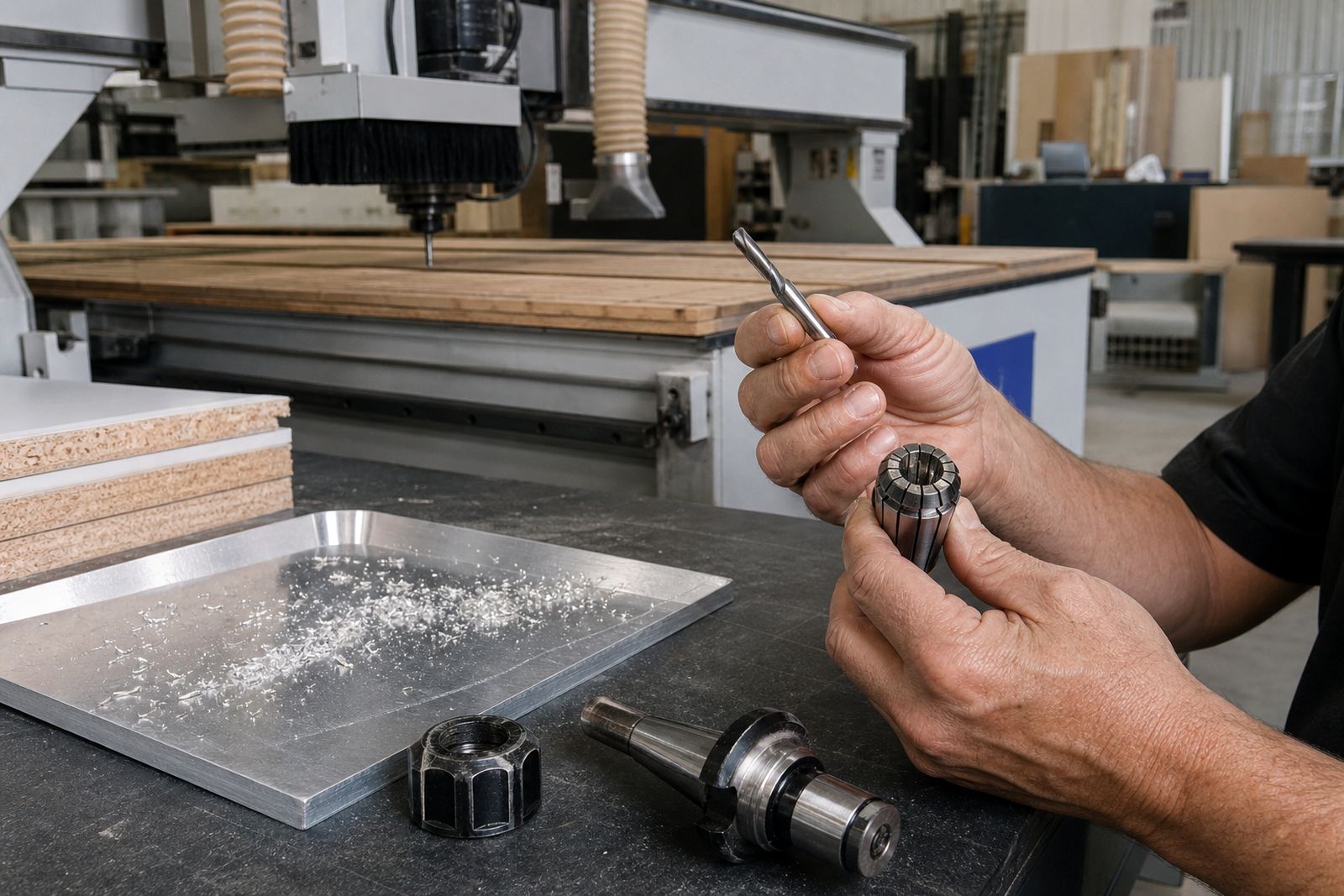
Single flute polish
Finish passes on aluminium without rubbing the shine off.
Read more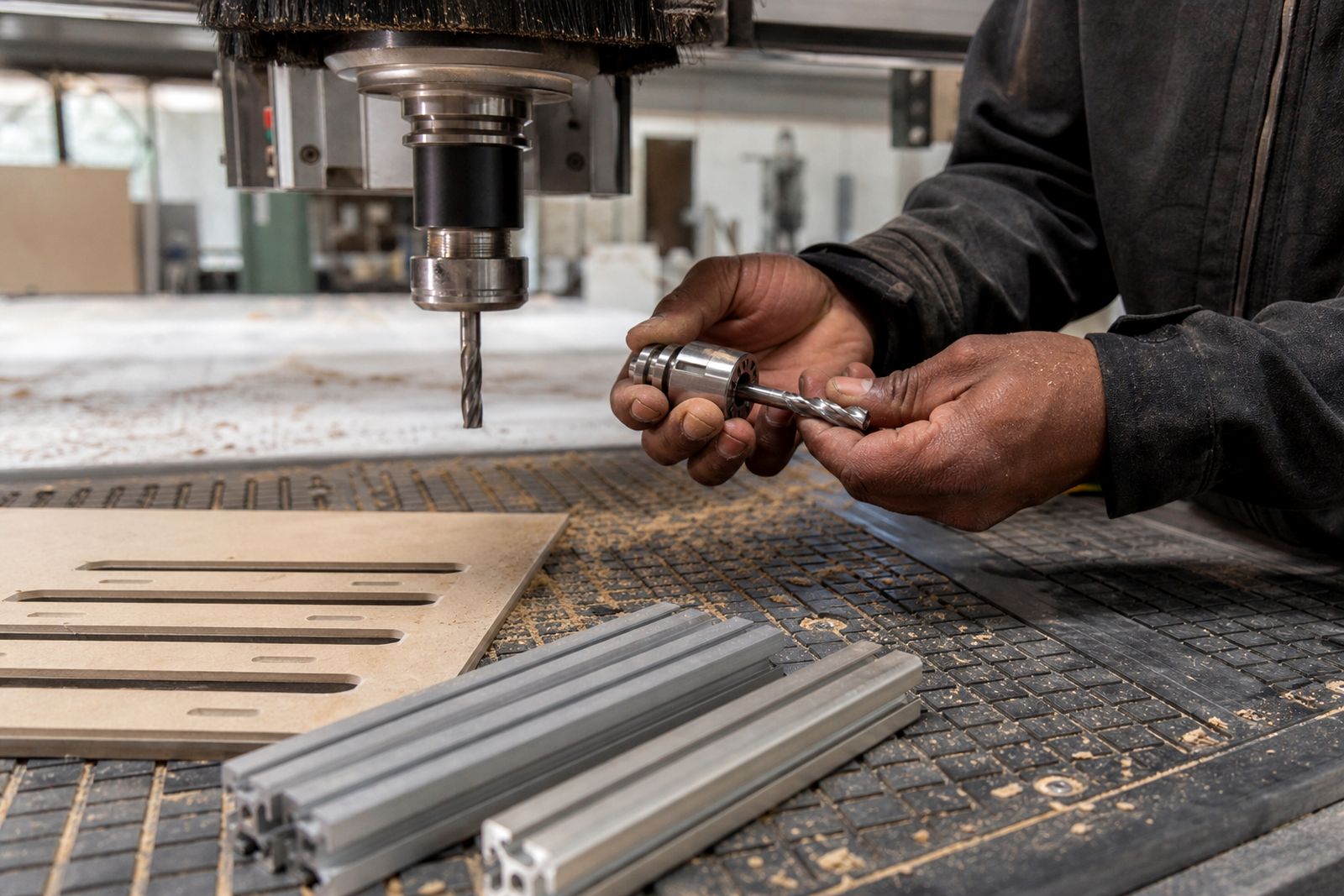
Slot width discipline
Metric slots that match extrusion drawings without guesswork.
Read more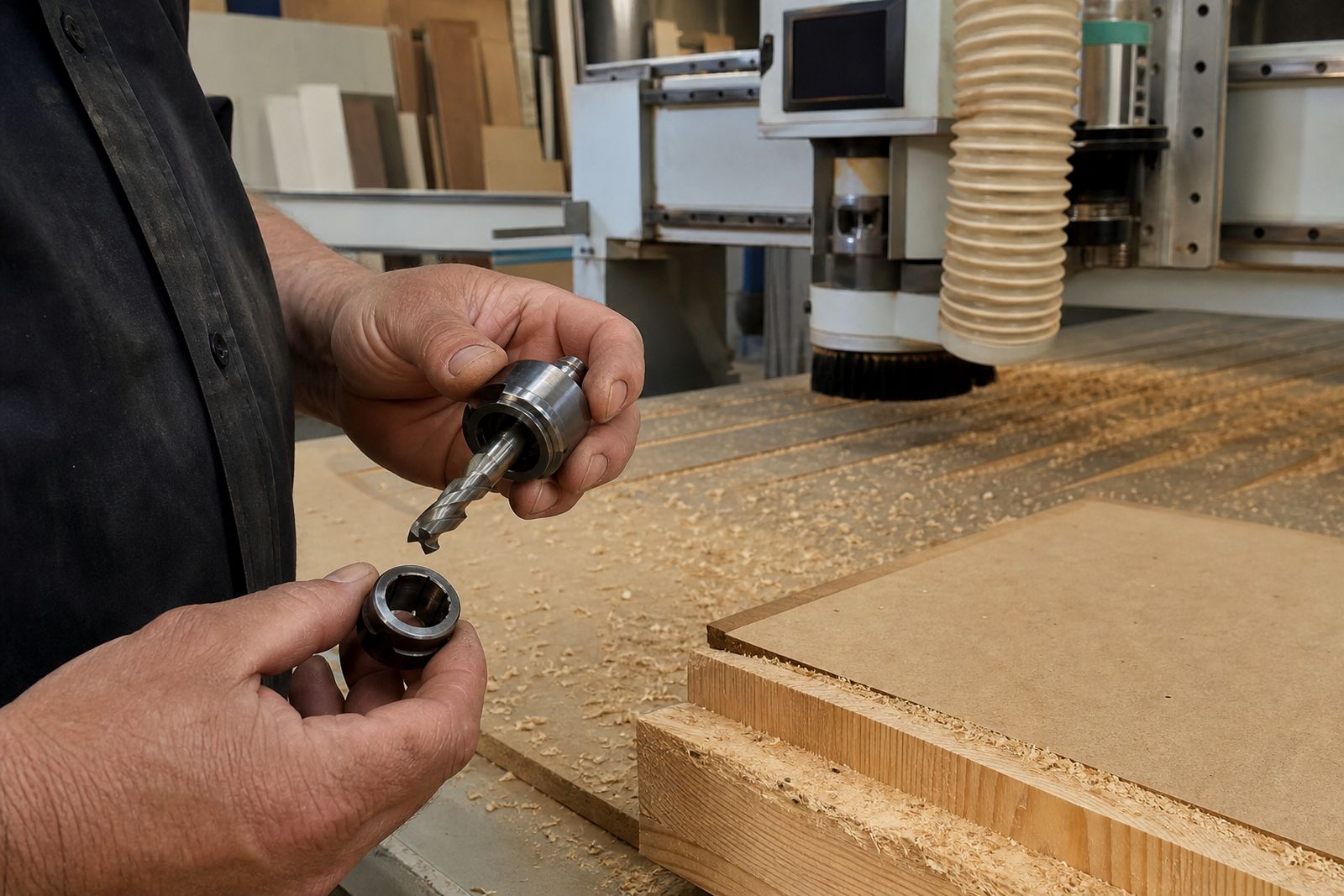
Softwood chip lift
Upcut habits that clear pine chips without tearing the show face. Softwoods like pine and meranti are fast to cut, but chip evacuation is your real test.
Read more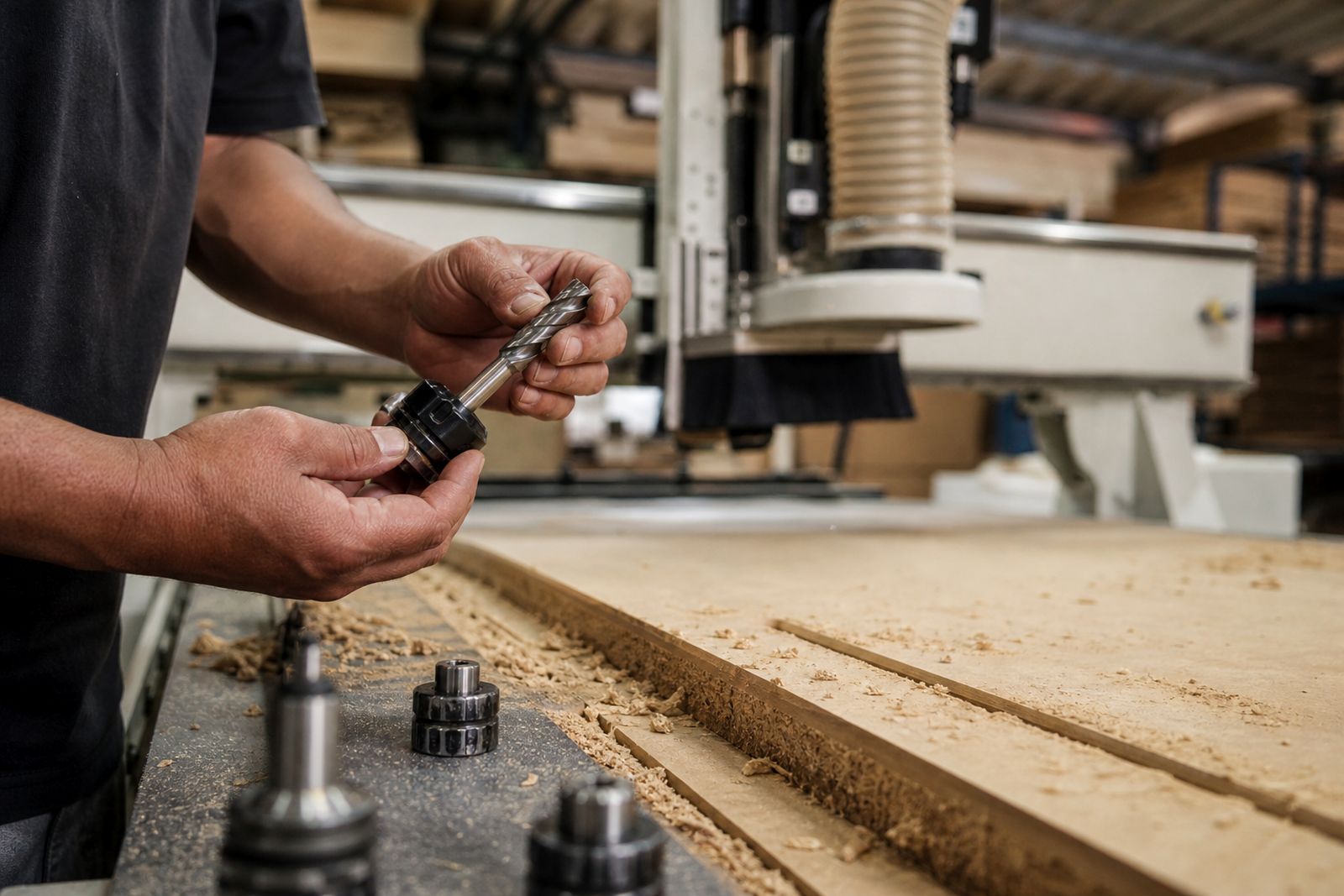
Spoilboard first
When the spoilboard, not the cutter, is the tool-life problem.
Read more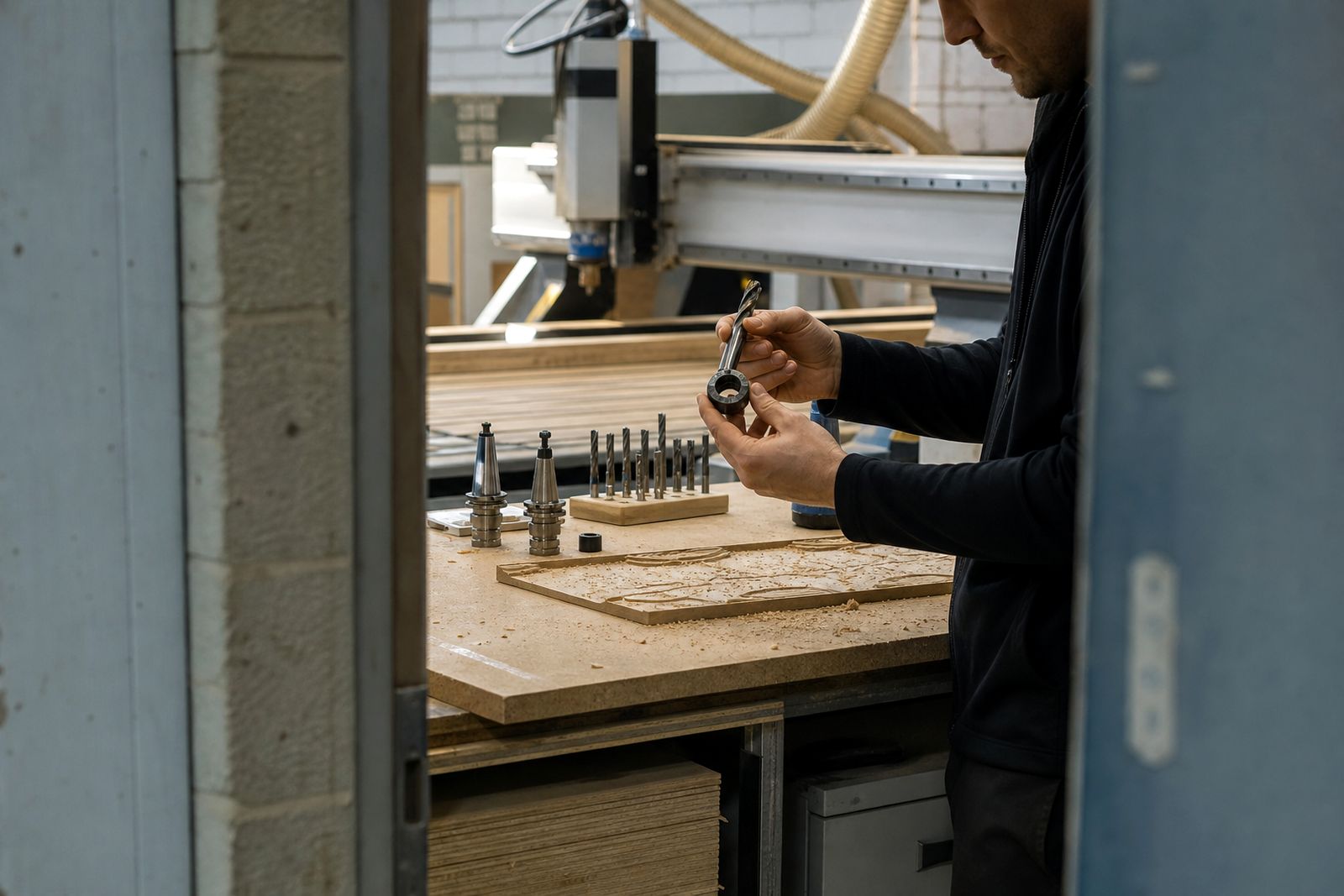
Stepover without drama
Relief stepover cards that balance finish against machine time.
Read more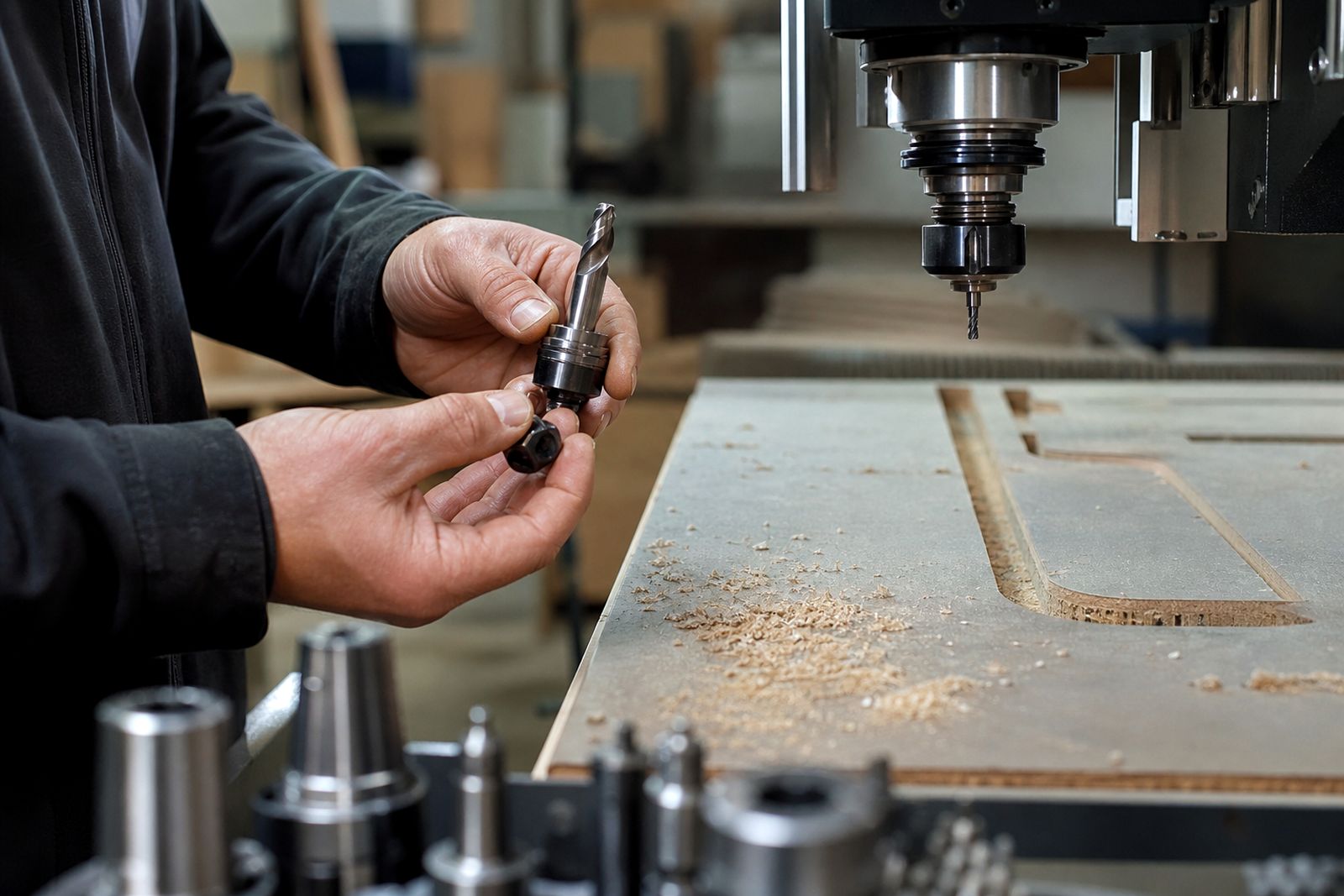
Ramp in, don't plunge
Why a shallow ramp entry keeps small carbide cutters alive in acrylic, ACM and aluminium, and the ramp angles our team actually uses.
Read more
Tool life before scrap
Colour tags that pull dull tools before they scrap a nest.
Read more
V-bit letter depth
Depth stops for trophy and sign lettering that still read at night.
Read moreWhat our Cutting Tool customers say
Verified Google reviews
Tell us about the job you need to cut
Send a note through our contact form with your machine, spindle and collet size, the material and thickness, the finish you need and your area, and we will come back with practical cutter options and a quote.
Open the contact form