

Mist vs dry Highveld
When mist helps, and when dry cutting is cleaner inland.
Why mist coolant matters for aluminium
Cutting aluminium on a CNC in the Highveld is a different story from running the same programme on the coast. I’ve supported plenty of workshops where mist coolant setups are fitted as standard, but not everyone realises how much the local climate affects chip evacuation, finish quality, and cutter life. In this note, I’ll unpack when mist is genuinely needed, and when dry cutting is cleaner and safer for inland teams.
When you’re running aluminium, especially on a prototype cell or finishing pass, the cutter can get hot and the chips like to gum up the flutes. Aluminium is sticky, especially at higher spindle RPM and lower chip loads. A misting system combines air with a tiny amount of lubricant, usually mineral oil, and helps keep the cutter surface cooler while blowing chips out of the cut. This is especially important for small-diameter end mills, under 6 mm, running at high RPM.
Without mist or air blast, you risk built-up edge: welded chips that dull your tool and ruin the finish. This is where mist makes a real difference, especially on longer production runs or when you’re pushing feed rates above 2 000 mm/min. Coastal shops with higher humidity and salt in the air also benefit from the corrosion protection of mist coolant, but the same isn’t always true inland.
When dry cutting wins in the Highveld
On the Highveld, with its dry air and typically lower humidity, dry cutting aluminium isn’t just possible, it’s often cleaner and safer. With the right uncoated or ZrN-coated cutter, a dust hood, and a decent vacuum, you can get excellent chip evacuation without introducing coolant mist. We see far fewer issues with chip re-welding compared to the coast, provided the feeds and chip load are right and the cutter is sharp.
Dry cutting means no slippery residue on the bed or parts, which matters if you’re cutting sheets for direct powder-coating or bonding. It also simplifies clean-up and avoids the hassle and cost of mist units and refills. Just keep a close eye on heat build-up in the cutter, if chips start to go blue or weld, back off the spindle speed or increase feed to keep the chip load above 0.04 mm per tooth for a 6 mm end mill.
Mist and dry cutting mistakes
We’ve seen a few mistakes crop up, especially with new CNC owners and hobbyists. One is running the cutter too slowly, thinking it will give a better finish, but this just rubs the aluminium and creates more heat. Another is using wood dust extraction for aluminium chips without an anti-static setup, which can be risky. On the mist side, too much oil in the mist causes a mess and softens spoilboards, while too little means no lubrication benefit at all.
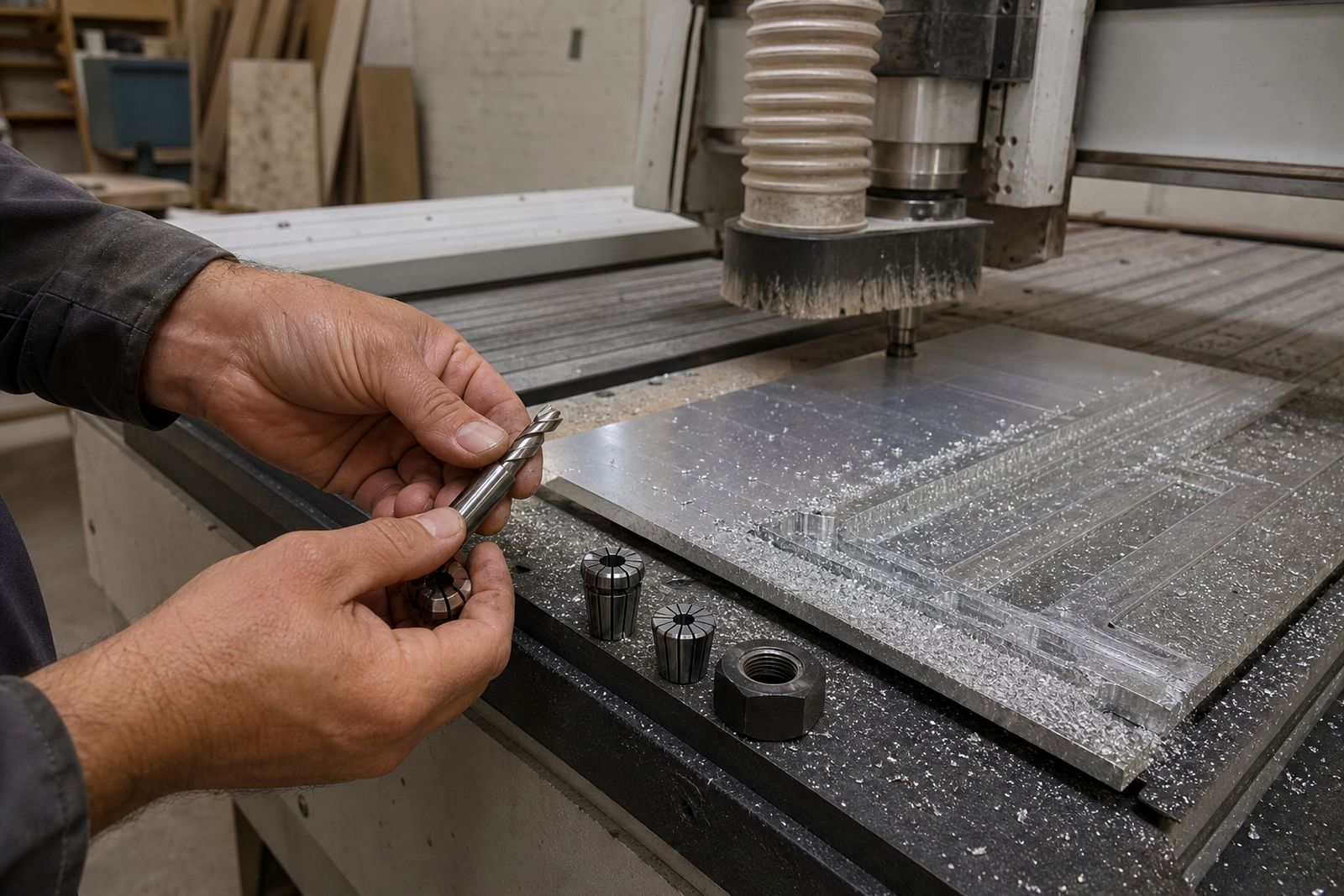
Another pitfall is not cleaning or checking the ER collet after every job. Aluminium fines can wedge in the taper, increasing runout and killing tool life. Always check with a dial indicator and keep stick-out as short as practical, under 30 mm for most 6 to 12 mm end mills.
- Set chip load per tooth by test cuts, starting at 0.04 to 0.08 mm.
- Use short stick-out in the collet for rigidity.
- Keep mist oil lean, just enough to coat chips, not soak the material.
- Vacuum up fines before re-seating material or changing cutters.
- Check and clean ER collets daily to keep runout below 0.01 mm.
Choosing the right cutting setup
If your shop is in Joburg or Pretoria, most sheet and extrusion work in aluminium can run cleanly dry, especially with a proper spiral upcut or chipbreaker flute and vacuum. For high-precision finish milling, consider a quick blast of air or a very light mist only if you see edge build-up in repeated test cuts.
Coastal humidity in Durban or Cape Town can favour mist coolant, especially for parts left on the table overnight or with tight tolerances. Prototype cells that run all day may need mist even inland, as cutter heat can creep up over longer runs.
Plan your routine: if you’re switching between MDF and aluminium, keep your dust and chip extraction separate, and use a spoilboard topping for clean sheet work. Use our contact form if you want a printable feeds and chip load card for your machine.
Related: Aluminium finish mill and Prototype cells. Browse all tools or more edge notes.
What our Cutting Tool customers say
Verified Google reviews
Also worth a look

Tell us about the job you need to cut
Send a note through our contact form with your machine, spindle and collet size, the material and thickness, the finish you need and your area, and we will come back with practical cutter options and a quote.
Open the contact form