

One-line tooling briefs
Put the tooling problem in one line before you widen the job.
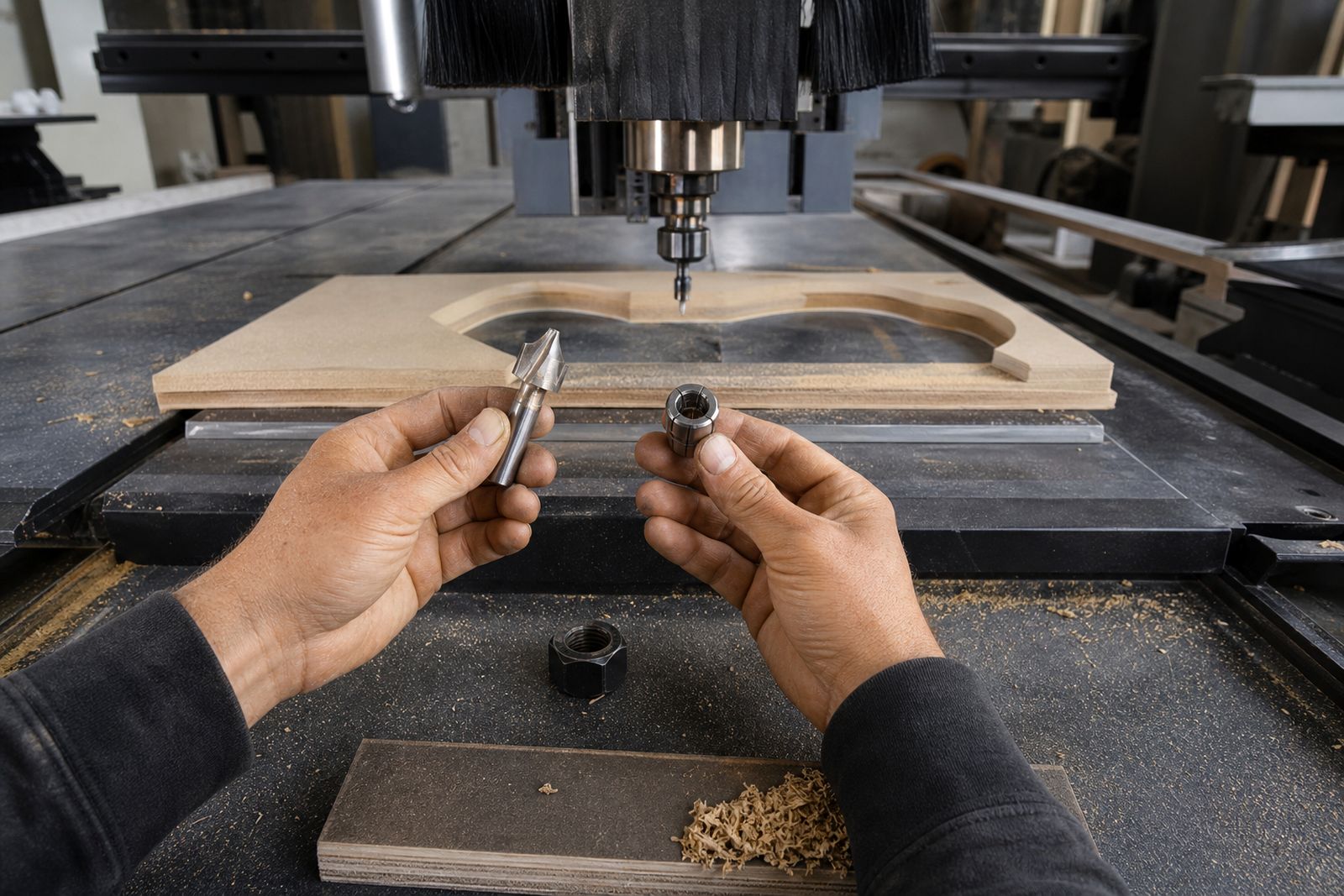
Start with a clear, one-line brief for each cutter job
At CuTool, we’ve noticed that the best way to solve your CNC tooling challenges is to write down the problem in a single line before diving into the details. I always tell our customers: get the real problem clear and simple first, then you’ll know which cutters, feeds, and tweaks you need. This approach has helped many South African workshops avoid wasted time and broken tools.
When I work through workshop examples, I often see teams get stuck because they start with a broad aim like ‘cut MDF parts’ or ‘engrave aluminium’. That is too vague for picking the right end mill or router bit. Instead, try: ‘Tab-free 9 mm MDF letters, 40 metre run, minimum sanding after cut’ or ‘2 mm deep slot, 8 mm wide, in 6061 aluminium plate, with no burring’. This one-line summary shapes your entire plan and helps you avoid rookie mistakes like using a compression spiral where a single flute would do better.
Use the one-line to drive your questions and tool choices
With your one-liner, you can quickly check key technical points. For example, do you need an upcut for chip evacuation or a downcut for a clean top edge? Is your part thin and at risk of lifting without tabs or a strong vacuum hold-down? If the brief is ‘clear edge, no melt on acrylic, 12 mm thick’, you know to reach for a polished single-flute cutter and set a chip load around 0.08 mm per tooth to avoid heat buildup. This narrows your tool list and saves time hunting through catalogues.
In Joburg’s drier air, dust can build up quickly on MDF jobs, so think about extraction and anti-static wipes. Along the coast, especially Durban and Gqeberha, humidity makes resin gumming more likely in chipbreaker spirals on pine, a fact that a good one-line problem will remind you to prepare for.
Record your one-liners and results on tool life cards
I encourage every workshop to keep a simple tool-life card or printable sheet for each job. Write your one-line brief at the top, then note the cutter geometry, speeds, feeds, ramping or plunging moves, and how many running metres you got before edges dulled or resin built up. This lets you spot patterns, like which bits last longest on 16 mm birch ply, or if you always get chipout on upcuts at high feed rates. South African joiners and signmakers who do this cut their wasted tool spend and avoid repeating the same mistakes.
Avoid common pitfalls by focusing your brief
We’ve seen too many shops choose the wrong cutter or stepdown just because they didn’t define the challenge. Here are classic mistakes that a clear one-line brief would have prevented:
- Running a 6 mm 2-flute at 18 000 rpm in PVC, melting the edge due to no air blast.
- Cutting 12 mm MDF with a coated spiral, then cleaning burnt resin because the dust hood was blocked.
- Using a compression bit for a slot but losing hold-down on a small part, causing chatter.
- Plunging straight down with a ball-nose instead of ramping, snapping the tip.
- Missing out on regrind opportunities by tossing a dull cutter before measuring runout or edge wear.
Related: Tool Life Cards and Starter workshops. Browse all tools or more edge notes.
What our Cutting Tool customers say
Verified Google reviews
Also worth a look

Tell us about the job you need to cut
Send a note through our contact form with your machine, spindle and collet size, the material and thickness, the finish you need and your area, and we will come back with practical cutter options and a quote.
Open the contact form