

Acrylic melt notes
Feed and chip-break habits that keep letters cool.
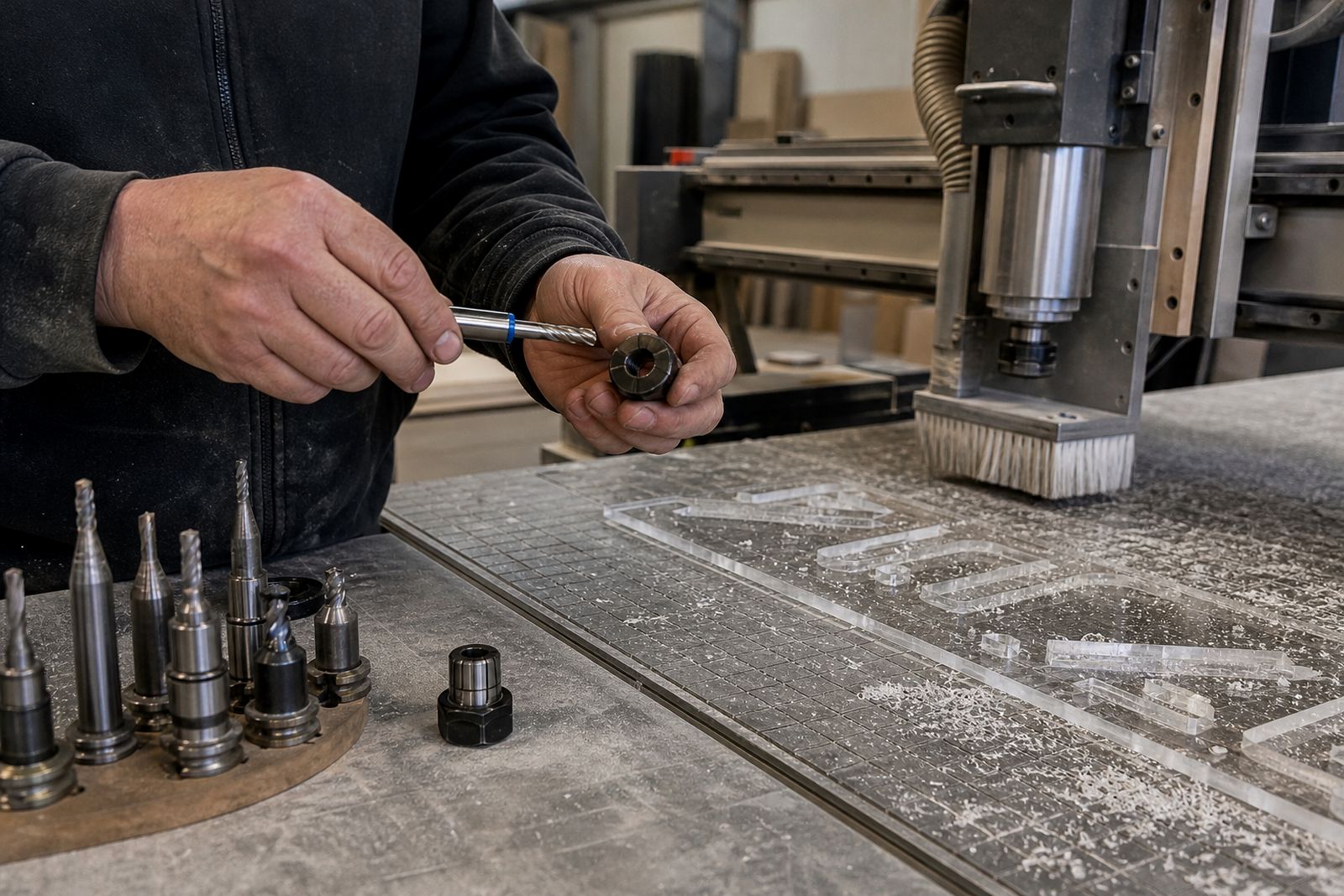
Feed rate and chip load make or break your edge
If you cut acrylic often, you know the struggle: chips weld to your bit, edges frost or go brown, and letters fuse to the sheet just when you want a clean pop-out. I have seen that cooling starts with the right chip and feed habits, not just a squirt of air or a fancy cutter. Let us get into the practical steps to keep your acrylic cool and your letters sharp.
Acrylic needs a healthy chip load or else you just polish and melt the material. I recommend a starting chip load of 0.08 to 0.18 mm per tooth for clear cast or extruded acrylic, using two-flute or three-flute end mills or acrylic chip-breaker spirals. If your feed is too slow, the cutter rubs, making heat build up. On the other hand, pushing too fast with a dull bit leads to chatter, bad edge finish and stress cracking.
On a typical 6 mm cutter, try a feed of 2400 to 4 200 mm per minute at 18000 rpm, but test on your offcuts. Small letters and thin strokes are easier to damage, so adjust the feed down and reduce the pass depth. Always watch the chip: it should fly away as a crisp, snow-like curl, not dust or sticky flakes.
Why chip-breaker cutters give a cooler result
Standard spiral or straight cutters can work for thick signs or big shapes, but for small letters and delicate inlays, an acrylic chip breaker is what keeps the edge smooth and the shavings loose. The chip breaker geometry puts a small notch in the flute, snapping the chip as it forms. This means shorter chips, less packing in the flute and less heat riding up into the workpiece.
Long stringy chips easily wrap around the tool, especially on high-gloss sheets. The chip-breaker keeps things tidy and speeds up clearing. For anything thinner than 6 mm, or for jobs with lots of tabbing, the extra control is worth it.
- Cleaner edges on small text and logos
- Less risk of heat haze or brown marks
- Easier chip removal from the cut
- Fewer stoppages to clear tangles
Hold-down and dust extraction are not optional
Acrylic moves as it heats, especially on small offcut blanks. Vacuum hold-down on a flat, clean spoilboard is the best way to stop chatter and keep the sheet from lifting into the bit. For bakkie workshops or where vacuum is not practical, use double-sided tape or well-placed clamps, but always avoid clamping close to the cut.
Dust extraction is not just for comfort. Fine acrylic dust builds up heat and can clog both the cutter and the collet. A high-flow dust boot, or at least a directed air blast, keeps the chips moving out. If you use a mist system, keep the mist light and avoid over-wetting: too much can soften the acrylic and leave a haze.
Cutter care and regrind habits for better acrylic letters
Sharpness is everything with acrylic. Even a slightly dulled edge causes chipping and cloudiness. After every batch or long run, inspect the edge under a good light. If you spot resin buildup, clean with isopropyl alcohol and a soft cloth. Never scrape with metal objects. A dial indicator is handy to check runout: anything over 0.03 mm means your collet or nut needs cleaning or replacement.
We work with local regrind partners for chip-breakers and acrylic spirals by courier. A cutter can usually be reground twice before the flute profile changes too much. If you are in doubt, send us a photo for advice through our contact form. Retire any cutter that leaves a frosty or grey streak, or if you notice growing vibration despite a clean collet.
Related: Acrylic chip breaker and Acrylic fabricators. Browse all tools or more edge notes.
What our Cutting Tool customers say
Verified Google reviews
Also worth a look


Tell us about the job you need to cut
Send a note through our contact form with your machine, spindle and collet size, the material and thickness, the finish you need and your area, and we will come back with practical cutter options and a quote.
Open the contact form