

How we work
Learn how CuTool tests, selects and supports cutters for real South African CNC jobs, not just catalogue claims.
Choosing cutter lines that suit South African CNC environments
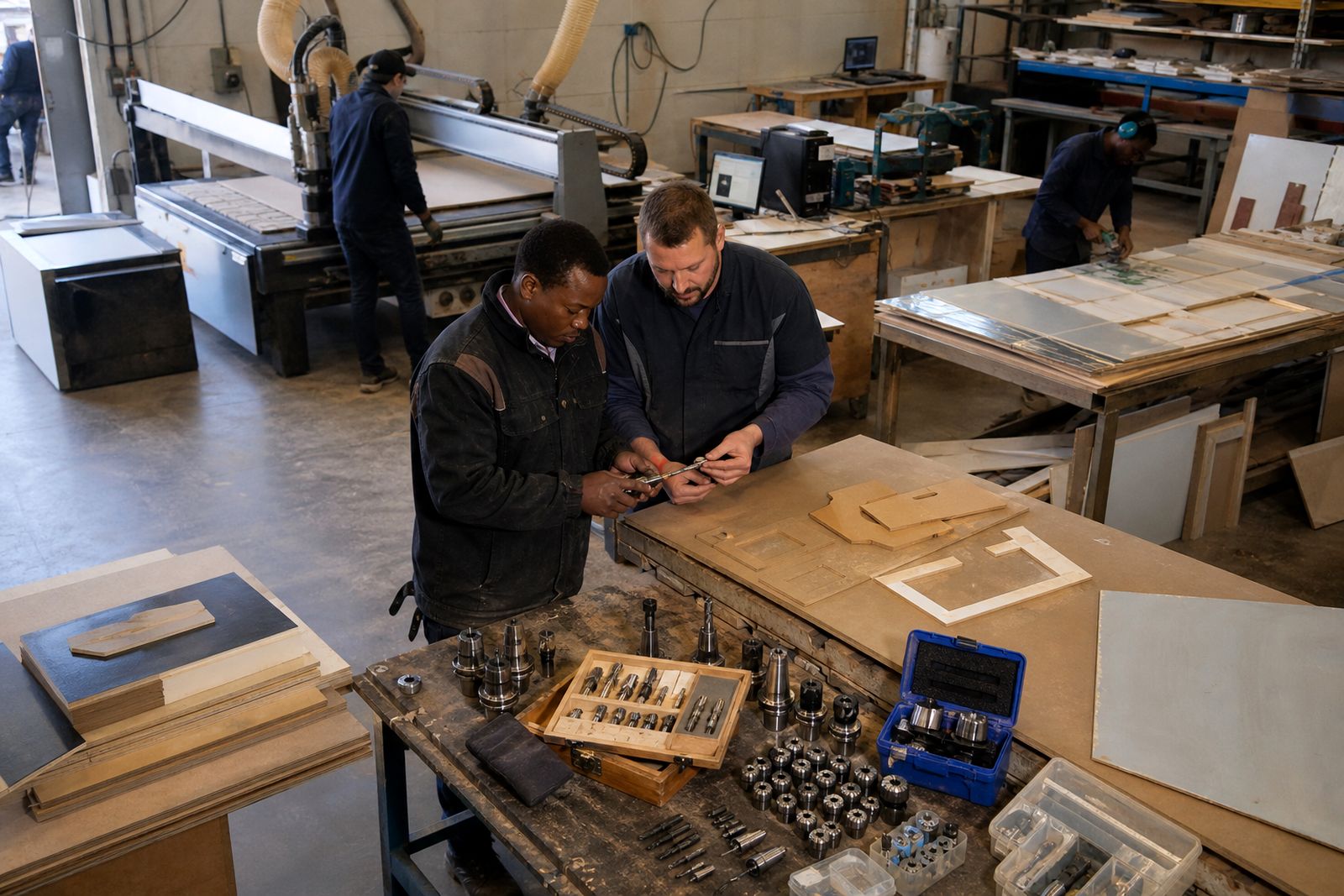
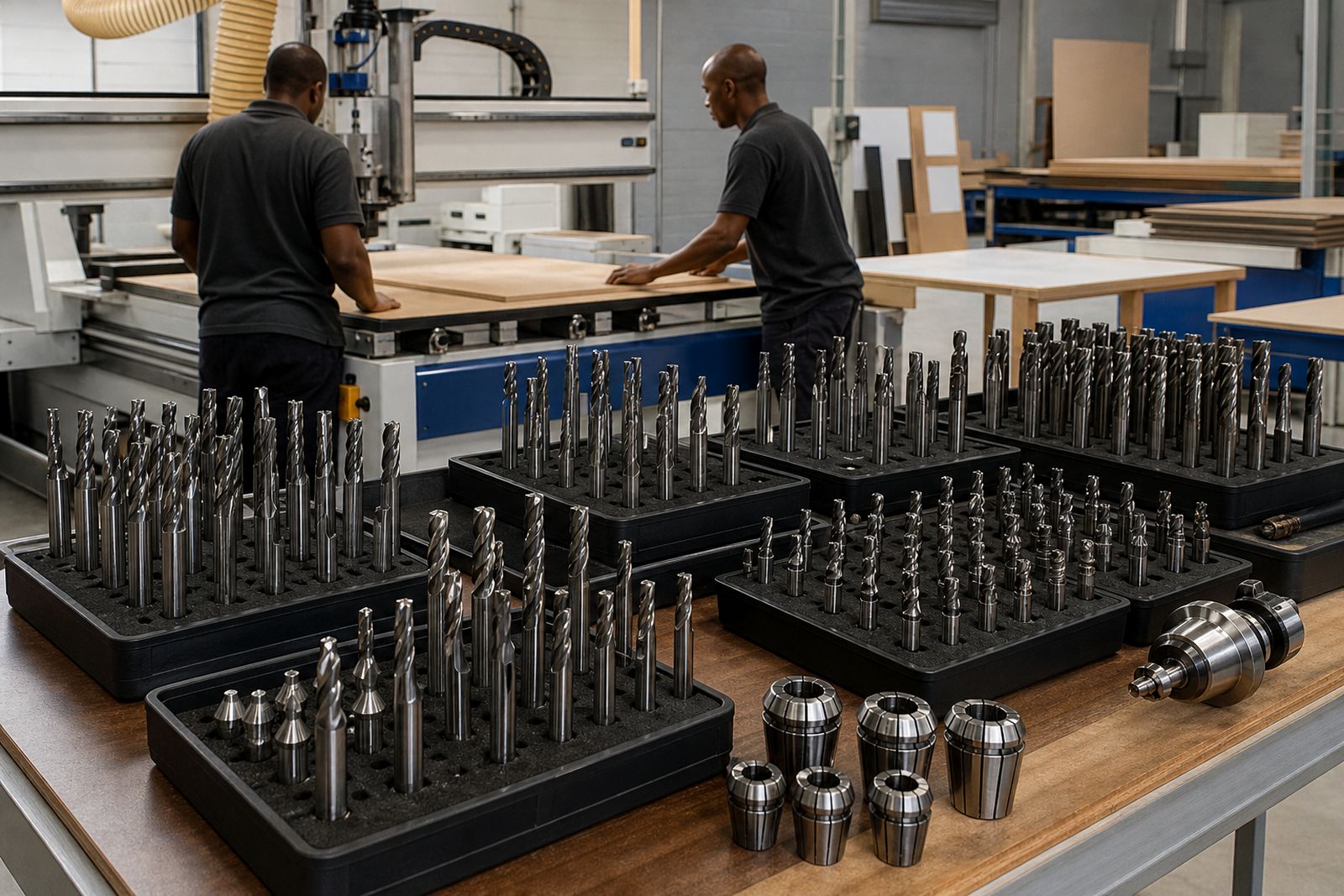
When we bring in a new range of cutters for CNC routers or mills, we do not just look at a supplier’s catalogue. We put real workpiece results and local realities first. Our focus is on what works for the types of wood, MDF, plywood, acrylic, aluminium and composites you find in South African shops, from the Joburg Highveld to the coastal damp. We consider dust extraction, vacuum hold-down, bakkie stability and whether the geometry stands up to tough pine, melamine or imported birch ply.
We look for reliable carbide, sharp edge retention and geometries that suit climb or conventional cutting. We choose flute counts, helix angles and coatings that match your material and typical spindle speeds. You will find a practical mix of up-cut, down-cut and compression spirals, single flutes, chip breakers, and special shapes like taper ball noses or slot cutters, so you’re set up for prototyping, production or custom work.
- We test for chip evacuation in humid and dry shops
- We check for fit in ER collets common in South Africa CNCs
- We avoid ranges that chip or clog on local MDF
Test-cutting and measuring at our Sunnyrock showroom by appointment
Every cutter line gets test-cut at our Sunnyrock head office before we’ll recommend it. We run passes on actual birch ply, pine, MDF, acrylics, and local aluminium flat stock, checking for finish, chip load, swarf clearance and heat build-up. We set up vacuum beds, use real spoilboards and rig up dust extraction to see if the flute geometry clogs or clears.
We verify spindle speeds and feed rates on typical South African routers and mills, not just what’s on the spec sheet. Using a dial gauge, we measure runout at the holder to see if the tool is running true and if the finish holds up at the real stick-out you’ll use in your shop.
- Cut quality is checked under magnification
- Heat and resin build-up are logged for each pass
- Test cuts are repeated after tool cleaning
Feeds cards, tool-life tracking and regrind decisions
We put together printable feeds and tool-life cards for every cutter line. These start with the toolmaker’s data but get localised by our team after real test cuts. Chip load per tooth, stepover, stepdown, spindle speed and feed are all given as starting ranges. Our cards note the usual trade-offs: slower feeds for finish, faster for roughing, typical maximum stepdown in mm, and which cutters handle ramping or plunging best.
Tool-life is tracked and compared for each batch. We recommend regrinding for carbide spirals and end mills once the edge loses its keen, but only up to two or three times before the core geometry is compromised. Our local regrind partners are vetted for concentricity and correct edge finish. Once a cutter starts burning, leaves excessive burr or fails to measure within runout spec after cleaning and regrind, it is time to retire it and replace.
- Cards are checked by two Sunnyrock machinists
- We factor in local dust, humidity and resin build-up
- Retirement is called if runout or edge-finish fails after regrind
Advice from CuTool through our contact form or in our showrooms
We answer technical questions directly through our contact form or in person at our Sunnyrock head office and regional showrooms by appointment. Our advice covers cutter selection, collet care, feeds, speeds and finishing strategies for your material, machine and clamping. You will get practical starting points for chip load, ramping, tabs or onion-skin passes, and tips for holding sheets flat or surfacing a spoilboard with minimal fuss.
Bring a problem cutter, a sample or a photo and we will help diagnose resin build-up, chatter or heat marks. If you are starting out, we can help you match flute count and helix to your router power, or fit the right collet and nut. We give straightforward advice, never guesswork. For anything tricky or custom, send a message through our contact form and we will work through the specifics with you.
Also worth a look
Tell us about the job you need to cut
Send a note through our contact form with your machine, spindle and collet size, the material and thickness, the finish you need and your area, and we will come back with practical cutter options and a quote.
Open the contact form