

Tools
Browse CuTool’s range of end mills, router bits, ball nose, chamfer tools, collets and holders for CNC work.
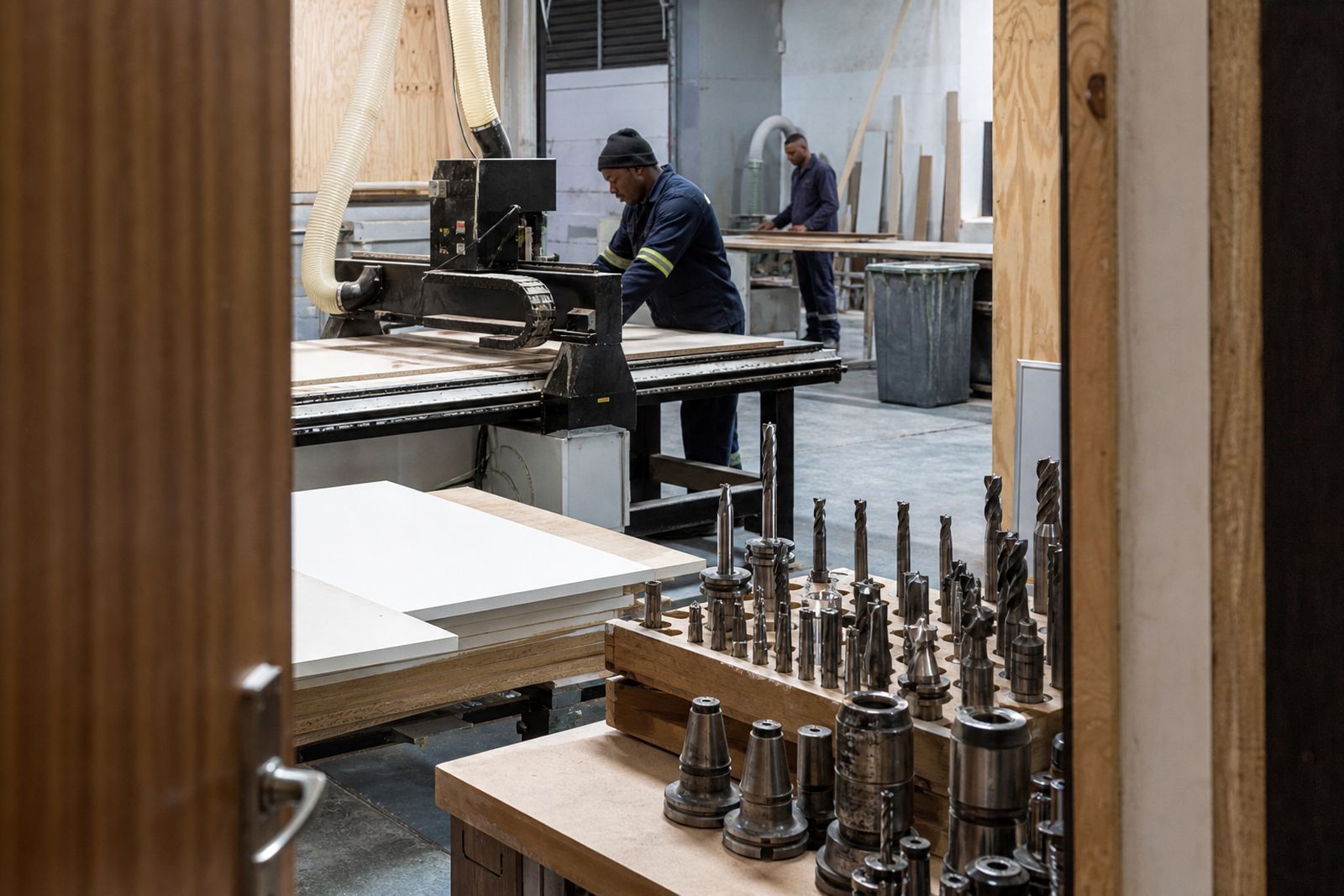
Carbide end mills for hard and soft materials
Carbide end mills are the mainstay in CNC milling, suited for wood, plastics, aluminium, and composites. Our range includes 1 to 4 flute options, plain and coated, from 3 to 12 mm diameter, and ball-nose and square-end profiles. Choose uncoated types for aluminium and coated (AlTiN) for hardwood and composite panels where tool life matters.
Select flute count and geometry based on your feeds and chip evacuation. Single and two-flute cutters suit softer materials and better chip clearing, while three or four flute end mills handle hardwood, MDF or engineered panels at higher feed rates. Lower flute counts can help avoid heat build-up and melting on plastics. Always check your collet and nut for cleanliness and torque, and minimise stick-out to avoid runout.
Upcut spiral router bits for clean bottom cuts
Upcut spirals are the workhorse for efficient chip removal and a crisp bottom edge, especially in through-cuts and pocketing. These are best for chip evacuation in MDF, ply, hardwood, and some plastics, with diameters from 3 to 12 mm and both single- and double-flute options.
If you need a clean upper surface, consider a downcut or compression bit instead. Upcut geometry pulls chips up and out, so always use dust extraction and eye guards. Typical starting feeds are 3 500 mm/min at 18000 rpm in MDF with a 6 mm bit, but always adjust for your machine and hold-down. Test for chip load per tooth, and use a spoilboard to protect your table.
Downcut spiral router bits for top finish
Downcut spirals push chips downward, delivering a clean top edge, ideal for sign makers, joiners and furniture shops. These bits work best in plywood, veneer-faced board, and soft plastics where surface tear-out is a concern. Available in 3 to 12 mm diameters and mostly 2-flute designs.
Since chips are pressed into the cut, use effective dust extraction and shallow passes to avoid heat and resin build-up. Downcut bits perform well in securing thin sheets when vacuum or double-sided tape is used for hold-down. Adjust your stepdown to avoid burning, and if you need a crisp bottom as well, consider a compression spiral.
Compression spiral bits for double-sided laminates
Compression spirals combine upcut and downcut flutes, giving clean edges top and bottom, crucial for melamine, Formica, and double-sided laminates. They come in 6 to 12 mm diameters, often in 2-flute and 3-flute versions, with a transition zone for best edge quality.
Start with a shallow first pass just below the surface to activate the downcut, then proceed with the full stepdown for the upcut portion. These cutters need solid hold-down and precise feeds. Watch out for chip packing when cutting thick panels; clear chips with air blast if needed.
Straight router bits for cost-effective general cutting
Straight bits are the basic choice for general routing in soft woods, plastics, and MDF, and offer a flat-bottomed cut at a lower cost than spirals. They come in diameters from 6 to 20 mm. Expect more chip recutting and slightly rougher edges, but these are ideal for quick, shallow grooving and rebate jobs.
Because straight cutters do not evacuate chips as effectively as spirals, reduce your depth per pass and stepdown to minimise heat and dust build-up. Use them with a well-fitted dust boot and keep your feed rates moderate. These are a popular pick for schools and starter machines.
Single flute cutters for plastics and aluminium
Single flute cutters excel in acrylic, PVC, polycarbonate, and aluminium because they clear chips rapidly and reduce heat build-up. Common sizes are 3, 6, and 8 mm, uncoated for aluminium and polished for plastics. Use high spindle speeds (18000 to 24000 rpm) with correspondingly fast feeds to avoid melting or welding chips.
For soft plastics, keep the chip load per tooth high by increasing feed or reducing rpm. In aluminium, use mist coolant or an air blast to control temperature and prevent chip welding. Clean your collets and check for runout regularly. Single flute bits are easily resharpened but should be retired if chipped or dull.
Chipbreaker spiral bits for tricky materials
Chipbreaker spirals are designed for tough, resinous or fibrous materials that can clog standard spirals, such as softwood, bamboo, and composite panels. The unique serrated edge breaks chips into small pieces, reducing heat and preventing clogging. Standard diameters are 6 and 8 mm.
These bits deliver a slightly rougher edge but excel at maintaining throughput, especially in high-resin pine or chipboard. Use these cutters when you see excessive chip packing or burning with regular spirals. Adjust feeds upwards if the machine allows, and always run with dust extraction.
Chamfer and V-bits for decorative edges and engraving
Chamfer and V-bits are indispensable for engraving, letter cutting, signmaking, and adding bevelled edges. Available with included angles from 30° to 90° and tip diameters from 0.3 to 12 mm, these tools handle everything from fine inlay work to bold sign faces.
For engraving, use slower feeds and shallow passes to avoid chipping brittle materials. When chamfering edges on hardboard or composites, control the depth of cut for consistent edge quality. Regularly clear dust from the flutes and monitor wear, especially on finer tips.
Taper ball nose bits for 3D contouring
Taper ball nose bits are made for 3D carving, relief work, and mould machining in wood, plastics, MDF, and model boards. With a conical shaft and small radius tip (0.5 to 3 mm), they allow deep reach and smooth surface finish without excessive tool flex.
Use these with a small stepover (8 to 10 percent of the diameter) for the best finish in 3D carving. Start with lower feeds and test in your material, as the small tip can be prone to breakage if pushed too hard. Keep cutters clean and watch for resin build-up, especially in pine and MDF.
Slot cutters for grooves and rebates
Slot cutters create clean, accurate grooves for joinery, biscuit slots, T-tracks, and rebates. Available in thicknesses from 3 to 8 mm, with either straight or staggered teeth, these are perfect for furniture and cabinetry work where fit and finish matter.
Ensure your slot cutter is mounted securely with the correct arbour or holder, and check machine spindle speed (typically 12000 to 18000 rpm) to match the cutter diameter. Always test on offcut material to fine-tune depth and width before running production parts.
ER collets, nuts and tool holders for precision
ER collets, precision nuts and tool holders are essential for minimising runout and ensuring tool life. Our stock covers ER11, ER16, ER20, and ER32, with matching nuts and holders for all common CNC routers and spindle types used in South Africa.
Inspect collets for dirt, chips or wear before every change, and torque the nut according to the spindle maker’s guide. Use a dial indicator to check runout, ideally under 0.02 mm at the cutter tip. Replace worn collets and nuts to prevent chatter, tool breakage and poor edge finish.
Feeds, speeds and tool-life cards
Printable cards from CuTool help you track feeds, speeds, and tool life for each cutter type and material. These are especially useful for shops with varied staff or high turnover, and for school and college training workshops wanting consistent results.
Fill in chip load per tooth, spindle rpm, feed rate, stepdown, and number of passes on each card. Mark when a cutter is resharpened or retired. Keeping this information visible at each machine helps with training, avoids accidents and extends cutter life. At larger sites, regrind arrangements are available with our local partners, use our contact form for details.
Start from the tools
Sign work leans on the sign shop guide. Furniture and joinery start with the router bit starter. Read chip load before hype before you change cutters.
Explore the range
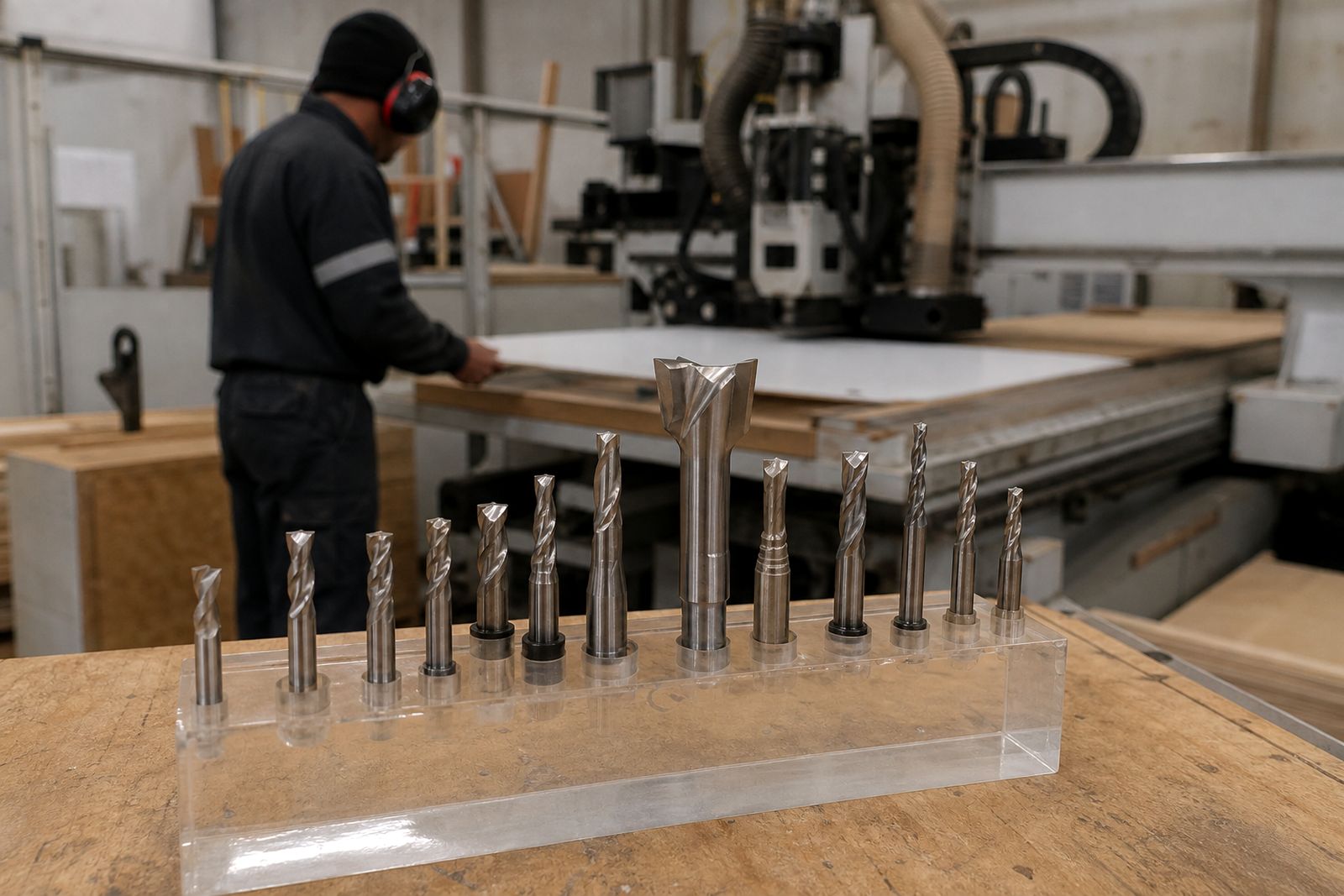
Acrylic chip breaker
Chip-breaking bits that keep acrylic letters cool on long nests.
Read more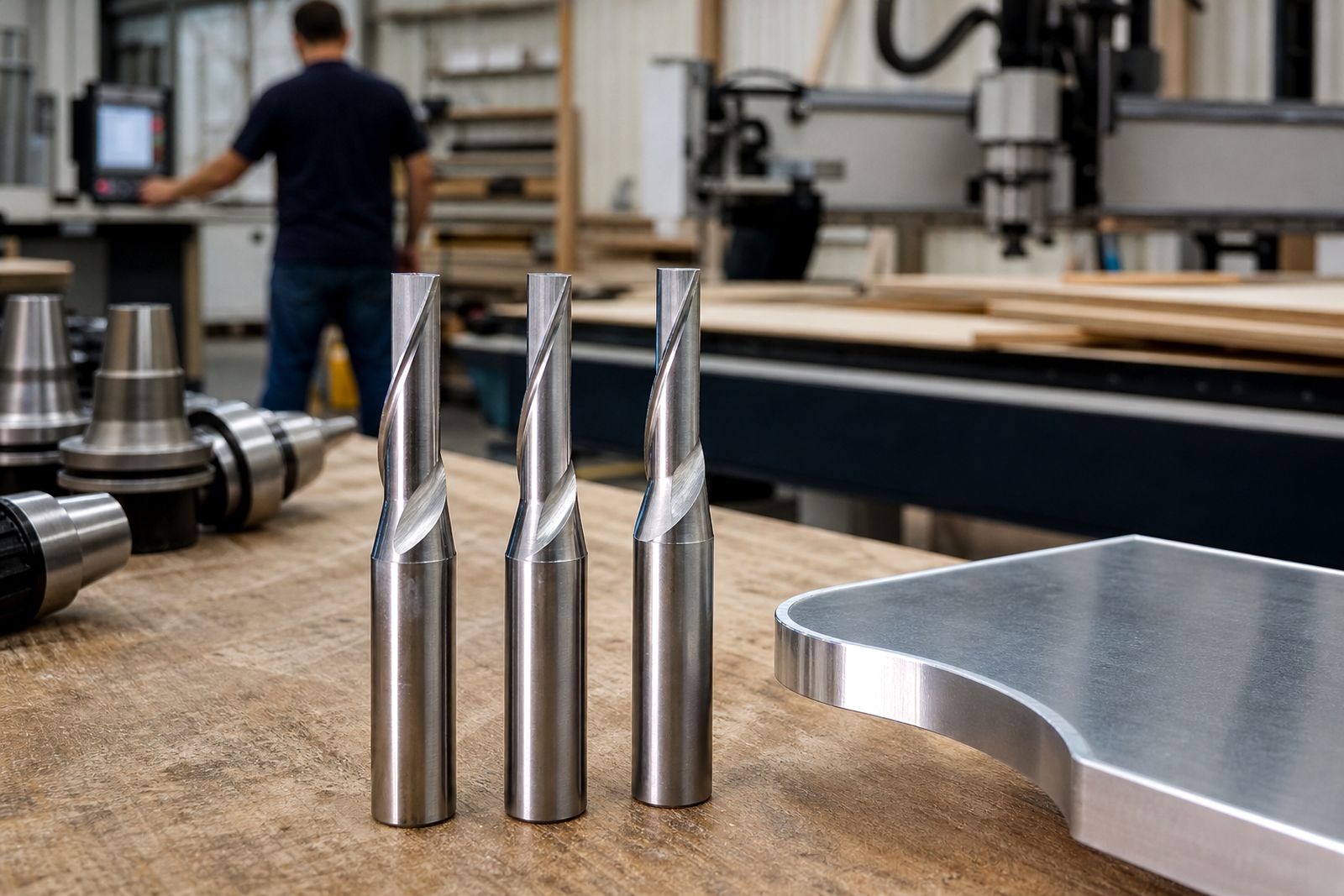
Aluminium finish mill
Single-flute finish mills for bright aluminium edges without rub marks.
Read more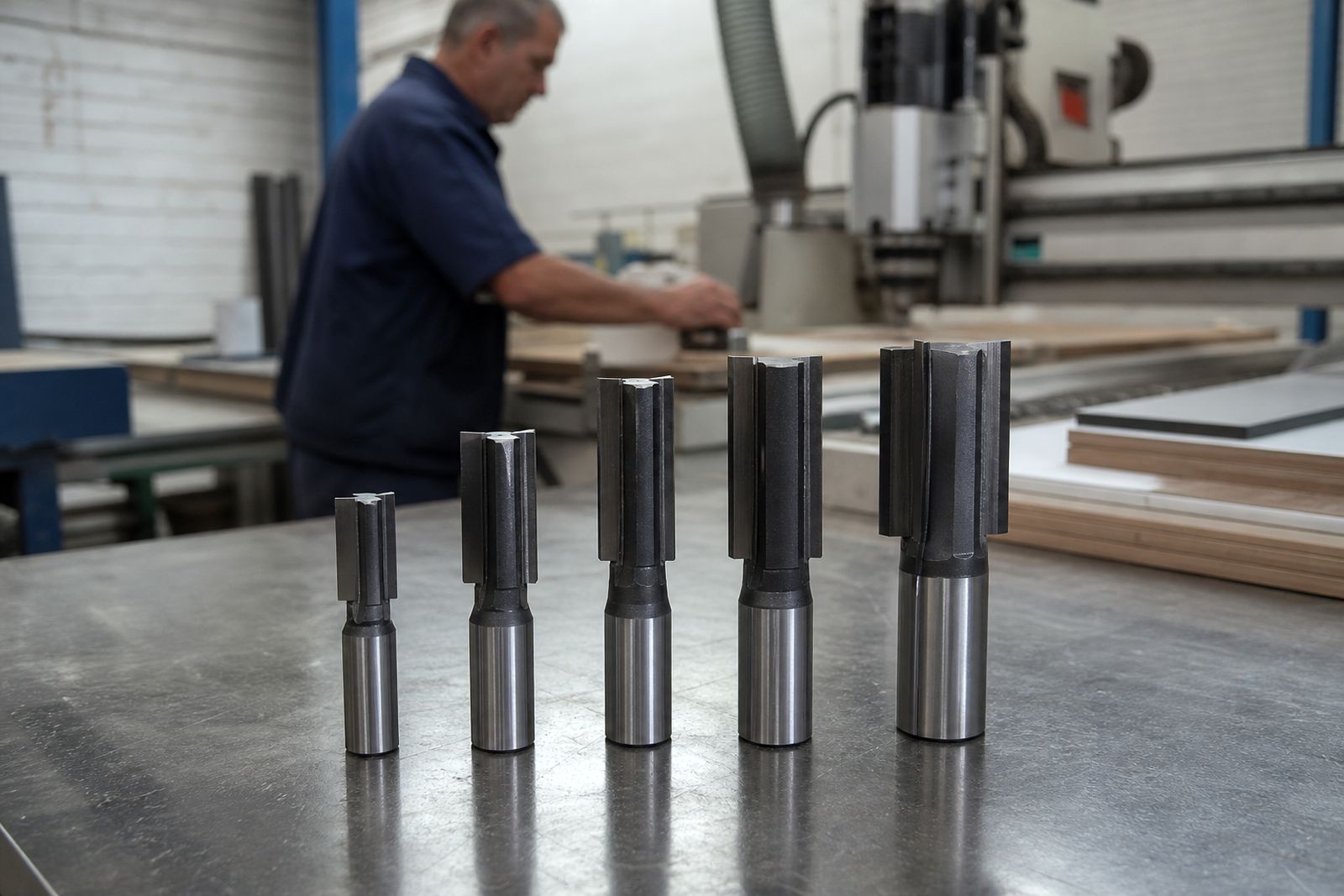
Carbide slot set
Slot and keyway cutters sized for fixture plates and aluminium extrusions.
Read more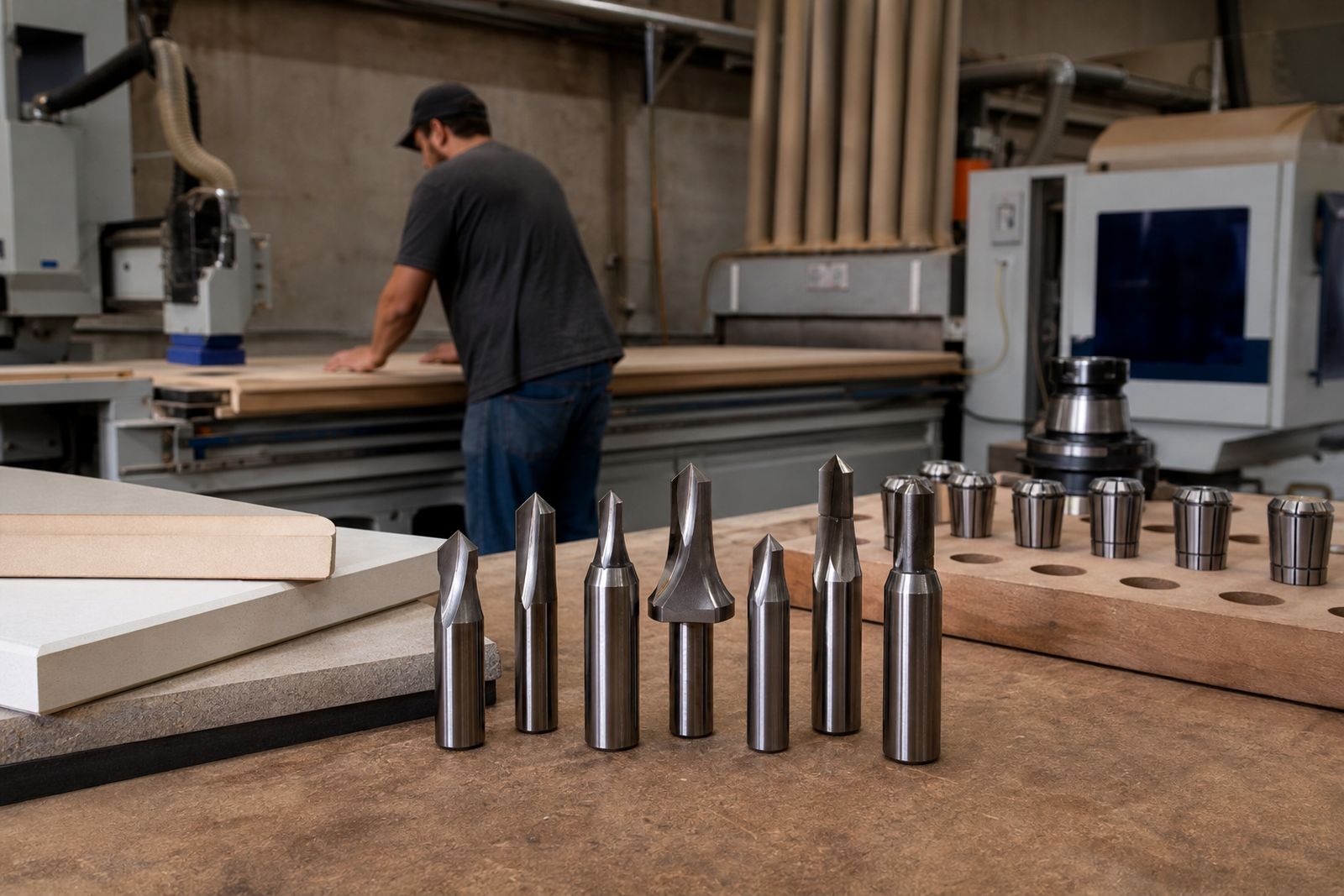
Chamfer edge kit
Chamfer and V-bits for clean edge breaks on signs and fixtures.
Read more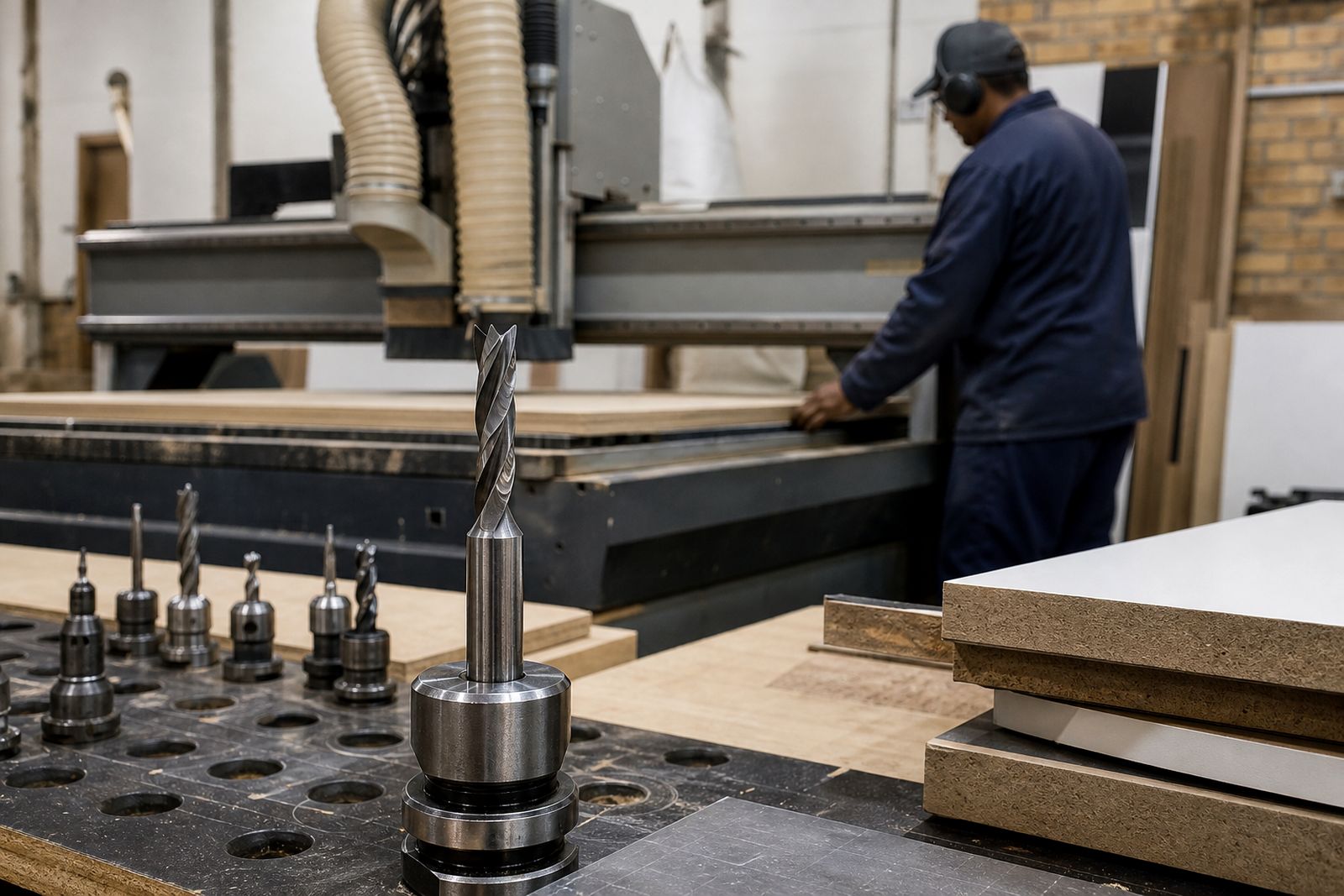
Compression nest bit
Compression spirals for double-sided clean edges on laminated boards.
Read more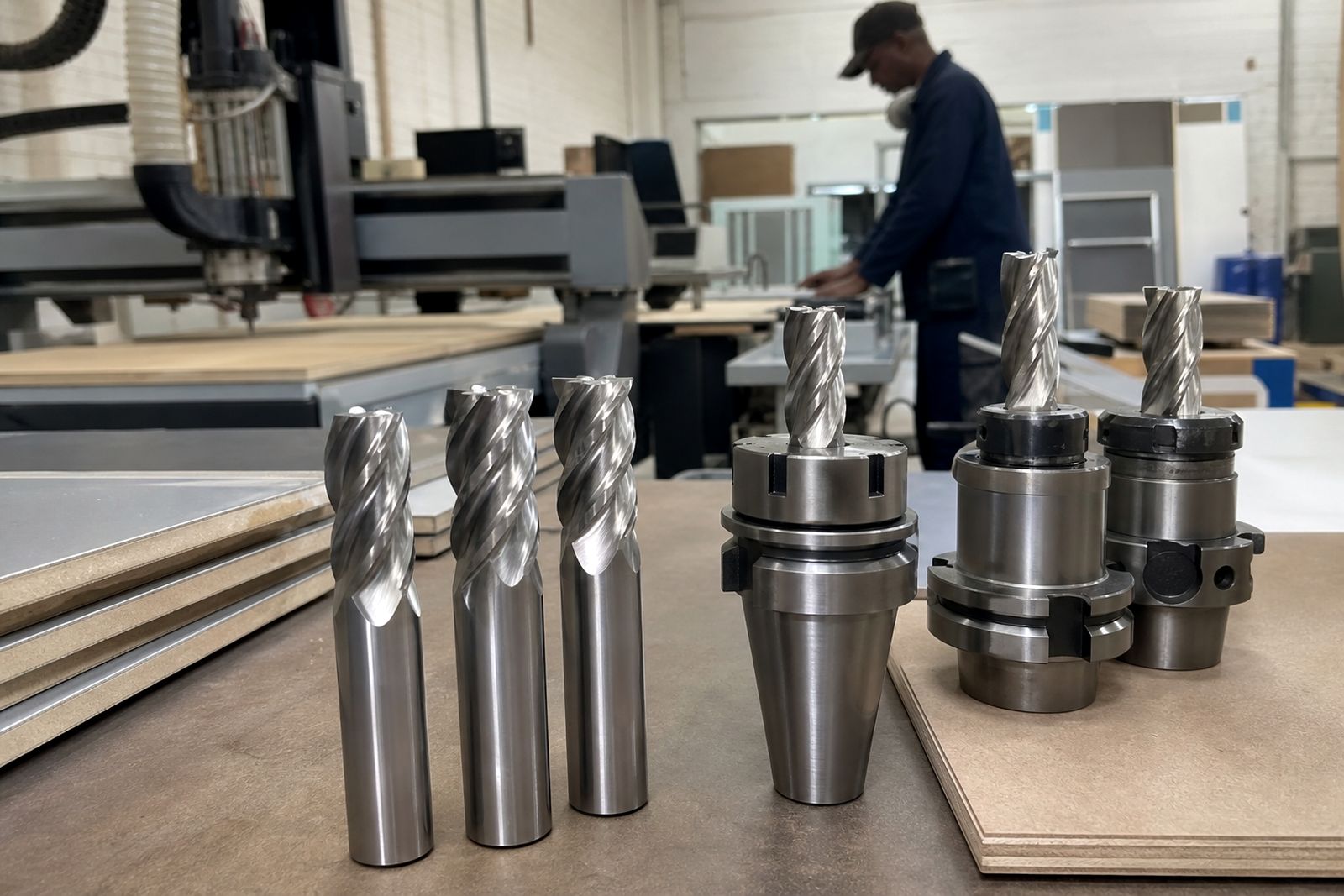
Edge Pro endmills
Four-flute carbide end mills for aluminium and soft steel on compact SA routers.
Read more
Holder collet kit
Collets, nuts, and holder notes that keep runout low on shared spindles.
Read more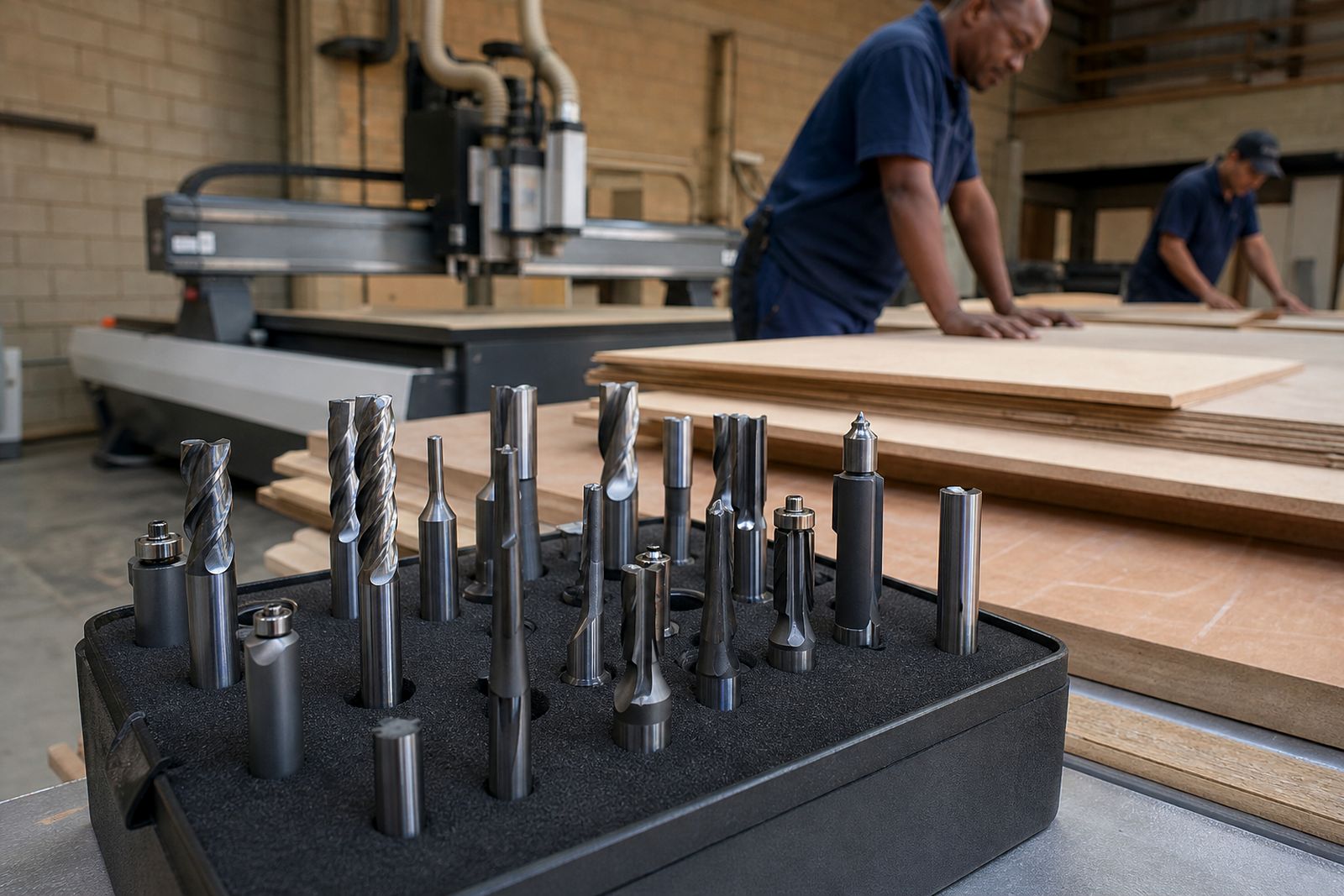
Router bit starter
A starter tray of spiral and straight bits for joinery and MDF letters.
Read more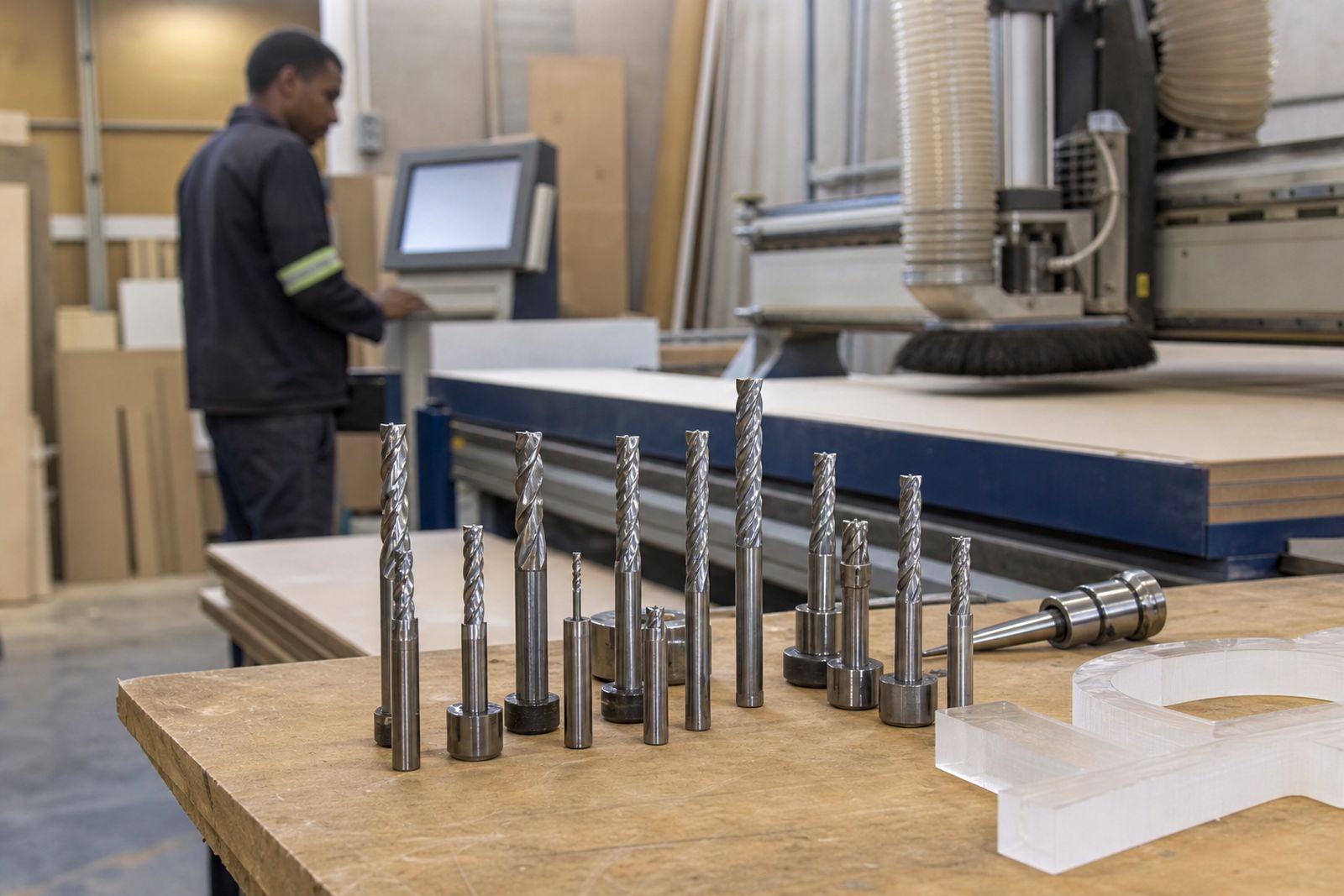
Sign spiral kit
Spiral cutters tuned for acrylic, PVC foam, and ACM letter nests.
Read more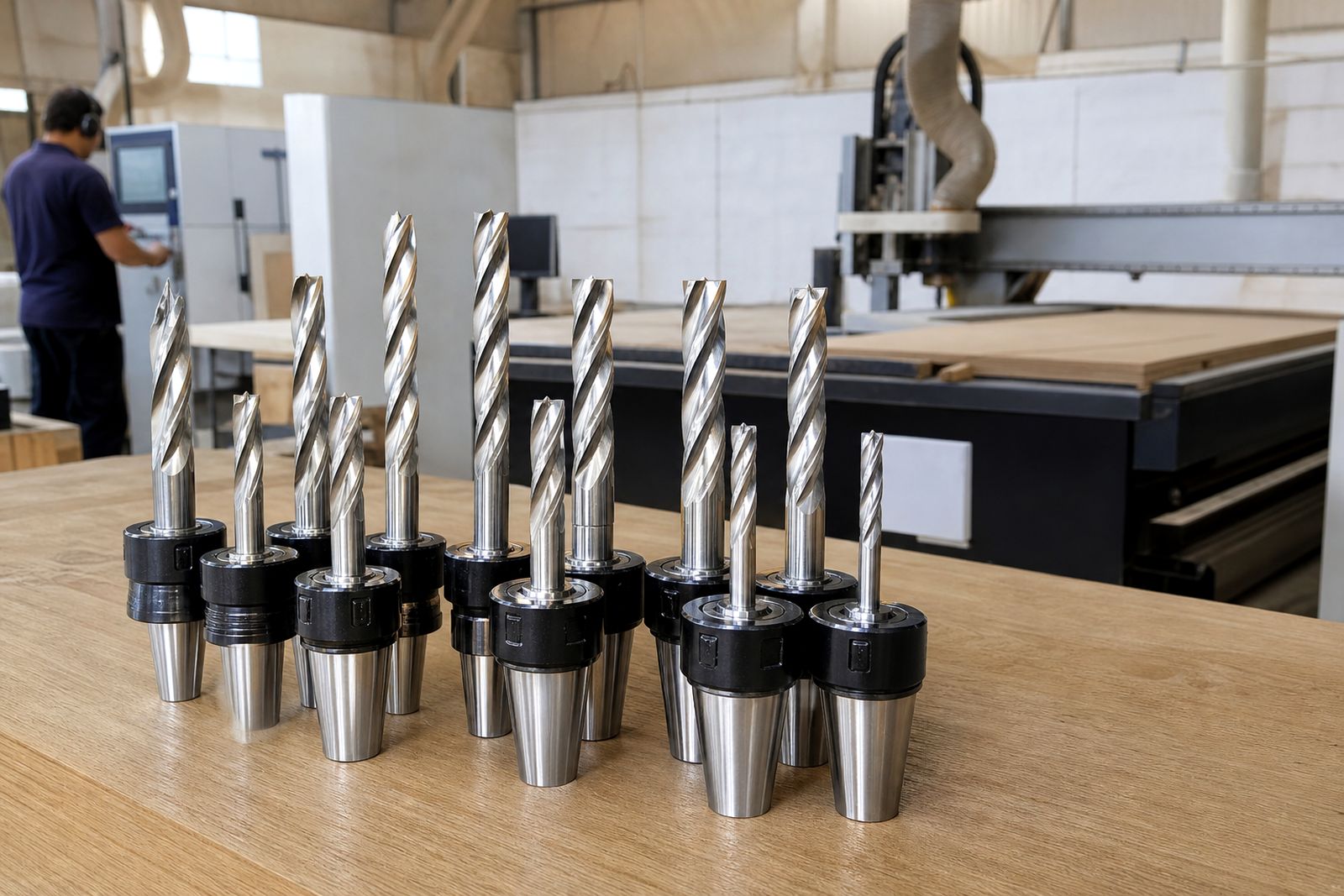
Softwood upcut pack
Upcut spirals for pine, meranti, and softwood joinery blanks.
Read more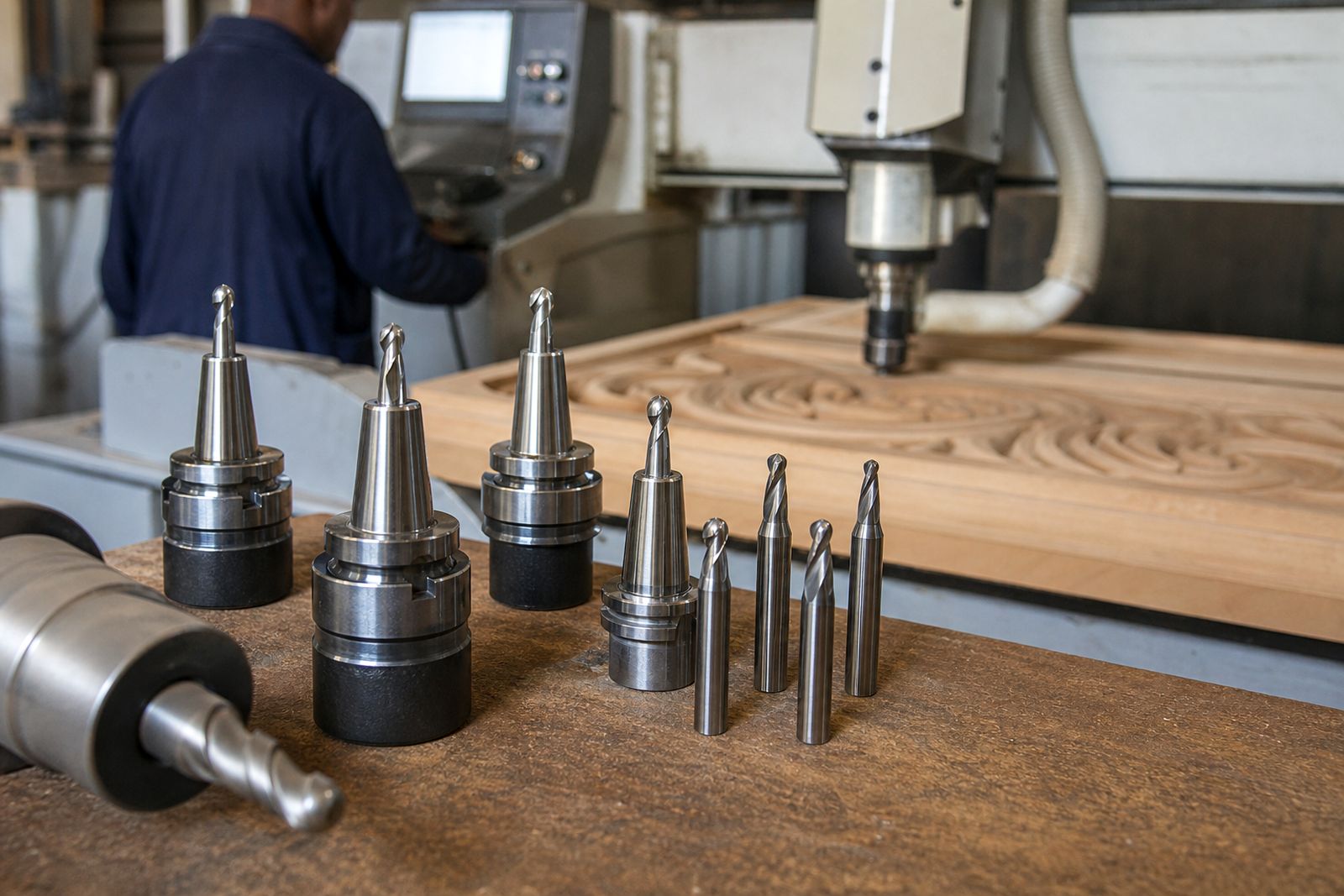
Taper ball nose
Taper ball-nose cutters for relief carving and mould detail. Workshops pick taper ball nose cutters for precise 3D relief work where stepover accuracy matters.
Read more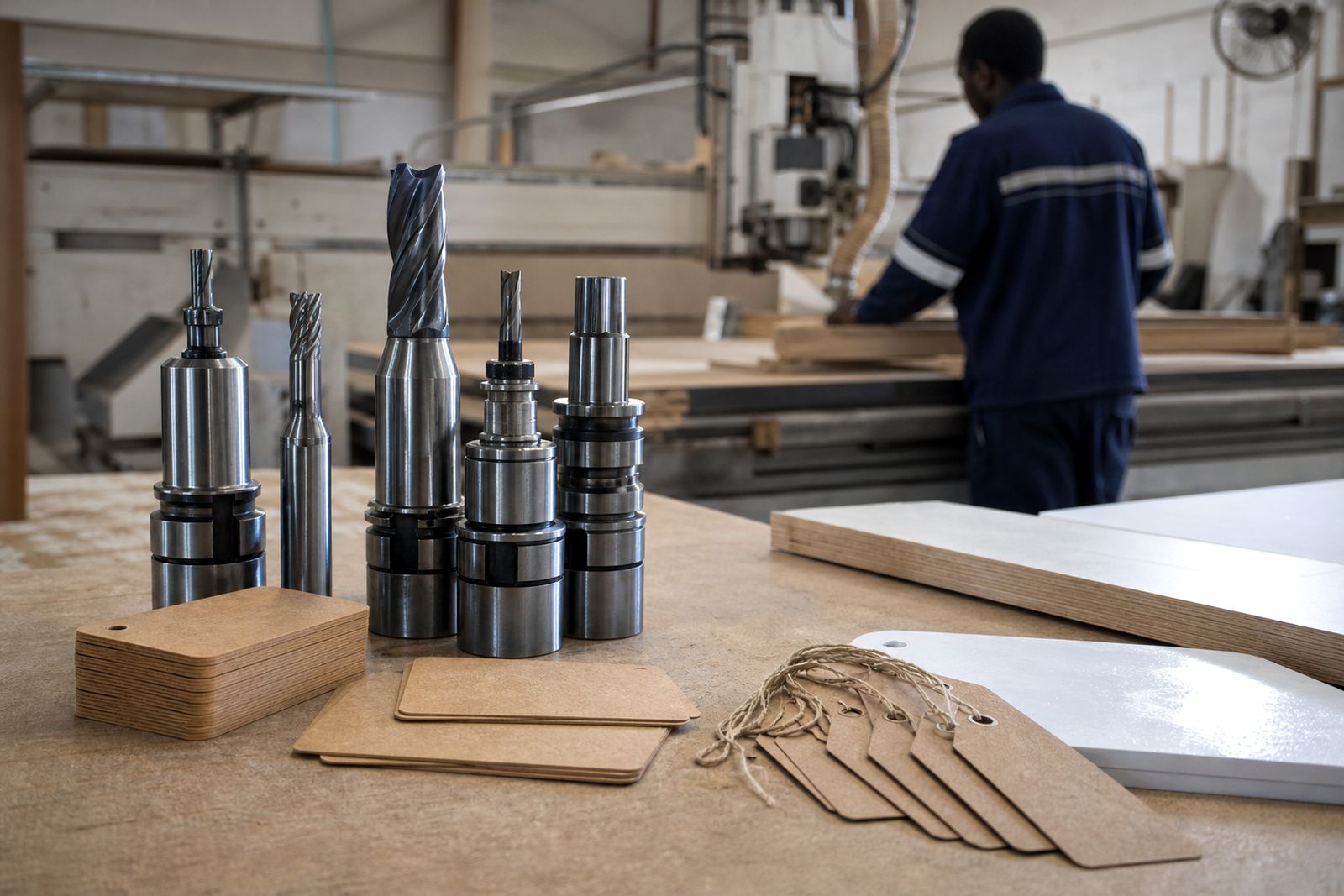
Tool life cards
Printable tool-life cards and scrap tags for tracking cutter wear, regrind timing and tool condition in South African workshops.
Read moreWhat our Cutting Tool customers say
Verified Google reviews
Tell us about the job you need to cut
Send a note through our contact form with your machine, spindle and collet size, the material and thickness, the finish you need and your area, and we will come back with practical cutter options and a quote.
Open the contact form