

Sign shop nests
Nesting sign letters and cutting ACM panels means your cutters must keep pace with tight deadlines and sharp edge demands.
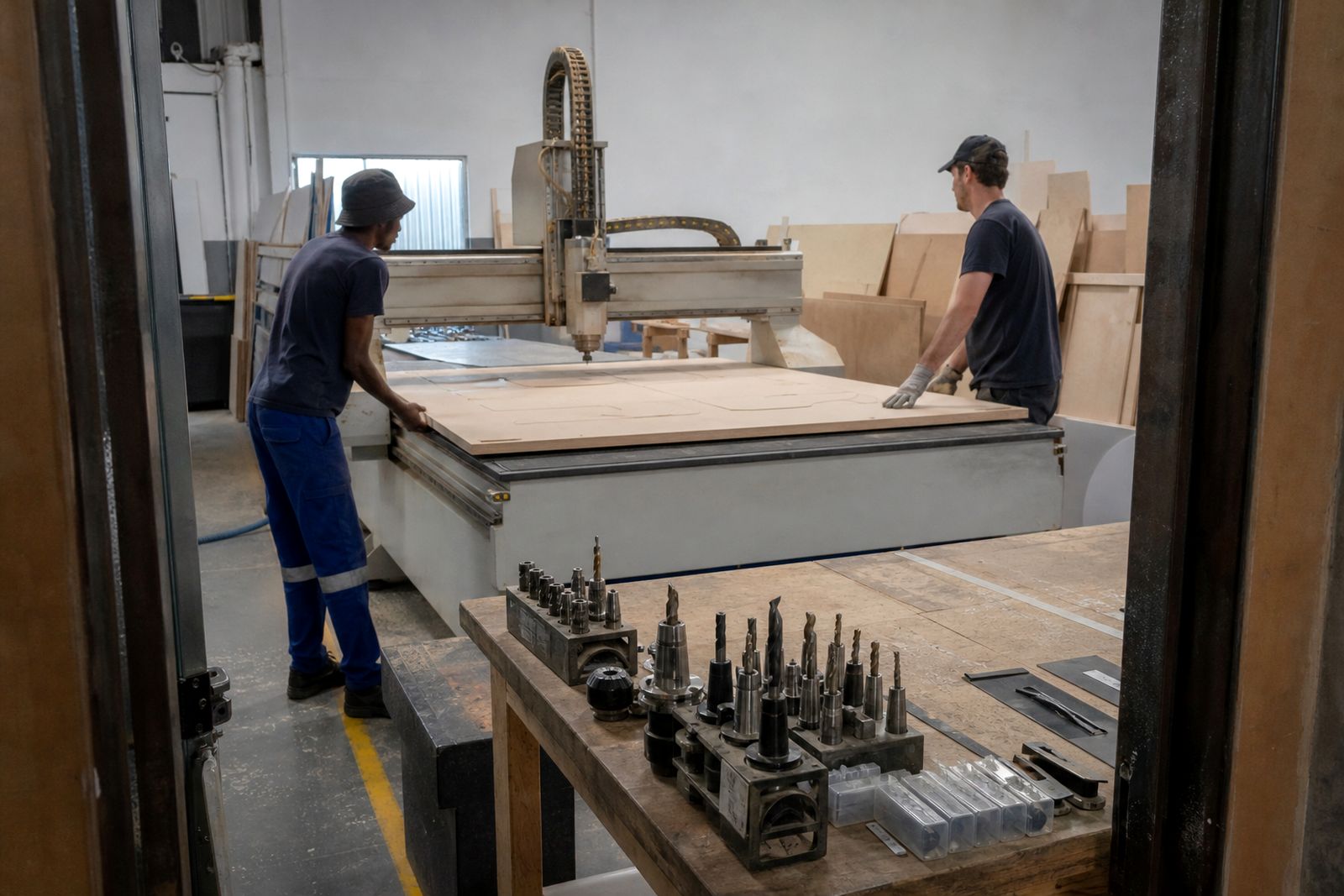
What sign shops cut for letter nests and panel jobs
Sign shop floors run best with our sign spiral kit for neat letter nests, the acrylic chip breaker for clean edges on plastics, and the chamfer edge kit for professional finishing on ACM and Perspex. These tools help you keep your cutting workflow organised and edges crisp just in time for handover.
See also edge notes and printable cards.
Most sign shops are cutting out logos, channel letters and shapes from ACM (aluminium composite material), Perspex, acrylic, foamed PVC, ABS and MDF. ACM panels for fascia signs and trays, plus Perspex for illuminated letters, keep workshop floors busy. Often, you’ll nest as many letters or shapes as you can fit per sheet to save material and fitting time, which means tight inside corners and plenty of tabs to keep small pieces from flying loose.
The materials range from soft and gummy (like PVC) to rigid and brittle (like acrylic), each needing its own approach to chip removal and heat management. Edges have to be sharp and clean, since workshop teams don’t want to sand or file before mounting.
Where cutter life and finish go wrong
Cutter failures often start with chip welding in acrylic or plastic, or rough edges on ACM from blunt flutes. Most sign floors run single-flute or two-flute spirals to keep up feed rates and stop chips clogging, but when collets are dirty or nuts overtightened, runout quickly eats away at edge quality.
If the wrong helix is chosen, or if you use a standard upcut on ACM, you’ll pull up burrs along the decorative surface, which must be scraped or flamed off. On rush jobs, shops sometimes skip the regular vacuum maintenance, leading to workpieces shifting mid-cut and breaking small letters or distorting panel holes.
Tooling also suffers when feed rates are set too slow, building up heat, or too fast, breaking fine tip geometry on tight corners. A blunt cutter not only leaves a ragged finish but also puts extra load on the spindle and shortens tool life.
CuTool kits for a nesting job
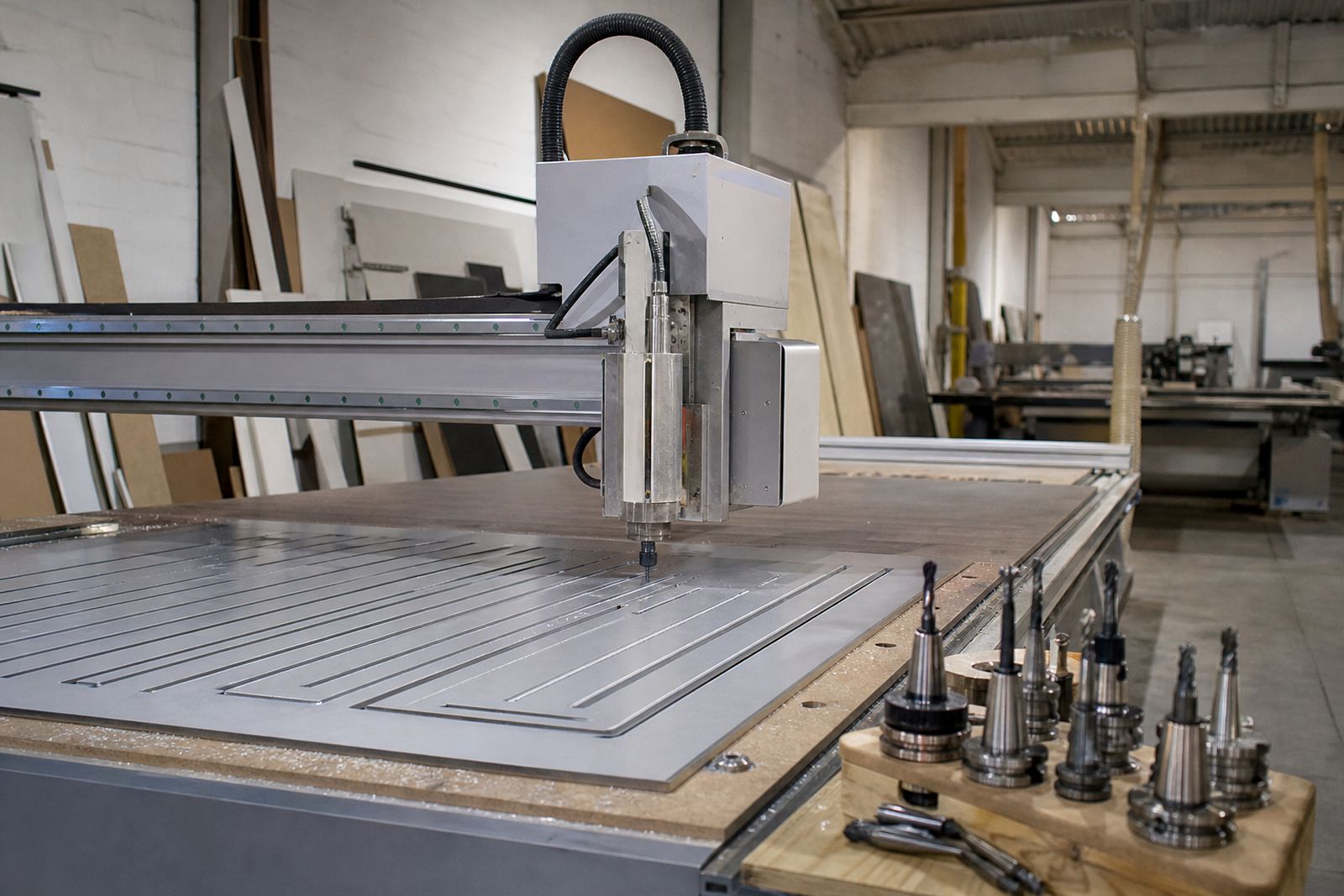
Our sign spiral kit starts the job, with a compression spiral (either 3 or 6 mm diameter, depending on job size) for sheet goods like ACM, foamed PVC and MDF. Compression spirals leave a clean edge top and bottom in a single pass, perfect for letters that will be handled or viewed up close.
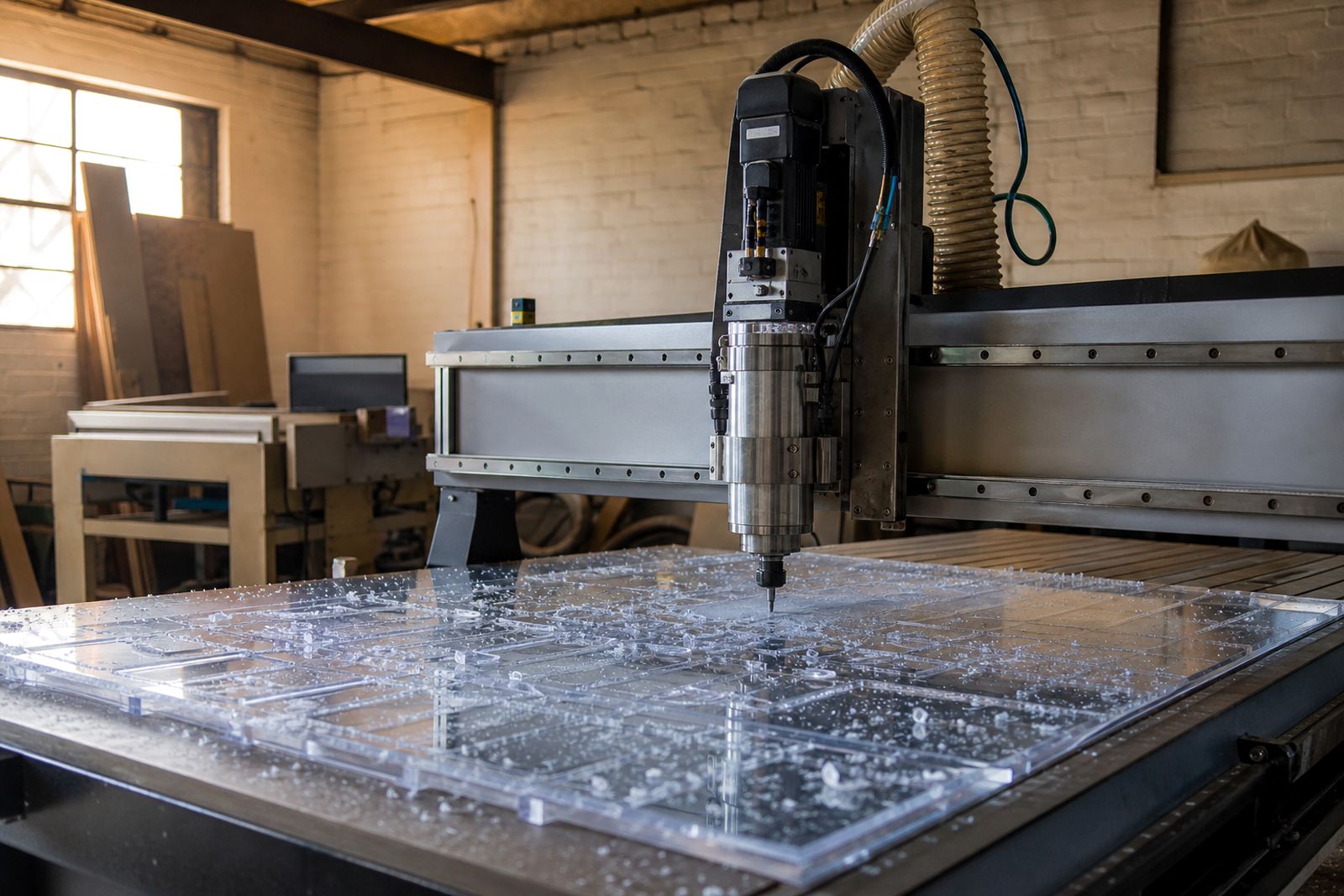
For acrylic or Perspex, run our acrylic chip breaker next. Its unique flute geometry breaks chips into manageable curls, reducing local heating and keeping edges smooth right off the table. Start around 1 mm per tooth chip load at 18 000 to 22 000 rpm for 6 mm tools, and adjust after test cuts for your machine and sheet thickness.
If the job needs a bevelled reveal, especially on ACM trays and Perspex letters, finish with the chamfer edge kit. This set covers typical signmaking angles and is compatible with standard ER collets. Always use the shortest stick-out possible, check runout below 0.02 mm, and surface the spoilboard before a big batch run to ensure consistent depth.
Sequence jobs by nesting all letters and shapes first, then follow with edge passes where needed. Use onion-skin tabs for small pieces and break out after the final pass to avoid breakage.
- Sign spiral kit: for main panel and letter cuts
- Acrylic chip breaker: for Perspex and acrylic shapes
- Chamfer edge kit: for finishing ACM and Perspex edges
Planning cutter stock and tool care for installations
For busy weeks, especially before school terms and the December festive rush, keep at least two spare cutters per diameter in the sizes you use most, usually 3 to 12 mm. Arrange regrind swaps with our local partners by courier so blunt cutters come back as sharp backups, and log hours on each with our printable tool-life cards.
Sign teams face tight handover schedules, so plan your Friday morning work by running your main panel jobs at least one day ahead. This gives leeway for an extra pass if a cutter chips late in the batch. During power cuts or after outages, always re-home and check zero before resuming a nest job. Prioritise dust extraction to keep fine ACM and PVC chips off rails and encoders, and check collet cleanliness every batch.
If you’re short on backup tools, use our contact form and our Sunnyrock team can help arrange prompt support. This keeps your sign floor cutting, even when the jobs stack up before a weekend install or expo build.
What our Cutting Tool customers say
Verified Google reviews
Also worth a look
Tell us about the job you need to cut
Send a note through our contact form with your machine, spindle and collet size, the material and thickness, the finish you need and your area, and we will come back with practical cutter options and a quote.
Open the contact form