

Aluminium trim shops
Aluminium trim and extrusion shops need crisp, burr-free cuts and accurate slots for shopfronts, signage, displays and architectural details.
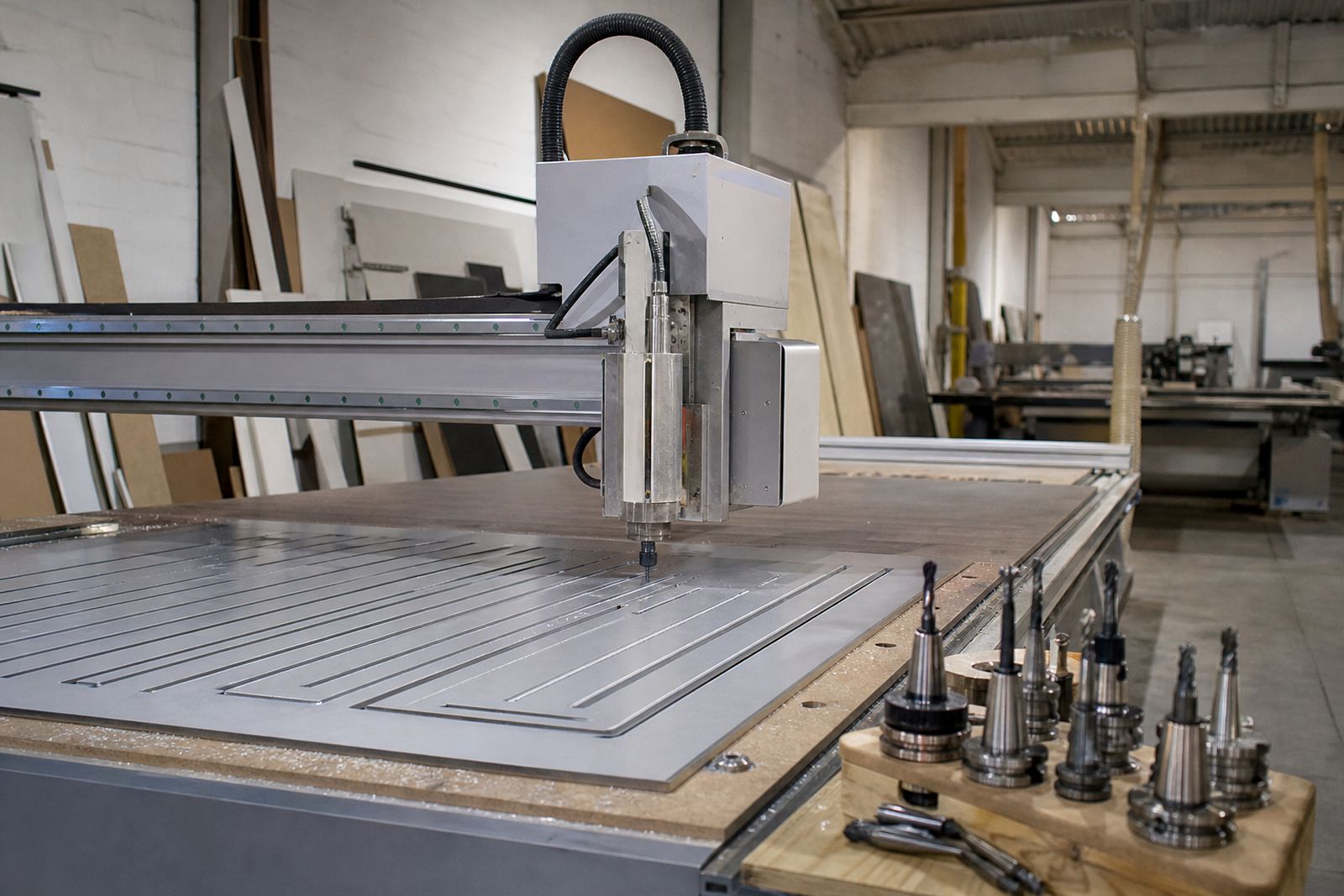
What aluminium trim shops cut and the materials they use
CuTool’s aluminium finish mills, carbide slot sets and edge pro endmills tackle everything from precise mitres to deep slots in extrusions. Get chip-free edges, snug fits and long tool life with the right cutter for every pass.
See also edge notes and printable cards.
Aluminium trim shops spend most days shaping extrusions, angle, channel, sheet and face-trim profiles for shopfronts, counters, office partitions, and display surrounds. The usual stock is 6063 or 6082, T5 or T6, mostly in 1.6 to 3 mm for sheet or up to 6 mm for typical extrusions. Shops also handle pre-anodised finishes, painted faces and the odd composite panel for infill. For mitred corners, notches, slots and end-caps, accuracy means faster fit-ups, and a bad burr or scratch can cost a whole length.
Aluminium is soft but gums up in seconds if the wrong tool is used. Shops also face different expand/contract rates in coastal humidity, and have to keep cuts clean for tape and adhesive prep.
Where tooling goes wrong in aluminium extrusion work
Problems mostly start with the wrong geometry: a standard steel end mill or blunt bit smears, clogs or vibrates, making the operator fight for a clean slot. Chip welding and built-up edge mean tools heat up, grab the workpiece or suddenly snap. Downward-helix bits push swarf into the slot, jamming the flutes and burning edges, while rough-edged slots mean loose fasteners or poor cosmetic quality. On high-run jobs, resharpening is often skipped because the team misjudges tool wear, or forgets to monitor runout and collet condition.
Outages can cut machines mid-pass, raising the risk of cutter marks and lost zero. Excessive stick-out to reach inside extrusions makes chatter worse and magnifies runout, ruining tolerance.
- Wrong helix or geometry for aluminium
- Overheating and built-up edge
- Dirty or worn collets causing runout
- Chatter from long stick-out
- Missed resharpen intervals
Which CuTool cutters to use in order, and why
For crisp edge finishing on face trim and mitres, start with the aluminium finish mill: this flute geometry is made to clear chips fast and resist welding, with uncoated or ZrN options for longer runs. Keep chip load at 0.03 to 0.10 mm per tooth, with a steady feed to prevent rubbing. For slots in extrusion flanges or keyways, the carbide slot set covers 3 to 12 mm widths, and its single-flute variant excels at deeper cuts with less heat. Edge Pro endmills round off sharp profiles or deburr the corners, keeping a fine finish for anodising or powder coating.
A typical job starts with roughing slots using the carbide slot set, then moves to the finish mill for the outer faces and mitre corners, and ends with the Edge Pro to tidy details. Always use a light air blast or mist, and never plunge straight down: ramp in gently to save the tool and the part.
- Carbide slot set for slotting
- Aluminium finish mill for edge finishing and mitres
- Edge Pro Endmill for rounding and deburring
Planning stock, regrinds and the busy season in trim work
Trim shops run flat out before school terms, festive displays, or big retail installs, so keep a backup of each tool size in the drawer and use printable tool-life cards to track hours on heavy-use cutters. Plan regrinds with our local partners by courier, especially for slotting tools. Collets and nuts are cheap insurance, so swap them every few months and check for dust or burrs before every shift.
During power cuts or unexpected outages, finish a pass if you can safely, then re-zero carefully before the next run. For tight deadlines, prep spares and assemble full tool sets before sending teams out. Use our contact form if you need extra sets or courier delivery.
What our Cutting Tool customers say
Verified Google reviews
Also worth a look
Tell us about the job you need to cut
Send a note through our contact form with your machine, spindle and collet size, the material and thickness, the finish you need and your area, and we will come back with practical cutter options and a quote.
Open the contact form