

Furniture studios
Small furniture studios working in softwoods rely on crisp relief carving, clean edges and reliable finishing to stand out.
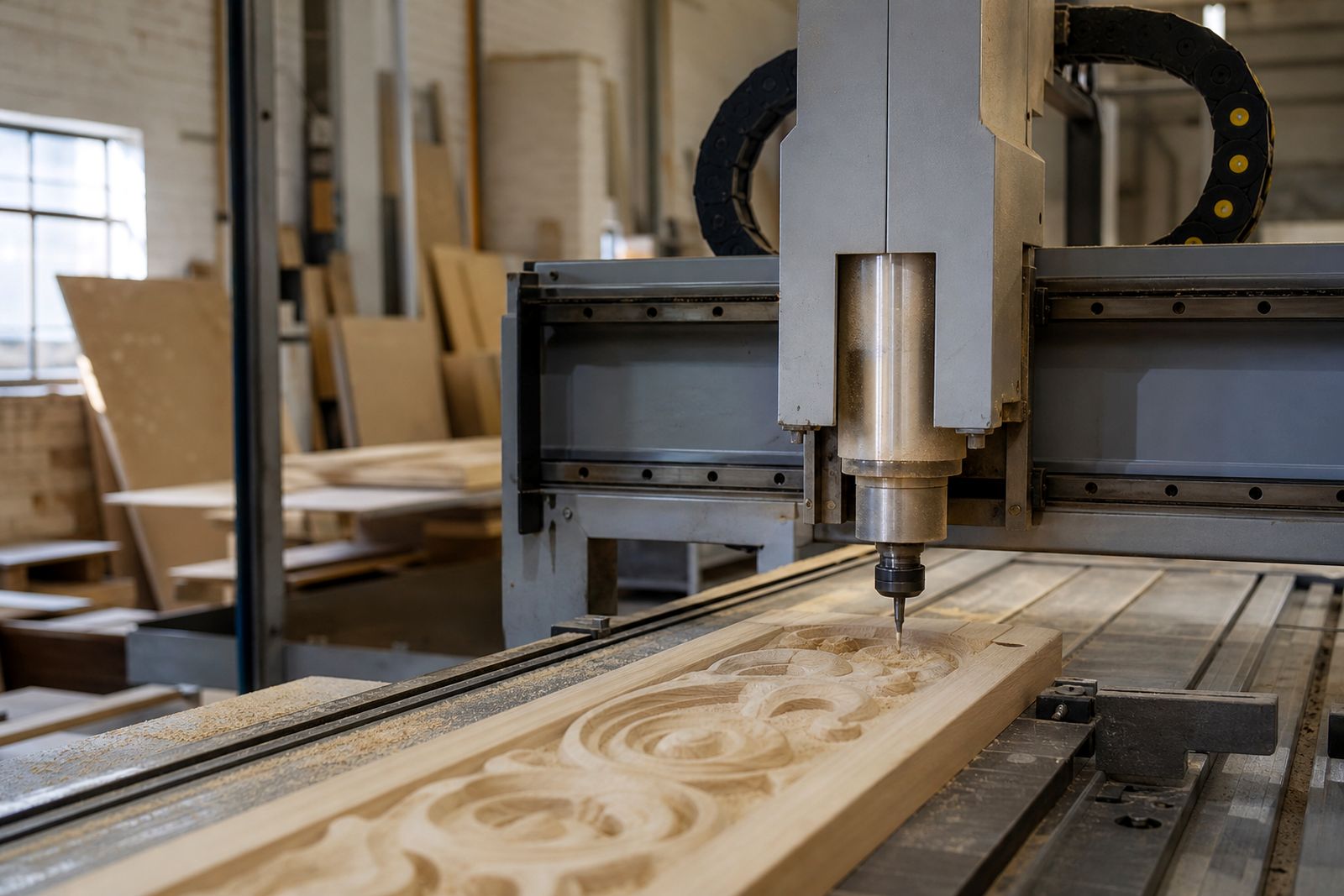
Common softwoods and furniture cuts in small studios
CuTool9s softwood upcut pack, taper ball nose and compression nest bit give furniture studios the edge for smooth slotting, detailed relief work and splinter-free surfaces in pine and similar timbers. All three tools are tailored for the fast changeovers and high finish quality small shops need.
See also edge notes and printable cards.
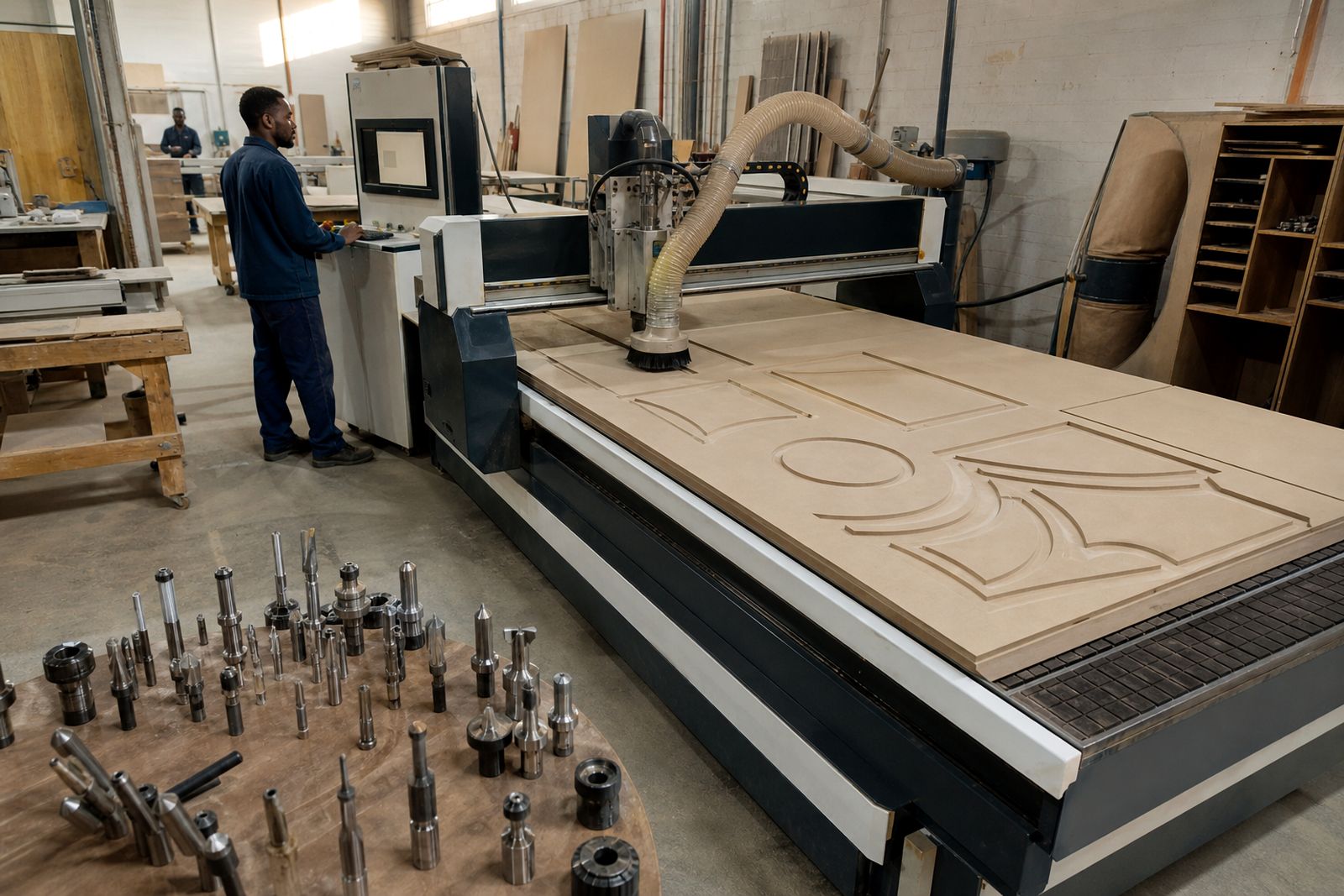
Most small furniture studios in South Africa work mainly with pine, meranti and other plantation softwoods, due to price and availability. These materials are forgiving but can splinter easily, especially on cross-grain edges. Typical jobs include cutting panels for shelving, cupboard doors, back panels and components for beds, stools or counters. Relief cuts for drawer fronts and decorative inlays are also popular, requiring fine stepovers and smooth 3D transitions.
Studios often use a mix of flat 2D slotting, pocketing and v-carve details, plus 3D relief work for features like handles, signage or custom panels. Stable hold-down, chip evacuation and managing resin build-up are daily challenges, especially with sappy or uneven stock.
Tooling pitfalls and where things go wrong with softwood CNC jobs
The biggest tooling issues in softwood come from tear-out, burning, and resin clogging flutes or collets. Softwoods can compress and spring back, causing tabs to snap early or onion skins to lift. Feed rates set too low increase heat and gum the bit, while rates set too high can leave fuzzy edges or worse, snap a fragile profile.
Studios often push through jobs with blunt tools, causing rough finishes or burning. Rushed bit changes and dirty ER collets can add runout, which shows up fast in relief carving, especially with long-reach taper ball noses. Dust control is also crucial as fine pine dust clings to rails and bearings, especially in humid Highveld or coastal shops.
The CuTool softwood set and running order for a furniture build
For typical small-furniture batches, we recommend starting with the softwood upcut pack for initial sheet cutting and slotting. The upcut spiral clears chips fast, minimises burning, and gives a crisp bottom edge, especially on through-cuts and mortises where a clean underside counts.
Next, the compression nest bit takes on visible outside profiles and pocket edges. Its up-down geometry gives you a clean top and bottom edge, ideal for final panels and visible joinery. Save this bit for the last pass when finish quality is key.
For any 3D relief, edge rounding or decorative contouring, the taper ball nose comes last. With a small tip diameter and tapered shank, it avoids chatter and leaves a smooth finish on organic shapes or engraved fronts. Start with a 1.5 to 2 mm stepover and 10 to 16 000 rpm, but test on your stock. Runout should be checked with a dial indicator, under 0.01 mm is best for fine detail.
Remember to torque your ER collet nut correctly and avoid too much stick-out. Wipe resin off shanks between cuts, and if you spot blueing or burning, swap out or clean the bit before the next pass.
- Softwood upcut pack: for initial sheet cuts and fast slotting
- Compression nest bit: for clean profiled edges and visible parts
- Taper ball nose: for 3D carving and relief details
Planning tool stock, regrinds and a busy week in your studio
For small studios, the trick is planning bit changes and regrinds around tight deadlines, school project surges and last-minute installation jobs. Order two sets of each core tool so you always have a sharp backup during a deadline crunch or when a bit chips unexpectedly. During the festive season or new-term rush, book your regrinds early through CuTool’s local partners, don’t wait for a cutter to fail midway through a run.
Store your ER collets dry and clean, especially in Durban or Cape winter damp, and inspect shanks and nuts for resin build-up weekly. If you know a power outage is likely, finish vital passes first, zeroing after a power cut can be tricky when working on thick panels or detailed relief. Print out our feeds and tool-life cards for your wall or toolbox to keep settings on hand in busy weeks.
Reach out through our contact form if you want help planning tooling for a big order or to check availability of regrinds in your area.
What our Cutting Tool customers say
Verified Google reviews
Also worth a look
Tell us about the job you need to cut
Send a note through our contact form with your machine, spindle and collet size, the material and thickness, the finish you need and your area, and we will come back with practical cutter options and a quote.
Open the contact form