

CNC hobby cells
CuTool gives hobby CNC owners the right cutters and advice to get started with confidence and keep their machine running clean.
What hobby CNC cells cut and the materials at play
Our router bit starter pack, holder collet kit and printable tool life cards are built for garage and hobby CNC workshops. You get sensible choices, good basics and a clear toolkit to keep track of your setup from the first project onwards.
See also edge notes and printable cards.
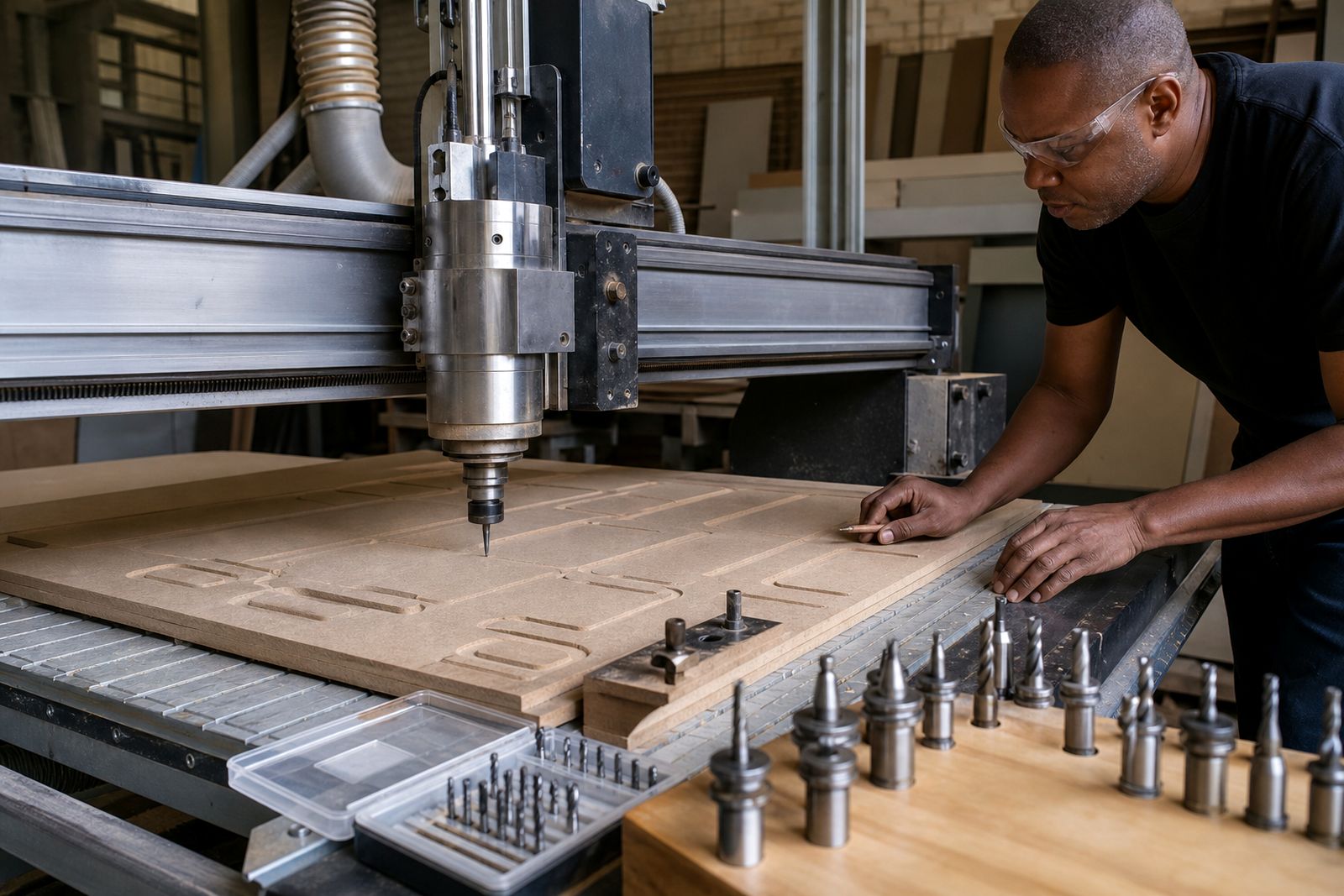
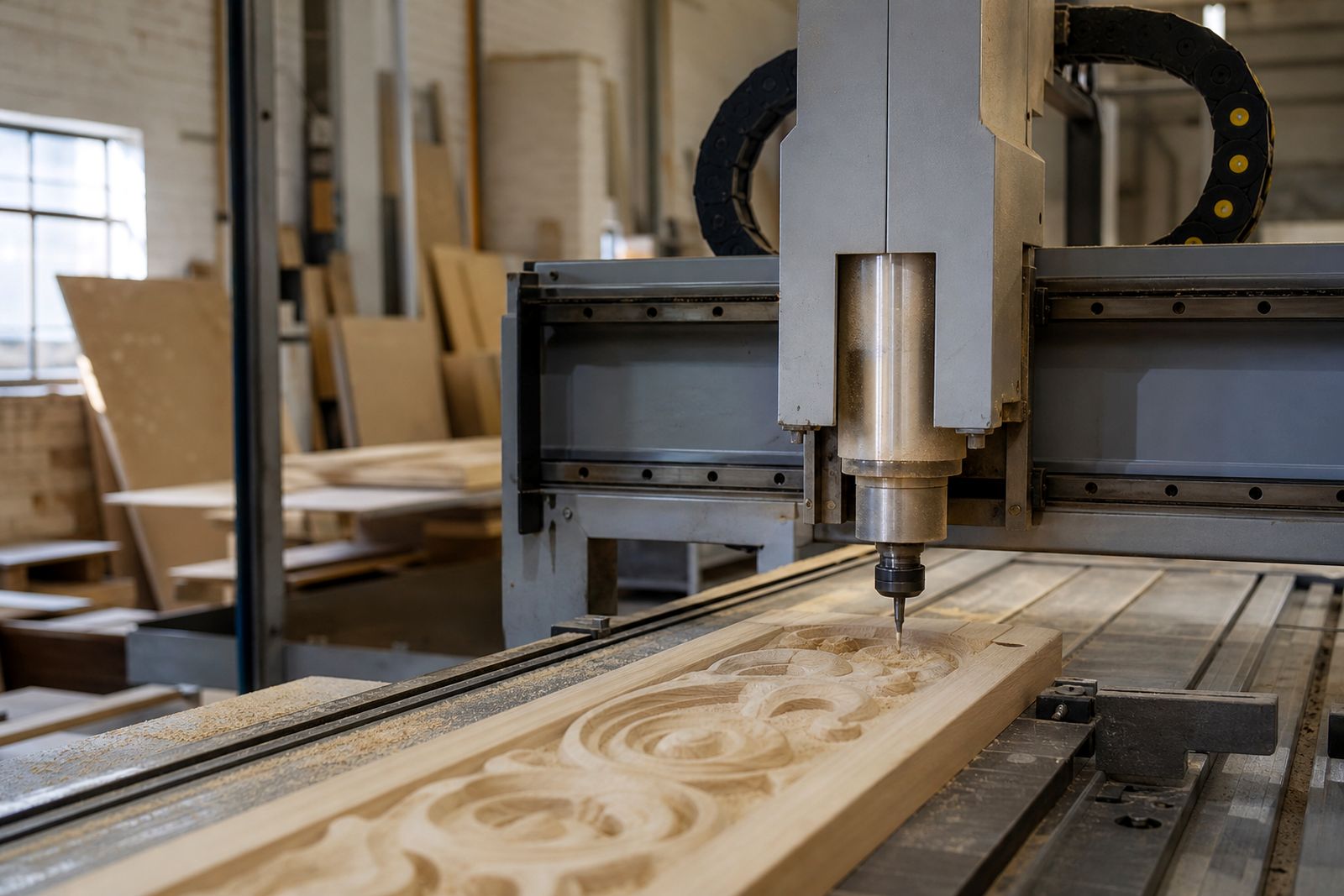
Most hobby CNC garages and spare-room cells handle a wide mix: MDF, ply, MDF, soft and hardwoods like saligna and pine, plastics like acrylic or ABS, the odd sheet of aluminium and maybe foam or signboard. Small-format machines, usually benchtop routers under 1.5 kW, mean working with sheet offcuts, cabinet fronts, craft blanks, signage prototypes, 2.5D plaques and the odd inlay or joinery test. The key is predictable results without fuss, since you may go weeks between cuts or change jobs every evening.
Humidity swings and Joburg Highveld dust are both common in these spaces, so it pays to keep bits wiped down and collets free of chips. With a bit of care, a typical hobby cell can turn out parts that match a pro shop for small runs, school projects or DIY furniture.
Where things go wrong for hobby CNC shops and why
Breakages and dull cutters crop up for a few reasons. Very short flute bits are tempting for price, but they clog chips in MDF or pine, then overheat and snap, especially if the dust extraction is a bit weak. Many new CNC owners use upcut spirals for everything but find edge fuzzing on ply and a fluffy top on MDF. Downcut spirals help hold edges down but can push chips into the kerf, heating up and leaving a burnt edge if feeds are too slow or the bit is blunt.
It’s easy to forget chip load per tooth: for a 6 mm two-flute in MDF, start with 0.15 mm per tooth at 18000 rpm and see how the chips look. If your controller or VFD resets after a power cut, don’t just re-run the pass blindly, re-zero and check for tool stick-out and runout. Collets often get overlooked, but a dirty or worn collet can double runout and cause chatter or even a cutter pull-out at depth. Check with a dial indicator if you see sudden roughness on the cut.
The CuTool starter sets and the order they run in a typical job
We’ve put together three main packs for hobby CNCs: the router bit starter pack, the holder collet kit and our tool life cards. The starter bit pack covers the basics: a 6 mm upcut spiral for roughing, a 6 mm downcut for clean finish passes, a 3 mm straight bit for detail or tight corners, plus a V-bit for sign letters or chamfers. The holder collet kit makes sure you’ve got a properly fitting ER collet, nut and spanner, ready for your router’s spindle taper.
On a typical garage job, fit the collet and nut from the holder collet kit, use the upcut spiral for the first rough pass, switch to the downcut for the finish and edge cleanup, and drop in the V-bit for surface detail. Print and fill in the tool life cards as you go, jotting down cut lengths, materials and any nicks or odd noises. This way you know when a bit is past its best or ready for regrind or recycling.
- Router bit starter: Upcut, downcut, straight, and V-bit
- Holder Collet Kit: ER collet, nut and spanner
- Tool Life Cards: Print and keep track of use
Planning stock, regrinds and a busy hobby week
It pays to keep at least one spare collet and a sharp upcut spiral on hand, especially before a deadline, school term or festive season gift run. If you cut a lot of MDF, plan for a regrind or swap after every metre or two of deep slotting, as resin builds up and blunts even carbide. Small jobs can sneak up on you: a friend asks for a school trophy, or you promise a side table for Friday, and suddenly you hit a surprise power outage mid-cut. Have your machine’s zero point marked and a UPS on the controller if you can, so you can re-home and finish the pass once the power is back.
Our Tool Life Cards make it easy to see what’s needed for your next run and help you batch up cutters for local regrind without guesswork. Drop us through our contact form to organise a refresh or for advice on the right feeds and speeds for your next material.
What our Cutting Tool customers say
Verified Google reviews
Also worth a look
Tell us about the job you need to cut
Send a note through our contact form with your machine, spindle and collet size, the material and thickness, the finish you need and your area, and we will come back with practical cutter options and a quote.
Open the contact form