

Taper ball nose
Taper ball-nose cutters for relief carving and mould detail.
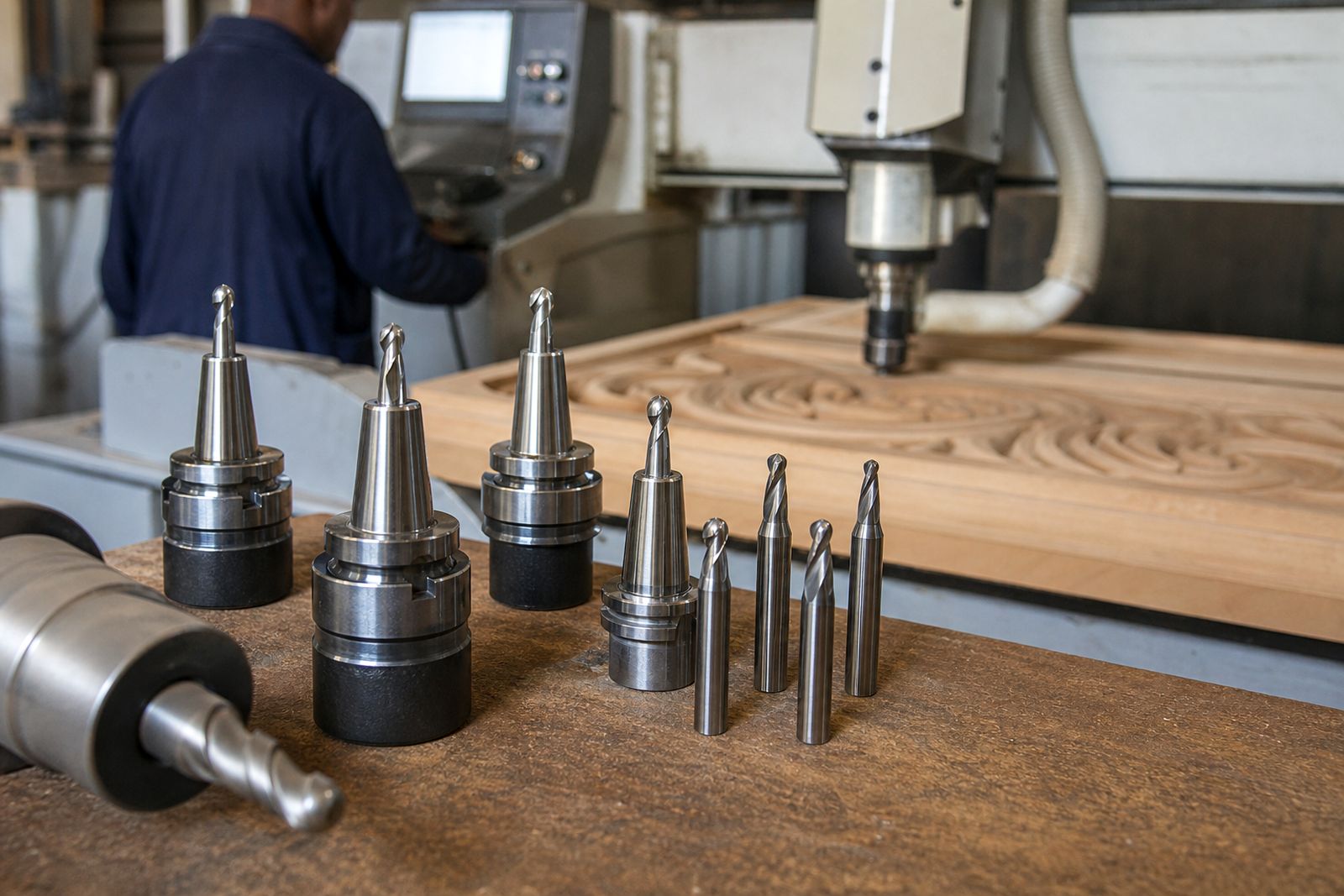
Taper ball nose for 3D Profiling
Workshops pick taper ball nose cutters for precise 3D relief work where stepover accuracy is vital. The geometry lets you shape moulds and exhibition features with smooth surface transitions and no guesswork on detail.
- 3 or 5 degree taper options
- Stepover cards included
- Ideal for foam, timber and MDF
- Special sizes available
| Tip | 1 / 2 / 3 mm |
|---|---|
| Taper | 3 / 5 deg |
| Reach | Listed per part number |
| Card | Stepover |
| Ideal for | Relief, moulds |
| Lead time | Special sizes |
Relief carving for furniture and displays
Taper ball-nose cutters are designed for 3D relief carving, especially where you want to bring out moulded shapes in timber, MDF and foam. Exhibition stand and furniture studios use them to run deep, accurate fillets or decorative panel work, where a straight ball-nose risks flexing and digging in. With a smaller ball tip and the added strength of a tapered shank, you can clear steep slopes and fine detail in a single pass. The geometry means less chatter, especially on long-reach jobs or where you’re running at the edge of your spindle’s power.
On foam and soft woods, the smooth finish from a taper ball nose cuts down on sanding. For denser grain, the tool’s shape helps hold corners crisp without burning or resin build-up, if you keep your feed steady and clear chips well. Many of our customers are exhibition builders or furniture makers needing consistent, repeatable results on shaped features. That’s where the stepover cards included with each cutter come into play: you don’t have to guess feeds and overlap, just adjust for your finish.
- Deep relief work in timber and MDF
- Foam modelling for stands and props
- Curved-edge moulds and sign details
What sizes are in the line and how to pick
Each taper ball nose comes in 1, 2 or 3 mm tip, with either a 3 or 5 degree taper angle. Smaller tips suit high-detail work, like trophy panels or intricate cabinet fronts, while 3 mm tips handle faster roughing or broader shapes. The steeper 5 degree taper offers more strength on long-reach cuts, reducing vibration where your spindle or gantry has a bit of flex.
Reach is listed per part number and matters for profile depth, especially if you want to carve thick stacked foam or deep timber. For most kitchen and signage panels, 10 to 30 mm reach is plenty, but check your job specs. Each cutter ships with a printed stepover card to match your tip size to pass overlap, so you can get repeatable results without test cuts every time.
- 1 mm for very fine relief
- 2 mm balances speed and detail
- 3 mm for large features
Choosing for South African conditions
On the Highveld, dry dust and static are real issues, especially with MDF and foam. Coastal workshops in Durban or Cape Town face humidity and occasional damp, so we recommend storing carbide cutters well clear of open windows or wet benches when not in use. Compact routers on single-phase power will handle the smaller tips up to 2 mm, but 3 mm tips and long reaches need careful ramping and lower depth per pass on these spindles. Watch out for shared spindles in school or college training settings: double check the collet size and that the stick-out leaves enough flute exposed for your deepest pocket.
If you’re running a panel every day, blow down your spindle and collet with clean air to keep dust from binding up. Our showrooms see a lot of hobbyists and pros alike who pick taper ball nose cutters for their ability to handle both fast foam shaping and fine sculpted work in hardwood, so long as you match the cutter geometry to your workshop’s real power and dust control.
- Dry, dusty Highveld needs clean spindles
- Coastal shops: store cutters dry
- Compact routers: take lighter passes
Taper ball nose
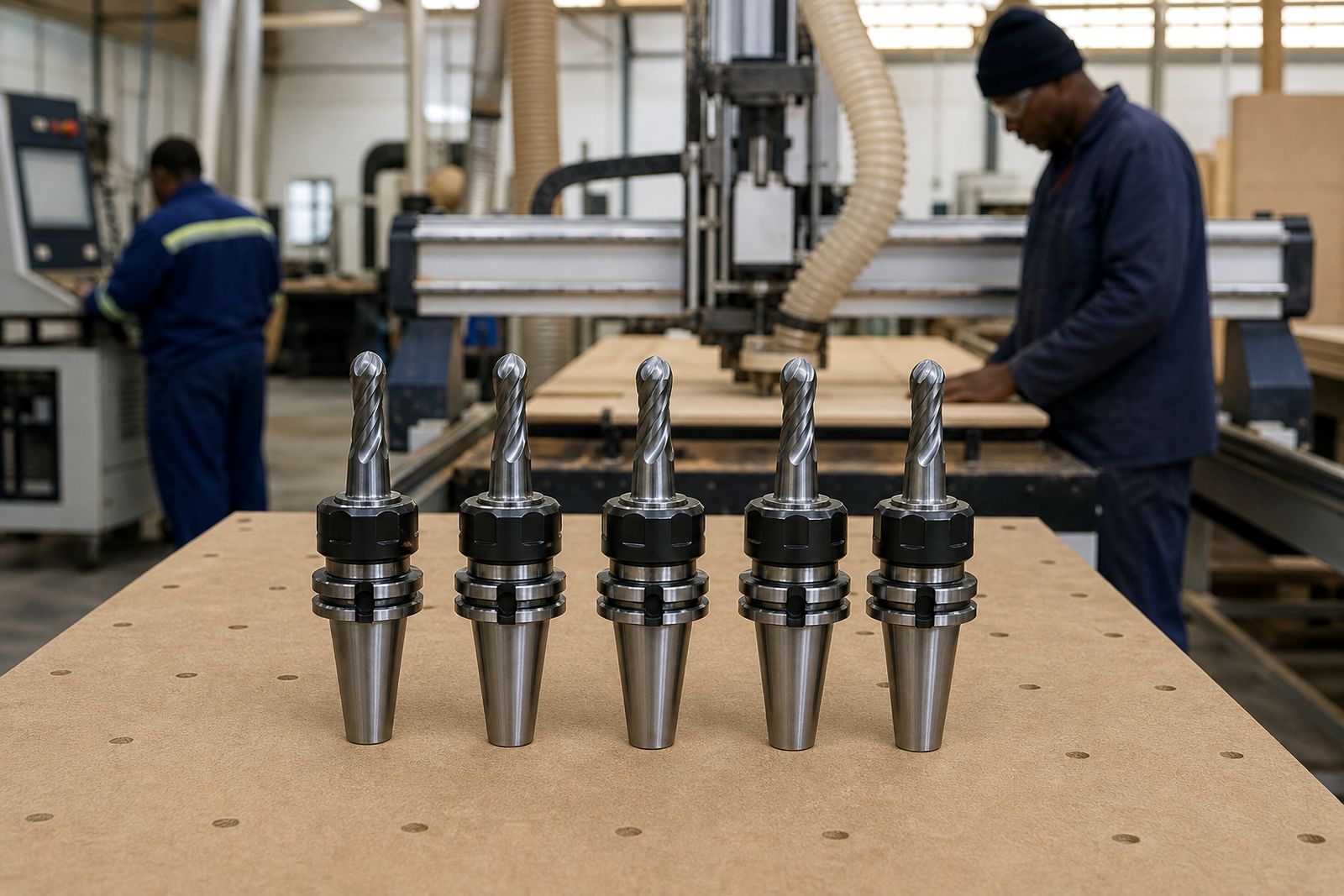
Taper ball nose fixtures
Correct collet, nut and a flat spoilboard keep relief carving fault-free.
Read more
Taper ball nose service
Check wear at the tip and flute, and arrange regrind through our contact form. Look for shiny flats or chips on the ball tip, or streaks along the flute.
Read more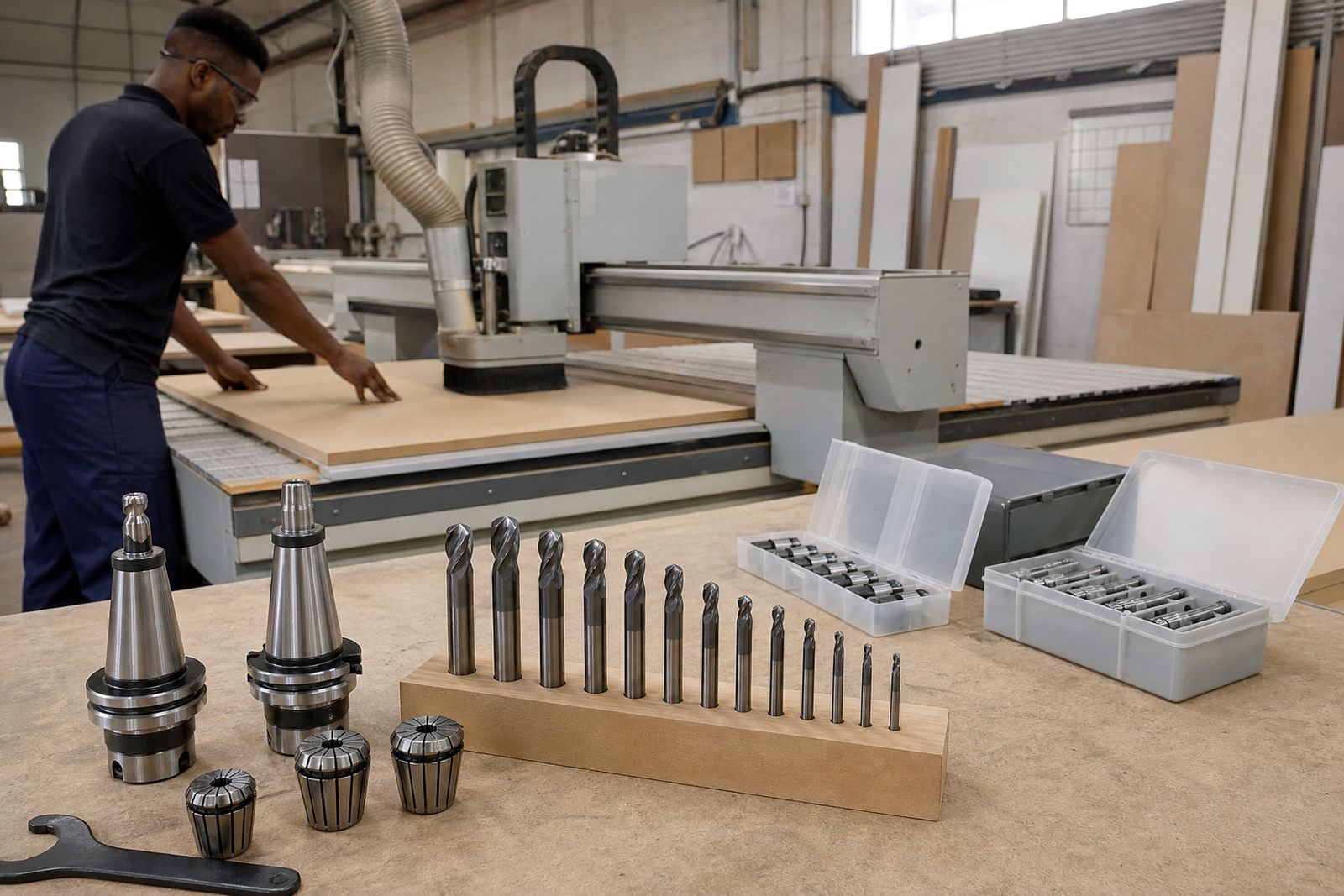
Taper ball nose specs
Tip size, taper angle and reach decide finish and toolpath freedom. The tip dimension (1, 2 or 3 mm) is the diameter of the ball end, not the shank.
Read moreWhat our Cutting Tool customers say
Verified Google reviews
Tell us about the job you need to cut
Send a note through our contact form with your machine, spindle and collet size, the material and thickness, the finish you need and your area, and we will come back with practical cutter options and a quote.
Open the contact form