

Taper ball nose specs
Tip size, taper angle and reach decide finish and toolpath freedom.
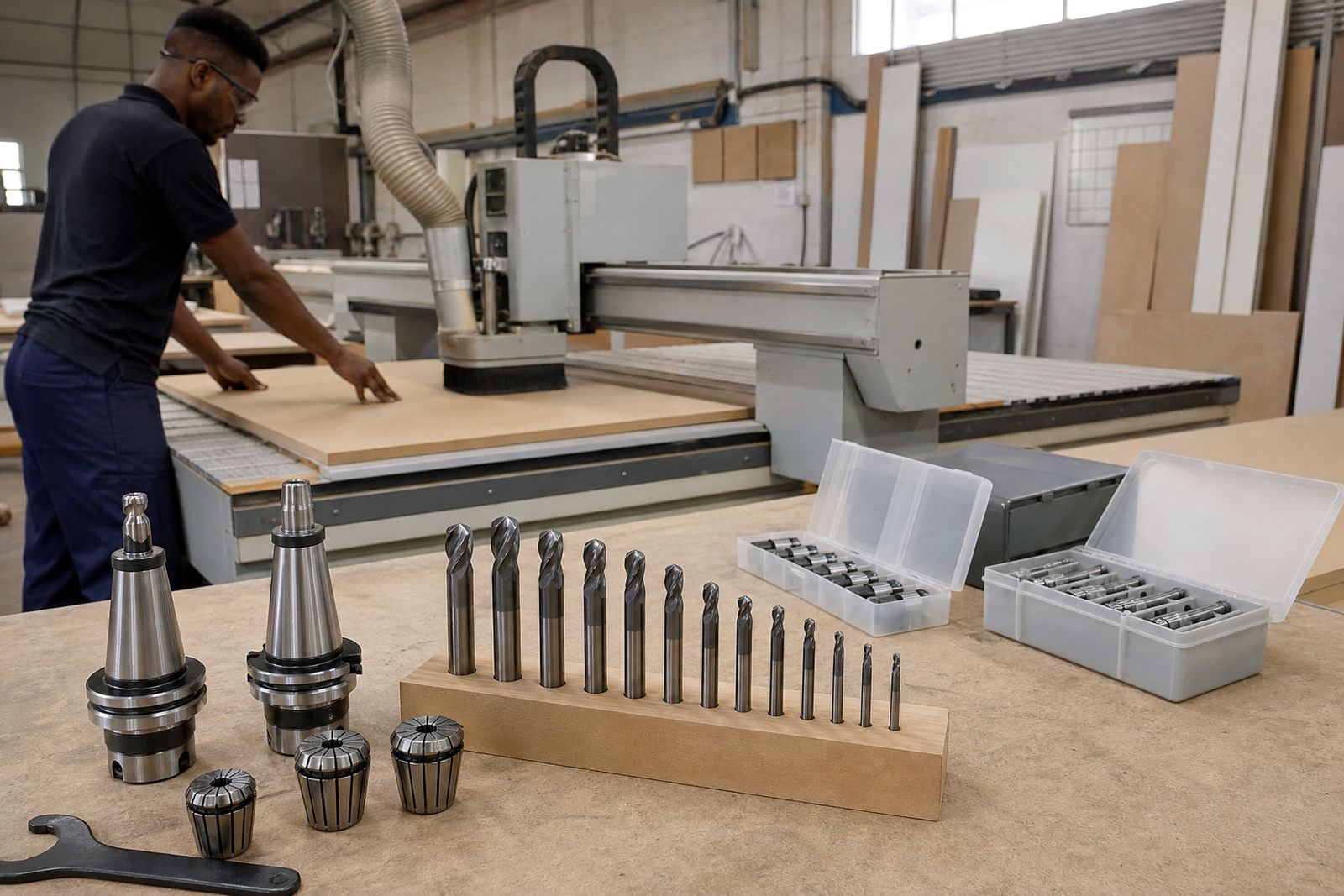
How to read the tip, taper and reach
| Tip | 1 / 2 / 3 mm |
|---|---|
| Taper | 3 / 5 deg |
| Reach | Listed per item |
| Card | Stepover |
| Ideal for | Relief, moulds |
| Lead time | Indent |
Taper ball nose suits relief, moulds. Lead time: Indent. Tell us your spindle, collet size and material and we will confirm the size.
The tip dimension (1, 2 or 3 mm) is the diameter of the ball end, not the shank. Smaller tips give tighter detail but need lower feed rates to avoid snapping. The taper angle, 3 or 5 degrees, is measured from the flute axis; more taper means a stiffer tool, so it’s less likely to deflect or break when you’re deep into dense timber or stacking layers of foam.
Check the full reach listed per item: this is how far below your collet you can safely cut. It’s crucial if your job has deep pockets or you’re cutting thick sign blanks. For best results, keep the stick-out just long enough to clear the job, not more, or risk chatter and runout.
- Tip size = detail level
- Taper angle = tool stiffness
- Reach = max profile depth
Starting feeds and speeds for common materials
Feeds and speeds start with the material and your spindle’s power. For MDF and hardwood, most workshops begin at 12000 to 18000 rpm, 800 to 1 800 mm/min feed, and 1.0 to 1.4 mm stepover (roughly half the tip diameter for finishing). For rigid foam, you can open up the feed to 2 200 mm/min and stepover up to the full tip. Always try a test cut and adjust if you see burning, chipout or noisy cutting. Chip load per tooth should be in the 0.03 to 0.08 mm range for these diameters. Keep the flute clean, especially in pine or soft timbers.
- MDF: 12000 rpm, 1 200 mm/min, 1.2 mm stepover
- Hardwood: 16000 rpm, 900 mm/min, 1 mm stepover
- Foam: 14000 rpm, 2 200 mm/min, 2 mm stepover
Check collet, stick-out and spindle before ordering
Before you order, measure your spindle’s ER collet size and maximum safe stick-out. Taper ball nose cutters work best in ER20 or ER32 collets, torqued to spec (20 to 30 Nm for ER32, less for ER20). If your spindle or router is an older or lighter model, check there’s clearance for the full flute reach at maximum Z. Use a dial indicator if you have one to check for runout before a long relief cut. A dirty collet, loose nut or overhanging tool can cause bounce or broken tips, so always seat the cutter fully and clean out dust before your next run.
- Match collet to shank size
- Check stick-out against flute length
- Clean collet before tightening
What our Cutting Tool customers say
Verified Google reviews

Tell us about the job you need to cut
Send a note through our contact form with your machine, spindle and collet size, the material and thickness, the finish you need and your area, and we will come back with practical cutter options and a quote.
Open the contact form