

Carbide slot set
Slot and keyway cutters sized for fixture plates and aluminium extrusions.
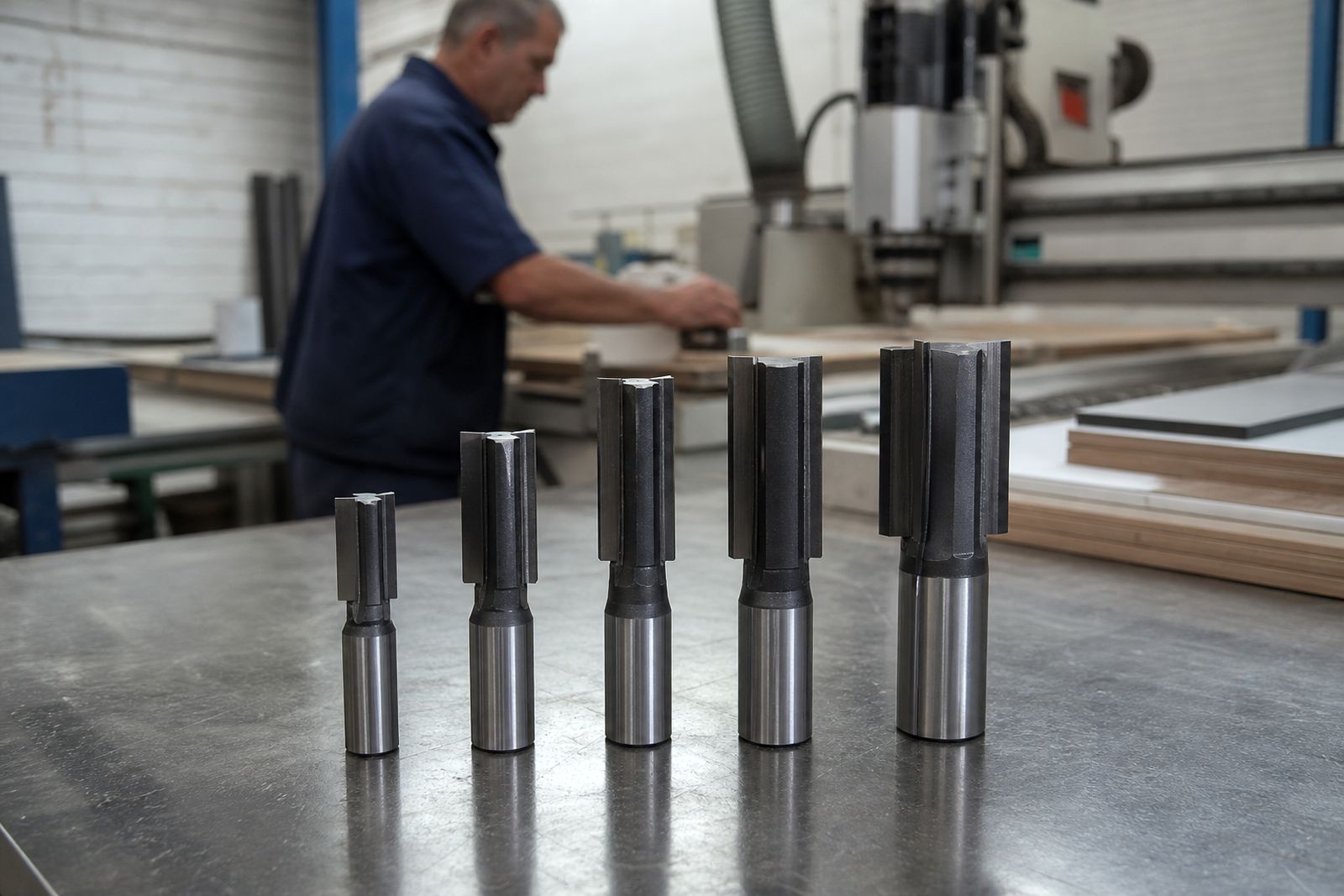
Carbide slot set for clean slots
3 to 12 mmWidthsPrinted cardDepth cuesMicrograin carbideMaterialER20 preferredHoldersWorkshops choose these carbide slot cutters because consistent slot widths mean fixtures fit from the first pass, and extrusion jobs are repeatable. Metric sizing cuts out guesswork and keeps assembly fast for South African shopfitters.
- Exact metric slot sizes
- Printed feeds and depth card
- Designed for ER20 holders
- Pairs well with fixture plate builds
| Widths | 3 to 12 mm |
|---|---|
| Depth cues | Printed card |
| Material | Micrograin carbide |
| Holders | ER20 preferred |
| Ideal for | Fixtures, extrusions |
| Stock | Available |
Slotting aluminium and plate for snug fits
These carbide slot cutters are built for workshop teams who need reliable slots and keyways in aluminium extrusions, fixture plates and shopfitting panels. Each tool is sized for standard metric slot widths, so when you’re mounting an extrusion for a shop counter or running dowel grooves in a fixture base, you get the fit right without having to shim or file after the cut. Micrograin carbide holds its edge in both hard and soft alloys, with geometry that clears chips cleanly, even in sticky 6000-series aluminium.
Sign makers and shopfitters often switch between MDF, birch ply and light-gauge aluminium. This set bridges all three, with flute shapes that evacuate chips and leave a clean slot wall. Most users set up for climb milling on aluminium and sometimes switch to conventional for laminated MDF, always matching feed to slot width and cutter size. For exhibition stand builders, controlled slot width keeps repeated parts lining up, especially where inserts or fasteners need a consistent seat.
What’s in the pack and how to choose sizes
Every carbide slot set includes cutters from 3 to 12 mm in slot width, with each size laser-marked for easy identification. The printed card in the box shows recommended depths for common fixture thicknesses and guides your first test cuts. If your fixtures use 6 mm bolts or 8 mm T-nuts, you’ll find a cutter that matches the fit.
When choosing sizes, check your typical fastener or extrusion profile. Our fixture shop regulars often keep spares of their most-used widths for production runs. If you’re working with thick plate or slotted angle, measure the final slot width needed after any finish pass or powder coating, and pick the closest cutter for a tight fit.
How workshop conditions affect your choice
South African CNC workshops face different realities: Highveld dust, Cape Town’s winter damp and compact machines running on single-phase. Aluminium and MDF both draw in moisture at the coast, so slot dimensions can drift unless your cutters are sharp and your spoilboard stays flat. Many small routers run on bakkie inverters or shared shop power, so we see requests for lighter slotting passes to match available spindle torque.
Our team often recommends a 3 to 8 mm slot for compact routers, as larger diameters may stall smaller spindles. In Gauteng’s fine dust, keep an air blast or vacuum close to prevent chip re-cutting and premature tool wear. For Durban shops, watch out for resin build-up on the cutter in damp air, wipe down and store dry between runs. The printed feeds card accounts for these local variables with ranges to suit both the Highveld and coast.
Carbide slot set
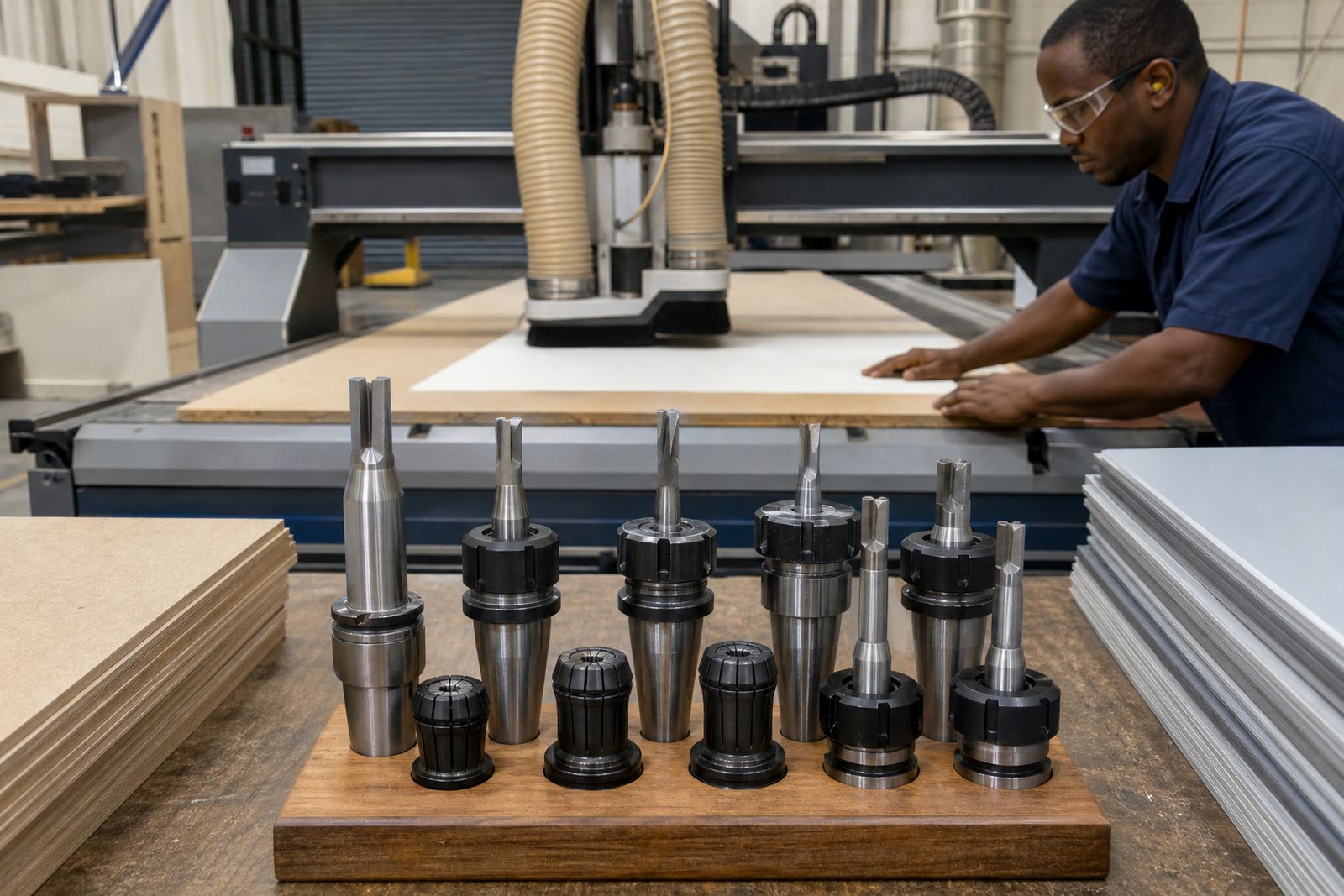
Carbide slot set fixtures
Quick slotting for fixtures and extrusions with controlled fit, right off the bench. Slotting success starts with the right collet and holder.
Read more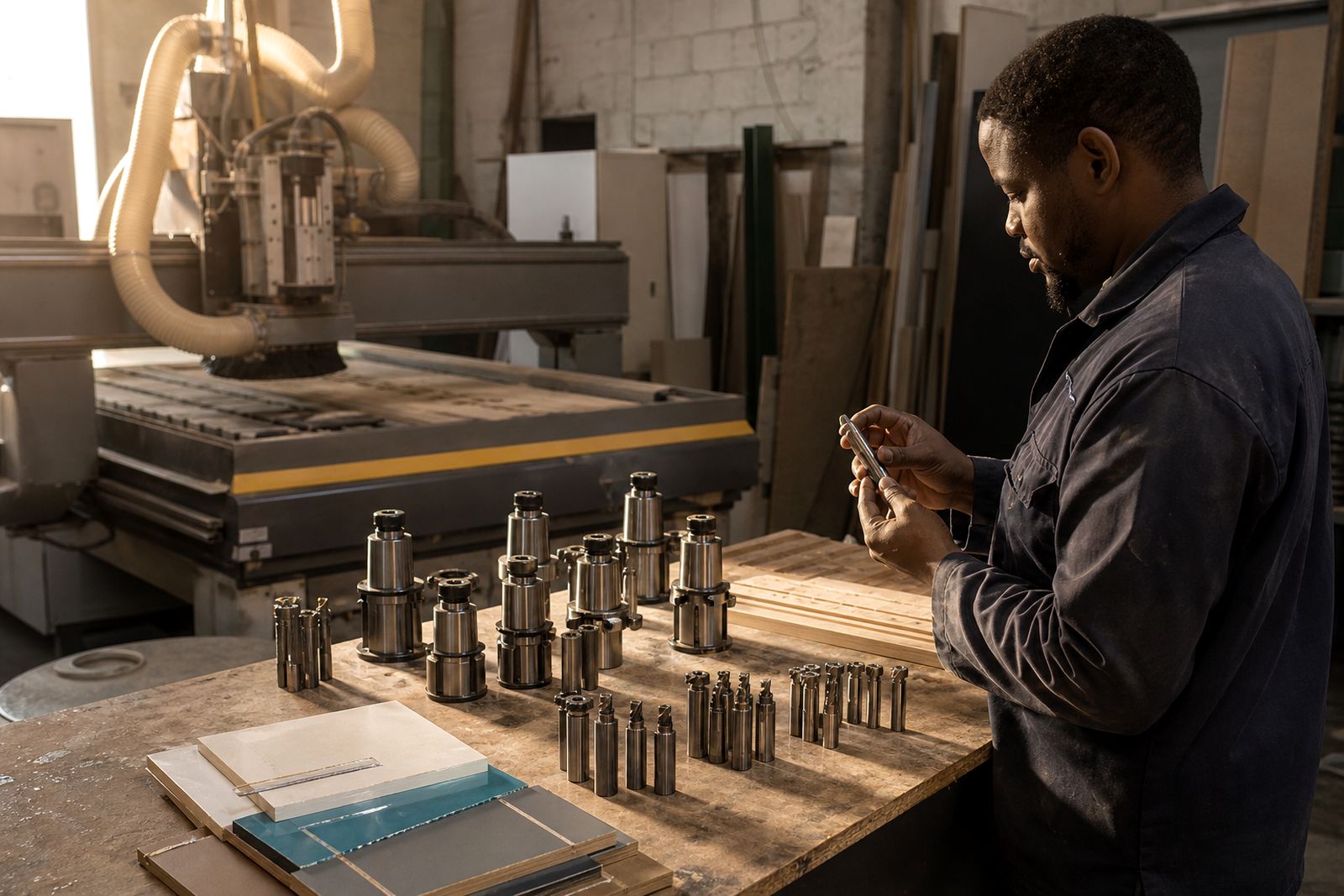
Carbide slot set service
Depend on repeatable metric slots and easy regrind support for your fixture tooling.
Read more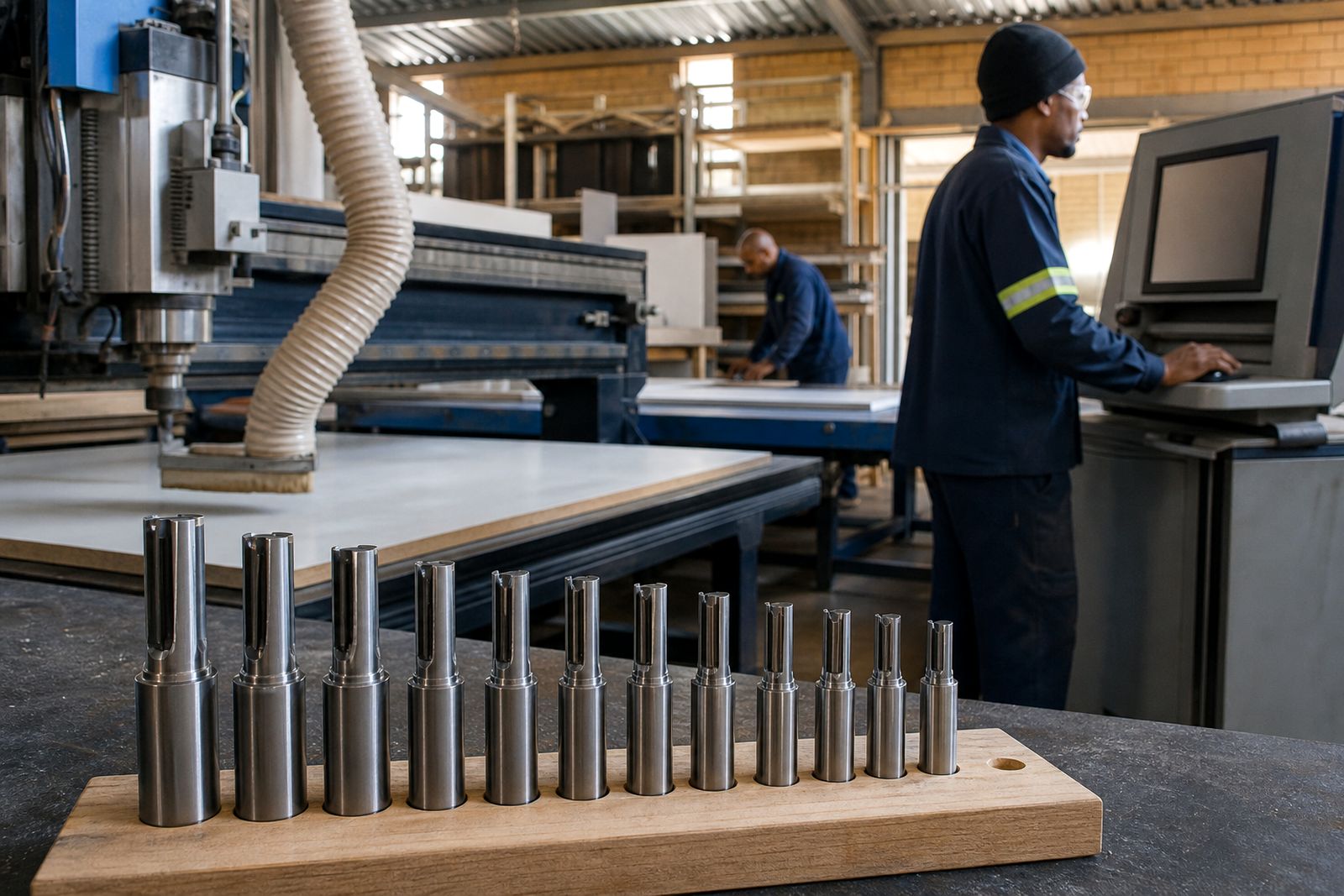
Carbide slot set specs
Each cutter in the carbide slot set matches a precise metric slot width, set up for plate and extrusion work.
Read moreWhat our Cutting Tool customers say
Verified Google reviews
Tell us about the job you need to cut
Send a note through our contact form with your machine, spindle and collet size, the material and thickness, the finish you need and your area, and we will come back with practical cutter options and a quote.
Open the contact form