

Carbide slot set fixtures
Quick slotting for fixtures and extrusions with controlled fit, right off the bench.
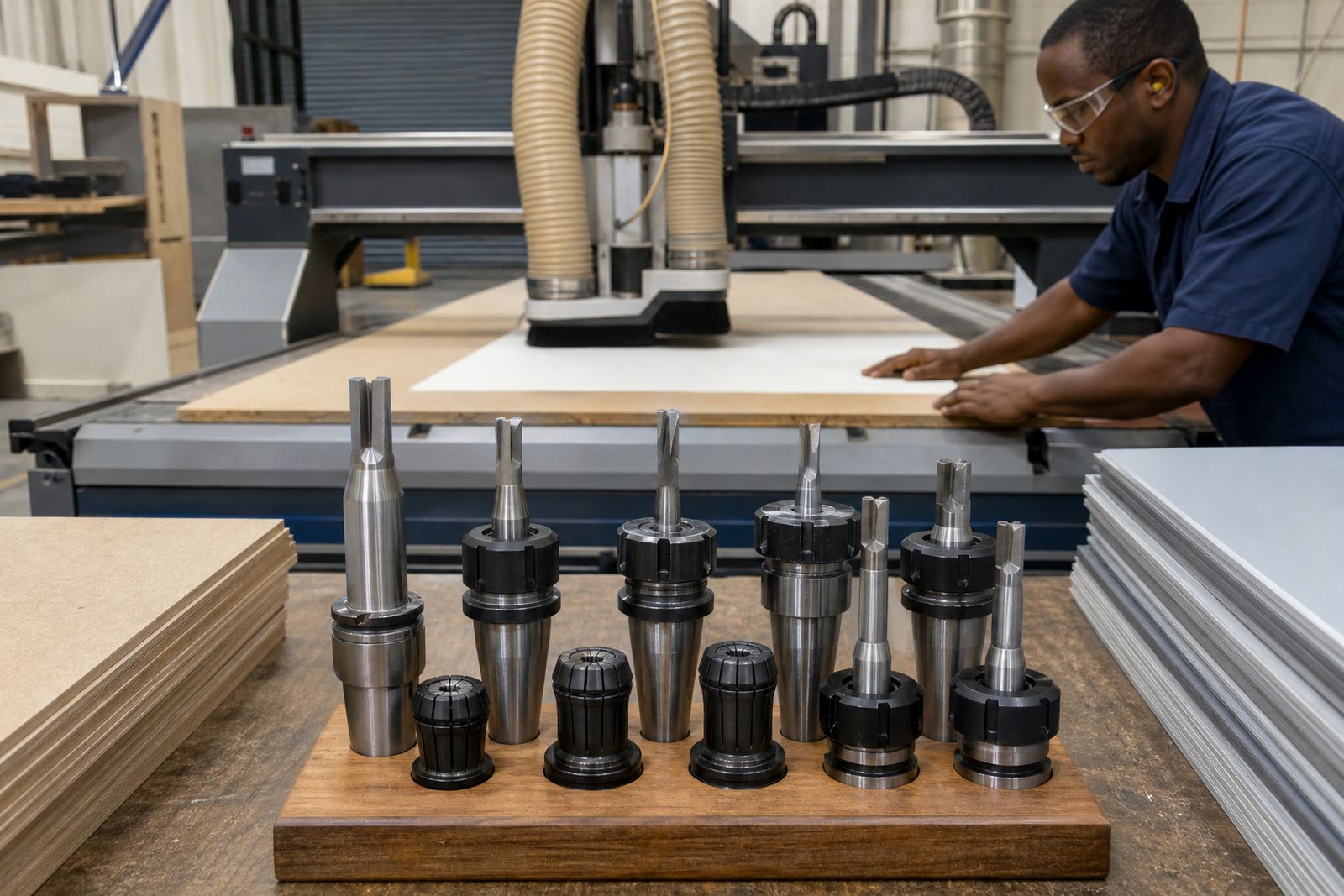
Pairs well with
- Pairs with ER20 holders
- Works with fixture plates
- Suited to extrusion prep
Collets and nuts for metric shanks come from the Holder Collet Kit, and our material guides cover the sheets and boards this line suits.
Collets, holders and hold-down for slotting
Slotting success starts with the right collet and holder. This carbide slot set is designed for ER20 collet systems which manage 3 to 12 mm cutters without slip or excess runout. Use a torque wrench for the nut, and always clean the collet and tool shank to avoid micro-slip on slotting passes.
For spoilboard prep, flatten with a flycutter first, then set up for vacuum hold-down if you’re running longer slots. MDF and plate both move with humidity, so check clamp pressure before each batch. Tabs or onion-skin passes can help prevent breakout at slot ends, especially in through-cut fixtures. For thin extrusions, light clamp blocks or double-sided tape can stabilise short workpieces.
Other CuTool tools for the same job
Many fixture builds start with the slot set and follow up with other CuTool lines. Edge Pro endmills clean up the outer profile after slotting. For cabinets and sign panels, the compression nest bit handles sheet goods while the chamfer edge kit is used to finish visible edges. The holder collet kit is on hand for quick changeovers or if you’re switching between slotting and profiling jobs.
Softwood Upcut Packs work well if you’re making jigs in pine or meranti for light-duty fixtures. For aluminium extrusions, the aluminium finish mill can take a final pass to leave a clean, burr-free slot wall. Tool Life Cards help you track runs and plan regrinds so you’re never caught short mid-job.
Common setup mistakes with slot cutters
The most frequent issue we see is over-extending slot cutters for deep cuts, which causes chatter or snapping. Stick-out should always match slot depth, plus 2 mm for clearance. Another mistake is under-clamping thin plates, fixtures can vibrate, causing slot width to drift. If you’re running back-to-back slots, let the tool cool between passes to prevent heat build-up and resin sticking.
Some workshops forget to check holder clearance and end up marking fixtures with the collet nut. Always run a trial pass above the work to confirm full travel. For tight slot fits, it helps to measure the actual cutter size with a micrometer before the first production run.
What our Cutting Tool customers say
Verified Google reviews
Tell us about the job you need to cut
Send a note through our contact form with your machine, spindle and collet size, the material and thickness, the finish you need and your area, and we will come back with practical cutter options and a quote.
Open the contact form