

Acrylic chip breaker
Chip-breaking bits that keep acrylic letters cool on long nests.
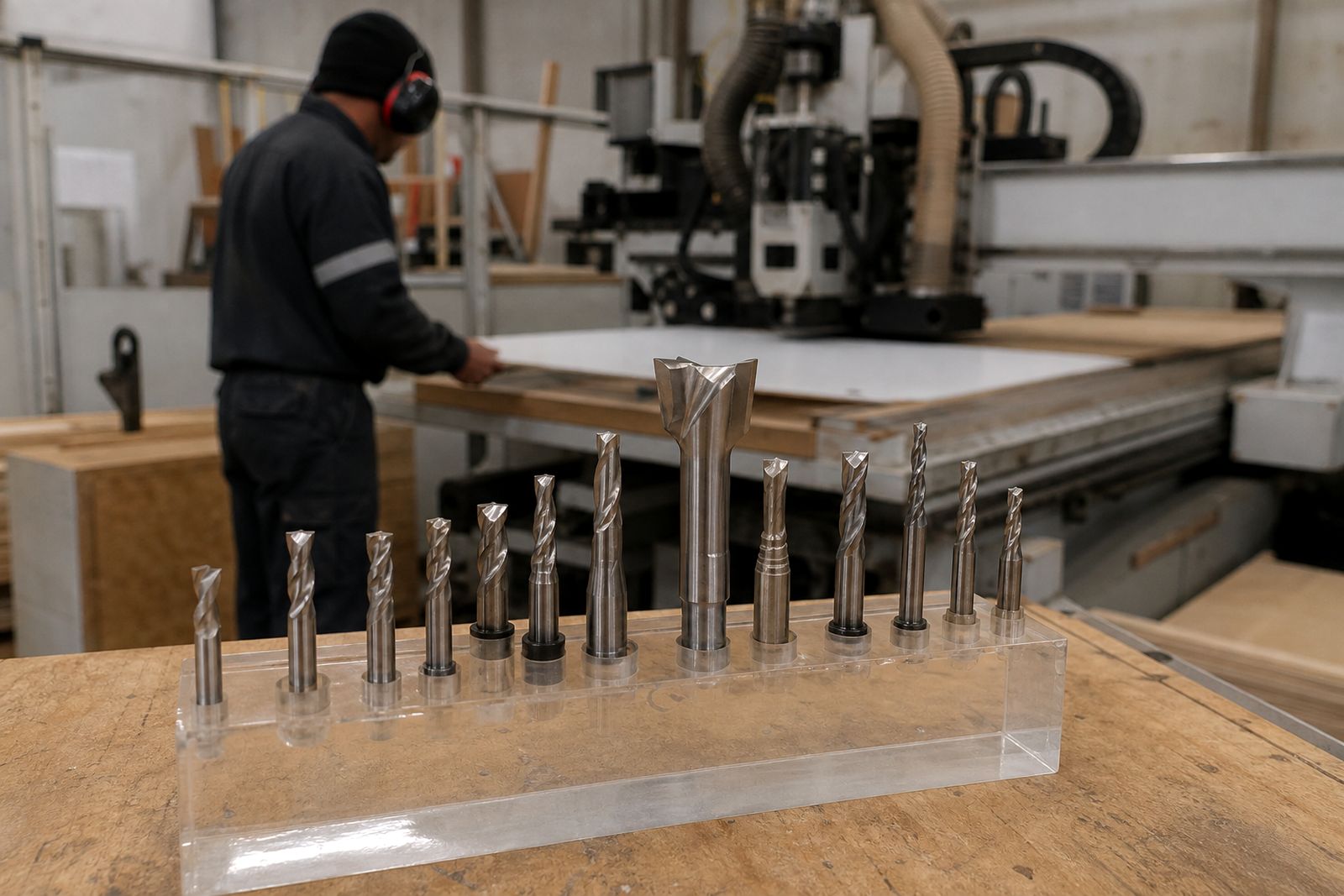
Acrylic chip breaker for Cleaner Plastics
Workshops choose this cutter when long acrylic letter nests and signage jobs demand clean, melt-free edges. Its stepped flute geometry manages chips so temperatures stay down, even in deep passes and tight nest layouts.
- Breaks chips to keep acrylic cool
- 4 or 6 mm diameter options
- Up to 15 mm pass depth
- Ideal for letter nests and signage
| Dia | 4 / 6 mm |
|---|---|
| Break | Stepped flute |
| Depth | Up to 15 mm pass |
| Card | Nest order |
| Ideal for | Acrylic letters |
Why chip breaker bits suit acrylic signage jobs
Acrylic chip breaker cutters are a practical choice for acrylic signage, trophy work, illuminated letters and display panels. When you nest rows of letters or parts, a standard spiral can let chips melt back into the cut, especially on long runs. The stepped flute geometry of this range breaks chips as it cuts, so they clear quickly. This keeps edge temperatures down and gives you less burring or gluey melt, which is a particular nuisance around tight inner corners and small fonts. The result is less time finishing parts and more time getting jobs out the door.
If you are batch cutting 3 mm to 12 mm acrylic sheets, or have a job with a heavy nest of intricate shapes, this bit is built to keep up. The chip-breaking action is especially valuable on clear or fluorescent acrylic, where melt marks are most visible.
- Acrylic letter nesting
- Display panels and trophies
- Clear and fluorescent acrylics
What comes in the range and how to choose sizes
Our acrylic chip breaker line comes in 4 mm and 6 mm diameters, both with stepped-flute geometry for reliable chip evacuation. Each tool is capable of passes up to 15 mm deep, so you can run through standard 8 mm, 10 mm or even 12 mm acrylic in a single pass. In the pack you'll find a printable nesting order card, making it easier to plan your cut sequence for clean part release. To choose the right size, match your bit diameter to the tightest internal radius you need to cut, and consider your spindle power and collet size. For intricate letters or detail, a 4 mm is often best. For larger graphics or fewer passes, go with 6 mm.
- 4 mm for tight detail and small fonts
- 6 mm for speed and fewer passes
- Both run in ER11 or ER16 collets
How South African shop conditions affect cutter choice
On the Highveld, dry winter dust can build up in your machine, so chip evacuation is even more critical, these bits help prevent compacted chips from collecting around small shapes. Coastal shops in Cape Town and Durban face more humidity, which can make acrylic chips a bit tacky, so these stepped flutes help clear them before they re-stick. If you're running compact routers or sharing a spindle between sheet materials, the 4 mm size works well on lower-power single-phase machines. Always run a dust extractor and watch for static in drier Joburg conditions, chip breakers produce smaller chips, which can get airborne. In all regions, keep collets clean and check stick-out to avoid runout, especially on deeper passes.
- Prevents re-melt in Highveld dust
- Handles humid acrylic cutting
- Suits 1,5 kW compact routers
Acrylic chip breaker
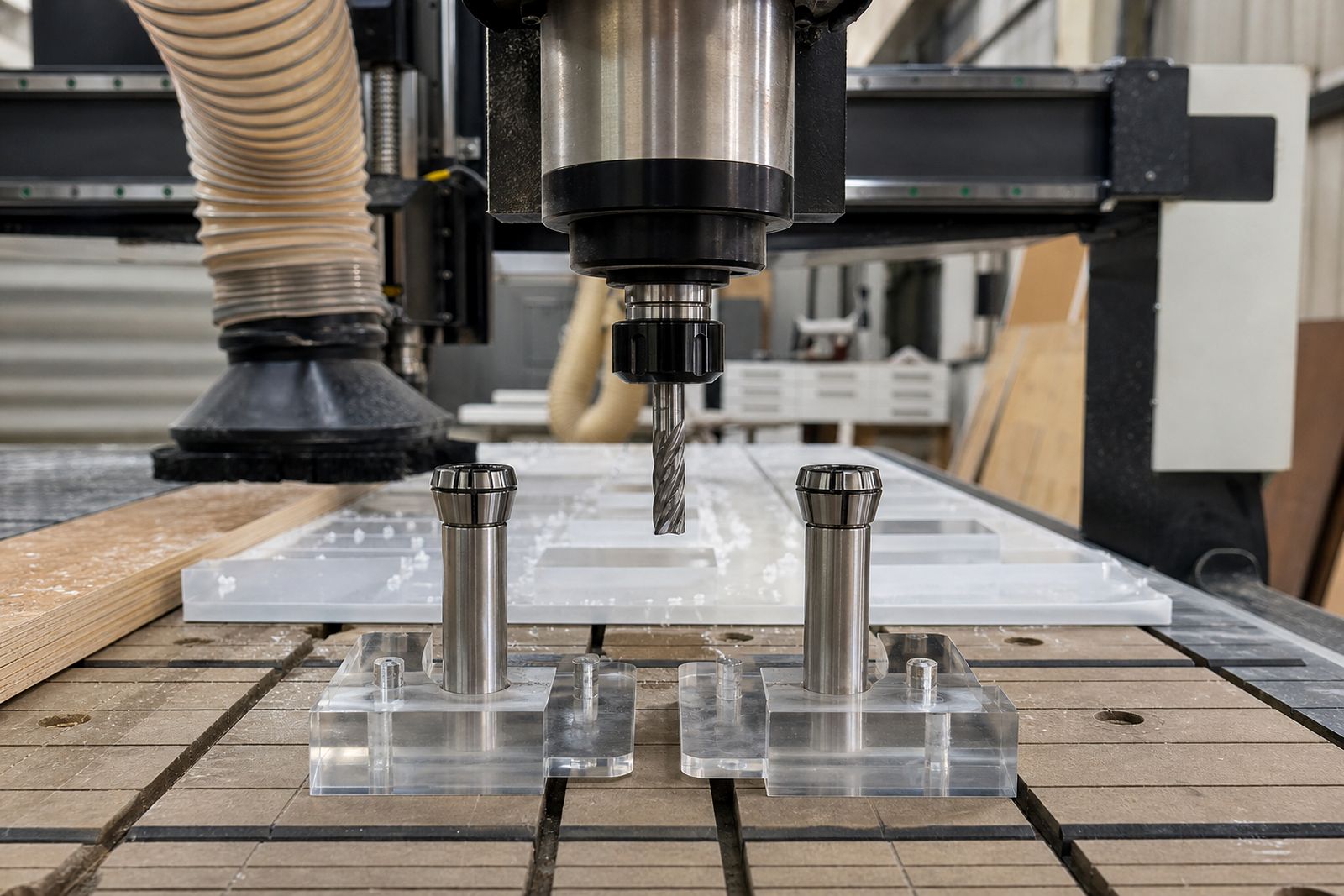
Acrylic chip breaker fixtures
Pairs with ER collets, vacuum beds, and spoilboards. For best results, use a clean ER collet sized to the shank, do not sleeve down if possible.
Read more
Acrylic chip breaker service
Regrind or replace at the right time for crisp cuts.
Read more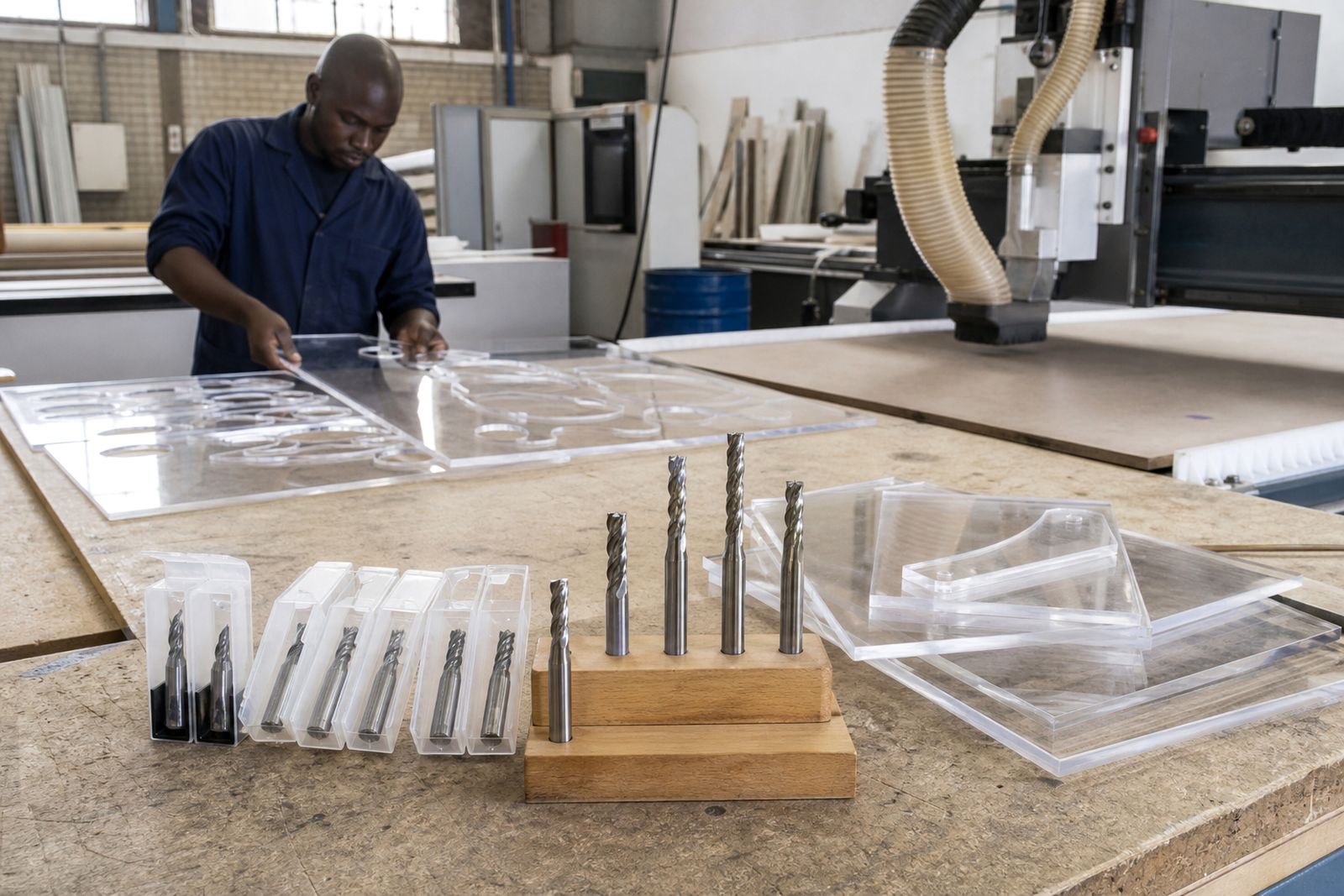
Acrylic chip breaker specs
Optimised for clean edge acrylic routing in nested jobs.
Read moreWhat our Cutting Tool customers say
Verified Google reviews
Tell us about the job you need to cut
Send a note through our contact form with your machine, spindle and collet size, the material and thickness, the finish you need and your area, and we will come back with practical cutter options and a quote.
Open the contact form