

Acrylic chip breaker specs
Optimised for clean edge acrylic routing in nested jobs.
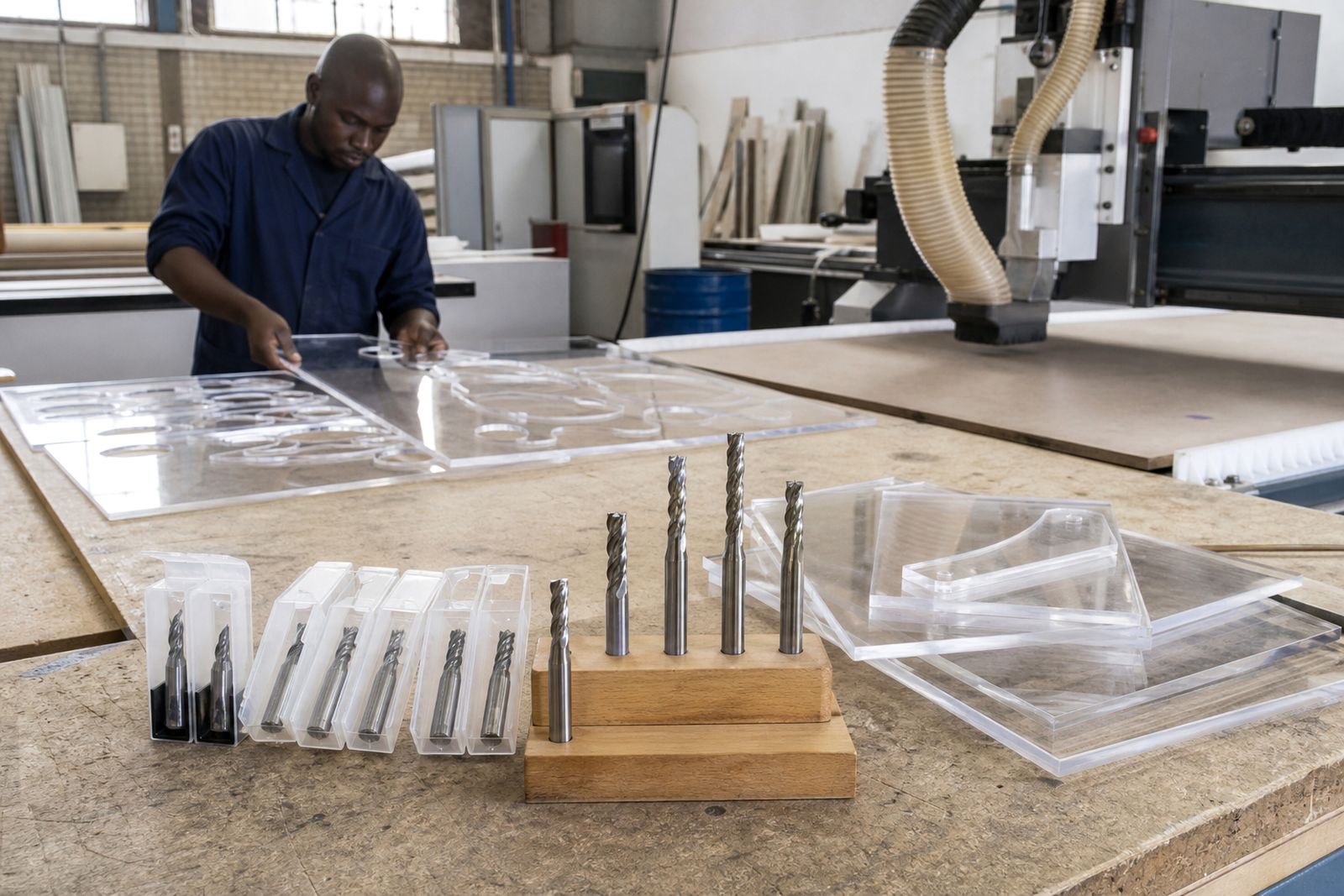
How to read the chip breaker spec sheet
| Dia | 4 / 6 mm |
|---|---|
| Break | Stepped flute |
| Depth | Up to 15 mm pass |
| Card | Nest order |
| Ideal for | Acrylic letters |
| Lead time |
Acrylic chip breaker suits acrylic letters. Tell us your spindle, collet size and material and we will confirm the size.
Key specs include diameter (4 or 6 mm), break geometry (stepped flute), and depth rating (up to 15 mm pass). The stepped flute means every flute has a small 'step' or interruption, which interrupts long chips and breaks them up as you cut. This is the main feature for acrylic: it keeps chips moving and edges cool. The rated depth lets you go through common 8 mm or 10 mm sheet in one go. The included nest-order card is for planning the order of your part removal to avoid part movement or re-cutting chips mid-job.
- 4 or 6 mm diameter
- Stepped flute chip breakers
- Up to 15 mm cutting depth
Feeds, speeds and typical settings for acrylic
Starting points for clear extruded acrylic are 18000 to 22000 rpm, 1,5 to 2,5 m/min feed rate, and 1,0 to 2,0 mm stepdown per pass for best edge quality. For cast acrylic, run slightly higher rpm and cut depth is much the same. Always adjust for your own machine's spindle power and hold-down, thin sheets may need slower feeds. If using air blast, it’s optional but helps clear chips on longer runs. Mist coolant is rarely needed unless running thick material or multiple passes. Always run a few test cuts and dial in for your batch.
- 18000 to 22000 rpm for most acrylic
- 1,5 to 2,5 m/min feed to start
- 1,0 to 2,0 mm stepdown for clean edge
Check your spindle, collet size and stick-out before ordering
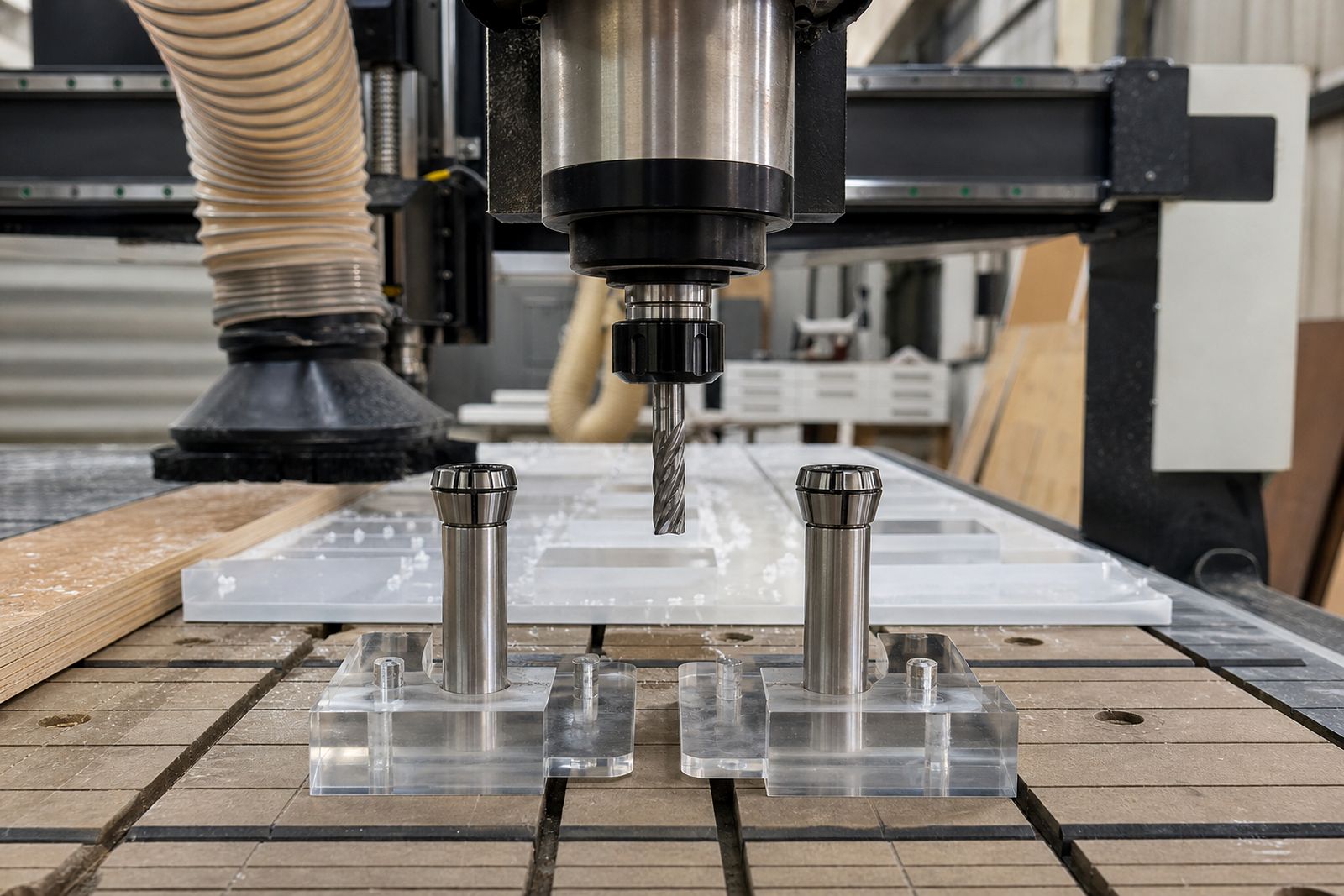
Before you order, make sure your spindle and collet match the bit diameter. Both 4 mm and 6 mm sizes run in ER11 or ER16 collets, but always double-check the fit. Stick-out should be just enough to clear your clamp or vacuum bed, but not so long that runout increases; use a dial indicator if you have one. If your spindle is under 1,2 kW, stick to 4 mm for reliability. Clean your collet and nut before each change to prevent runout and bit slip, which affects cut quality and tool life.
- Match bit to ER collet
- Minimise stick-out for accuracy
- Check spindle power for bit size
What our Cutting Tool customers say
Verified Google reviews

Tell us about the job you need to cut
Send a note through our contact form with your machine, spindle and collet size, the material and thickness, the finish you need and your area, and we will come back with practical cutter options and a quote.
Open the contact form