

Acrylic chip breaker fixtures
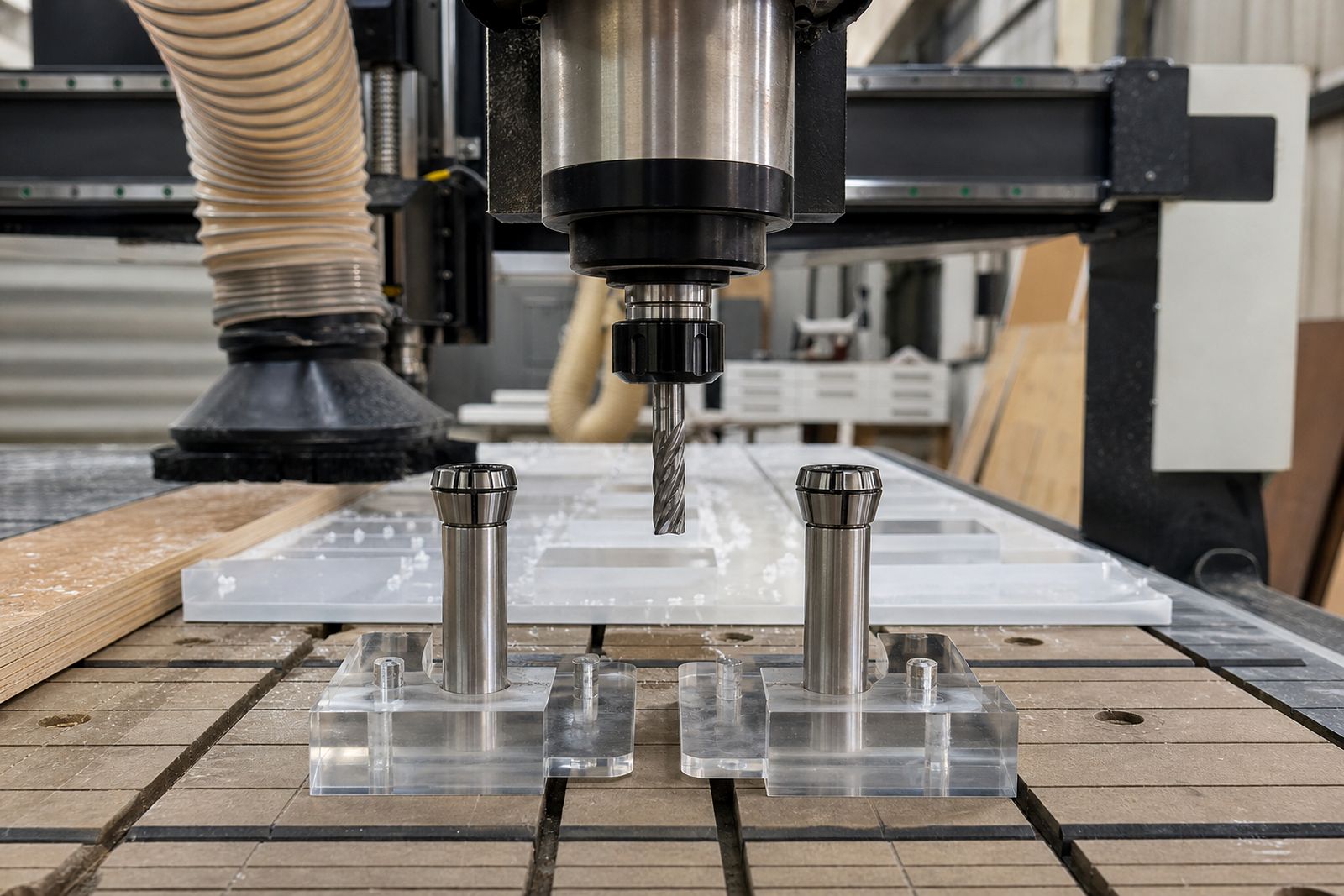
Pairs with ER collets, vacuum beds, and spoilboards.
Pairs well with
- ER collets in correct size
- Vacuum hold-down or tab cutting
- Spoilboard surfacing before nesting
Collets and nuts for acrylic chip breaker cuts (metric shanks) come from the Holder Collet Kit, and our material guides cover the sheets and boards this line suits.
Collets, holders and workholding for acrylic nests
For best results, use a clean ER collet sized to the shank, do not sleeve down if possible. Vacuum hold-down is ideal for acrylic sheets, as it avoids any clamp marks and ensures the full nest is stable right to the last pass. If you do not have vacuum, use strong clamps clear of the toolpath and add tabs or an onion-skin pass to keep parts in place during the cut. Always surface your spoilboard before a nest job to prevent rocking and uneven cut depths. For small parts or letters smaller than 40 mm, tabs are a must.
- Clean ER collets prevent runout
- Vacuum hold-down for full sheets
- Tabs for small nested parts
CuTool tools that pair with acrylic chip breaker cuts
For a full sign or trophy job, pair acrylic chip breaker cuts with our edge pro endmills for trimming and edge polishing, and the chamfer edge kit for bevel effects. Start with the spoilboard surfacing tool to level your bed. Use the tool life cards to track hours and predict when to rotate or regrind. For fastening, our holder collet kit keeps your spindle set up and ready for quick swaps between jobs. The carbide slot set is handy for rebate work or edge slots before final cut-through.
- Edge Pro endmills for finishing
- Chamfer edge kit for bevels
- Spoilboard surfacing for bed prep
Setup mistakes to avoid with chip breaker bits
A common issue we see is too much stick-out, which leads to vibration and rough edges. Some shops run dull collets, causing runout and burning on the cut. Others forget to check for correct collet torque, risking slippage or tool pull-out on deeper passes. On vacuum tables, faults often come from an unlevel spoilboard or not clearing chips between passes, which can lift thin acrylic and break parts out early. Always double-check clamp clearance and run a dry cycle before the first cut.
- Avoid excess stick-out
- Check collet torque every change
- Surface spoilboard for every nest
What our Cutting Tool customers say
Verified Google reviews

Tell us about the job you need to cut
Send a note through our contact form with your machine, spindle and collet size, the material and thickness, the finish you need and your area, and we will come back with practical cutter options and a quote.
Open the contact form