

Compression nest bit
Compression spirals for double-sided clean edges on laminated boards.
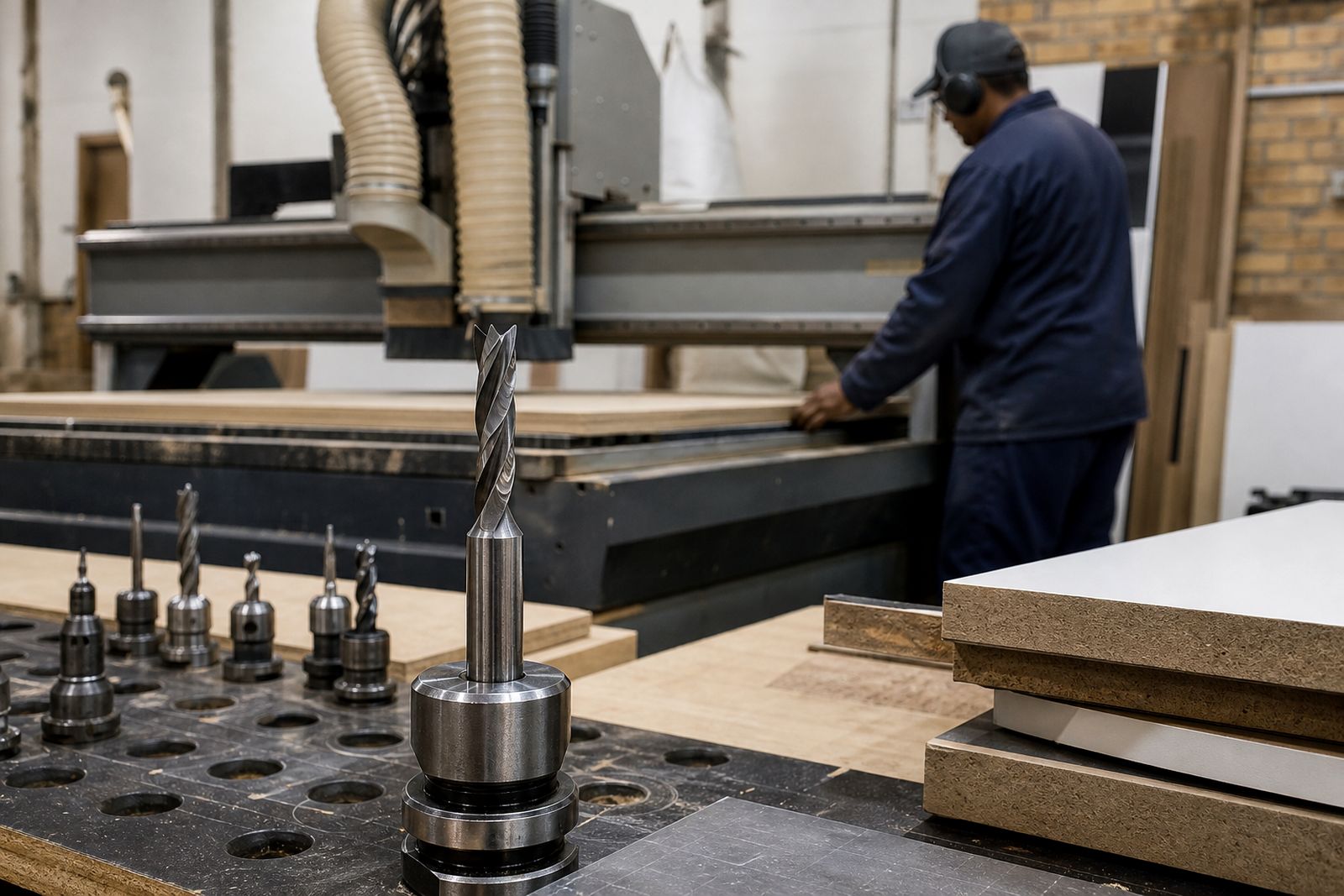
Compression nest bit for board cutting
Workshops turn to the compression nest bit for clean, double-sided edges on melamine, plywood and veneered boards. Its balanced up and down spiral geometry prevents laminate tearout, especially vital for kitchen, cabinet and furniture makers doing nested base panels.
- Dual-action spiral for crisp edges
- Reliable for melamine and ply boards
- Ideal for nested cabinet panels
- Minimises chipping and sanding time
| Dia | 6 / 8 / 12 mm |
|---|---|
| Style | Compression |
| Board | Melamine, plywood |
| Card | Pass depth |
| Ideal for | Nested cabinets |
Why compression geometry works for boards
Melamine and veneered panels are unforgiving if your tool pulls fibres the wrong direction. A standard upcut spiral will lift and tear the top edge, especially on a nested cut. The compression nest bit solves this with a dual-spiral: downcut at the top compresses fibres into the laminate, upcut at the bottom ejects chips cleanly. This leaves both faces crisp on kitchen doors, drawer fronts and flat-pack panels. Shopfitters and cabinet makers use it almost exclusively for nested baseboard work, and trophy or display fabricators get the same edge benefit on double-faced MDF and ply.
How to choose the right pack and diameter
Each pack covers common board thicknesses: 6, 8 and 12 mm diameters suit most nested cabinet and display panel work. For kitchen makers, 8 mm is the go-to for 16 or 18 mm board. 12 mm gives maximum strength and chip clearance on thicker or larger assemblies. We recommend starting with the smallest diameter that offers enough rigidity and surface finish for your nesting layout. All bits are solid carbide for long life and precision routing.
What matters for local workshops and climates
On the Highveld, dry fine dust from MDF and chipboard means you’ll want a dust extractor or vacuum shoe running with the bit. At the coast, Durban or Cape winter damp can swell boards, so check for swelling and stick to conservative passes. Compact routers on single-phase power often run spindles from 1.5 to 3 kW: always check both your ER collet size and spindle speed range before ordering. Power cuts or load reduction will mean re-zeroing after a stop, so mark your X-Y zero and use tabs or onion-skin passes to keep the part stable if you have to restart a job.
Compression nest bit
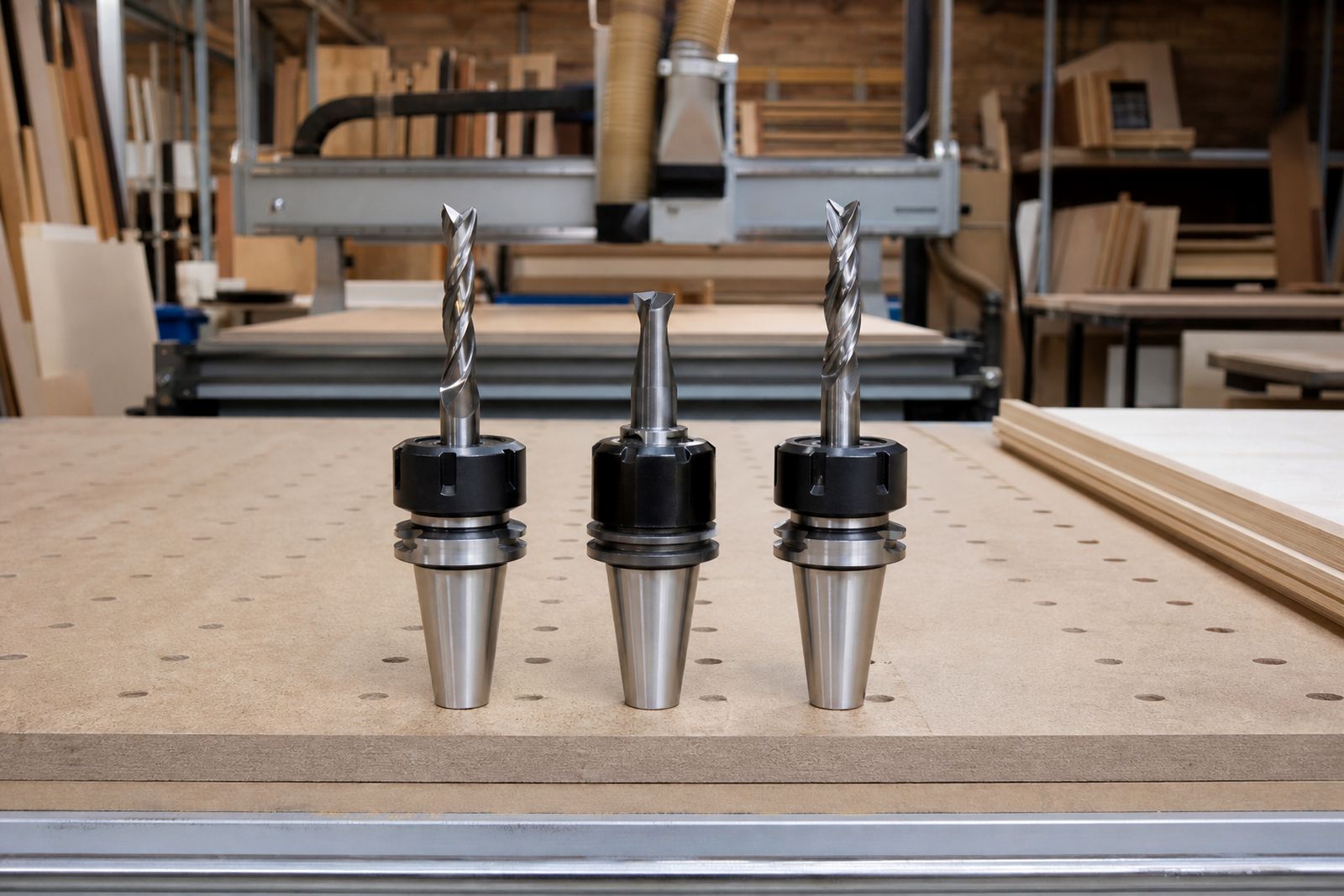
Compression nest bit fixtures
Spoilboard surfacing pairs best with a well-trammed spoilboard, solid ER collet and vacuum or tab hold-down. For the cleanest edge, surface the board flat first.
Read more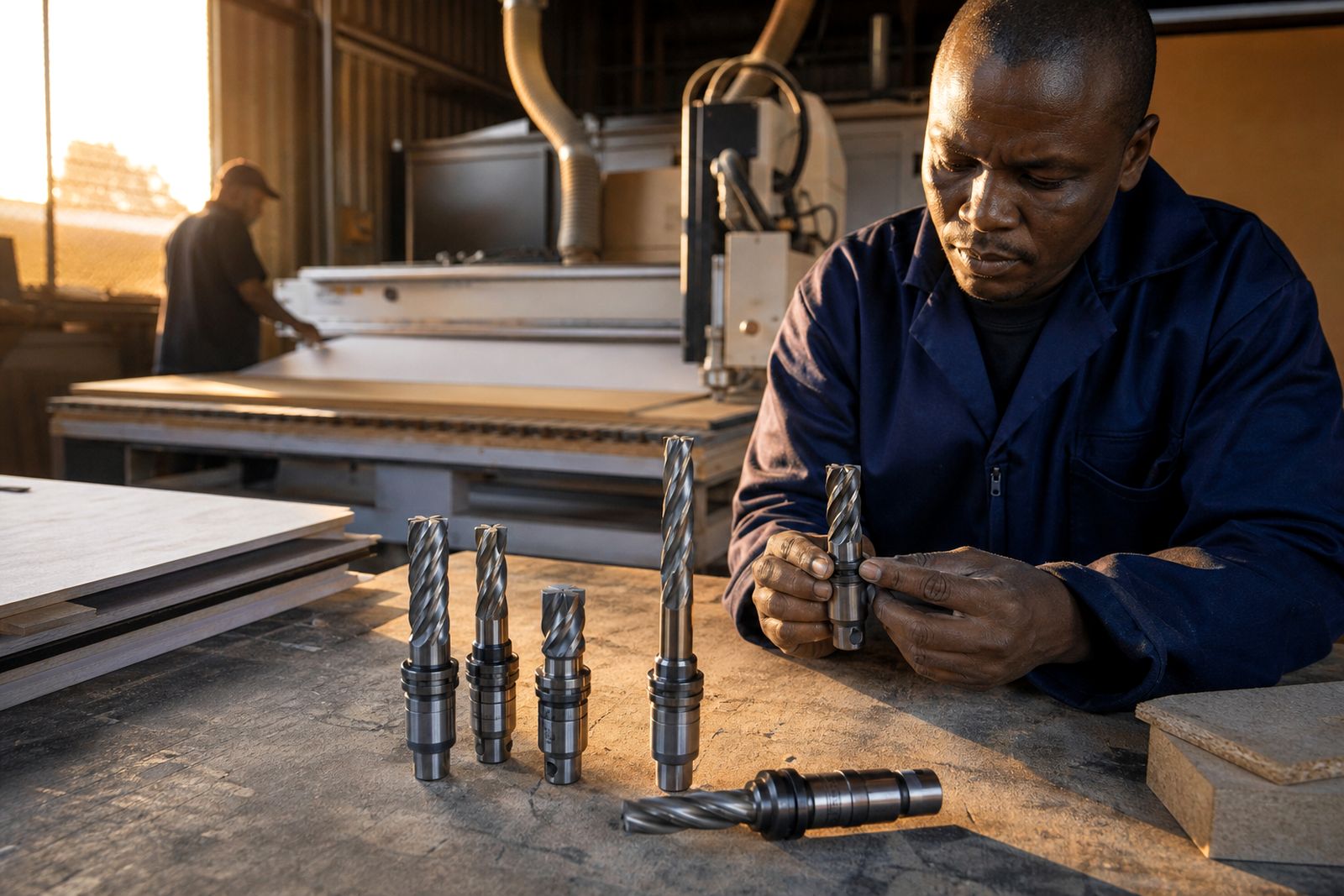
Compression nest bit service
Our team helps with regrind, wear checks and advice tailored to South African cabinet and furniture shops.
Read more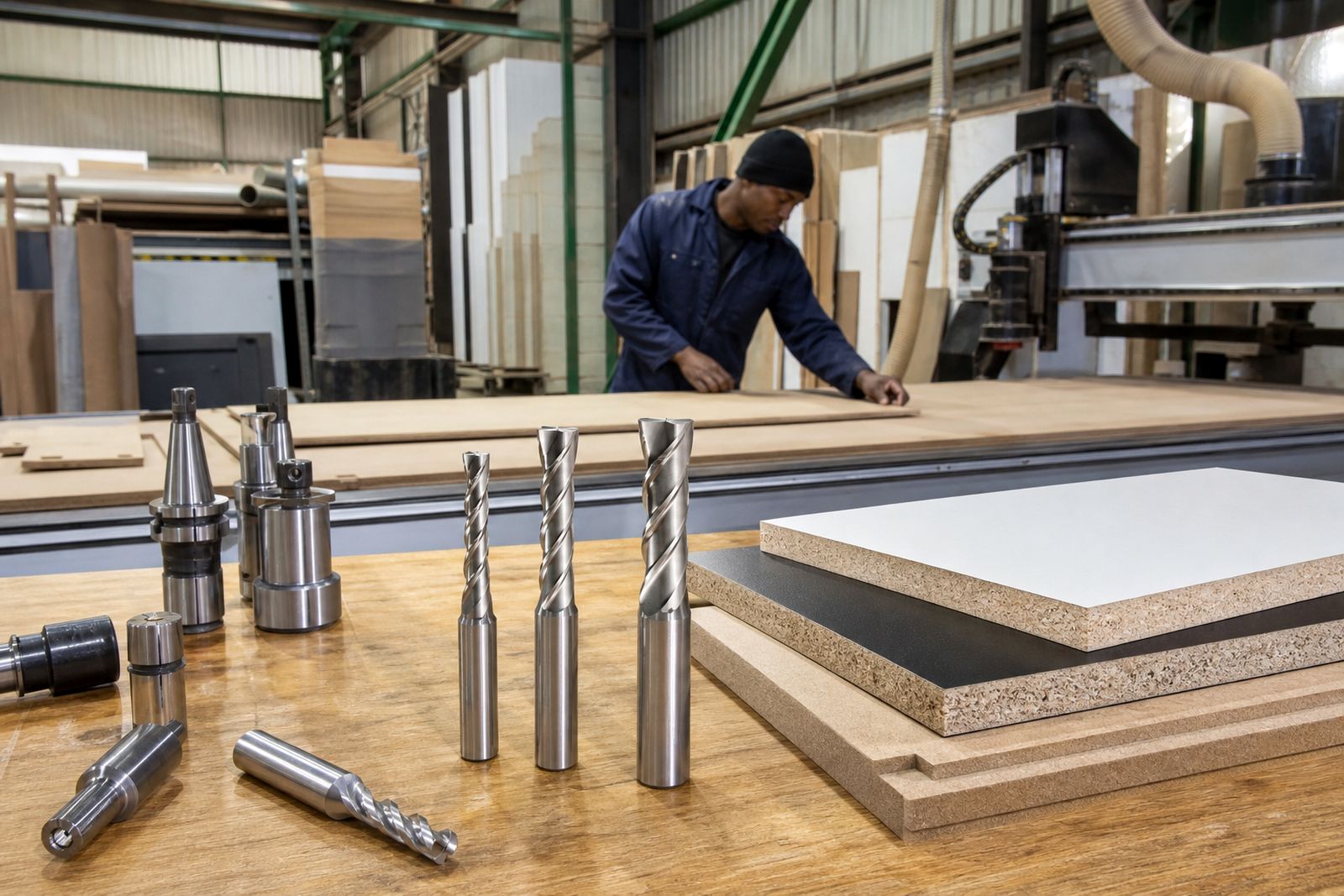
Compression nest bit specs
Compression geometry gives you clean top and bottom edges on laminated boards with every pass.
Read moreWhat our Cutting Tool customers say
Verified Google reviews
Tell us about the job you need to cut
Send a note through our contact form with your machine, spindle and collet size, the material and thickness, the finish you need and your area, and we will come back with practical cutter options and a quote.
Open the contact form