

Sign spiral kit
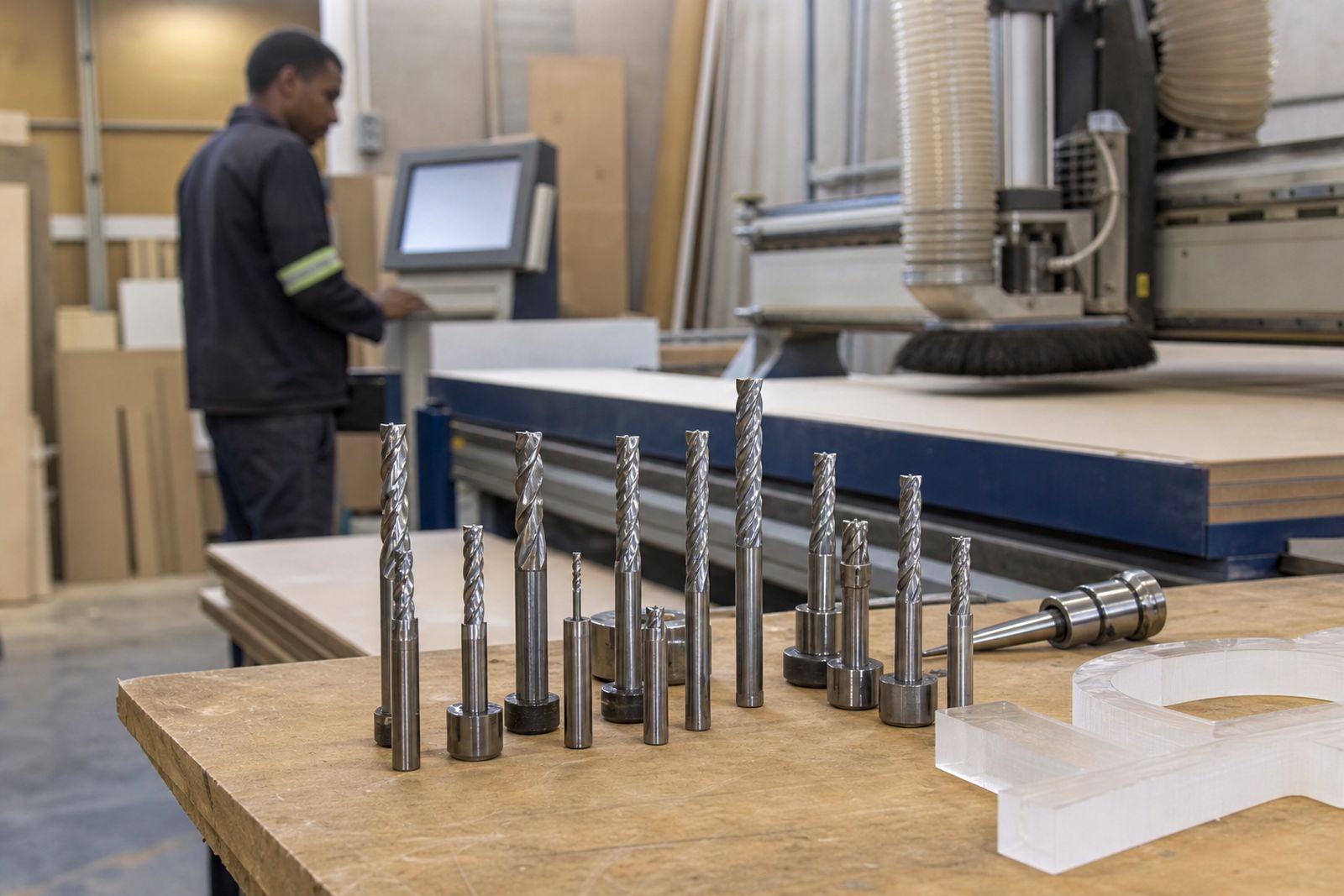
Spiral cutters tuned for acrylic, PVC foam, and ACM letter nests.
What the kit is for
3 / 4 / 6 mmDiametersSingle and doubleSpiralsAcrylic, foam, ACMMaterialsSample packCouponsShops pick the sign spiral kit when deadlines are tight and edge quality counts, especially on complex letter nests. Each cutter is dialled in for acrylic, PVC foam, or ACM, so you don’t have to guess what will work on Friday’s rush job.
- No melt or chip clogging
- Foam board edges stay clean
- Double spiral for smoother ACM
- Sample coupons help test feeds
| Diameters | 3 / 4 / 6 mm |
|---|---|
| Spirals | Single and double |
| Materials | Acrylic, foam, ACM |
| Coupons | Sample pack |
| Ideal for | Letter nests |
| Lead time | Coastal + inland |
Why the geometry gives clean edges
The sign spiral kit is built around the realities of busy sign shops. Acrylic, PVC foam and ACM each need the right edge, and a one-size-fits-all bit just won’t cut it, literally. Our single flute spiral breaks chips on acrylic to avoid melting, while the double flute manages softer foams and ACM laminate stacks. Compression bits can bruise thin PVC foam on the upstroke, so the kit sticks to upcut and neutral geometries for tidy letter edges. If you’re running high-density foam board, the gentle helix draws dust up and away, avoiding that fluffy, torn look. It’s for sign-makers who want a predictable, burr-free finish for the team’s next install, not a panic clean-up.
What’s in the sign spiral kit and how to choose sizes
In each kit you’ll find spiral cutters in 3, 4 and 6 mm diameters, all in both single and double flute. The single flute is the go-to for fast acrylic clearing and edge-lit work, while double flute covers foam, ACM and denser plastics. If your jobs are mostly small script, the 3 mm gets tight cuts with less hand finishing. Larger 6 mm spirals handle thicker backers or stacking multiple sheets. Each kit includes sample coupons, so you can test feeds and edge quality before committing to a run. Pick sizes based on your spindle’s collet and the typical letter height you rout.
How South African shop conditions affect your choice
Whether you’re in Joburg’s dust or Durban’s humidity, workshop climate makes a difference. On the Highveld, static-charged chips cling to everything, so vacuum extraction is a must. Cutters can gum up faster in Cape winter damp, and foam boards can go soft if stored open. For single-phase routers or starter CNCs on compact spindles, stick with the 3 and 4 mm cutters to keep spindle load low. Shared spindles in school and college workshops may have worn collets, so always check fit before a run. For shops battling power cuts, always finish a pass before re-zeroing your tool, these spirals are sharp, but a mid-cut stop can leave a step on acrylic edges.
Sign spiral kit
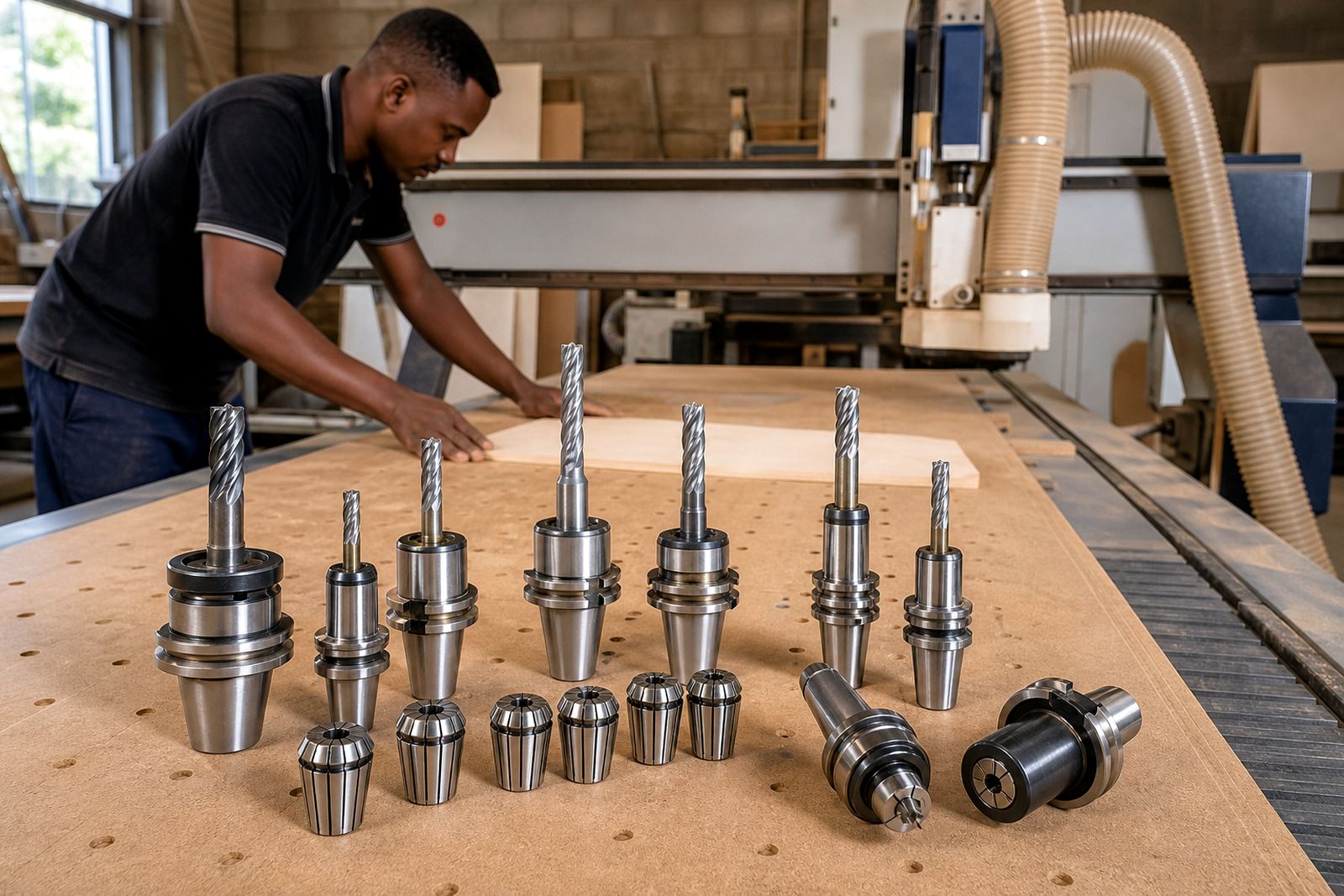
Sign spiral kit fixtures
Paired with a snug ER collet, the right spoilboard, and vacuum or clamps, these bits cut reliably clear edges.
Read more
Sign spiral kit service
Our team helps with regrinds, replacements or extra kits for your next set of sign letters.
Read more
Sign spiral kit specs
Spiral bit kit for 3 to 6 mm plastics and ACM cutting, with single and double flute options in 3, 4 and 6 mm sizes for sign work.
Read moreWhat our Cutting Tool customers say
Verified Google reviews
Tell us about the job you need to cut
Send a note through our contact form with your machine, spindle and collet size, the material and thickness, the finish you need and your area, and we will come back with practical cutter options and a quote.
Open the contact form