

ACM nest order
Pierce order that keeps ACM panels flat for installs.

Start with the right spoilboard and hold-down
Getting ACM (aluminium composite material) nests right is crucial for neat, flat sign panels that go straight into the fitting stage without hassle. I see a lot of drama in sign shops when cut order or fixturing gets rushed. Here’s how I organise ACM pierce order on the CNC, so the panels stay flat, edges clean and everything’s ready for the fitters to do their work.
ACM is lightweight and flexible, so proper spoilboard and vacuum hold-down is essential to keep sheets flat. I always check the spoilboard for high spots or worn grooves, and the workshop team can run a 22 mm surfacing cutter with 1 mm stepdown. For highveld shops, dry winter air can warp MDF spoilboards, so check them weekly. If your vacuum isn’t perfect, tape the panel perimeter or use sacrificial T-tracks to keep corners down. Don’t clamp too hard on the edges or the panel can pucker when released.
Nest with tabbing and onion-skin passes in mind
When I nest ACM panels for signs, I leave at least 8 mm between parts for the cutter to finish clean edges and space for tabs. For fine letters or cutouts, onion-skin passes, leaving 0.2 to 0.4 mm at the bottom, help prevent drop-through or sharp corners lifting during finishing. Compression spirals from our sign spiral kit are perfect for burr-free edges, but watch the chip load: 1 to 1.5 mm per tooth is a safe starting point for most 6 mm cutters at 18 000 to 20 000 rpm. Too slow, and heat will warp the edges or clog the flute.
- Leave 8 mm minimum between nested parts
- Use onion-skin passes for small shapes
- Plan tabs near corners and long edges
- Start with 1 to 1.5 mm chip load per tooth
- Always double-check the cutter stick-out
Sequence pierce order to control panel movement
Piercing and cut order on ACM makes a huge difference. Always pierce internal cutouts first before perimeter cuts. If the outer edge is cut too early, the sheet will shift or flutter on the vacuum, especially in humid Durban or Cape winter conditions where the panel can go wavy. For each panel, mark a datum and keep the main clamps or vacuum under the last areas to be cut. If you must pause mid-job for a power cut, re-zero carefully before restarting to avoid offset parts. It’s easy to forget to recheck clamping after a break.
Common mistakes and how to avoid them
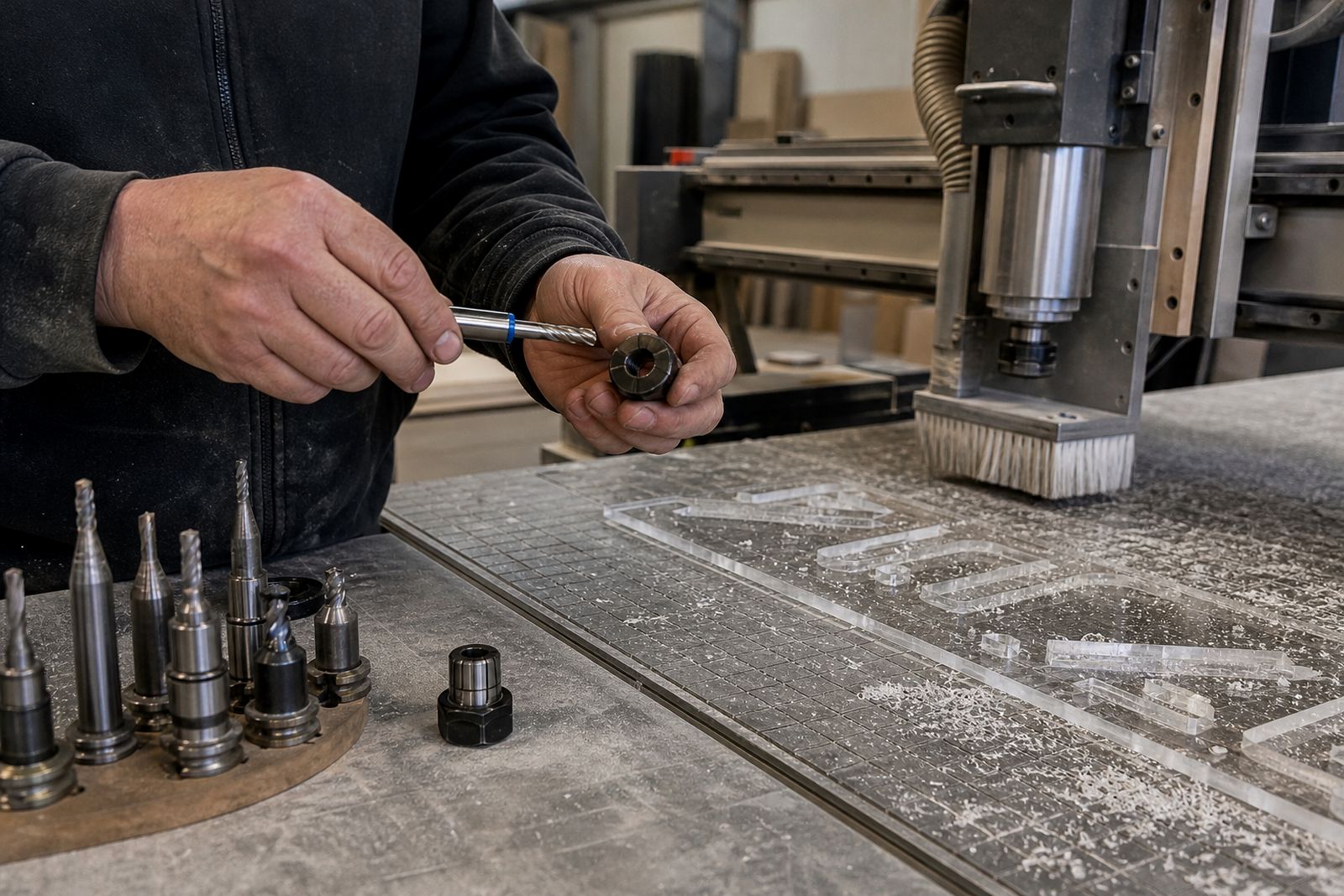
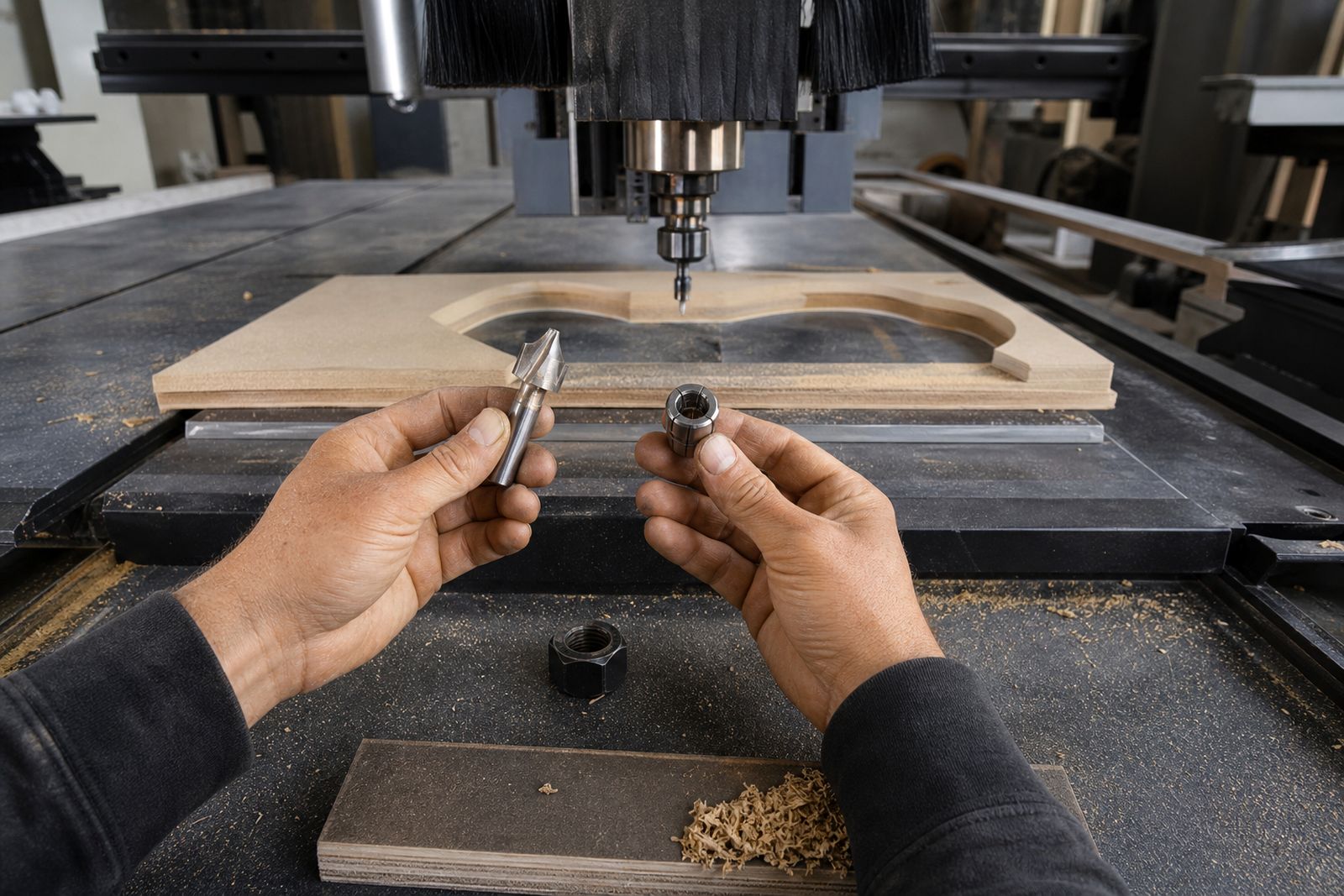
I’ve seen good shops waste ACM panels by skipping steps. Forgetting to clean the collet or using a cutter with resin build-up gives nasty chatter along the cut. Wrong pierce order means the panel lifts, then you get a stepped edge that won’t sit flat. Sometimes, a busy operator will double up on tabs or miss the last onion-skin pass and end up prying parts loose with a screwdriver. That scratches the panel and ruins the finish. Always set the correct sequence in your CAM programme, check the kerf width, and test a scrap piece for feed before starting a big sheet.
Related: Sign spiral kit and Outdoor sign shops. Browse all tools or more edge notes.
What our Cutting Tool customers say
Verified Google reviews
Also worth a look

Tell us about the job you need to cut
Send a note through our contact form with your machine, spindle and collet size, the material and thickness, the finish you need and your area, and we will come back with practical cutter options and a quote.
Open the contact form