

Starter workshops
Starting with the right tools gets your CNC shop out of the trial-and-error rut and onto reliable, productive cutting.
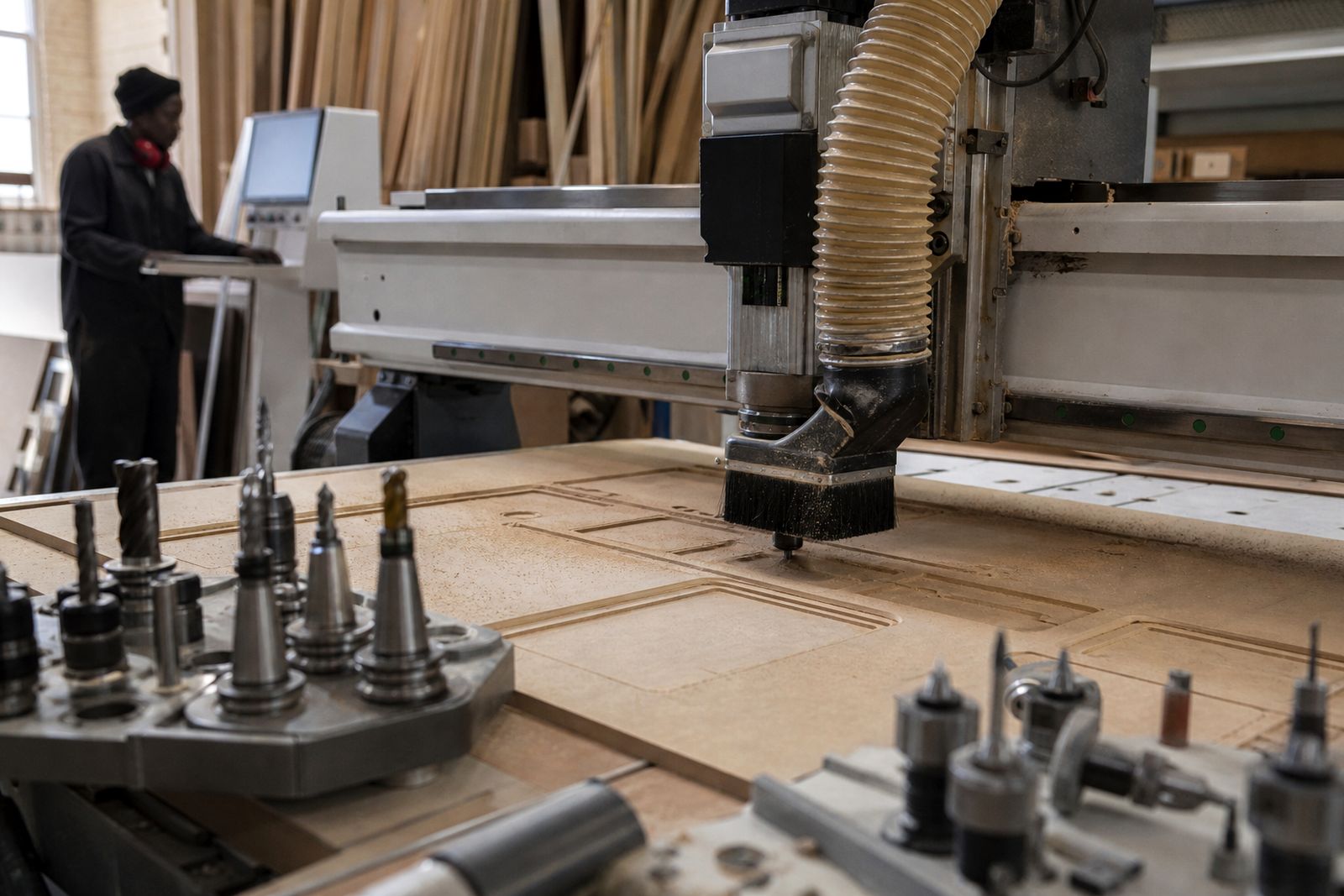
Common jobs and materials for new CNC shops
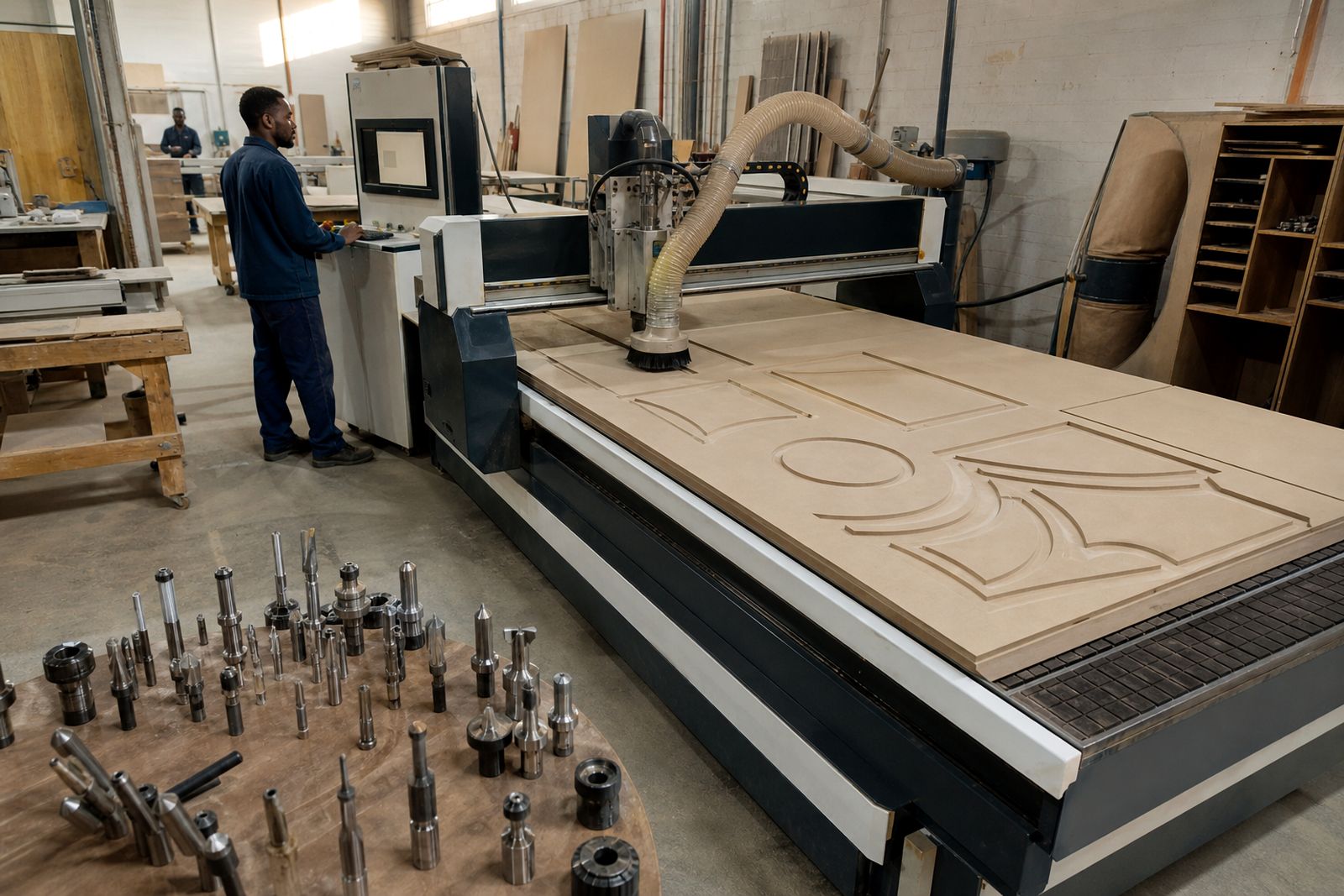
Starter workshops move up from random mixed bits to a proper set with our router bit starter, holder collet kit and tool life cards. These kits help you cut MDF, plywood, acrylic and soft aluminium with less guesswork and more control.
See also edge notes and printable cards.
Starter shops often take on projects like sign blanks, cabinet doors, MDF templates, acrylic displays and soft aluminium panels. Most cuts are in 6 to 18 mm MDF, plywood, chipboard, foamed PVC, acrylic sheet and sometimes 2 to 6 mm aluminium. The first big challenge is getting a clean edge on wood-based boards and not melting plastics or jamming up with chips.
You might also handle smaller batches of trophies, basic engraving, or first furniture pieces, jobs that need versatile tooling rather than just one random bit for each job. Grades and surface finish matter more as customers start to notice the difference.
Where tooling mistakes cost time and material
Many shops start with a box of odd bits from different places: wrong flute count, chipped edges, no idea of up or downcut, or rusty holders. This leads to burring, burning, poor finish or even ruined sheets. Using a wood upcut on acrylic, or a downcut on soft aluminium, quickly shows the limits of guesswork.
Another common problem is not matching collet size or over-tightening with pliers instead of a torque spanner. This causes runout, vibration and poor tool life. Rushed feeds and wrong chip load mean bits dull early or snap at the first sign of a tight curve. Skipping dust extraction or working with a dirty collet can damage both your spindle and your lungs.
- Wrong bit for the material
- Worn collets causing runout
- Unmarked or lost cutters
- No record of tool life or regrinds
- Shortcutting safety with no eye protection
The CuTool starter kit on a job
Our router bit starter set covers upcut and downcut spirals in 3 to 12 mm, a compression bit for plywood, a single flute for plastics, and a straight bit for MDF and chipboard. With these, you can plan for deep passes in MDF, clean edges in acrylic, and chip-free plywood cuts. All are marked for quick ID.
The holder collet kit includes ER collets, nut and spanner sized for your spindle, helping you get proper grip and minimal runout. Always check the collet and nut are clean before each job, and use a torque spanner for tightening, never overdo it by hand.
Tool Life Cards from CuTool help you track which cutter did which job, how many metres it has cut, and when it's time for a regrind. Stick these cards on your tool rack or the wall where the team can see them.
A typical pass: select the right bit for the job, check and fit the collet and nut, zero the tool, cut a short test at a starter feed (say 4 to 6 m/min for 6 mm MDF with a 2-flute spiral, 2 mm stepdown), then run your job. Mark the card. When the job is done, clean and rack the bit, no mystery bits lying around.
Planning stock, regrinds and busy periods
Keep at least one backup for your main cut sizes, especially in 6 and 8 mm, so you aren’t stuck if a bit dulls or snaps before a delivery. The tool life cards help you see what’s getting close to its regrind limit, send those out to a CuTool partner before the festive rush or big school term jobs.
Plan tool orders and regrinds around your busiest spells. The week before a school reopening, exhibition build or shopfit job, do a count and check your cards. If you know you’ll face Eskom load reduction or a local outage, schedule your trickiest cuts for power-up hours, and run a quick pass to re-zero the Z after an outage.
If you need backup or advice, use our contact form; our Sunnyrock team can advise on regrind turnarounds and courier options, so you aren't left with downtime.
What our Cutting Tool customers say
Verified Google reviews
Also worth a look
Tell us about the job you need to cut
Send a note through our contact form with your machine, spindle and collet size, the material and thickness, the finish you need and your area, and we will come back with practical cutter options and a quote.
Open the contact form