

Runout ritual
A two-minute dial check that saves a week of bad edges.
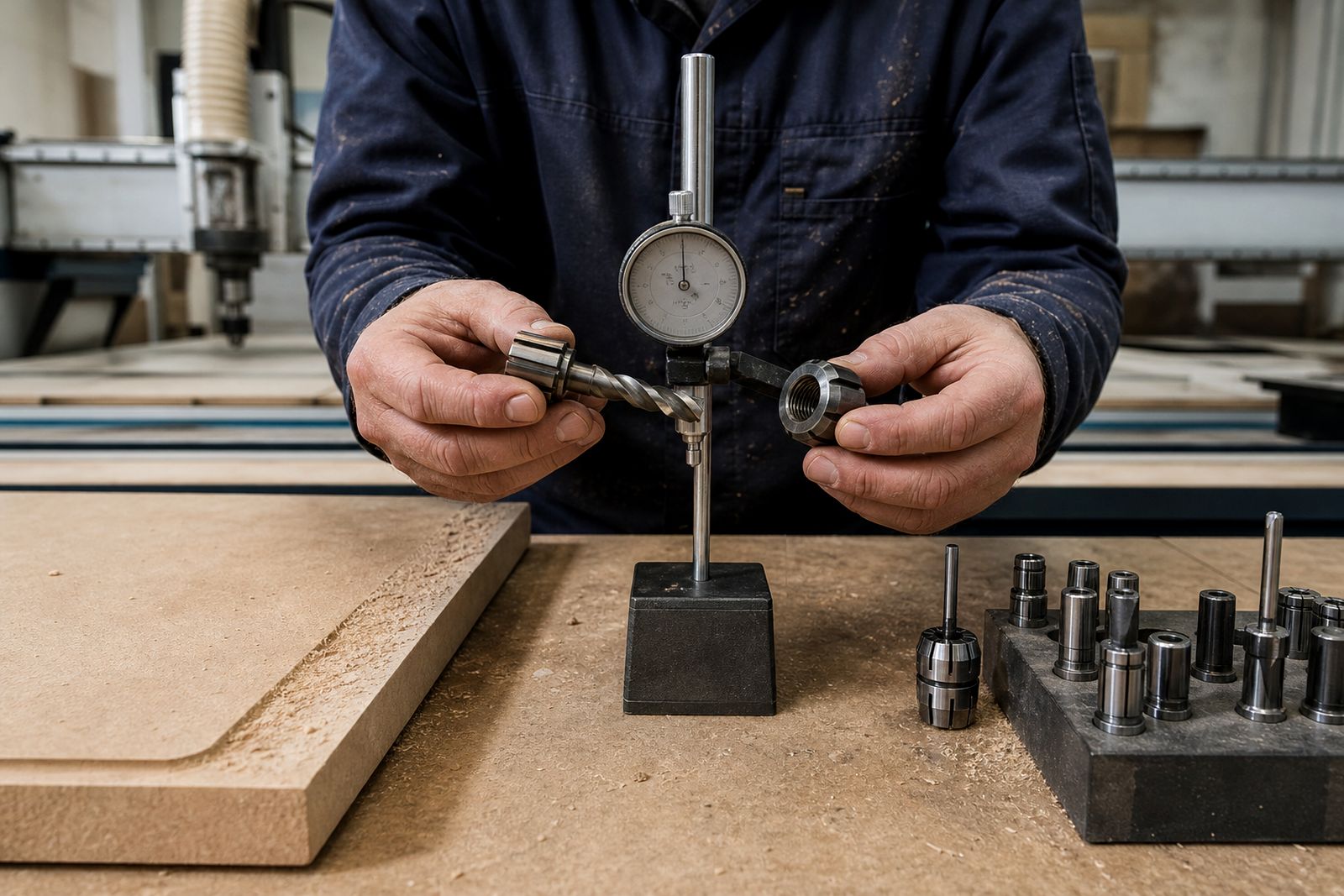
How runout creeps into CNC shops
Ask anyone who has seen a week of chipped or wavy edges and they will tell you: checking spindle runout with a dial gauge is two minutes that can save days of rework. I have seen enough cupped melamine, furry MDF and chipped acrylics in Joburg and Durban workshops to know where the trouble starts. A quick runout check catches most of it before you even load a cutter.
Even with top-brand routers and mills, runout is almost never zero after some time in a busy shop. Collets pick up dust and resin, nuts lose their bite, and a bit of Highveld grit or coastal humidity can rust the inside of a holder. We often see new hobby users skip cleaning or use mismatched collets from a box. The result is that the cutter spins with a wobble, sometimes just 0.03 mm, but that is enough to wreck a sharp edge in MDF, high-gloss board or Perspex.
The most common errors our team comes across are running with collets that have not been blown out, over-tightening the nut by hand without a torque spanner, or swapping from a cheap 6 mm collet to a 1/4" without checking fit. Those small habits cause runout to build up unnoticed.
Dial check before loading a cutter
Before you start, fit the ER collet and nut into the holder, snap in a clean blank shank (like an old broken cutter with a straight, undamaged shaft) and seat the holder in the spindle. Use a dial indicator fixed to the bed or table. Bring the tip of the indicator gently to the side of the shank, about 12 mm below the nut.
Slowly turn the spindle by hand. Proper runout should be under 0.01 mm TIR (total indicated runout) for fine finishing. Anything above 0.03 mm means you will see chatter on aluminium, or feathering in solid timber. If you hit 0.05 mm or more, stop: strip, clean, and reassemble.
- Remove all dust and chips before fitting the collet
- Check for any dings or rust in the pocket
- Use a torque spanner for the collet nut
- Record your dial reading every Monday before work
Runout mistakes and quick fixes
The worst runout I have seen was in a kitchen joinery on the East Rand, where a cracked nut was still in daily use. Never reuse a dropped or cracked nut, and never force a collet in if it feels gritty or sticks. Another common problem is excessive stick-out. If you clamp less than 20 mm of shank, or hang more than 40 mm below the nut without support, vibration and runout multiply. Always keep the cutter's stick-out to a minimum: just enough to clear your workpiece and any clamps.
If your runout jumps after a power cut or sudden spindle stop, check for swarf caught in the collet, and re-zero after cleaning. Many shops now keep a spare collet kit and nut handy, especially in Gauteng where humidity swings between winter dryness and summer storms. Swap out questionable parts before you burn through a box of carbide.
When to retire a collet or holder
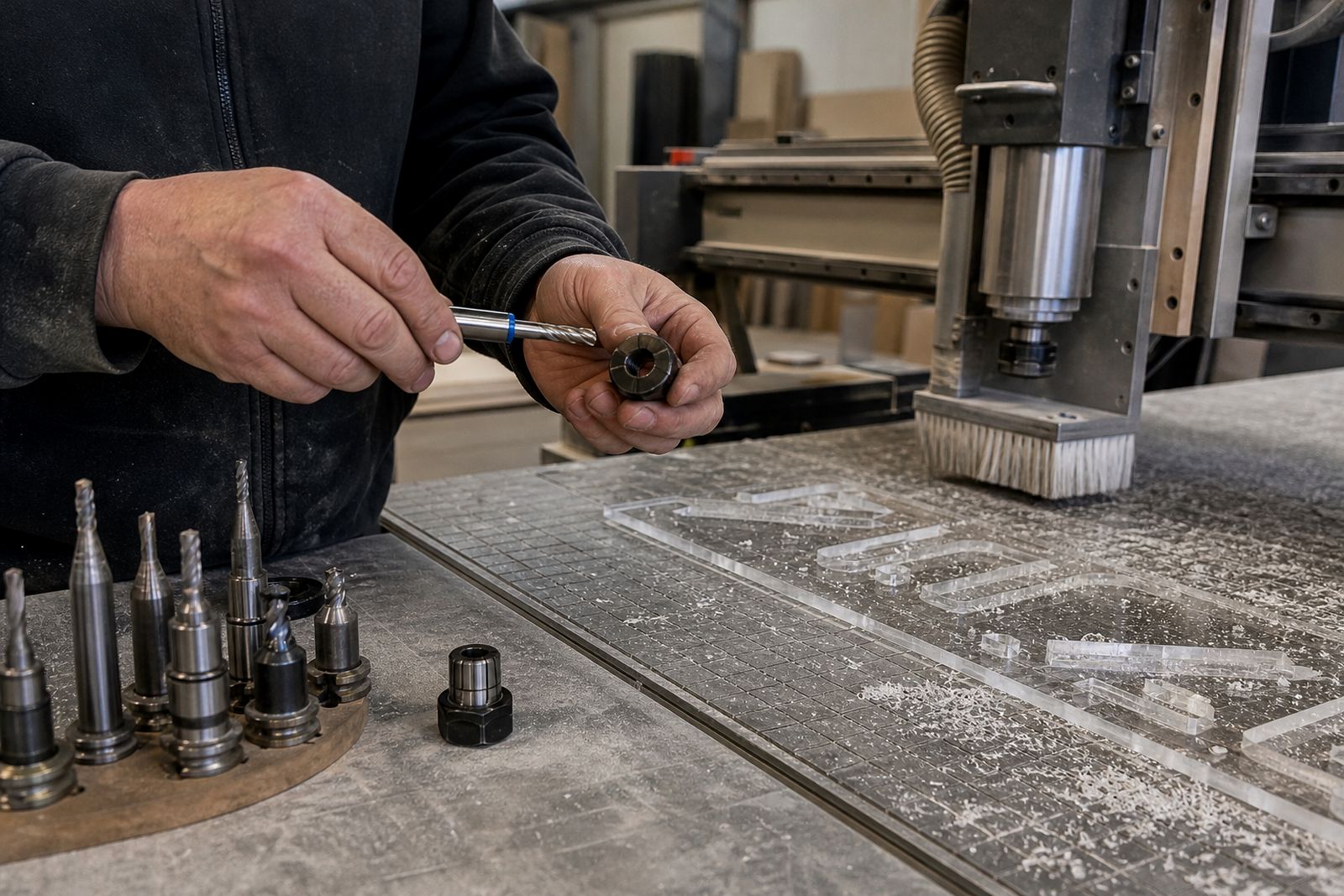
A fresh carbide cutter in a worn collet will never run true. ER collets have a working life: after about 400 to 600 hours of actual spindle time, even the best will lose clamping force or develop tiny cracks at the slots. If you spot a collet not springing back, or faint grooves inside, it is ready for retirement.
If you see runout that does not shift after cleaning, and you have eliminated the cutter as the cause, your holder may be bent or scored. For many small CNC cells, it is worth investing in a full holder collet kit: this lets you swap out and diagnose faults immediately, instead of waiting for poor edge quality. If you need help sourcing kits or want tips for hobby rigs, you can always reach our team through our contact form.
Related: Holder Collet Kit and CNC hobby cells. Browse all tools or more edge notes.
What our Cutting Tool customers say
Verified Google reviews
Also worth a look

Tell us about the job you need to cut
Send a note through our contact form with your machine, spindle and collet size, the material and thickness, the finish you need and your area, and we will come back with practical cutter options and a quote.
Open the contact form