

Tool life before scrap
Colour tags that pull dull tools before they scrap a nest.
How tool life gets missed in busy shops
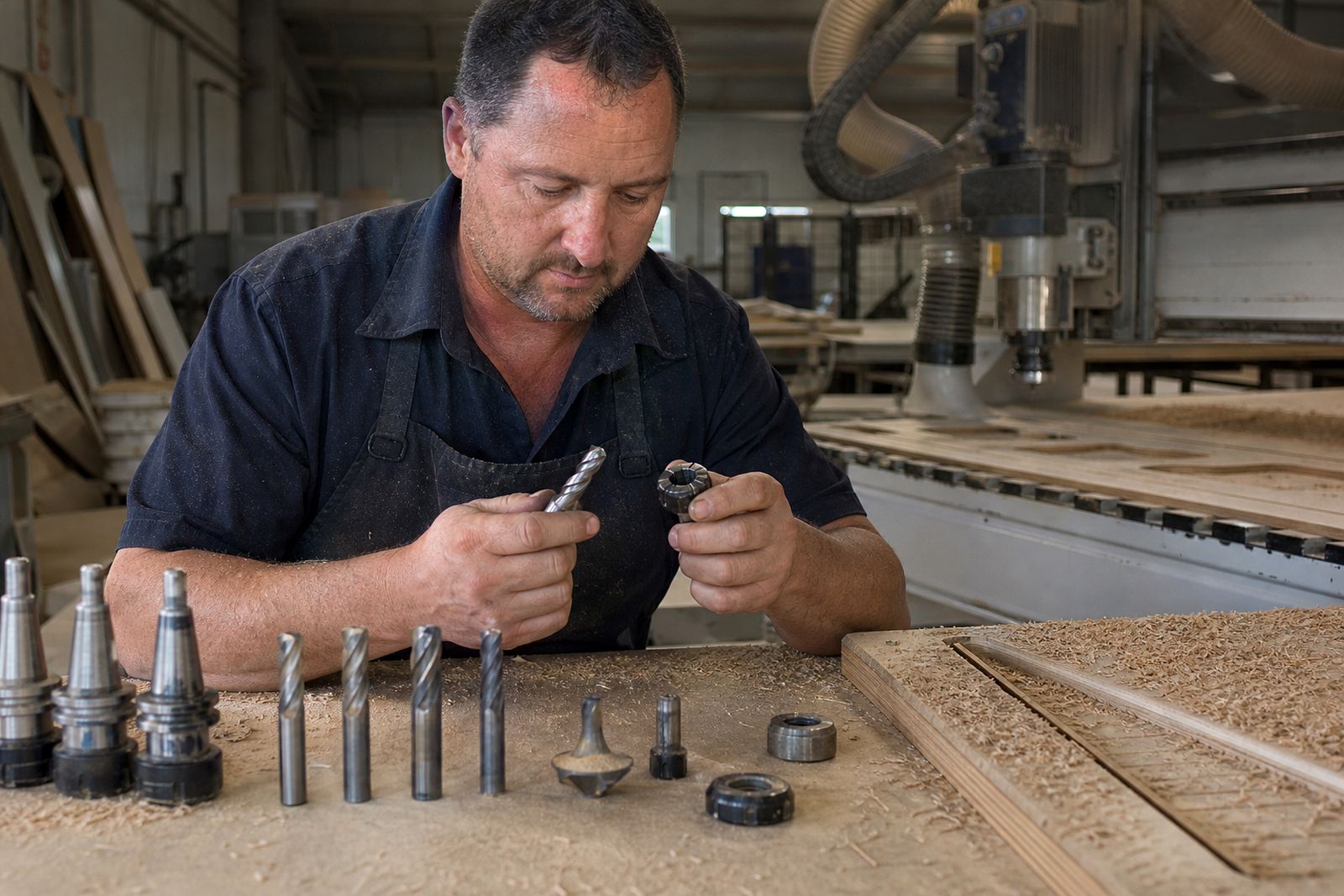
If you’ve ever scrapped a full sheet because a cutter dropped its edge halfway through, you know how costly tool life mistakes can be. My goal is to help you spot dull tools before they ruin a nest, not after. At CuTool, we've seen how a simple colour tag system combined with routine checks saves both material and headaches.
With multiple jobs on the go, it’s easy to lose track of which end mill has done how many metres. In South African joinery and signage shops, we often see teams swapping bits between jobs without logging hours or metres cut. Gauteng’s hard MDF and coastal humidity both affect tool life, so what works in Joburg might not hold up in Durban’s winter damp. The most common slip is assuming a cutter still has life just because it’s ‘not broken’. But carbide edges don’t always chip dramatically, they slowly dull, causing fuzzy edges or melt marks, especially on white melamine or acrylic.
Another problem: the same size tool used for both roughing and fine passes, so you lose track of which one is still sharp enough for finishing. This is why we suggest making tool monitoring a habit in your routine, not an afterthought after a ruined sheet.
A simple colour tag system
Our Sunnyrock team uses coloured cable ties or printed self-adhesive dots right on the shank, matched to a card on the wall or CNC controller. Green means just reground or new, yellow signals its on the last third of its tracked life, and red means pull it before next use. Every time you swap a tool, check the tag, then update your tally on the Tool Life card. It takes less than a minute but stops costly mistakes. We recommend keeping your tag colours and meaning consistent across all shifts, so anyone in the workshop can spot a tired cutter at a glance.
If you use multiple tool holders or share tools between machines, always recheck the tag as you load the collet. Static tags do wear off, so replace faded ones during your monthly maintenance day. Don’t assume a visibly shiny flute means it’s sharp, check the tag and the log.
- Use green, yellow and red tags or dots for instant tool status
- Update your Tool Life card or tally right after every use
- Standardise tag meaning across shifts and machines
- Replace faded or missing tags during planned maintenance
- Never trust flute shine alone, always check the tag and card
Track measurable tool life
At CuTool, we suggest you log every tool’s cut distance in metres, or at least tally the number of full-sheet nests it’s done. For a typical 6 mm two-flute carbide spiral cutting MDF, plan on 200 to 350 running metres before performance drops, though this varies with stepover, stepdown, feed and whether you’re running climb or conventional. In starter workshops, it’s easy to skip these numbers and go by feel, but a few minutes with a permanent marker on the collet nut or a printout on the wall makes all the difference. Encourage your team to jot down the nest count after each shift, you will soon spot the sweet spot for swapping tools before you see edge burn or fuzz.
Catch dull tools before they ruin a nest
We’ve seen many a kitchen carcass or trophy sheet go straight to the scrap pile because the spiral cutter dulled mid-pass. Watch for a change in chip colour, burning smell, or extra sanding on cut edges. If your feeds and speeds haven’t changed and your extraction is working, but you see more dust and less curl in the chips, that’s a sign to pull the tool. A quick magnifier check at the bench helps, but the colour tag system is faster and more reliable for busy teams. Remember, don’t wait until you hear spindle chatter or see breakout, by then, the nest might already be lost. The small effort of tagging and tracking pays off every time you avoid a rerun.
Related: Tool Life Cards and Starter workshops. Browse all tools or more edge notes.
What our Cutting Tool customers say
Verified Google reviews
Also worth a look

Tell us about the job you need to cut
Send a note through our contact form with your machine, spindle and collet size, the material and thickness, the finish you need and your area, and we will come back with practical cutter options and a quote.
Open the contact form