

Flute count in practice
When four flutes help, and when they just rub soft aluminium.

What flute count does in the cut
When you start picking end mills for a new CNC job, the number of flutes is as important as the cutting edge shape and material. I get a lot of questions from local shops about when to use three or four flutes, or whether high-flute-count cutters are just for steel. Here’s what actually happens in real South African light industrial and sign shop settings, with a focus on aluminium and composites.
Flute count controls both chip space and cutting edge contact. A two-flute lets each tooth throw a bigger chip and clears material fast, great for soft plastics and timber. Three-flute cutters are a good middle ground for denser composites and foamed PVC. Four flutes give a smoother finish in hardwoods or engineered boards. Each flute gets less load, so the cut can be finer and there’s less chatter, provided you can clear chips efficiently.
In aluminium, and especially soft grades like 6061 or signage sheet, the higher flute count can actually work against you. Four-flute tools are likely to rub and pack, not cut, unless you slow down feed or increase spindle speed. Too much rubbing leads to built-up edge, when aluminium starts to weld onto the flute, and that’s where cutters get ruined in one pass.
Two and Three Flutes for Aluminium
South African aluminium fabricators, especially in Durban and on the Highveld, usually go straight for two- or three-flute cutters. Our local humidity can make soft aluminium even more prone to sticking and galling. Two-flute end mills have bigger gullets for chip clearance. This is key when trimming extrusions, routing signage blanks or surfacing plates.
With a three-flute, you can often push feed rates up. I recommend starting around 2,000 to 3,800 mm/min feed at 18,000 to 22,000 RPM for a 6 mm diameter carbide tool, and then dial in from there. Chip load should be at least 0.03 mm per tooth. Keep the cut shallow, stepover under 40 percent, and use an air blast or mist if you can. Don’t use four flutes unless you have high-pressure coolant or the job is small enough to manually clear swarf after each pass.
- Two flutes: best for soft aluminium, wide chip space
- Three flutes: balance of speed and finish
- Four flutes: only for fine finishing with strong chip evacuation
- Never use high-flute counts dry in soft alloys
Common flute count mistakes we see in jobbing shops
One of the biggest errors is using a four-flute end mill on a workshop bakkie’s subframe plate or on aluminium trophy blanks, then wondering why the cutter sounds rough and workpieces weld to the flutes. It’s tempting to run high spindle speeds and hope for a clean finish, but with soft alloys this creates heat and smears the cut. Four flutes also ramp poorly in aluminium, so you might see a burned entry point. If you must use four flutes, keep the radial engagement light and watch for chip packing.
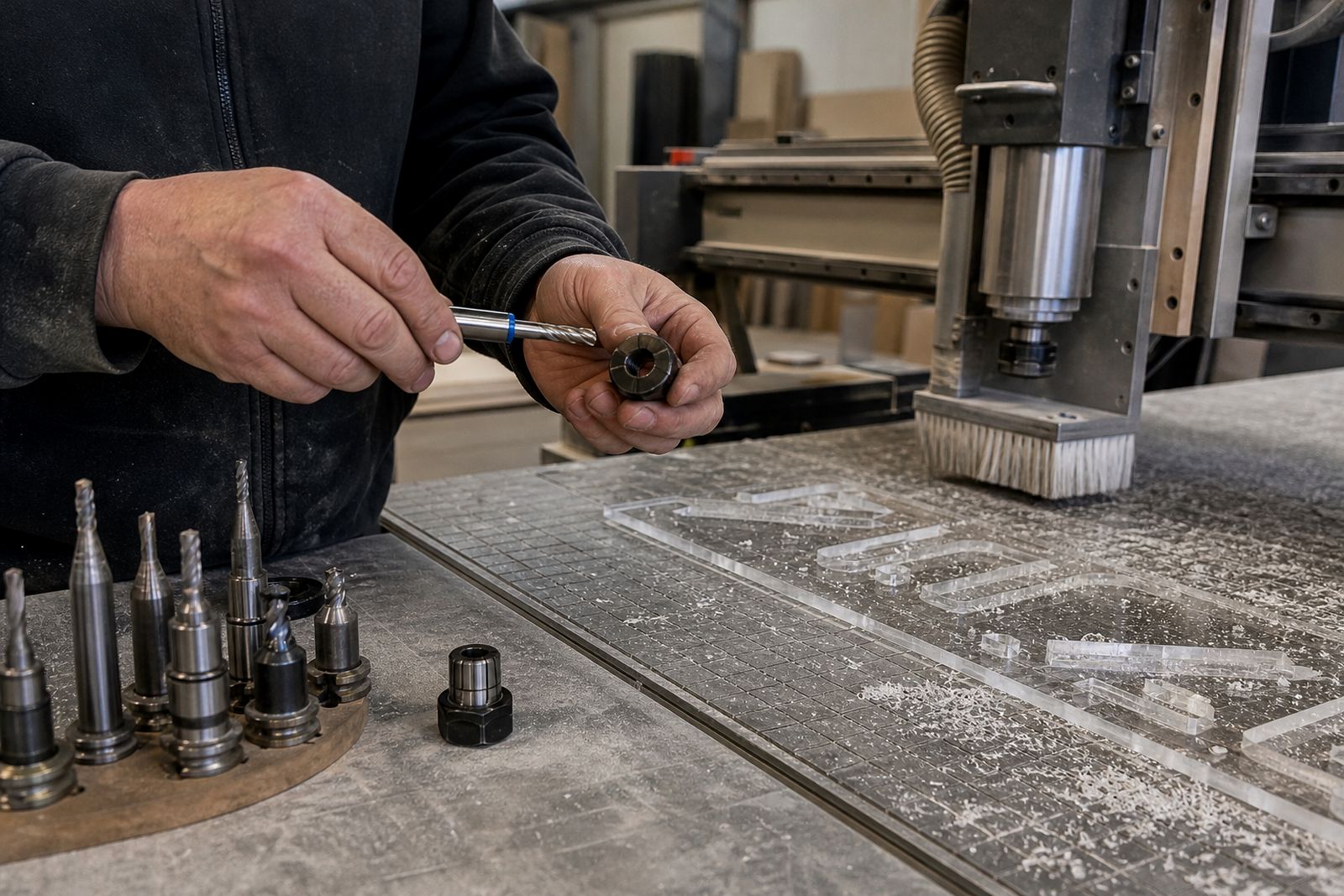
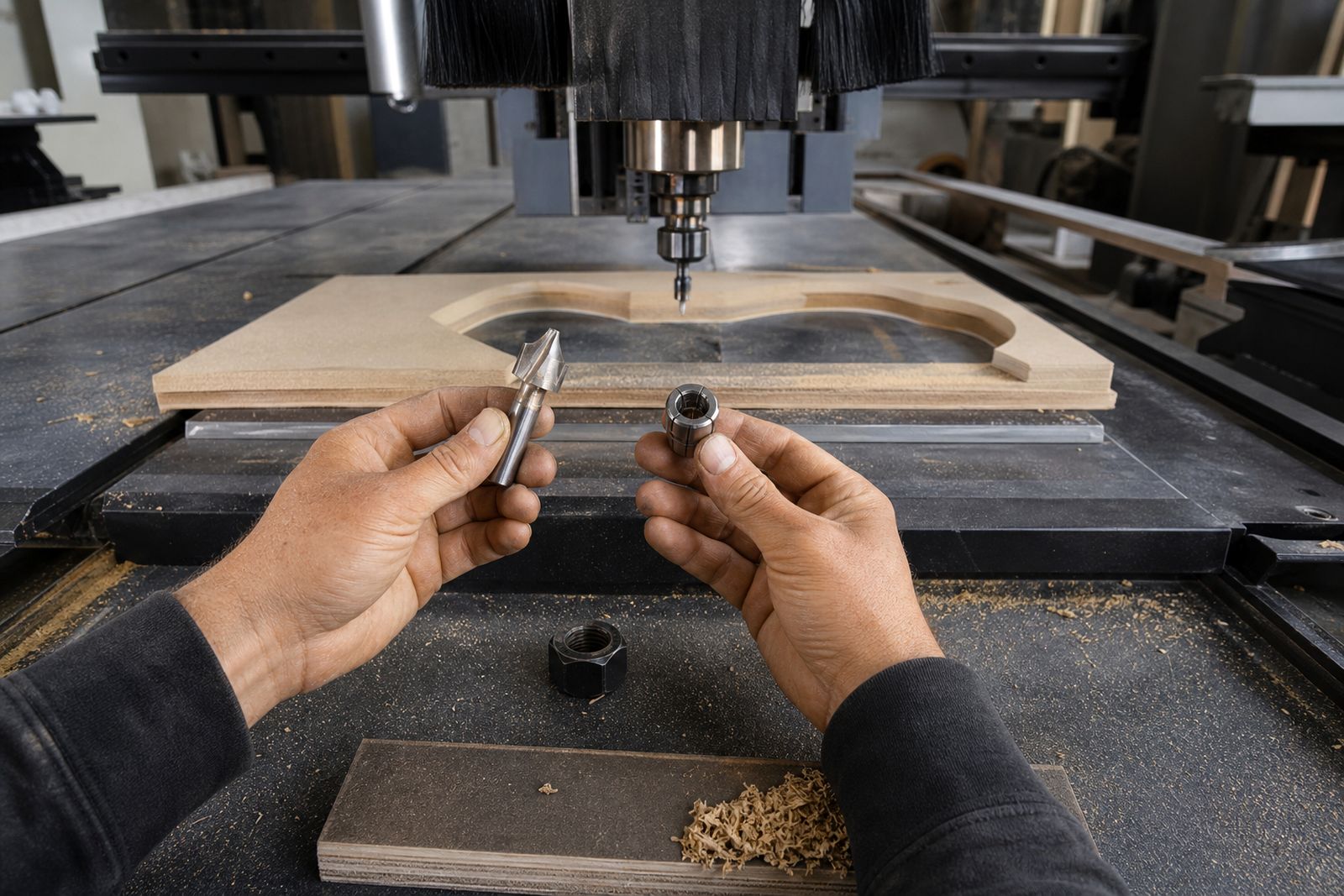
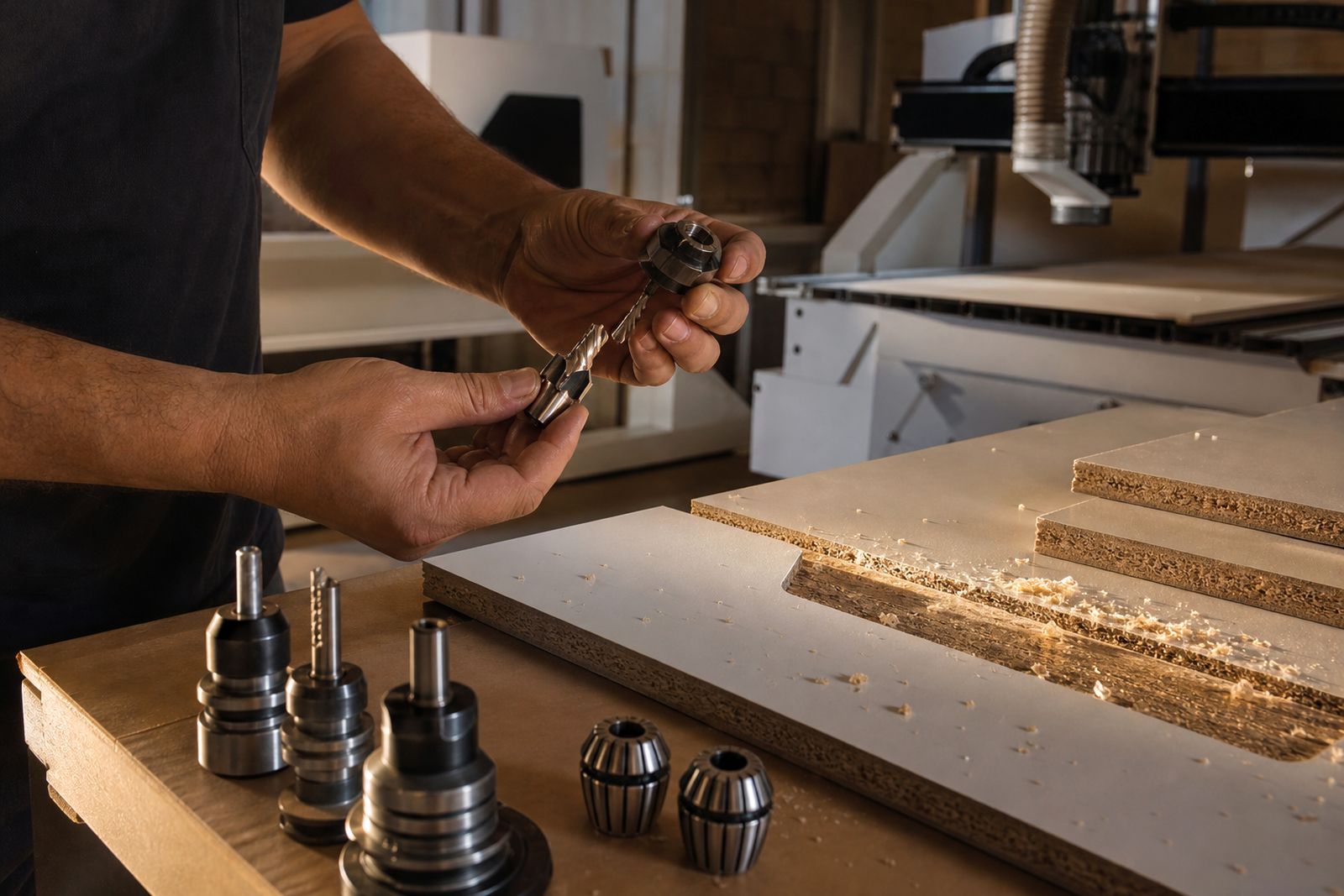
Another problem is not cleaning the collet and nut, which increases runout. Even a few microns extra vibration makes higher-flute-count cutters more likely to rub or break. Always check runout with a dial indicator after tool change, and never stick out more than 30 mm on a 6 mm shank. It’s easy to forget, but chip recutting is a silent killer for tool life, vacuum up between passes.
When four flutes work for wood and composites
Four-flute end mills shine in compacted, abrasive materials, think MDF, HDF, or hardwood beading, where chip clearance is less of a problem. In these cases, four flutes can let you step the feed up for cleaner edges and longer tool life. Our Edge Pro compression spirals in four-flute work well for kitchen panel shops from Randburg to Gqeberha, especially with dust extraction and solid vacuum hold-down.
It’s also worth noting that in sign shops cutting fibre-reinforced panels, a four-flute tool with a sharp edge and AlTiN coating handles the heat and wear much better. Just make sure you’re not running too slow, or you’ll blunt the edge fast. Ramping into material is smoother with more flutes, reducing chipping on surface laminates.
Related: Edge Pro endmills and Aluminium trim shops. Browse all tools or more edge notes.
What our Cutting Tool customers say
Verified Google reviews
Also worth a look

Tell us about the job you need to cut
Send a note through our contact form with your machine, spindle and collet size, the material and thickness, the finish you need and your area, and we will come back with practical cutter options and a quote.
Open the contact form