

Climb vs conventional
Softwood edges that stay clean when climb milling is allowed.
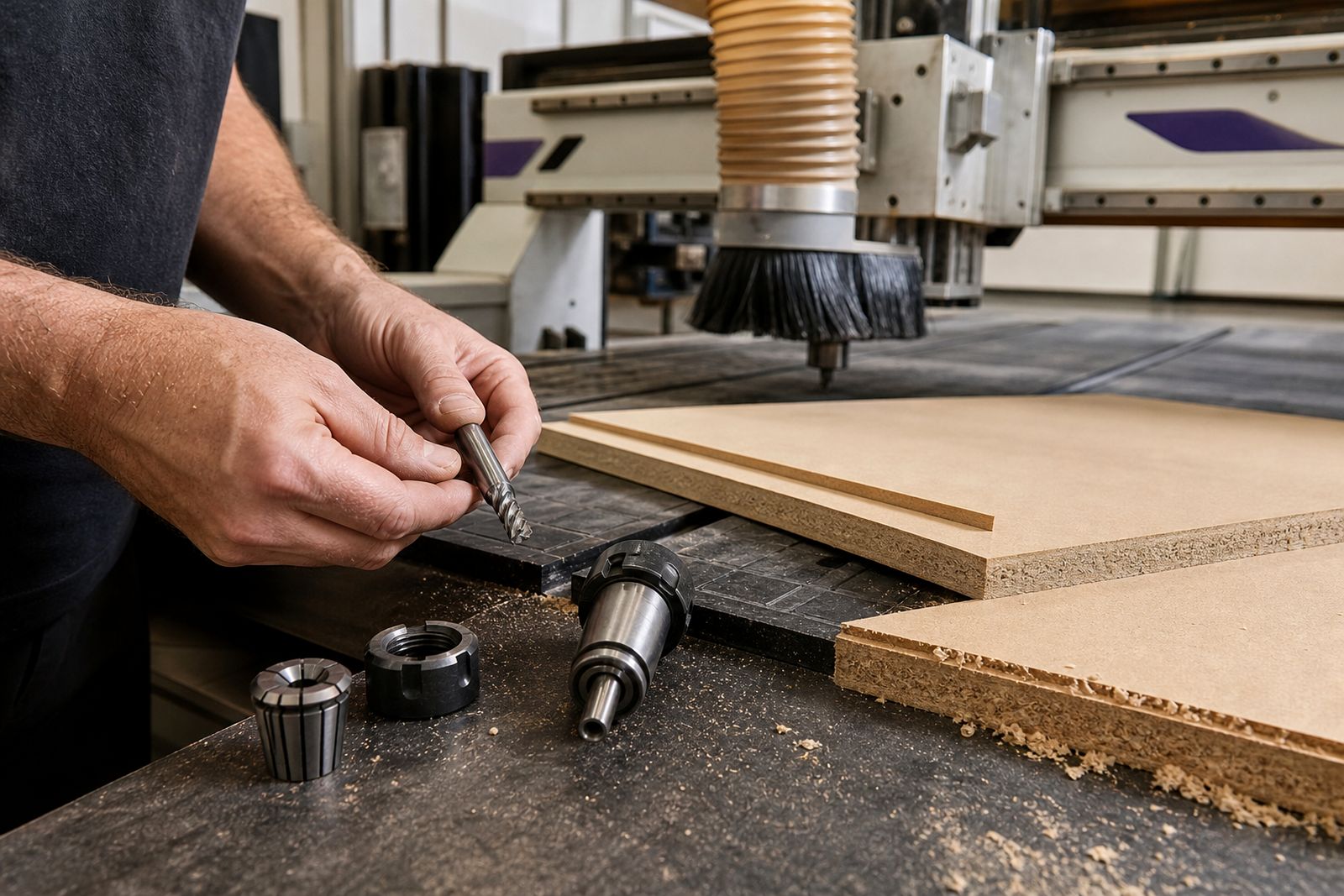
Understanding climb and conventional passes on softwood
Climb milling and conventional milling each have their place in CNC routing, but when it comes to softwood edges, the right choice can make the difference between a crisp, clean edge and a mess of splinters. I have seen plenty of joiners and furniture studios across Joburg, Durban and Cape Town struggle with this, especially when humidity or timber grade changes the game. Here I’ll break down when and how climb milling can give you a better finish, and where the risks lie.
In conventional milling, the cutter’s rotation moves against the feed direction so the tool meets the timber with a scraping action. This is safer for beginners and can be more forgiving if your machine has backlash or slack in the screws or rails. However, on softwoods like pine, meranti or saligna, conventional passes tend to lift and tear the fibres along the edge, producing a rougher finish, especially on end grain.
Climb milling, on the other hand, means the cutter rotates with the feed so the teeth start by biting into fresh material and exit cleanly. This shearing action leaves a smoother edge, often with less fuzz or torn grain on softwoods. On well-maintained CNC routers with minimal backlash, climb milling is my go-to for finishing passes on softwood edges.
What to check before choosing climb milling
First make sure your machine’s motion is tight, no visible backlash in X or Y and no flex in the gantry. Use a dial indicator to detect any play if you’re unsure. Climb milling puts extra load on the machine and can grab workpieces if hold-down isn’t solid. In workshops with vacuum tables, check the vacuum is steady and the spoilboard is flat and sealed. For smaller machines or simple jigs, screw-down or cam clamps can help.
Also, always fit a sharp upcut spiral or compression bit, as a blunt tool will worsen tear-out regardless of milling direction. Watch that your stick-out is 25 mm or less for a standard 8 to 10 mm upcut, to avoid chatter and flex at the tip.
Setting feeds, chip load and edge quality
For softwood edges, start with a chip load of 0.12 to 0.18 mm per tooth. With a common 2-flute upcut and a spindle speed of 18,000 rpm, try a feed rate of 4 to 6 metres per minute and adjust on test pieces, watching for splinters or burning. Lower feeds can actually make fuzzing worse as the cutter rubs and heats up. If you hear excessive squeal or see resin building up, clean the tool and check if the dust extraction is doing its job.
Always finish with a pass of 0.5 to 1 mm stock left, using climb milling for that last cleanup. Consider a lighter stepdown (say, 3 to 4 mm per pass in dense pine) for best results. A light mist or air blast keeps resin and chips clear, especially in the humid coastal shops around Durban.
- Check chip load by dividing feed rate by spindle rpm and number of flutes
- Start test cuts with conservative stepdowns, then increase as the machine allows
- Use dust extraction to keep resin off the flute and keep the edge cool
Avoiding problems and making the most of climb passes
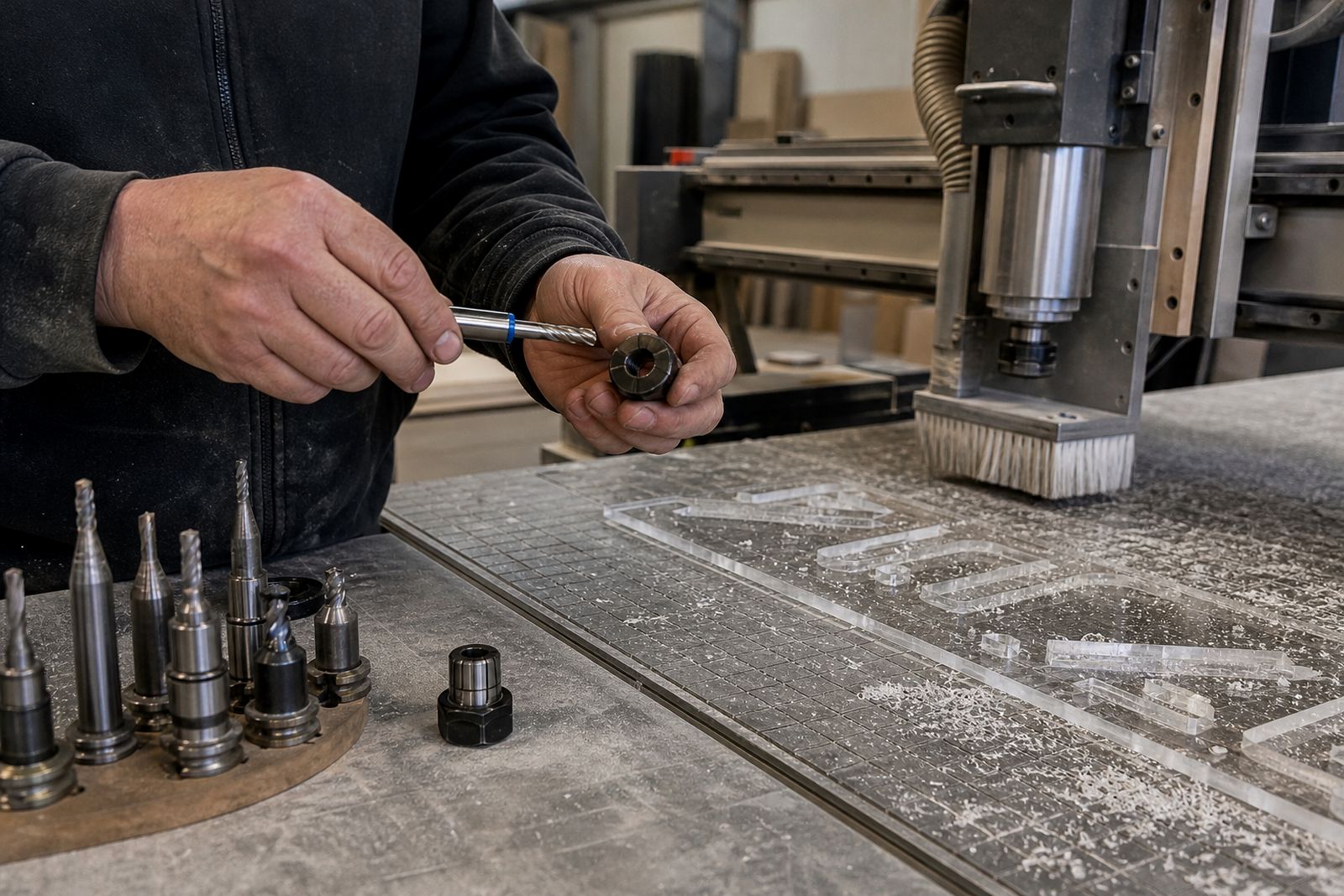
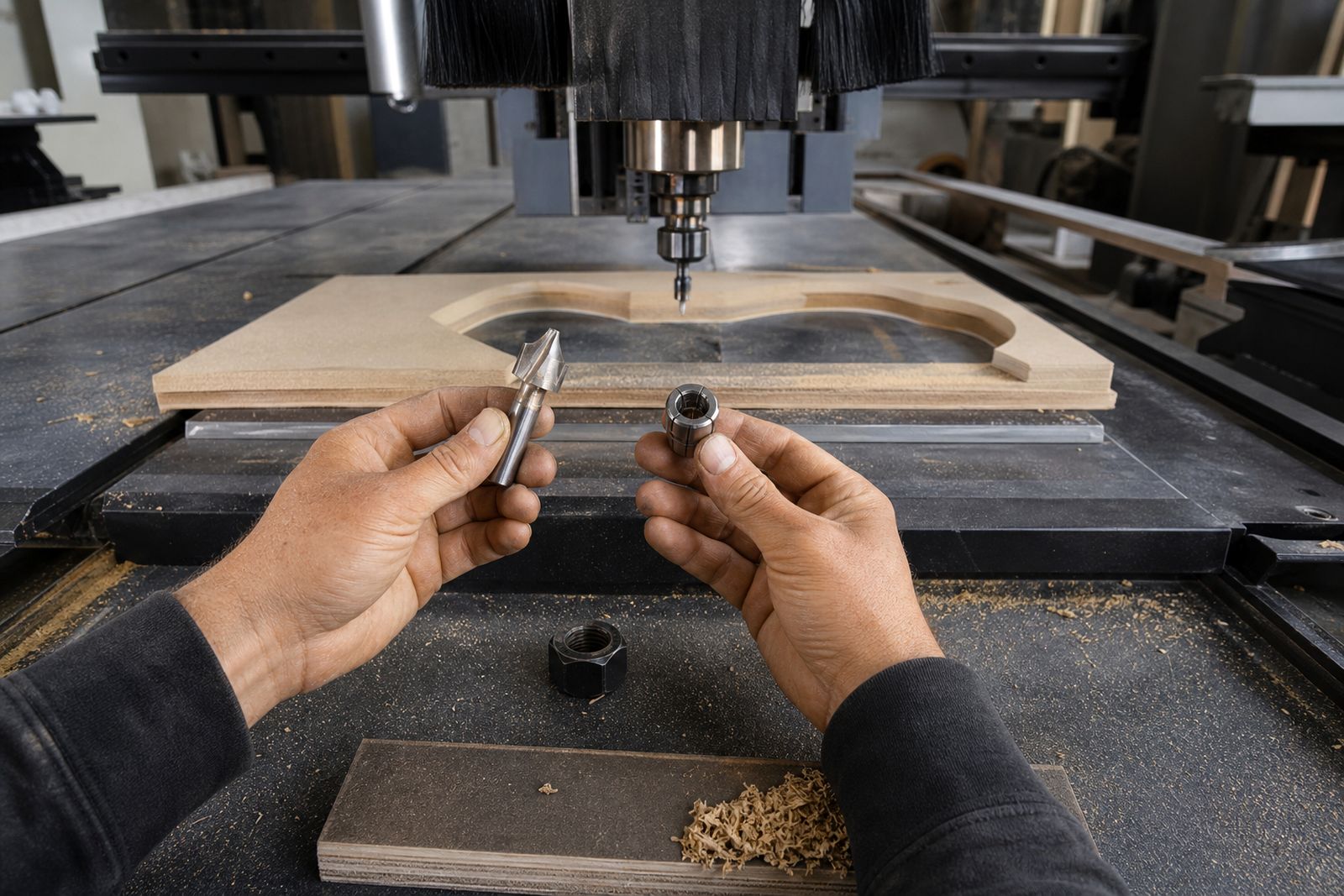
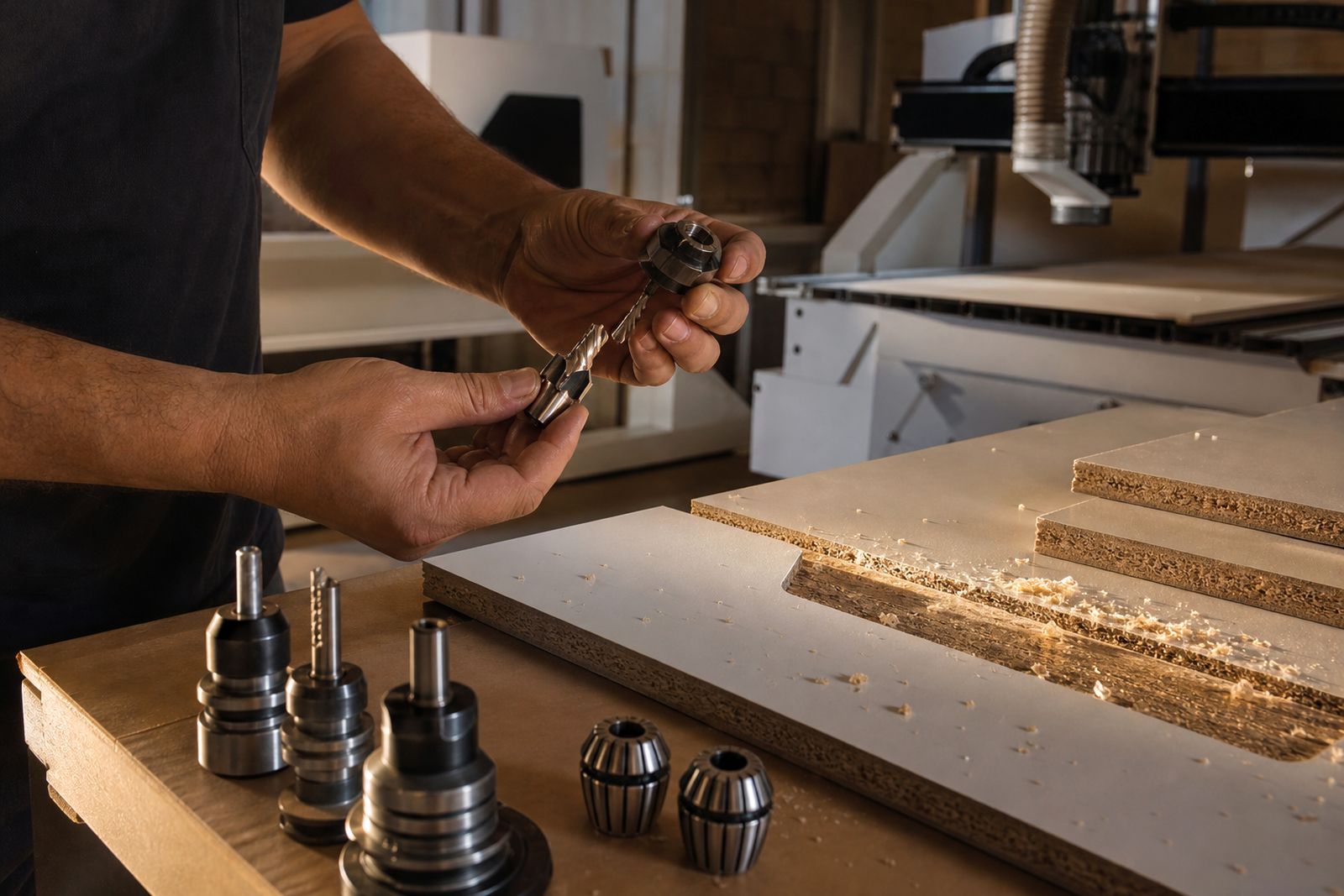
If you notice chatter, scalloping or the workpiece shifting during climb milling, stop and check your collet, tool holder, and hold-down system. A dirty or worn collet increases runout, replace it if you measure more than 0.03 mm runout with a dial indicator. Always torque the collet nut to the cutter maker’s recommended spec. Never try to hold a narrow offcut by hand or reach in while the spindle is turning, and follow the OHS Act for eye and hearing protection.
Finish passes in climb direction are especially sensitive to softwood density and local conditions. In winter on the Highveld, dry pine can chip out at knots, so slow the feed slightly or use a compression spiral. Along the coast or in KZN humidity, watch for resin softening and clean your cutters more often. If you do get a bit of fuzz on the edge, a quick onion-skin pass with a sharp bit can remove it without sanding.
Related: Softwood upcut pack and Furniture studios. Browse all tools or more edge notes.
What our Cutting Tool customers say
Verified Google reviews
Also worth a look

Tell us about the job you need to cut
Send a note through our contact form with your machine, spindle and collet size, the material and thickness, the finish you need and your area, and we will come back with practical cutter options and a quote.
Open the contact form