

Shared spindle manners
School and hobby cells that share one spindle without chaos.
Set up a clear tool change routine
In many South African school and hobby CNC workshops, sharing a single spindle across several routers or mill beds is common. It saves money, but if the tools and collets are not handled right, chaos and breakdowns follow fast. I’ve seen neat cells run smoothly with strict habits, and others grind to a halt for avoidable reasons.
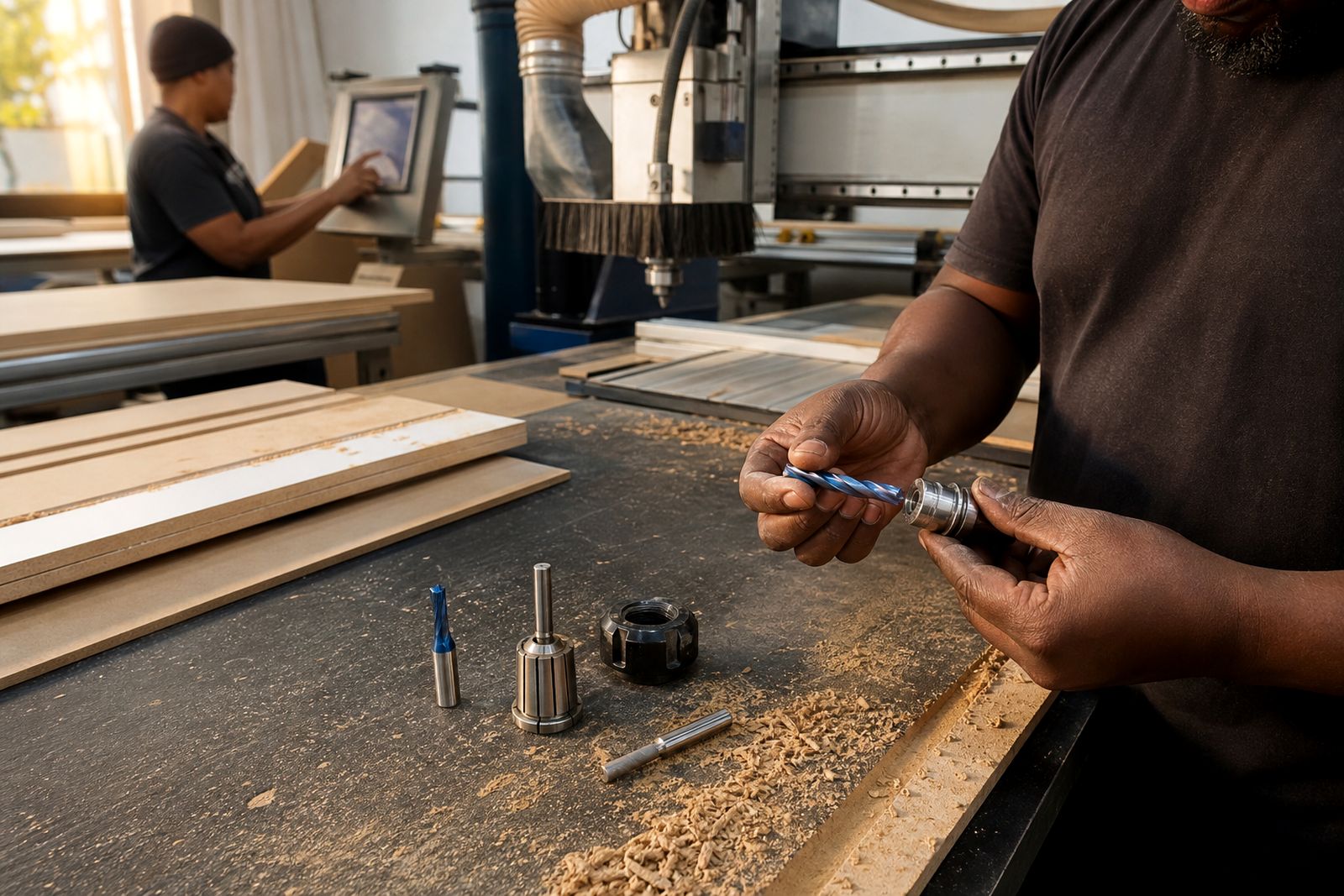
A shared spindle makes it easy for mistakes to creep in during tool changes. Decide on a standard: always power down, spindle lock on, and remove the collet holder with the correct spanner before swapping tools. Lay out a clean work area for bits, holders and collets so nothing rolls off or goes missing. One common error is misplacing the nut or using the wrong size collet for a tool shank, which can cause runout or even slip during a pass.
Before each job, check that the cutter shank matches the collet size exactly, don’t force an 8 mm bit into a 6 mm collet. Wipe down every tool and collet before fitting, as a single speck of sawdust or aluminium chip can stop the collet closing evenly. For schools, label each holder and collet set by size, and teach each group to return them to their marked tray.
- Always power off before changing bits
- Check collet and bit size match
- Keep a marked tray for each size
- Clean components before each use
Match holder and collet to the job
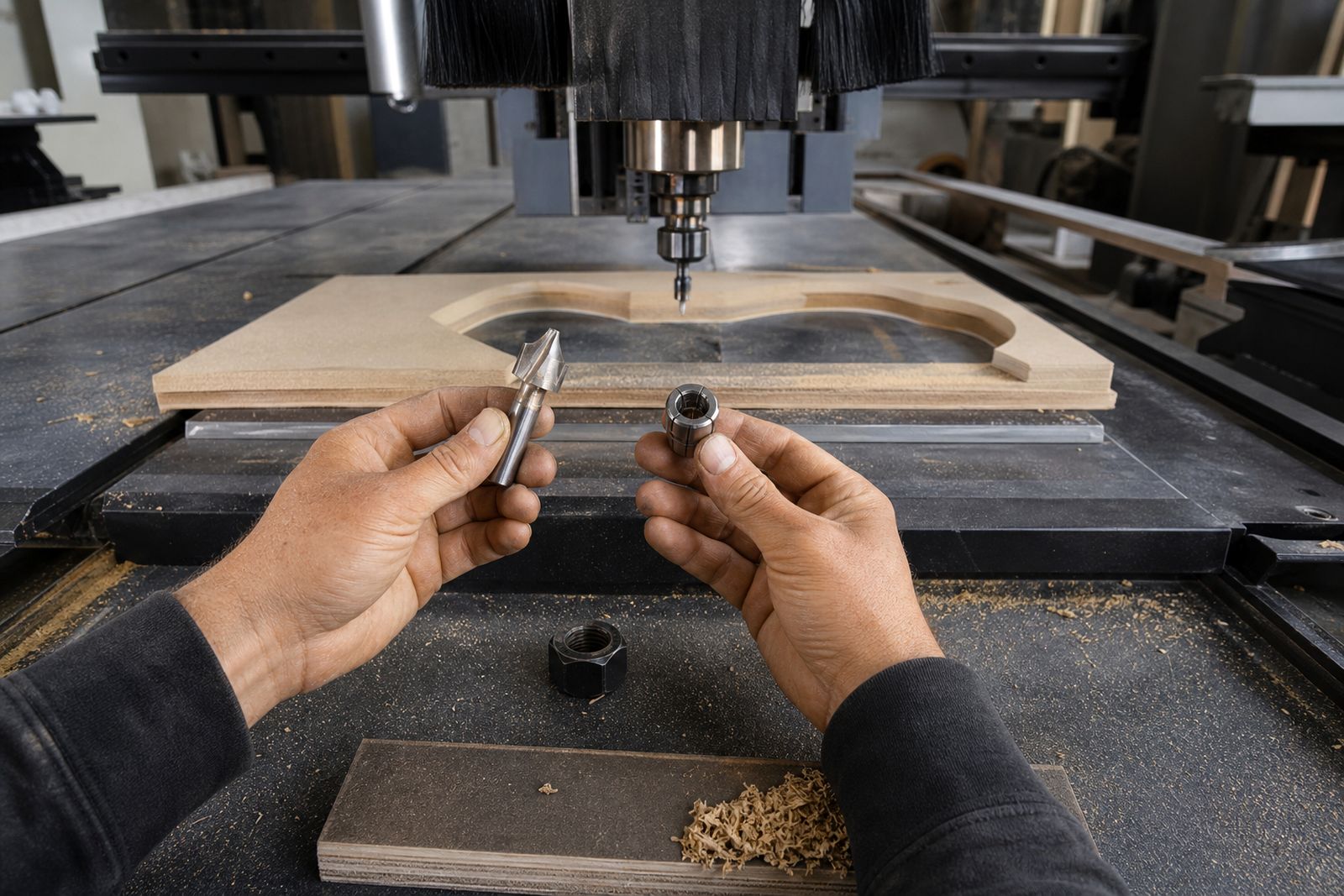
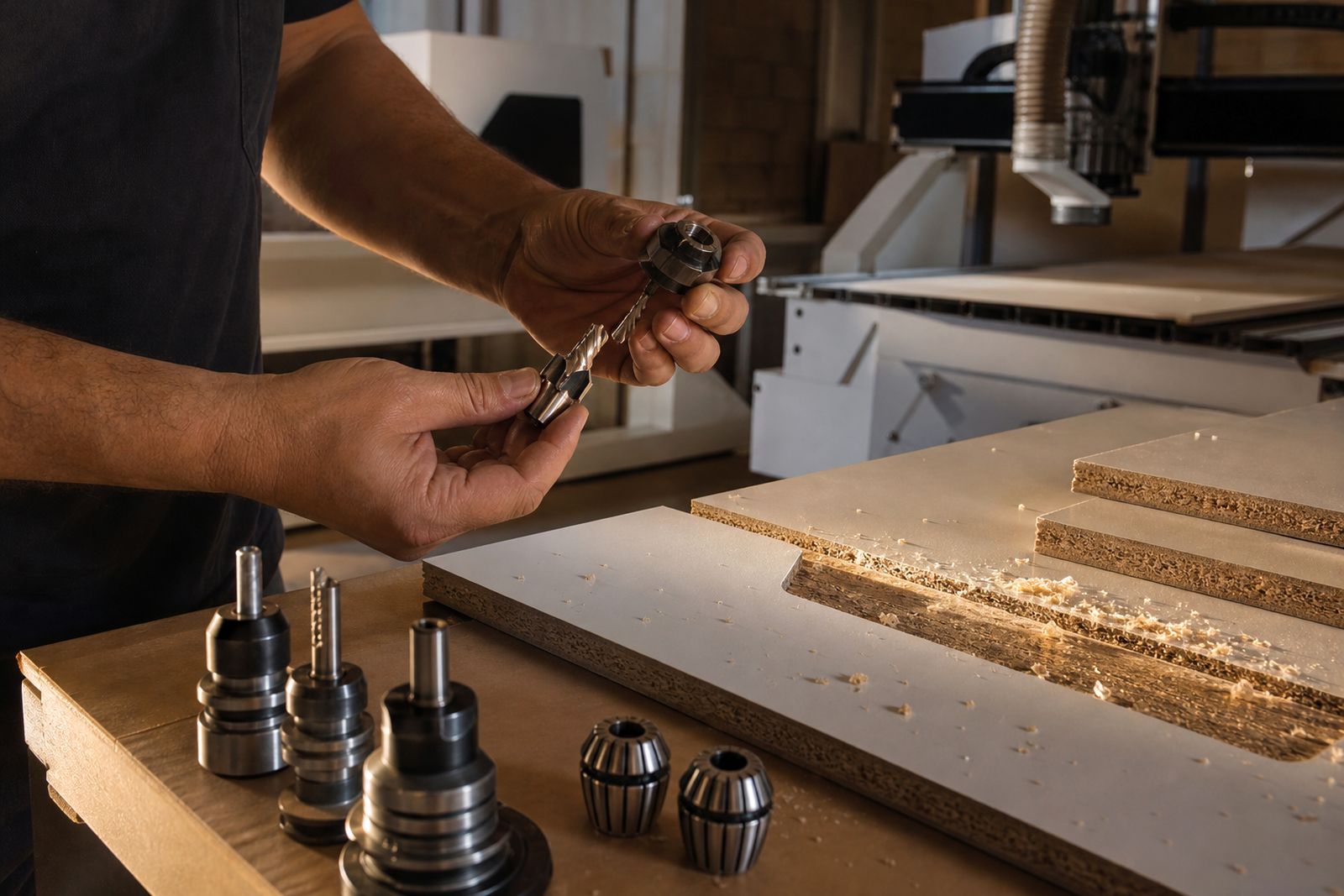
We see a lot of confusion about which collet and nut goes with which job. ER collets are most common: for example, ER16 covers 1 to 10 mm, while ER32 handles 2 to 20 mm. Use the smallest holder that fits the cutter for maximum grip and the least runout. For 3 mm to 12 mm shank cutters, ER16 and ER20 are good choices. Stick-out (how far the cutter extends from the holder) should be kept to the bare minimum for each job, as extra stick-out increases vibration and runout.
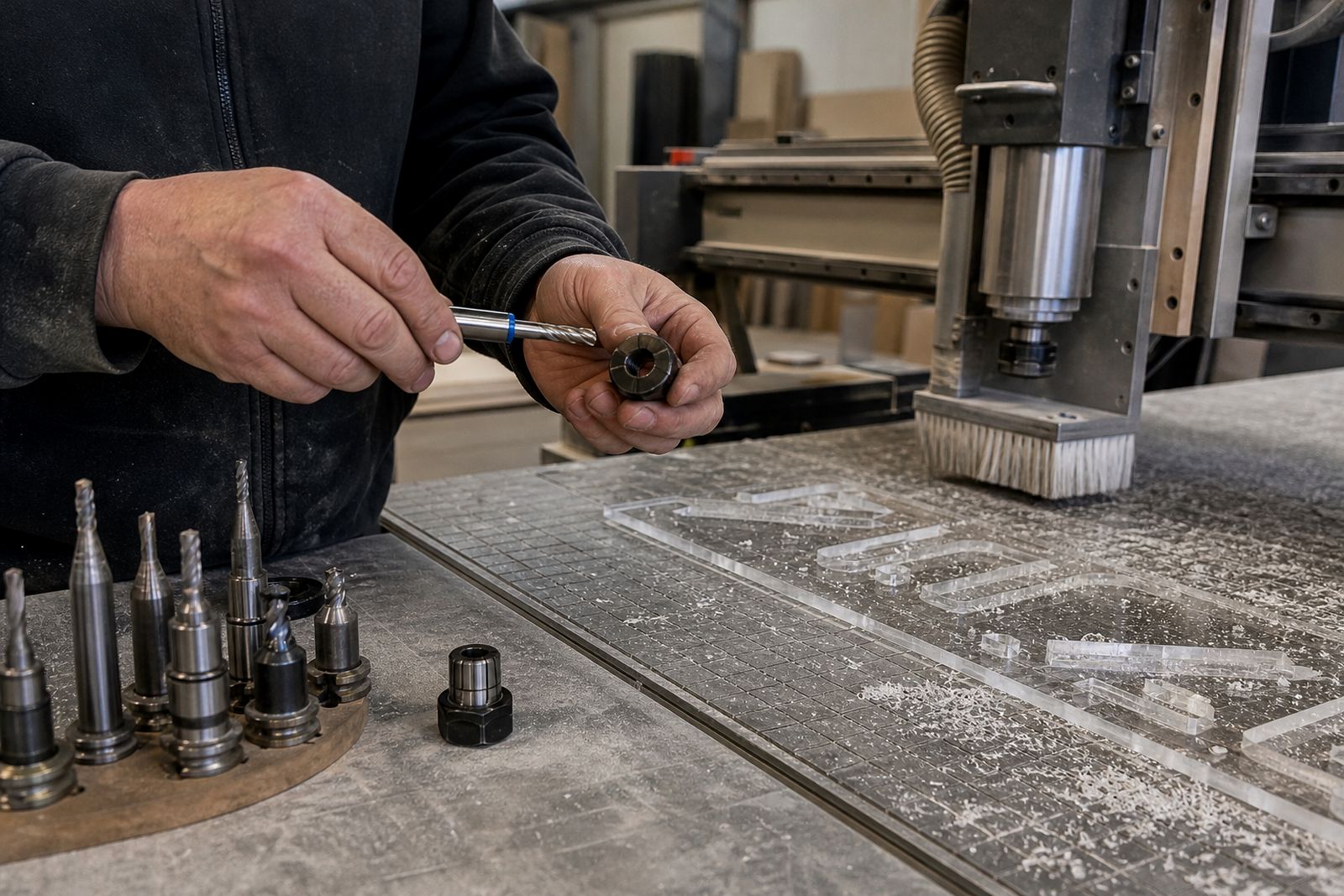
Each time, snug the nut with a torque spanner if you have one, or make it firm by hand without over-tightening. If you’re swapping between aluminium and MDF, note that resin from wood builds up inside collets. Scrub with a brass brush every week. This keeps your tool life up and prevents chatter or slippage.
Track spindle and tool life together
When multiple users share a spindle, it’s easy to lose track of tool wear and spindle hours. To avoid downtime, stick a simple log sheet or printable card above each cell. Mark the hours run, which tools have been used, and any odd noises or finishes. If a cutter starts burning wood or leaves a rough edge in Perspex, don’t ignore it, flag it for a check or swap out. For schools, get each group to record the feeds and speeds they used, so everyone learns what works and what does not.
A typical carbide spiral end mill on MDF lasts 6 to 10 hours of cutting if feeds are correct (say, 2.5 to 4 metre/minute feed at 18,000 RPM is a safe starting point for a 6 mm bit). If you notice chipped edges or blueing, retire or send for regrind straight away to avoid spindle damage.
Avoid cross-contamination and protect equipment
South African humidity and coastal air in Durban or Cape Town mean more rust risk for holders and collets. Wipe all steel parts with a drop of machine oil before storing, and never leave a bit in the spindle overnight. In rooms where wood, aluminium and plastics are cut with the same spindle, always clean the collet and holder between material changes to stop wood dust contaminating acrylic or aluminium jobs.
Never mix up the holders, dedicate one set for aluminium and another for wood if possible. For vacuum tables, check for chips in the spoilboard after each pass, as trapped debris can knock a bit out of centre. If you get a power cut mid-job, always re-zero the cutter just in case the spindle moved slightly.
Related: Holder Collet Kit and School workshops. Browse all tools or more edge notes.
What our Cutting Tool customers say
Verified Google reviews
Also worth a look

Tell us about the job you need to cut
Send a note through our contact form with your machine, spindle and collet size, the material and thickness, the finish you need and your area, and we will come back with practical cutter options and a quote.
Open the contact form