

Collet torque notes
Tightening torque that keeps ER collets true on shared school spindles.
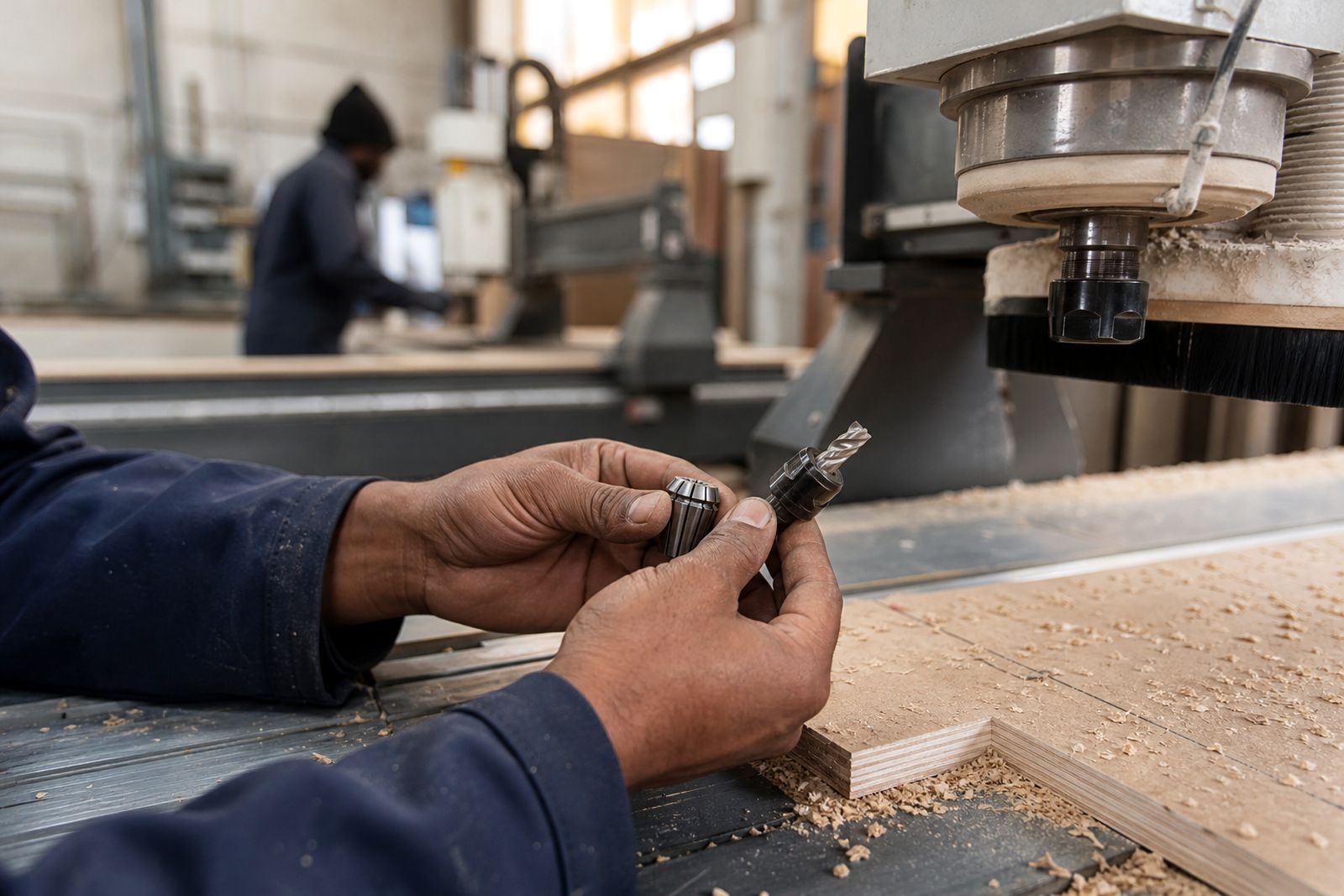
Why collet torque matters most on shared machines
In South African school workshops, shared CNCs get a lot of hands and different skill levels, so keeping ER collets tight enough, but not overtightened, is a real concern. I’ve seen many end mill breakages and poor finishes simply from the wrong torque on the collet nut. Let’s talk about what actually works to keep collets running true and cutters seated properly, especially with our climate swings and busy benches.
Incorrect torque on the collet nut is one of the main reasons for runout, tool slip and even spindle damage in school CNC routers and milling machines. Too little torque, and the cutter creeps or even pulls out under load, especially during heavy plunges or deep pockets. Over-tightening, on the other hand, distorts the collet or damages the threads in the nut. In shared spaces, tools are swapped out constantly, sometimes by learners in a rush, so the risk is higher.
A typical ER16 or ER32 nut needs 50 to 90 Nm to clamp well, but not all teachers have a torque spanner handy. Instead, they often rely on 'hand-tight plus a nudge', which is inconsistent and depends on the person. Proper torque avoids uneven pressure on the cutter, which can show up as chatter in MDF or melting in acrylic, especially when humidity is high or the air is dusty after a dry Highveld winter.
Steps to achieve correct collet clamping force every time
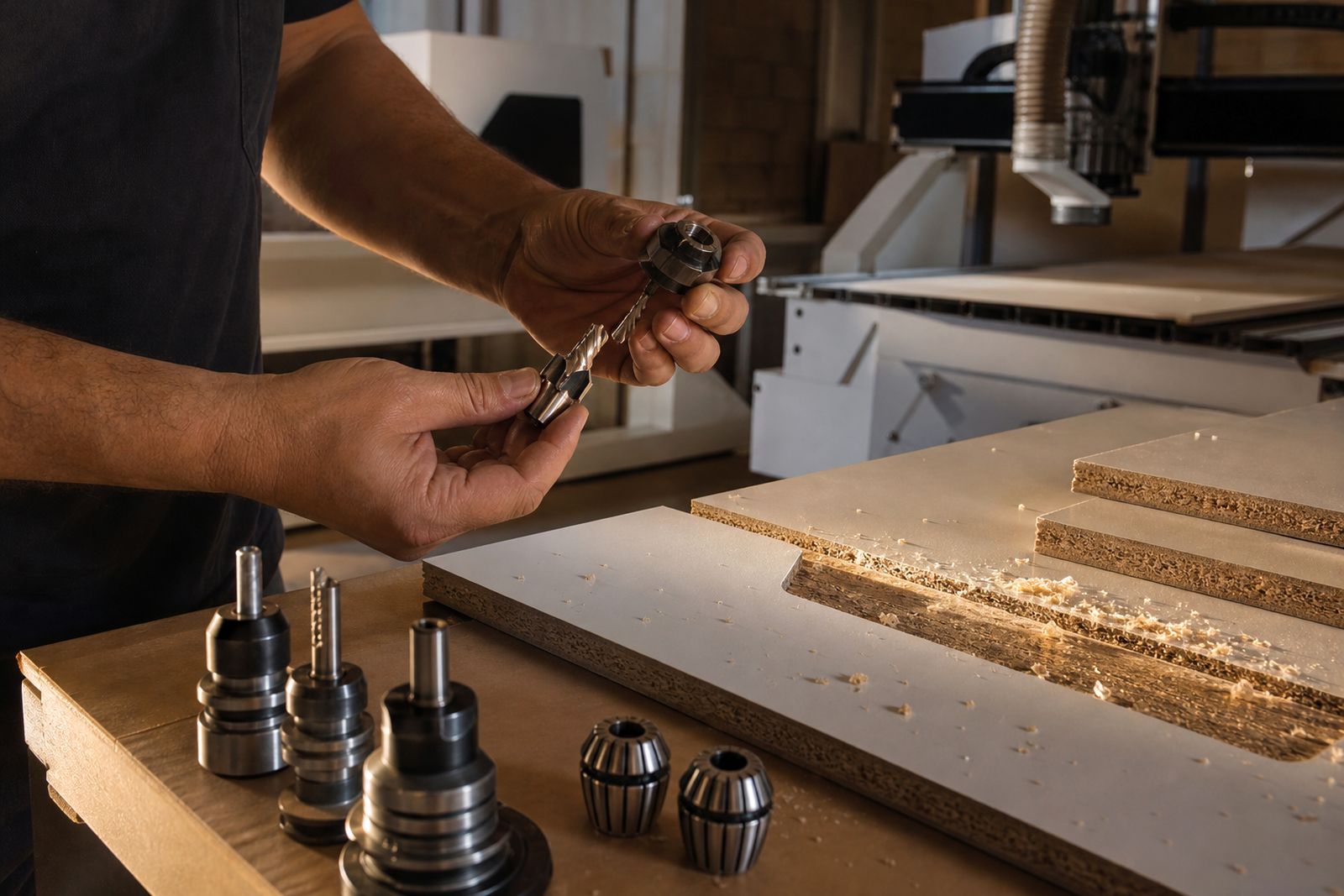
First, start by cleaning the collet, nut and holder. Fine dust, especially from MDF or chipboard, builds up in the grooves and stops the collet from closing evenly. Wipe down the parts and blow out the slots with compressed air if you can. Check for resin build-up, which we see a lot after tight cuts in melamine or pine.
Insert the tool fully into the collet, then back it off 1 mm so the flutes are clear of the collet face. Hand-tighten the nut first, then use a calibrated torque spanner wherever possible. If you don’t have one, a standard ER32 nut will usually take about the same force as hanging a 10 kg bakkie battery on the end of a 300 mm spanner, not much more. Practice on a bench to get the feel and compare with a torque tool.
Never use two spanners in a 'cheater bar' setup or bang the nut with a mallet. This can damage both the nut and your spindle bearings. And always check that the collet is seated and not cocked in the nut before tightening.
Common mistakes in school and college workshops
We often get collets in for regrind or replacement that have been overtightened until the slots have splayed open, or with cutter shanks welded in from slippage and fretting. Another regular issue is dirt in the taper or a collet seated unevenly, causing up to 0.1 mm runout. This leads to visible ‘double tracks’ in acrylic or aluminium and quickly dulls the corners of expensive bits.
Shared machines also see collets mixed up between ER types or nut designs, which can cause poor clamping or even jam the nut altogether. Running cutters with sticks-out longer than necessary, often to reach over clamps or jigs, increases leverage and makes proper torque even more critical. With all the hands and quick changes, it’s easy to skip the cleaning or to forget to check runout with a dial indicator.
- Over-tightening collet nuts beyond specification
- Mixing collet types or nut sizes
- Skipping cleaning between changes
- Failing to check runout before a job
- Using excessive cutter stick-out
Best practice for long tool and collet life in South African conditions
Stick to the right torque specs whenever possible and standardise tool changes by keeping a torque spanner near the CNC, even if learners do most of the setups. Marking spanner handles with a bit of tape at the right torque spot can also help where tools are shared. Make sure everyone knows not to use extra force or knock the nut.
Keep collets, nuts and holders clean and dry, especially in Durban and Cape winters where moisture can cause light rust overnight. After every few changes, check for runout with a dial indicator; anything above 0.02 mm may mean the collet is worn or dirty. Retire any collet that won’t spring back or shows visible slot deformation, and arrange regrind or replacement through your tooling partner. All these steps will keep your CNC running smooth and your end mills lasting longer, whether you’re in Joburg, Bloem or PE.
Related: Holder Collet Kit and School workshops. Browse all tools or more edge notes.
What our Cutting Tool customers say
Verified Google reviews
Also worth a look
Tell us about the job you need to cut
Send a note through our contact form with your machine, spindle and collet size, the material and thickness, the finish you need and your area, and we will come back with practical cutter options and a quote.
Open the contact form