

Slot width discipline
Metric slots that match extrusion drawings without guesswork.
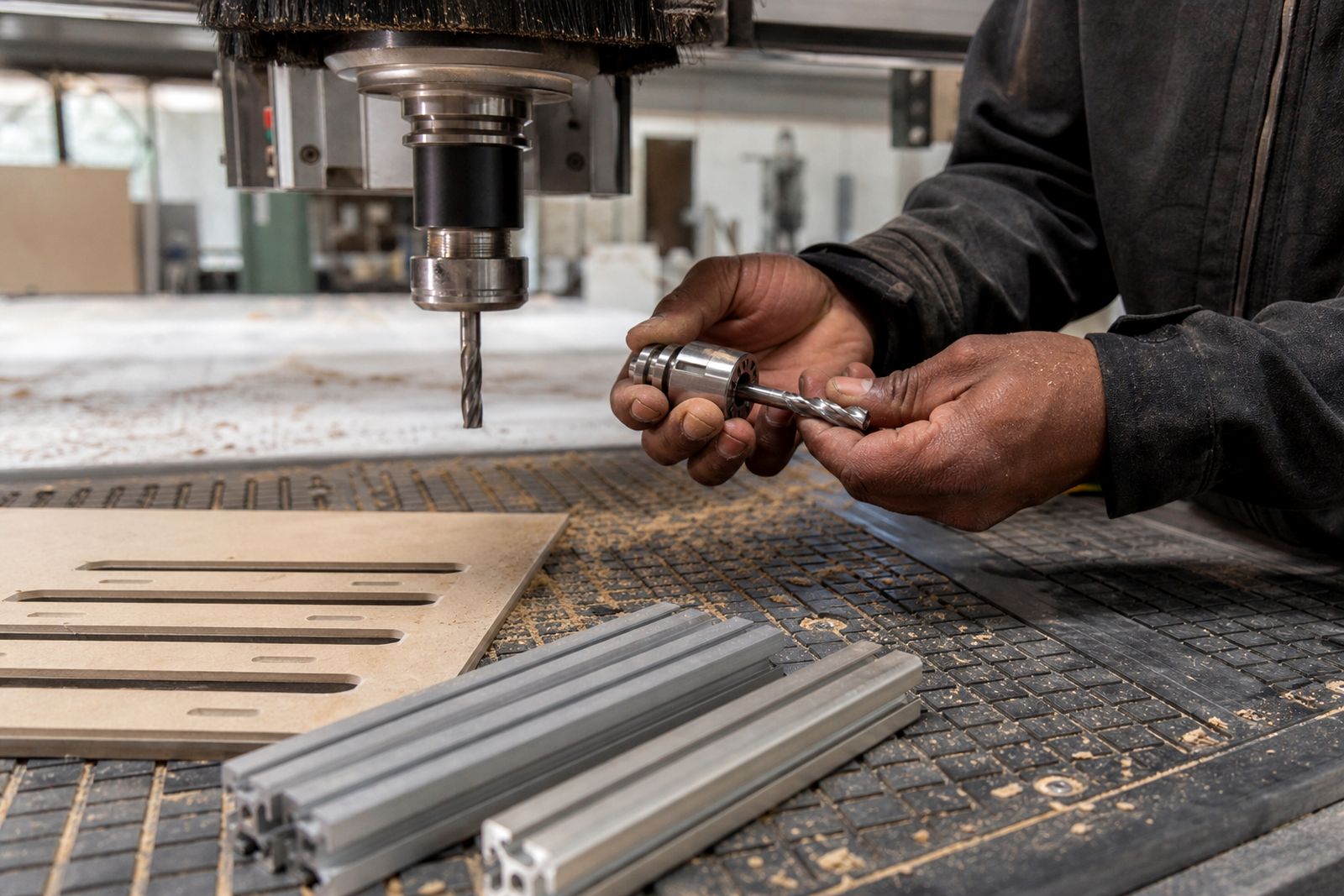
Check the extrusion drawing first
I see daily how much frustration comes from slots that just don’t fit extrusions. Slot width discipline is about removing guesswork and getting those clean metric fits every time, especially when working with aluminium profiles or cabinetry joinery. Let’s dig into the nuts and bolts of locking in accuracy and repeatability when you’re cutting slots on the CNC.
Before you even think about toolpaths, get your hands on the extrusion or fitting spec sheet. South African aluminium extruders tend to stick to metric, but always check: 6 mm, 8 mm and 10 mm are common slot standards. Use a digital caliper and measure the actual slot or tongue you want to fit. Double-check the fit with a feeler gauge if you have one, especially if the extrusion drawing gives a tolerance range (for example, 8.1 to 8.3 mm). This saves you a pile of headaches later, especially when bulk ordering fittings that must just drop in. Write down your measured size to match in your CAD programme.
How cutter choice affects slot width
Carbide slot drills and end mills are marked in millimetres, but the finished slot is only as accurate as the tool’s actual cutting diameter. We have seen plenty of bits marked 6 mm that measure in at 5.97 mm or even 6.04 mm with the micrometer, either can throw your extrusion fit off. Always measure the tool tip before you start. If you’re using a new bit from our carbide slot set or a trusted local regrind, you’ll get closer, but double-check all the same.
Stick-out also matters: the longer the tool, the more chance of deflection, especially in tough hardwood or thick MDF boards. Keep your stick-out as short as possible to minimise runout, and measure runout with a dial indicator at the tool tip. For most shopfitting slots, single or two-flute upcut spirals are preferred for chip clearance. Clean the collet and nut, and seat the cutter firmly. If you’re slotting aluminium, use an uncoated cutter or ZrN, and run a mist or air blast to clear chips and keep things cool.
Program slot width for a perfect fit
If your slot tool is spot on the required width, a single full-depth pass is the quickest, but only if your spindle power and hold-down are solid. For wider slots, programme a contour or pocket toolpath with an offset: for example, to cut an 8 mm slot with a 6 mm end mill, run two offset passes at 1 mm stepover, then a spring pass to clean up both faces. Don’t forget to leave a finishing allowance, say 0.1 mm per side, then do a final full-depth finishing pass for best fit. Always ramp in, never plunge straight down, to extend tool life and avoid chatter marks.
Watch out for cut width drift if you’re pushing feed rates too high or taking too much stepdown at once. For pine and MDF, 3 to 5 mm stepdown per pass is typical, but for aluminium profiles, less is more: keep pass depth conservative and feeds moderate, around 2500 to 3 500 mm/min to start. Adjust on test cuts, and keep a printed feed chart and slot gauge handy at the CNC.
Slot fit mistakes and consistency
The most common issue we see is not calibrating the tool diameter and then wondering why fittings just won’t press in smoothly. Another is running a dirty or worn collet, which can add invisible runout and widen the slot by a few tenths. Sometimes someone will measure the slot after a power cut and don’t re-zero the machine, so their second pass is off by half a millimetre. Make sure to re-zero after any interruption.
In Durban’s damp or a Highveld dry winter, remember wood-based boards will shift a little, so always check your fit after a few test cuts. Avoid slotting too fast and melting MDF resin, which closes up the slot. If you’re running a production batch, check slot width regularly with a go/no-go gauge. When a cutter gets dull or chips, retire it or bring it in for a regrind, rather than fighting with poor fit.
- Measure both the cutter and material before slotting
- Use clean, properly torqued ER collets
- Re-zero after any power or machine stoppage
- Test slot fit at the start of each job
- Replace dull or chipped cutters promptly
Related: Carbide slot set and Shopfitting weeks. Browse all tools or more edge notes.
What our Cutting Tool customers say
Verified Google reviews
Also worth a look

Tell us about the job you need to cut
Send a note through our contact form with your machine, spindle and collet size, the material and thickness, the finish you need and your area, and we will come back with practical cutter options and a quote.
Open the contact form