

Shopfitting weeks
Shopfitting crews rely on accurate slotting, nesting, and edge-breaking to keep retail and commercial projects on schedule.
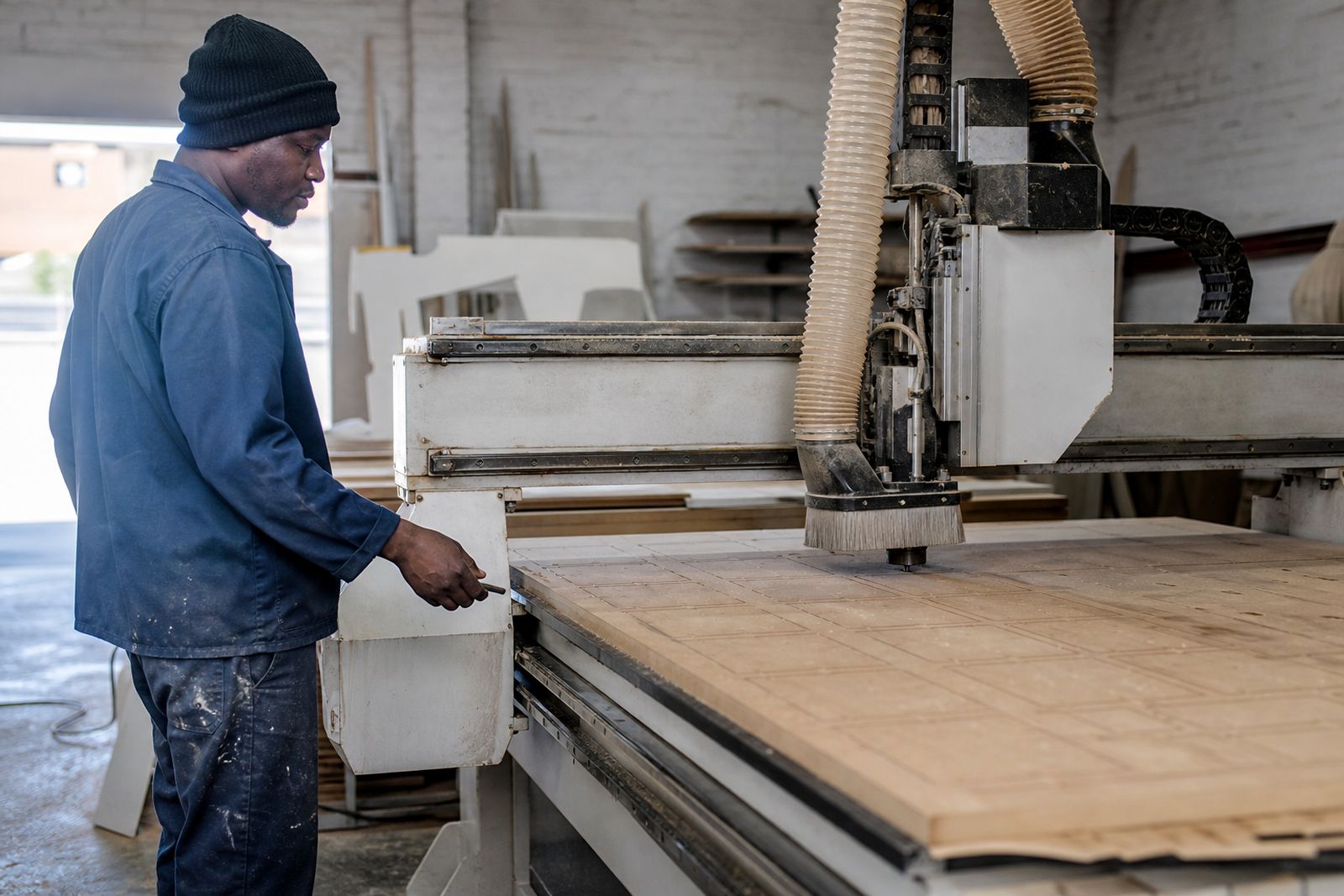
Shopfitting work means fast nesting and clean joinery
Shopfitters commonly need to run slots, nested parts, and clean chamfered edges. CuTool’s carbide slot set, compression nest bit, and chamfer edge kit are built for these high-output weeks.
See also edge notes and printable cards.
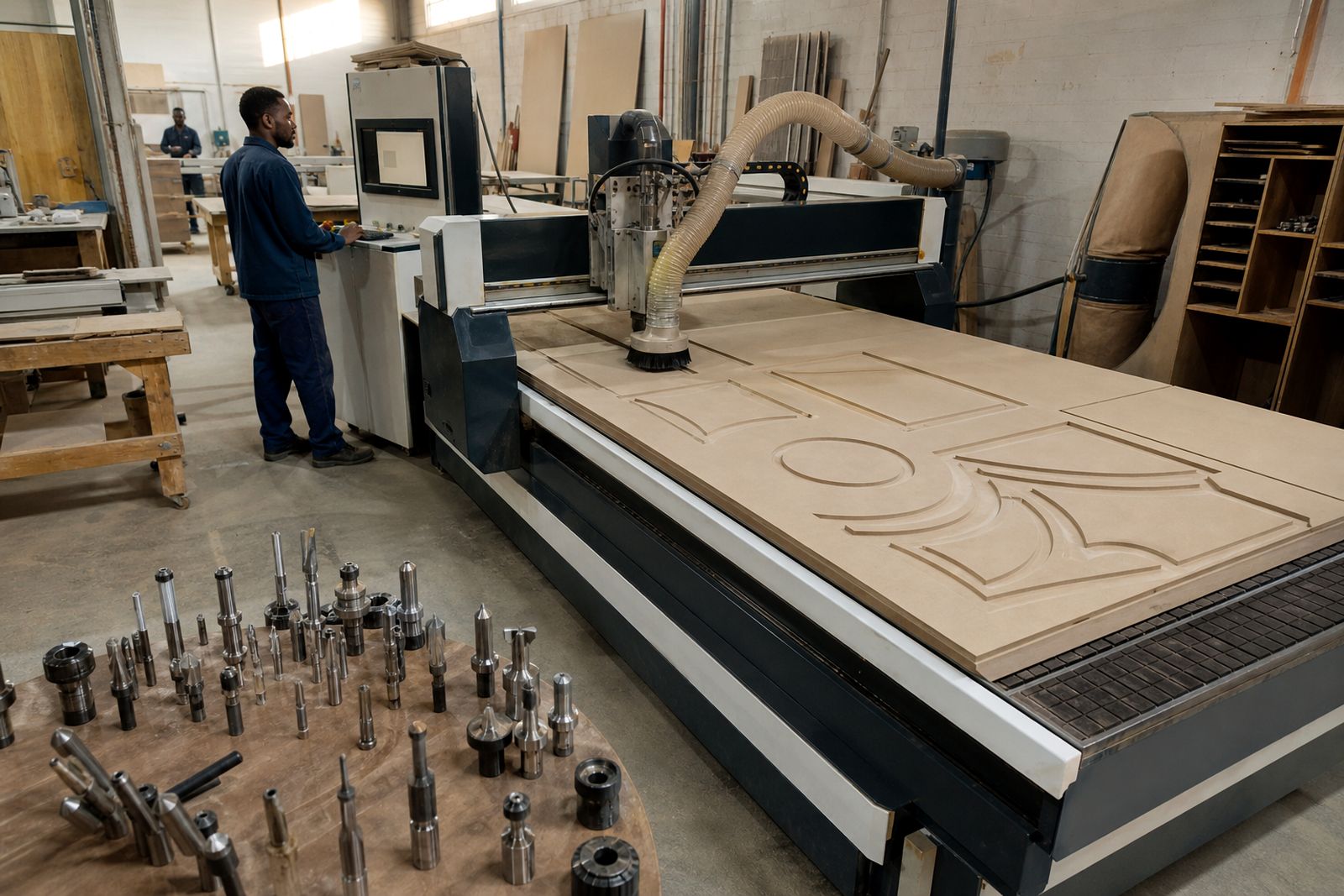
Shopfitting teams cut a mix of melamine, MDF, plywood, compact laminate, and acrylics for counters, shelving, display units, slatwall, and kiosks. Panels often arrive in standard 2.7 to 3 metre sheets that must be slotted, nested, drilled, edged, and sometimes rebated for hardware or LED strips. Most work is for retail, hospitality, or banks, with tight deadlines and exacting finish requirements, especially on visible edges.
Nest jobs can involve hundreds of parts per week, often with intricate slots for shelf pins, cable routing, or concealed fixings. Tolerances are usually within 0.2 mm for fit-up, but visible edges need to be reliably chip-free, especially with thinner laminates and acrylics used in higher-end interiors.
Where slotting, nesting and edge-breaking go wrong
Repeated nesting on composite boards quickly dulls tools, especially if there’s any embedded grit or glue in the sheets. A blunt compression bit will start to burn, tear, or chip the laminate face, sometimes unnoticed until assembly. Slot cutters can suffer from chip packing, especially if feed rates are too slow or extraction is poor, leading to heat build-up and resin sticking.
Edge-breaking with a worn chamfer cutter can leave frayed fibres or a scalloped edge on melamine and MDF. Failures are often linked to poor chip evacuation, collet wear (especially after a high-output week), or exceeding the recommended stick-out. Runout above 0.03 mm, checked with a dial indicator, is a common culprit for off-centre slots and excessive chatter.
CuTool kits for slotting, nesting and edge-breaking
For a typical shopfitting build, our team recommends starting with the carbide slot set: select the slotter width to match shelf support or hardware channels, set feed per tooth at 0.08 to 0.15 mm for clean chip clearing, and use an air blast to prevent build-up. Next, the compression nest bit comes into play for nested cabinet and panel parts, upcut at the bottom, downcut at the top, giving a clean edge without laminate lift or bottom fuzz. Adjust stepover to 45 to 55 percent of the cutter diameter, with plunge ramping where possible to minimise breakout.
After the bulk profile cuts, finish with the chamfer edge kit to break sharp machined edges: run at high rpm and moderate feed, ensuring dust extraction is on point. For stacked or double-sided boards, use a light onion-skin pass before final removal. Always check collet cleanliness and torque the nut to spec, loose or dirty collets can cause chatter or edge scalloping.
This tool sequence, carbide slot set, then compression nest bit, then chamfer edge kit, fits most shopfitting jobs.
- Start with accurate slotting using carbide slot set
- Nest and profile with compression nest bit
- Edge-break with the chamfer edge kit
- Check collet and nut before each shift
- Verify runout on critical fits
Planning stock, regrinds and deadlines in shopfitting
Shopfitting weeks often follow a tight programme: cut, edge, flat-pack, and send to site for overnight fitting, sometimes around school terms or festive season peaks. Plan at least one spare set of each cutter for every active CNC, and tag tools needing regrind before they’re fully blunt to avoid mid-week failures. Our regrind partners in Joburg, Cape Town, and Durban can handle common profiles.
Order collets and spare nuts in advance if you’re running multiple shifts or need to cover for power cuts or delays. Store new and reconditioned tools in labelled containers, away from workshop dust and humidity, especially on the coast during Cape winter or Durban’s summer damp. Track which tool set ran each batch, so if a chatter or finish issue crops up, you can trace it back before the next job.
For support or to arrange a regrind, use our contact form.
What our Cutting Tool customers say
Verified Google reviews
Also worth a look
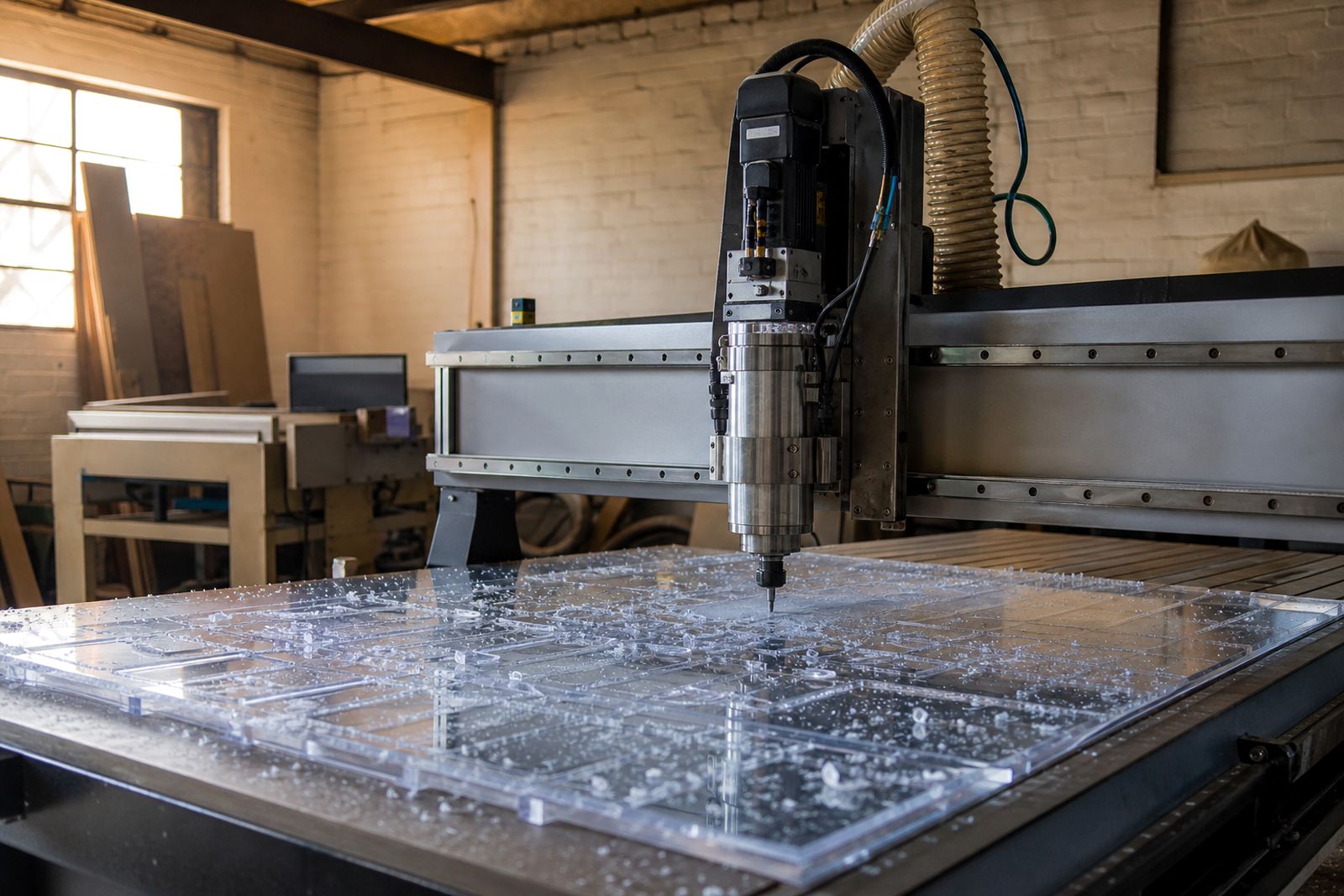
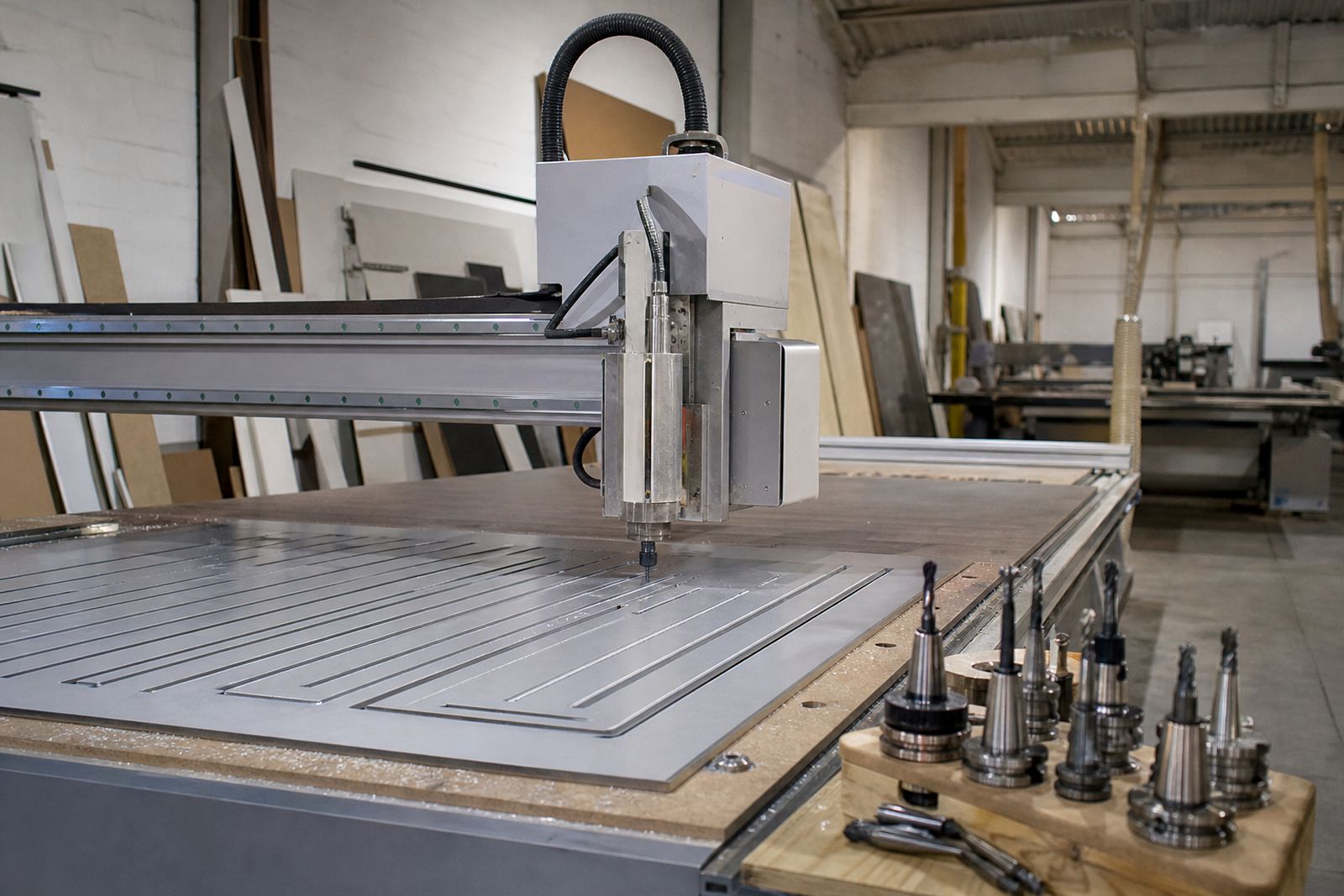
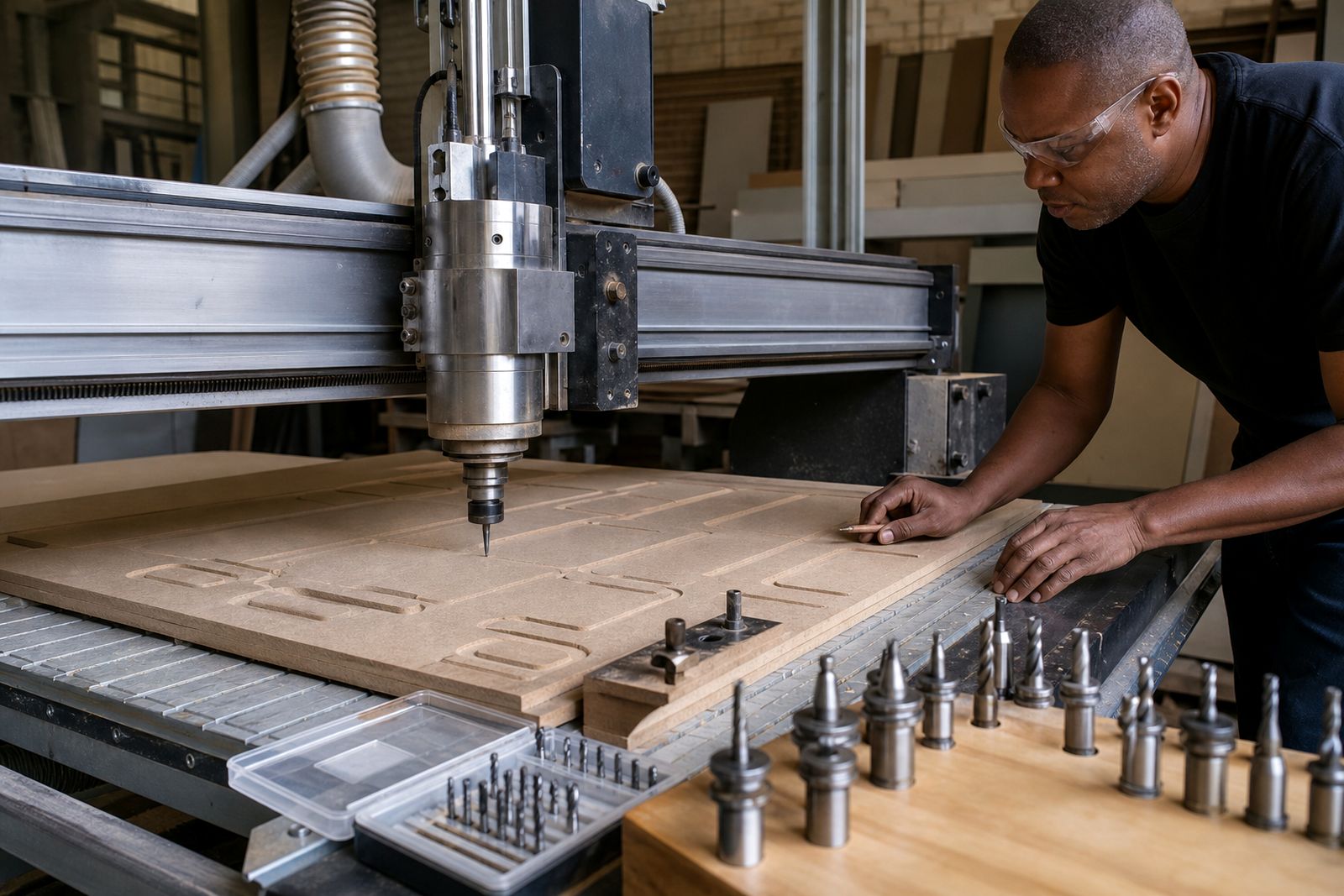
Tell us about the job you need to cut
Send a note through our contact form with your machine, spindle and collet size, the material and thickness, the finish you need and your area, and we will come back with practical cutter options and a quote.
Open the contact form