

Feeds for MDF letters
Straight and spiral feeds that keep MDF letters sharp.
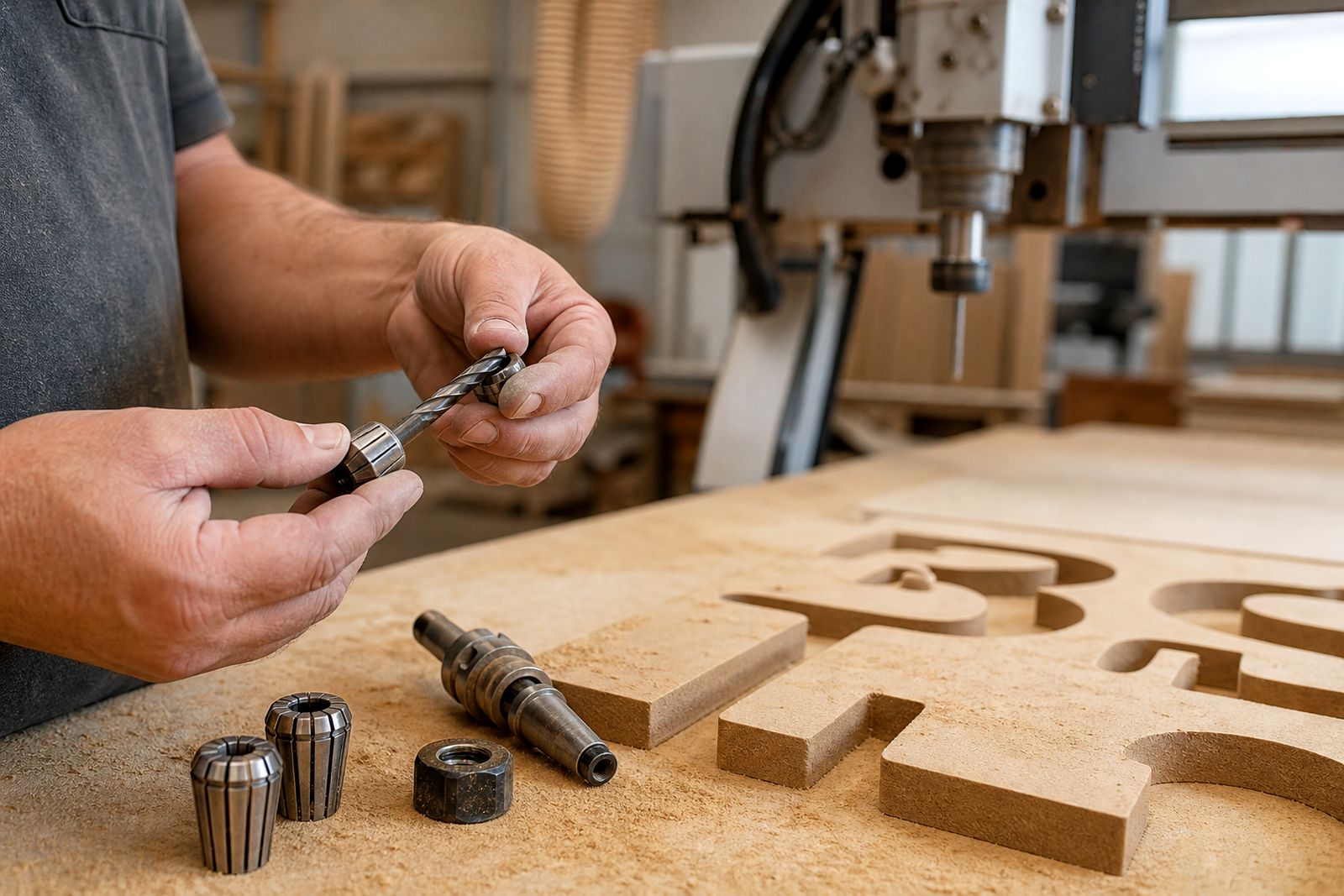
Matching bit geometry to MDF
CNC-cut MDF letters are a mainstay for sign shops and shopfitters from Joburg to Durban. The trick is getting sharp, crisp edges without fluffing or burning, whether you’re running straight or spiral bits. In this note, I’ll cover feed choices, cutter selection and practical tips for clean MDF letter work, based on what we see from CuTool’s bench and written guidance through the contact form.
MDF is dense but friable, so chip clearance and edge finish matter. For basic 2D letters, you can use straight two-flute cutters or spiral flutes, upcut, downcut or compression. Straight bits, especially 2 or 3 flute, are common for flatbed routers and tend to give a crisp finish on the lower face. But for best edge quality with less fuzzing, a spiral downcut or compression spiral is my go-to.
Downcut spirals push the MDF fibres downward, helping to keep the top edge clean, while compression spirals sandwich the workpiece and leave both edges sharp. For letters smaller than 100 mm high or with very fine serifs, 3 to 6 mm diameter bits work well. Watch out for excessive stick-out beyond the collet: 25 to 35 mm is usually safe for these sizes.
Setting feeds and spindle speeds for crisp edges
Too slow a feed rate will heat up the MDF, glazing the edge or causing burning. Too fast and you risk tear-out, especially with a dull bit. As a starting point, I suggest 3 to 5 m/min feed with a 3 mm or 4 mm bit, and 5 to 8 m/min for 6 mm. Set spindle speeds in the 18000 to 22000 rpm range. You want a chip load per tooth in the 0.1 to 0.2 mm zone, test this by checking if the chips are flaky, not dust.
If you see fluffing or burning, try raising feed or lowering speed. On certain batches of imported MDF, especially in humid coastal shops, you might have to slow down a touch to avoid fraying. Always run a test letter and inspect the edges before nesting the full job.
Stepover, finishing passes and tabs for sign shop runs
A roughing pass with 50 to 70 percent stepover clears most material fast, leaving 0.3 to 0.5 mm for a finishing pass. For outer profiles, run a separate finishing toolpath at full depth with a low stepover, say 10 to 20 percent, to get the cleanest edge. Always leave onion-skin for the last pass if your vacuum hold-down is marginal, MDF letters can shift if tabs are too thin or few.
Tabs keep parts anchored, but too large and you waste time sanding. For medium MDF, 3 mm wide by 3 mm tall tabs spaced 120 to 150 mm apart hold well for most sign shop letters. Make sure the finishing pass clears around the tabs cleanly to reduce handwork later.
- Roughing: 0.5 mm leave-on, 60% stepover
- Finishing: 0.1 to 0.2 mm stepdown, 15% stepover
- Tabs: 3x3 mm, 120 mm apart
Cutter care and common MDF pitfalls
MDF dust is abrasive and can blunt edges quickly. Clean your ER collets every shift, especially in the Highveld’s dry season. Inspect tool runout with a dial indicator, over 0.02 mm is asking for trouble on detailed letters. If you notice chatter or overheating, check for resin build-up and give the cutter a proper clean, or swap out for a fresh or re-ground bit.
Always double-check the tool is torqued to spec and never reach into the cut zone while the spindle spins. Good dust extraction is a must, especially for MDF. If you lose power during a pass, re-zero carefully and rerun the finishing toolpath. For regrind or local cutter support, our team at Sunnyrock can organise courier arrangements, just use our contact form.
Related: Router bit starter and Sign shop nests. Browse all tools or more edge notes.
What our Cutting Tool customers say
Verified Google reviews
Also worth a look

Tell us about the job you need to cut
Send a note through our contact form with your machine, spindle and collet size, the material and thickness, the finish you need and your area, and we will come back with practical cutter options and a quote.
Open the contact form