

Holder clearance
Giving the holder room before the flute hits the fixture.
Why holder clearance matters in CNC shops
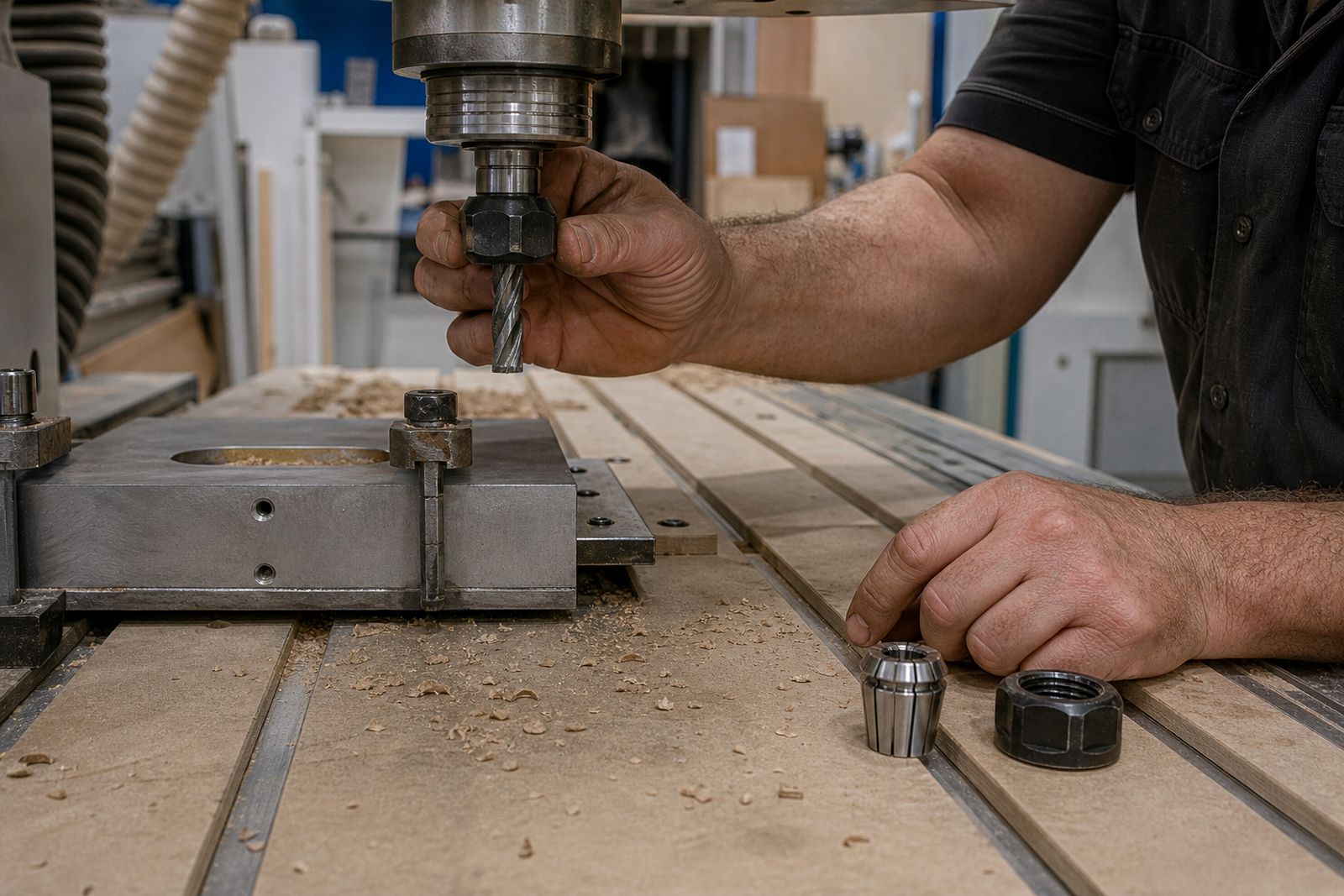
Holder clearance is a detail I see far too many workshops overlook, especially when chasing tight fits and deep pocketing on CNC routers or mills. If your holder or nut comes close to the job or fixture, you risk a crash long before the flute ever bites. Over years helping many teams, I have seen how planning that extra space for the holder can avoid expensive mistakes.
Many CNC owners, whether they’re running a joinery in Durban or prototyping in a Highveld tech cell, focus only on flute reach and cutting depth. What’s easy to miss is the bulk of the ER collet holder or nut, which is almost always wider than the shaft or flute. Job losses from holder collisions are not rare: I’ve seen several jobs ruined and collets snapped when the toolpath didn’t keep the nut clear of a clamp or stepped fixture.
On thicker materials, or when you’re using a stubby cutter for minimum deflection, you often have less stick-out, so your holder is even closer to the workpiece and any clamping. This is especially tricky on vacuum tables using taller fixtures, or when extra tabs or onion skins are left for part security.
Measuring for proper holder clearance
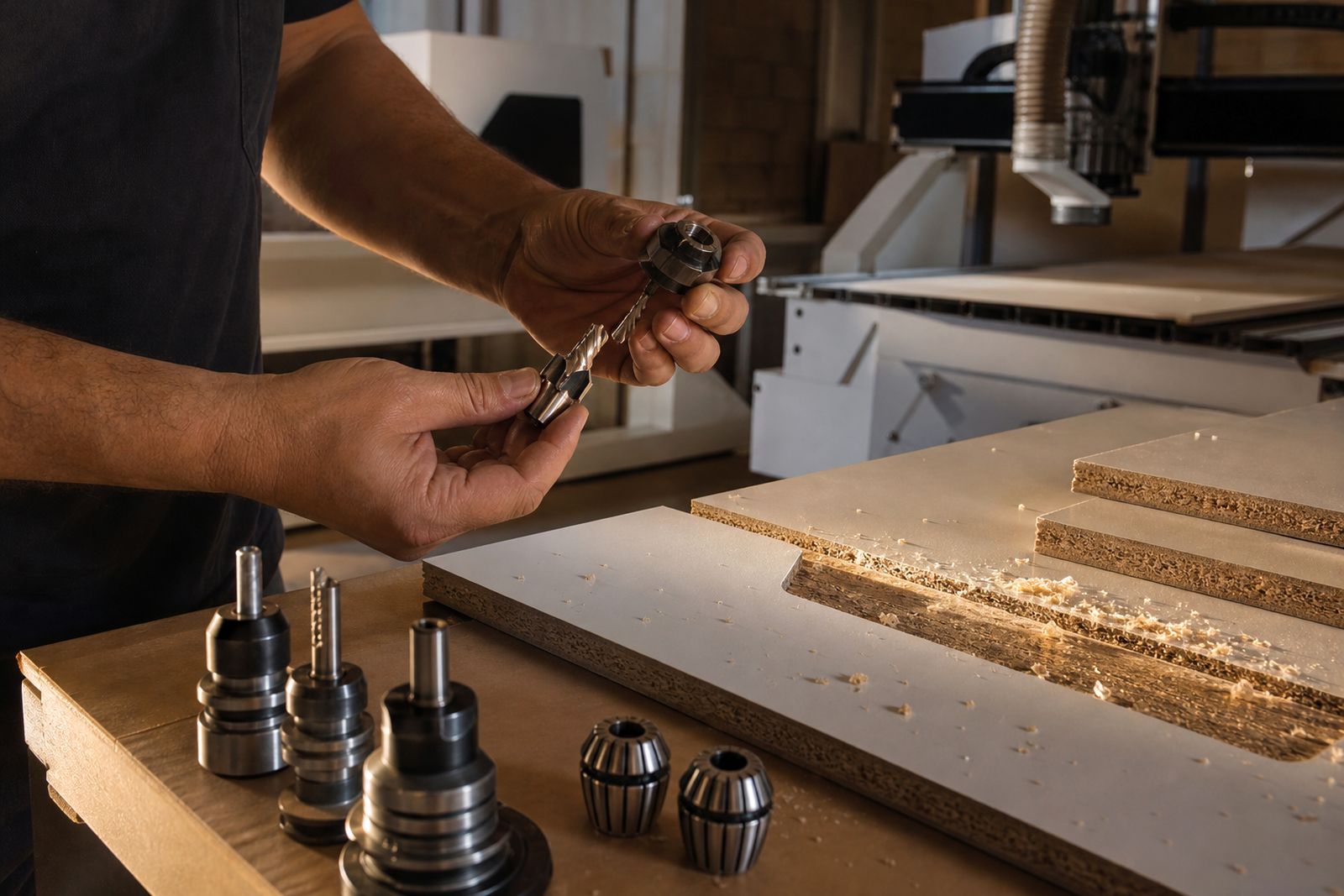
The simplest way to avoid a holder clash is to measure your tool assembly from the tip of the flute up to the bottom of the holder, as well as the holder diameter. Most ER32 nuts are 32 to 36 mm across, and the average straight shank is only 6 to 12 mm. Always check your CAM setup: simulate the full holder outline, not just the flute or shank.
Give yourself at least 3 to 5 mm extra clearance between the nearest part of the holder or nut and any fixture, clamp or raised feature. For pocketing, watch for inside corners where the holder can 'corner-catch', especially if the cut route ramps down. If you need deep reach, consider longer-shank cutters or dedicated reach adapters, but keep stick-out minimal to avoid chatter and runout.
Common holder clearance mistakes
In South African shops, we see a few recurring errors relating to clearance. First, not checking for raised screws or T-slot clamps that sit above the stock: this is a classic trap on older cast-iron tables. Second, programming a toolpath that ignores the nut size, especially in tight pockets for signage or trophy work. Third, using short-flute cutters to reduce deflection but forgetting that the holder itself may become the new limit. And lastly, setting up a prototype cell with a fixture for one tool, then crashing on the next pass with a bigger holder.
Practical solutions include mapping out all fixture heights in your setup sheet, using a digital caliper to double-check holder diameter, and always running a dry pass above the workpiece after a tool change when you're unsure.
- Measure holder and nut diameter before programming
- Double-check fixture heights, especially clamps and screws
- Simulate with holder shadow in CAM, not just tool
- Run a dry pass after tool changes
- Minimise cutter stick-out for less deflection
Holder kits for production and prototypes
At CuTool, we see different needs between prototype cells and high-volume runs. In prototype work, with frequent tool changes and unknown fixture profiles, a full Holder Collet Kit with several extension types can save many headaches. For production, standardising on a set stick-out and matching fixture heights gives predictable clearance and reduces downtime from avoidable collisions.
South African humidity can also impact clearance by causing wood or plastics to expand slightly, so always check your fixture fit before a big run, especially in damp Cape or coastal shops. A good habit is to clean the collet and holder faces each day, dust or resin build-up can shift your effective clearance by half a millimetre, enough to cause a collision on precision jobs.
If unsure, drop us a message through our contact form. We’re always happy to talk through your holder and clearance questions.
Related: Holder Collet Kit and Prototype cells. Browse all tools or more edge notes.
What our Cutting Tool customers say
Verified Google reviews
Also worth a look
Tell us about the job you need to cut
Send a note through our contact form with your machine, spindle and collet size, the material and thickness, the finish you need and your area, and we will come back with practical cutter options and a quote.
Open the contact form