

Softwood chip lift
Upcut habits that clear pine chips without tearing the show face.
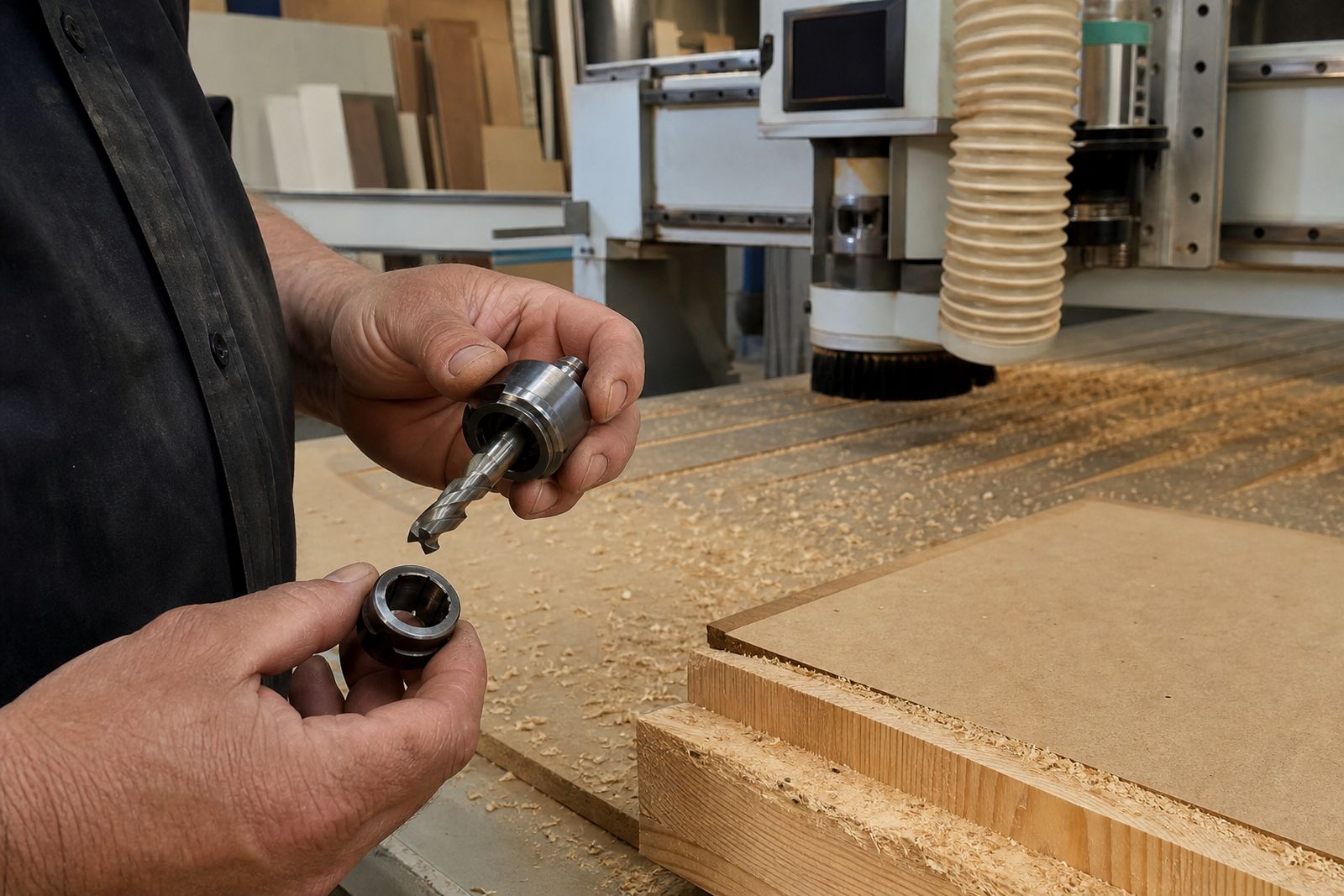
Pick the right upcut for pine
Softwoods like pine and meranti are fast to cut, but chip evacuation is your real test. I see too many joiners fighting chip packing or ugly tear-out on visible faces. I’ll cut straight into upcut spiral habits that make the most of chip clearance in South African pine, without chewing up the show side.
Locally grown pine is open-grained and resinous, so chip size can vary with moisture and pitch. For softwood, a 2-flute upcut spiral is the workhorse, giving strong chip lift in sheet or solid. Go for a straight or near-straight flute, not a high helix: these clear chunky chips without digging out the face fibres.
We see good results in joinery shops with our 3 to 12 mm diameter upcut spirals. For thick pine, more flute space means less clogging, especially if you run a slightly higher feed per tooth to keep the cutter loaded (around 0.25 to 0.40 mm per tooth is my starting range, but do test with your own stock).
Control feed and chip load for clean faces
Too shallow or slow, and you’ll rub and heat the cutter, melting pitch and building up resin. Too deep in one pass, and you risk either jamming the flutes or ripping up the show face. Typical stepdowns for pine are 1.5 to 2 times the tool diameter per pass, but drop back if your vacuum hold-down isn’t strong or stock is warped.
A moderate feed rate (say 3500 to 6 000 mm/min for an 8 mm cutter in pine) helps push chips up and out. Climb cutting with an upcut spiral throws chips high but can fuzz up the top edge, so leave a thin onion-skin layer (0.3 to 0.7 mm) on the last pass, then finish with a climb or even a light conventional cut to crisp up the edge.
Use vacuum hold-down and tabs well
Pine is soft and light, so it moves under the cutter. On the Highveld, dry air can shrink boards, making them even harder to grip. We see jobs lost when boards lift and the upcut grabs the work loose. Use a clean, flat spoilboard and check your vacuum zones. If you’re on sacrificial MDF, resurface regularly to keep pull-down even.
Tabs are essential for small or narrow pine parts. Keep them wide but shallow: 6 to 8 mm long and 1.5 mm thick is usually enough for 18 mm pine. For deep parts, up the tab thickness or run a slower finishing pass. Don’t forget to sand off the fuzz left by upcut tabs.
- Use onion-skin passes for show-face parts
- Check vacuum seal on dry or thin pine
- Clear chips with an air blast when needed
Keep chips moving for cleaner faces
Pine sap and fine dust collect fast on upcut spirals, leading to chip packing and heat. Wipe cutters after every session, not just at the end of the shift. If you see streaking or resin burn on the cutter or work, soak bits in paraffin or a branded tool cleaner for a few minutes, then brush off residue.
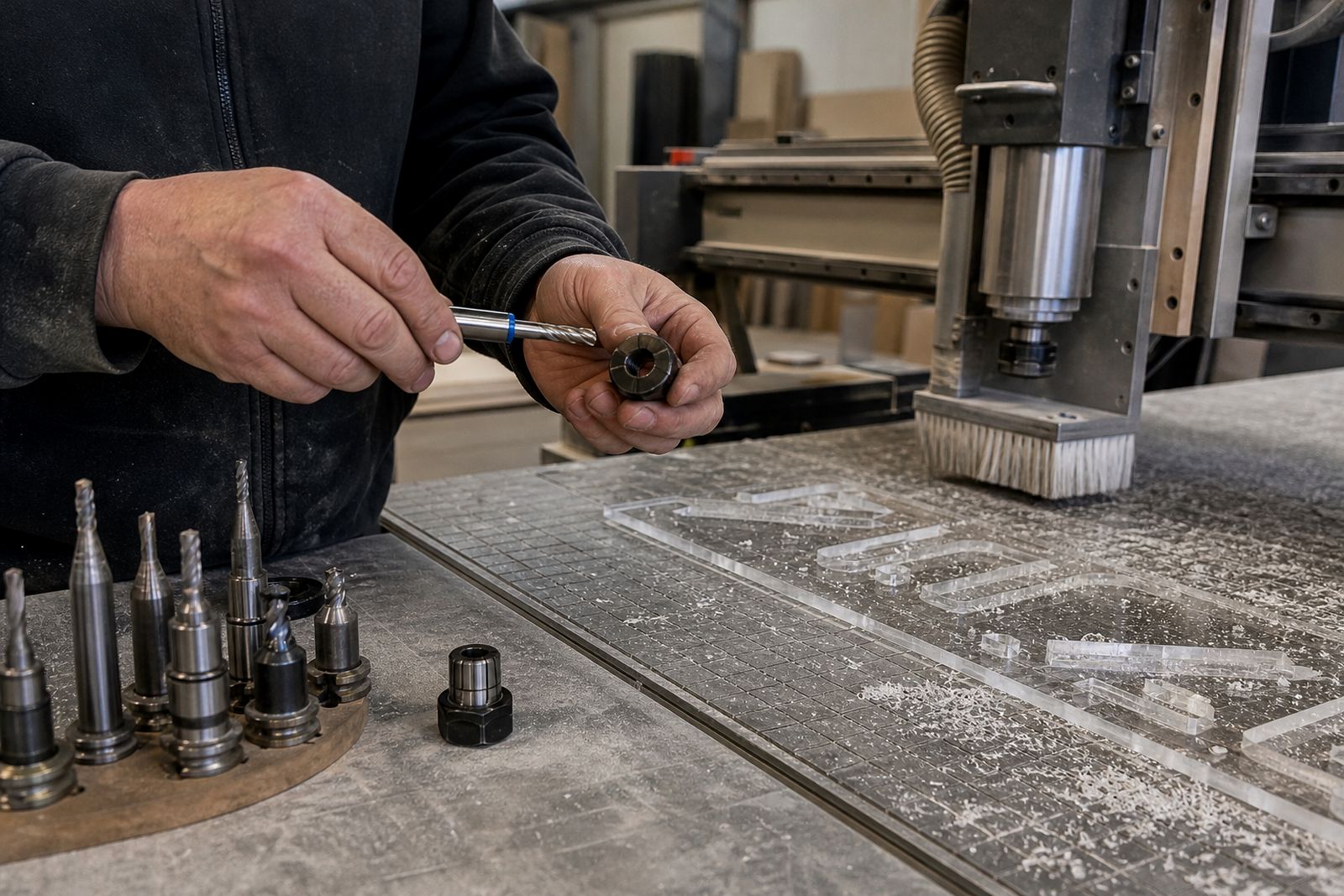
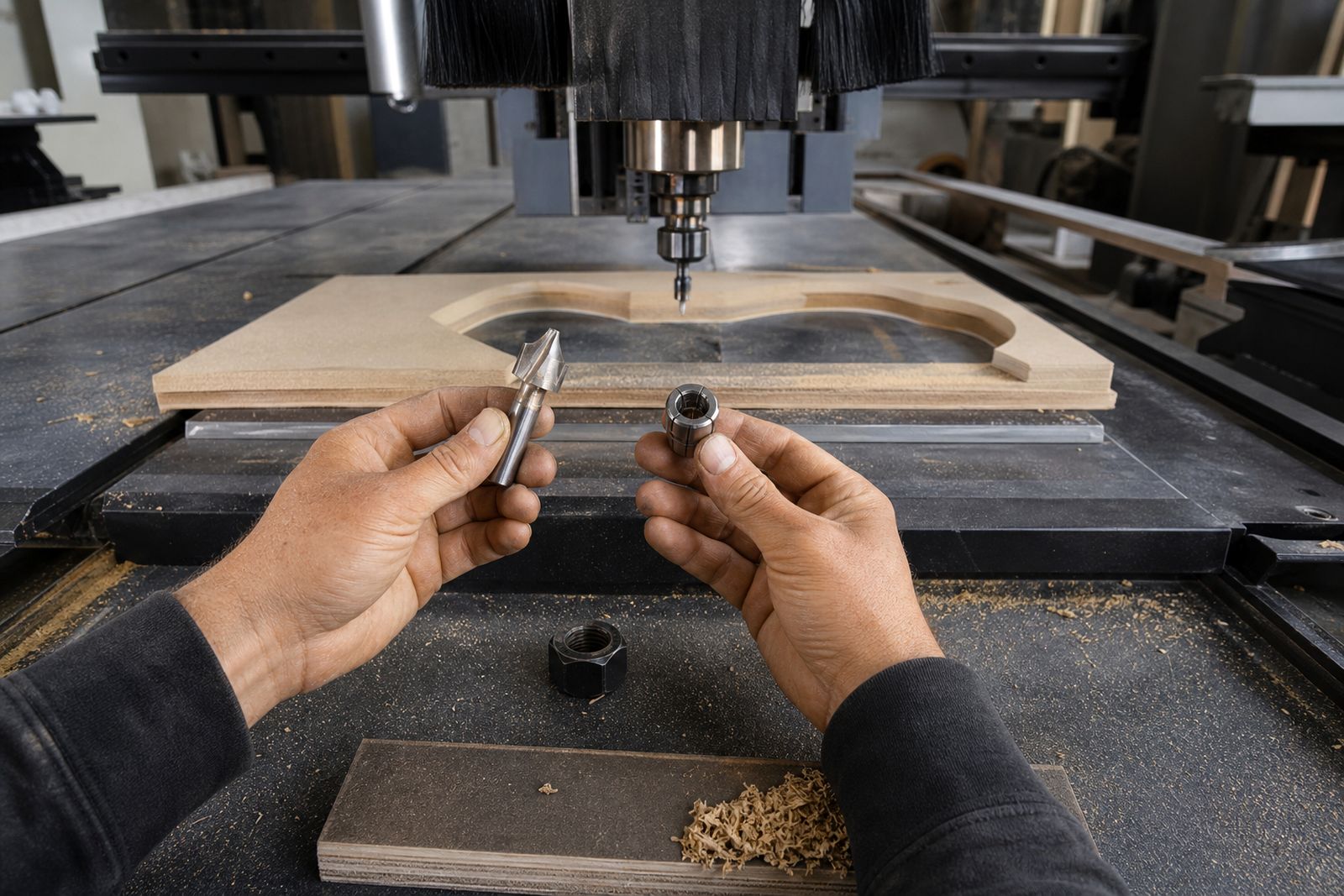
Runout is often missed: if your upcut’s edge is dulling unevenly or you hear thumping, check runout at the collet with a dial indicator. Anything beyond 0.03 mm is too much for fine pine detail. Always torque collet nuts properly and never pack a cutter too far out of the holder, as stick-out increases vibration and flex.
If the upcut spiral is truly blunt, rather swap or send it in for regrind than force it through pine. A sharp edge does the hard work for you and clears chips much cleaner.
Related: Softwood upcut pack and Joinery cells. Browse all tools or more edge notes.
What our Cutting Tool customers say
Verified Google reviews
Also worth a look

Tell us about the job you need to cut
Send a note through our contact form with your machine, spindle and collet size, the material and thickness, the finish you need and your area, and we will come back with practical cutter options and a quote.
Open the contact form