

Joinery cells
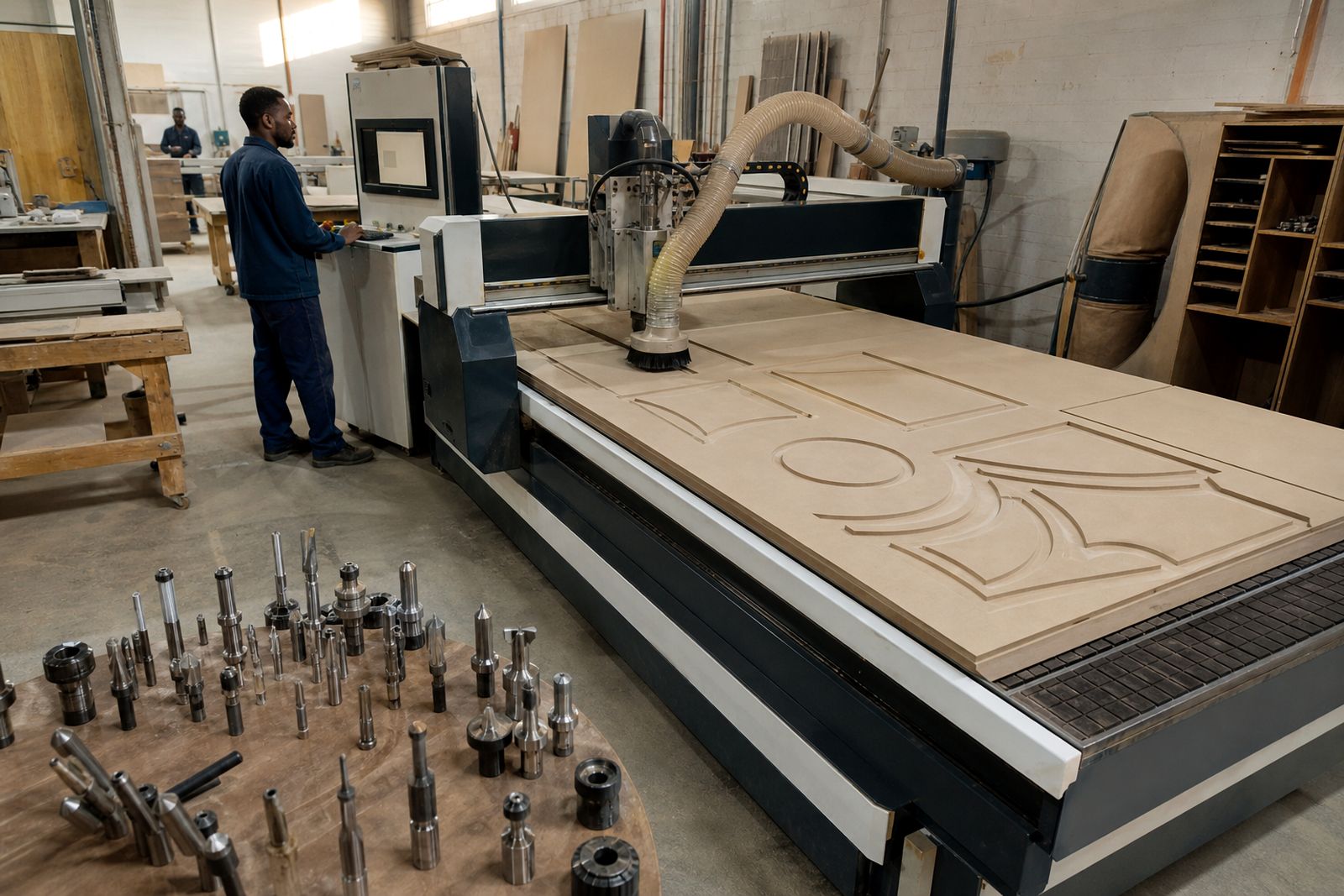
Efficient joinery cells rely on the right sequence of spiral and straight router bits to keep production flowing, even when sharing a single spindle.
Common joinery materials and typical jobs
Joinery teams count on CuTool’s router bit starter, softwood upcut pack and holder collet kit for accurate, splinter-free machining of pine, MDF and board. Our kits are made for shared-spindle workshops with high job turnover.
See also edge notes and printable cards.
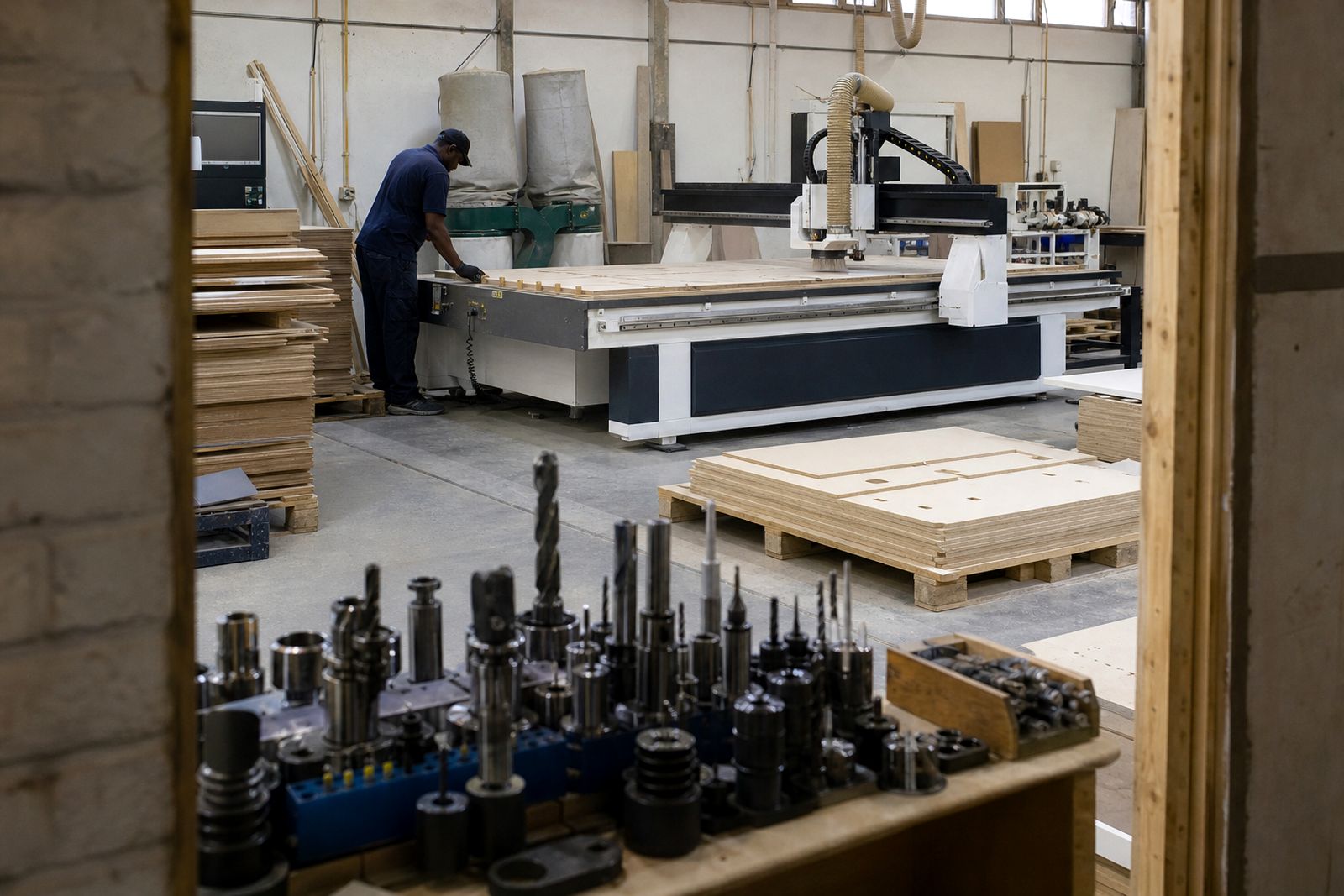
Joinery cells in Gauteng and the coastal cities mostly cut pine, Meranti, MDF (MDF), chipboard and melamine, often in thicknesses ranging from 12 to 32 mm. Weekly output includes kitchen carcase panels, wardrobe sides, shelf packs, solid timber doors and drawer parts. Clean edges, tight mortices and reliable repeats are essential, especially with visible edges and pre-finished stock where chip-out or burning costs time and money.
Most joinery shops programme multi-pass nested jobs, profiling, grooving, and pocketing with a single spindle, so tool changes must fit the rhythm of a busy day. End panels and rails need sharp spirals for cross-grain cuts, while straight bits suit long grain and grooving.
Where router bits fail in joinery cells
Blunt spirals and straight cutters are the biggest workshop headache. With high workpiece turnover and shared spindles, it’s easy to push a cutter past its best, leading to ragged edges, slow feeds, burning and the risk of a broken bit. Sticky resins in pine, especially in Highveld winter, can build up on flutes fast, choking chip evacuation and raising cutting temperature.
Incorrect collet fit or a dirty collet nut often causes runout, easy to miss in a rush, but it ruins cut quality and shortens bit life. High stick-out to clear clamps or jigs may also introduce vibration, so always check with a dial indicator if cut quality drops. With MDF, dust build-up around the spindle needs constant extraction or it will clog everything from the bit to the rails.
- Blunt or overloaded spirals causing chip-out
- Pine resin slowing feeds and raising heat
- Dirty or worn collets leading to runout
- Excessive stick-out causing vibration
CuTool’s joinery bit packs and running order
For a typical joinery cell, our router bit starter kit covers 3 to 12 mm spirals (upcut for through cuts, downcut for veneer or melamine faces, compression for double-sided laminates) and a selection of straight 6 and 8 mm bits for grooves and rebates. The softwood upcut pack adds tough 2-flute upcut spirals for pine and Meranti, with chip loads from 0.25 to 0.35 mm per tooth as a sensible range to test.
Start each job with a rough profile cut using the upcut spiral from the softwood upcut pack, then switch to a downcut spiral or straight bit from the router bit starter for finish passes and dados. The holder collet kit ensures your collets are clean, correctly torqued and running concentric, which is vital for edge finish on both solid and board.
Always ramp into cuts and avoid plunging straight down with spirals. Use tabs and onion-skin passes for nested parts to keep workholding secure, especially if your vacuum is weak during a power cut or cable-theft fault.
- Softwood upcut pack for fast roughing cuts
- Router bit starter for versatile finish and groove passes
- Holder Collet Kit to keep bits running true
Planning stock, regrinds and keeping up in busy periods
Joinery cells must plan for peaks around term starts, mid-year kitchen renovations and the pre-festive rush. Keep at least two spare sets of all primary spirals and straight bits, especially ahead of school terms and big apartment or retail fitouts. We recommend sending worn spirals for regrind each Friday, to avoid a pile-up before Monday deadlines.
During weeks with power cuts or load reduction, schedule heavy roughing jobs when the lights are stable and reserve the sharpest finish bits for late in the day. Mark each collet and nut set on a wall chart and rotate them, replacing any that show poor grip or runout over 0.03 mm.
Installers working off bakkies should keep spares in a sealed container, away from jobsite dust and damp, especially in Durban winter or Cape storms. If you’re running late, a quick wipe with methylated spirits gets pine resin off spirals before the next shift.
What our Cutting Tool customers say
Verified Google reviews
Also worth a look
Tell us about the job you need to cut
Send a note through our contact form with your machine, spindle and collet size, the material and thickness, the finish you need and your area, and we will come back with practical cutter options and a quote.
Open the contact form