

Softwood blanks
Pine and meranti blanks for upcut work.
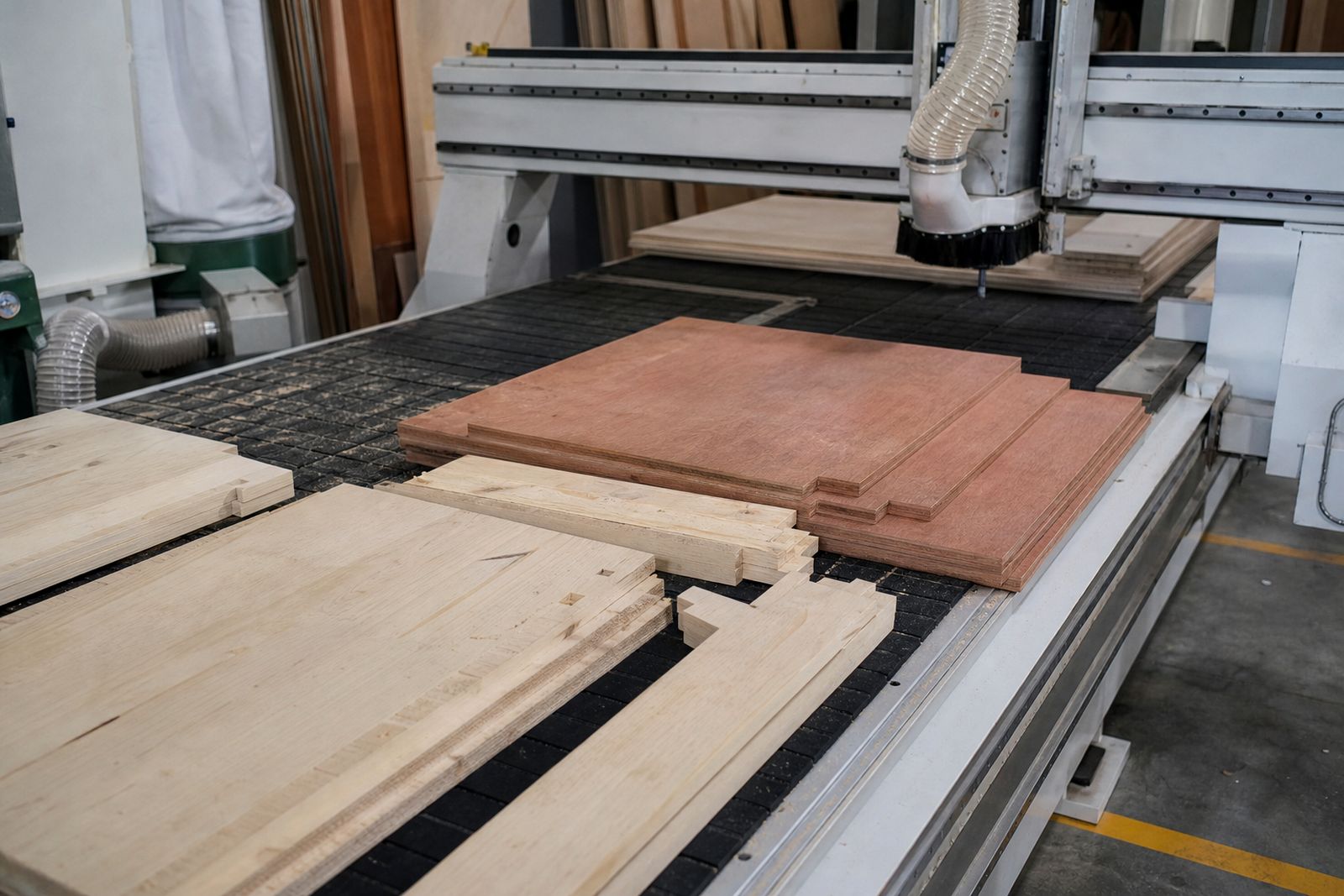
Machining pine and meranti blanks in South African shops
Pine and meranti blanks offer predictable machining for CNC routing and joinery. Common in South African cabinet and furniture workshops, these softwoods are reliable for upcut work and prototyping.
Pair with the tool range and the feeds card.
Pine and meranti are classic softwood choices in Gauteng and coastal CNC shops, especially for joiners, furniture makers, and kitchen fitters handling door frames, cabinet parts, and custom panels. Pine’s even grain and moderate resin content give steady results on most routers, while meranti blanks offer a little more resistance but rarely cause major tear-out if the tools are sharp. Both respond well to upcut spirals, leaving clean chip evacuation and neat edge finishes when the feed and spindle are matched properly. On test blanks, we find pine takes higher feed rates without burning, while meranti often needs a softer approach to avoid splintering at edges, especially across the grain or in narrow rails.
Shops in the Highveld often value these blanks for rapid prototyping and jigs, while coastal humidity can make the resin in pine a touch stickier during summer months. Both woods are forgiving on older routers, making them a favourite for student work in college and school training workshops.
Best CuTool cutters and sensible starting feeds for softwoods
For pine and meranti blanks, our team recommends starting with 2 or 3-flute upcut spirals in carbide. They pull chips up and out, helpful with pine’s long shavings and meranti’s tendency to clog. Always confirm chip load from your specific cutter data, but as a starting point, we see good results with the following approach:
Upcut spiral bits: Start at 12000 to 18000 rpm, feed 3500 to 5 000 mm/min, 2 to 3 mm stepdown, 40 to 60 percent stepover. Single flute tools suit small CNCs or when spindle power is limited. Downcut and compression spiral bits suit outer passes on doors or panels where top-surface splintering is an issue. For slotting, use multiple shallow passes, especially on meranti. Always run a test cut and check the edge finish and chip clearance before committing to long runs.
- 2-flute upcut spiral for clean chip clearance
- 3-flute spiral for faster feeds on larger CNCs
- Compression bit for laminated or veneered blanks
- Single flute for small routers or thick blanks
- Straight bit for roughing and rebates
Storing blanks and holding them down in local conditions
Softwood blanks like pine and meranti will move with moisture changes, especially along the grain. On the Highveld, storing packs flat on level racks keeps them from cupping, but it is important to avoid direct sun or rapid drafts that dry the faces unevenly. In Durban or coastal Western and Eastern Cape, humidity can creep in fast, so seal packs in plastic film or keep the offcuts under cover until ready to machine. If blanks arrive with a protective film, leave it on until just before loading to limit dust and moisture pick-up.
Use a flat, level spoilboard and check for twist with winding sticks or a straight edge. For vacuum hold-down, ensure the blank’s surface is dust-free and press down firmly to close any gaps. Where vacuum is not enough, back up with mechanical clamps or masking tape along the edges for smaller jigs. Always check for flatness before surfacing the first face, especially after a wet winter or if the blanks have been through a Joburg power cut and aircon cycling.
What our Cutting Tool customers say
Verified Google reviews
Also worth a look

Tell us about the job you need to cut
Send a note through our contact form with your machine, spindle and collet size, the material and thickness, the finish you need and your area, and we will come back with practical cutter options and a quote.
Open the contact form