

Aluminium plate
Plate habits for finish mills and slot sets.
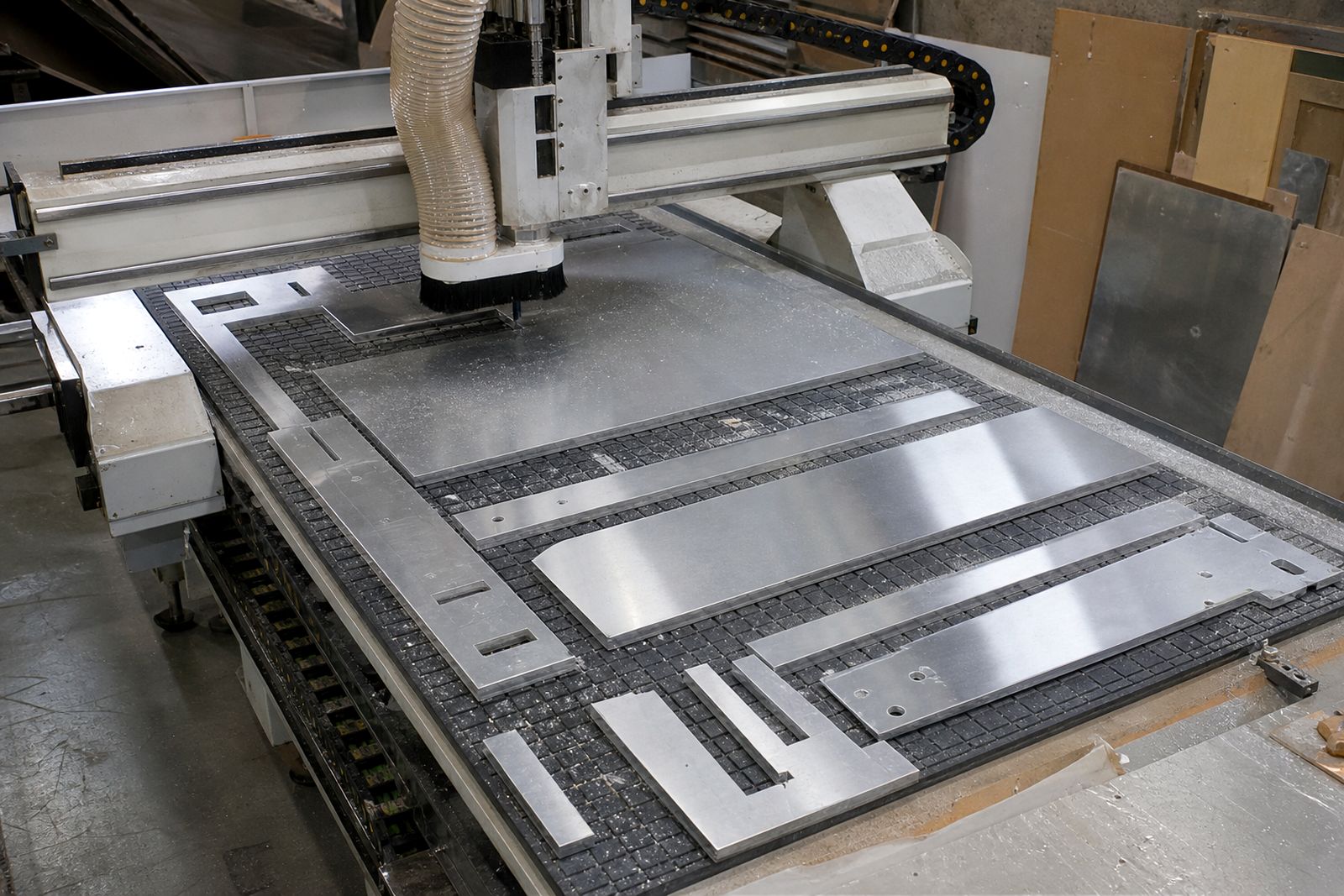
Aluminium plate for CNC work
Aluminium plate is a favourite for signage, enclosures and custom hardware where crisp detailing matters. It machines cleanly with sharp cutters and proper chip removal.
Pair with the tool range and the feeds card.
Many South African shops use aluminium plate for sign letters, control panels, architectural features and custom brackets. The material is easy to source in 3 to 12 mm thickness for most panel work. On the Highveld, it's common in engineering and trophy workshops. Coastal shops, especially around Durban and Cape Town, favour it for marine fittings and display trims, thanks to its corrosion resistance.
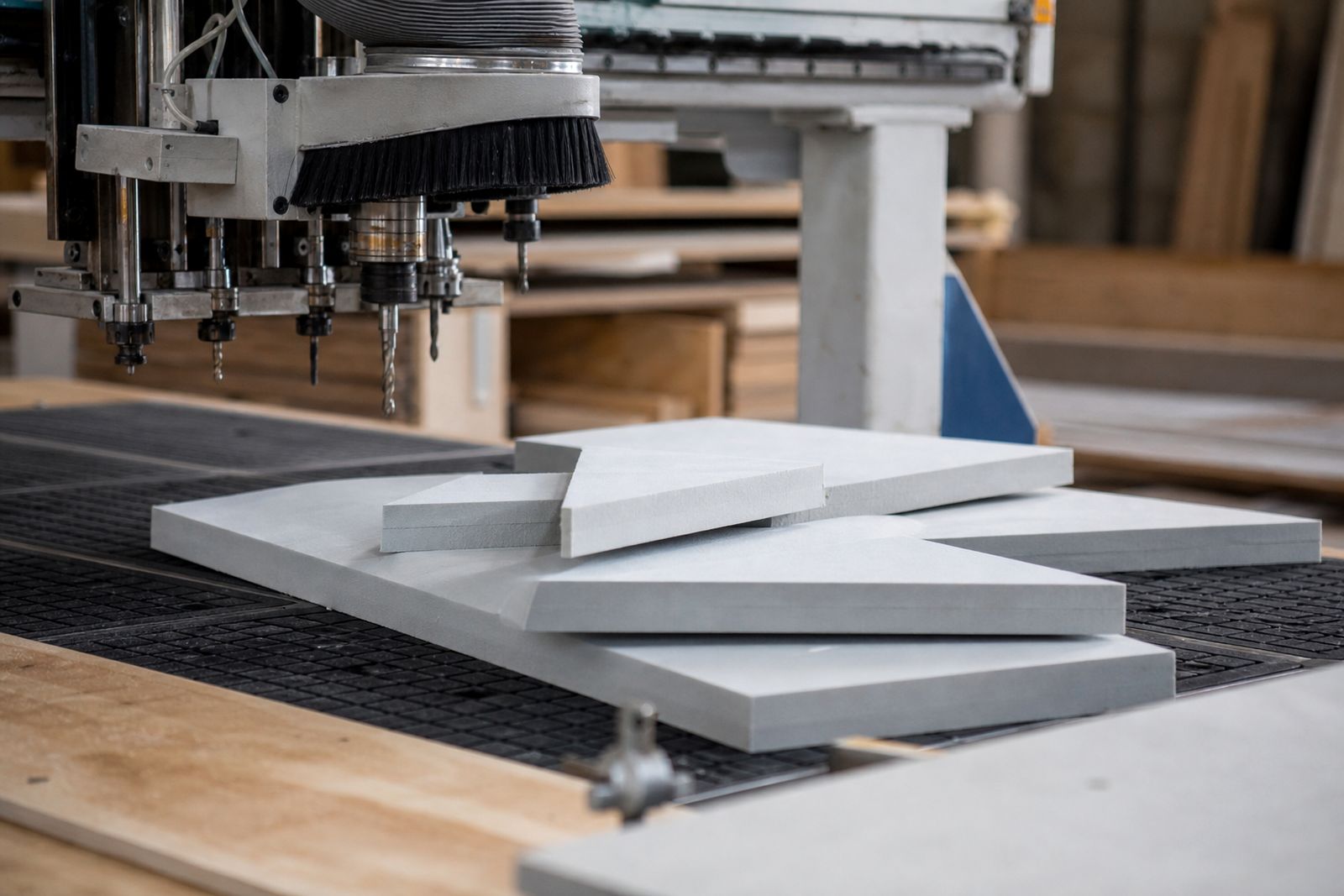
Aluminium plate machines well but is unforgiving of dull tools, poor chip clearance or excessive heat. It conducts heat away quickly but can clog flutes if feeds are too slow or the cutter geometry is wrong. Our sample offcuts show typical grain and film finish. For any job with exposed edges, a reliable finish cut is essential to avoid rework or hand deburring.
CuTool cutters for precise plate work
Our single-flute and two-flute carbide end mills, uncoated for aluminium, suit general slotting and profile work. Compression and upcut spirals are not ideal for plate, as bottom finish matters more than top, and chip evacuation is critical. Try the following as starting points, always adjusting to your machine and clamping:
Chip load: 0.04 to 0.12 mm per tooth, depending on diameter and rigidity. Spindle speed: 18000 to 24000 rpm for 3 to 6 mm tools, lower for larger diameters. Feed rate: 900 to 2 000 mm/min for 3 to 6 mm cutters, or up to 3 000 mm/min with a confident setup. Use shallow stepdowns (up to half the diameter), and ramp in whenever possible. Air blast is essential for chip evacuation, and a mist system helps with finish and tool life. Always check for runout with a dial indicator, and keep stick-out minimal.
Slotting requires rigid hold-down and a sharp, fresh tool. For finishing passes, climb milling leaves a better edge but may pull the part if not well secured.
- Uncoated single-flute carbide end mills (3 to 12 mm)
- Two-flute straight and spiral end mills for detail cuts
- ER collets and precision holders for minimal runout
- Air blow or mist coolant attachments
Store aluminium plate flat and clean
Aluminium plate is vulnerable to warping if stored upright or on an uneven surface. At our Sunnyrock head office, all sample offcuts are kept flat with the protective film intact. For your own stock, keep plates stacked horizontally on a dry, level pallet or racking. In Highveld shops, condensation is rare but rapid temperature swings can cause slight bending. Along the coast, humidity and winter rain raise the risk of oxide blooms or water marks, especially if film is removed too soon.
When machining, keep the protective film on the non-maching side as long as possible. Vacuum hold-down or high-grip double-sided tape works best on smaller routers. For larger panels, use multiple clamps to spread the force. Always check plate flatness before setting Z-zero, and wipe off all moisture to prevent slippage or corrosion. Offcuts are best stored in sealed drums or wrapped to keep the surface bright until needed.
What our Cutting Tool customers say
Verified Google reviews
Also worth a look
Tell us about the job you need to cut
Send a note through our contact form with your machine, spindle and collet size, the material and thickness, the finish you need and your area, and we will come back with practical cutter options and a quote.
Open the contact form