

Cast acrylic
Cast sheet notes for chip-break letter nests.
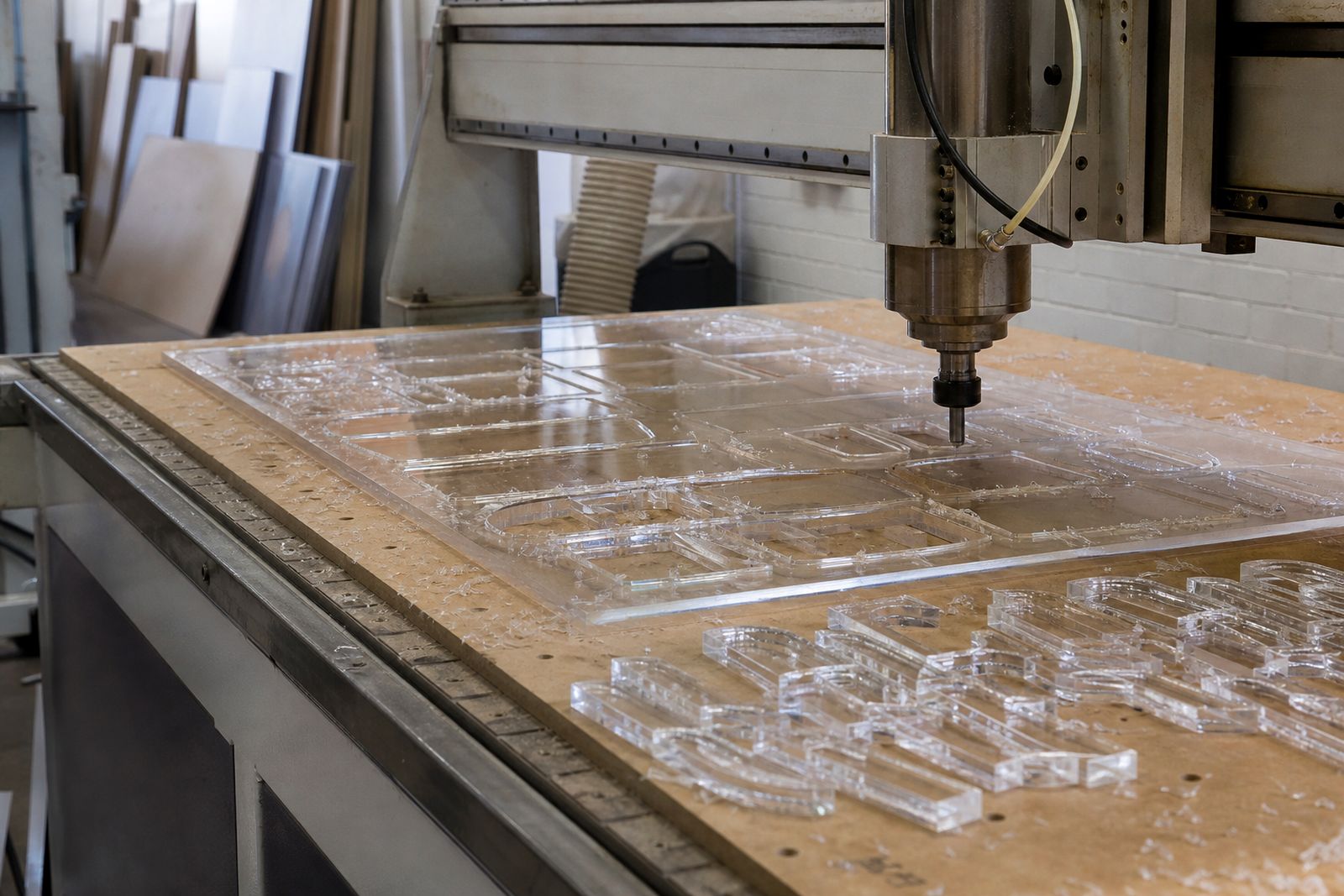
Cast acrylic for signage and display
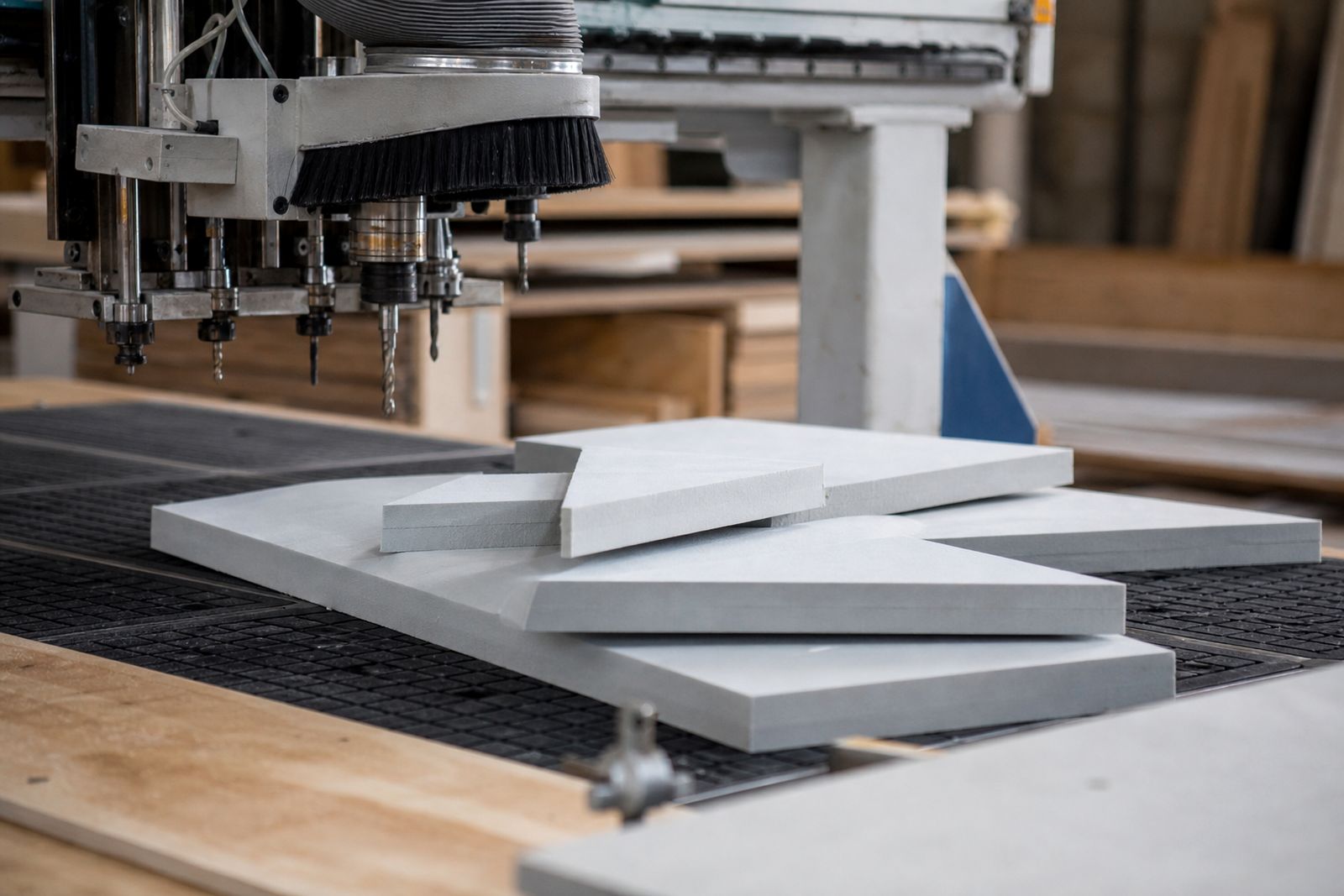
Cast acrylic machines cleanly with sharp carbide spirals. SA sign and display shops often nest letters and shapes from these sheets.
Pair with the tool range and the feeds card.
Cast acrylic is preferred by South African sign shops, trophy makers and display builders for its clarity and consistent thickness. Unlike extruded acrylic, it produces less edge melt and polishes well after trimming. Machining cast acrylic keeps detail sharp for logos, 3D letters and edge-lit panels. Even in trophy and awards work where engraving is deep, cast acrylic holds small features without chipping.
Shops on the Highveld and the coast both use cast sheets for letter nests, exhibition panels and retail displays. The clearer edges and flatter sheet of cast acrylic make it the standard for router-cut illuminated signs and for slotted assembly work where fit up matters. We keep sample offcuts at our head office for customers needing to test edge finishing or adhesives.
CuTool cutters for clean acrylic edges
We recommend solid carbide single-flute spirals for most acrylic routing, especially for detailed letter nests. The single flute pulls chips out fast and leaves a glassy edge when sharp. For deeper slots or faster cycle times, 2-flute upcut spirals with a polished finish help eject swarf and avoid heat build-up. Chip-breaker spirals can be useful for stacked letters or thicker material to break up chips and stop melting.
A sensible starting feed for single flute spirals is 14 to 18 metres per minute at 18,000 to 22,000 RPM, with 1.5 to 2 mm depth per pass for 3 to 6 mm material. For thicker 10 to 15 mm acrylic, start at 10 to 14 m/min, increase depth per pass up to 3 mm if holding is solid, and always test on an offcut. Keep the chip load above 0.08 mm per tooth to prevent rubbing. Mist coolant is seldom needed unless the shop is especially warm or cutting sheets over 15 mm thick.
- Single flute upcut spiral, polished edge, for smooth letters
- 2-flute spiral for thicker sheets or higher feed
- Chip-breaker spiral for stacked nest jobs
- V-bit for engraving and chamfering edges
Storing cast acrylic flat and secure
Cast acrylic needs to be stored flat on a rigid surface, especially in coastal areas like Durban or Cape Town where humidity can cause mild bowing over time. Always keep the protective film on until the moment of cutting to prevent scratches and dust settling. Inland, the low humidity of Joburg and the Highveld usually helps sheets stay flatter, but it is still best to keep them stacked with enough weight to avoid warping.
For hold-down on CNC, vacuum tables are ideal but need a clean spoilboard and a good seal, especially if the sheet has cut-outs or is narrow. For smaller routers, strong double-sided tape or mechanical clamps at the corners can work, but always check for flex in the middle. If the sheet has absorbed moisture, allow it to acclimatise in the workshop for a day before cutting for best flatness and minimal stress. Dispose of protective film safely as acrylic dust can get slippery.
What our Cutting Tool customers say
Verified Google reviews
Also worth a look
Tell us about the job you need to cut
Send a note through our contact form with your machine, spindle and collet size, the material and thickness, the finish you need and your area, and we will come back with practical cutter options and a quote.
Open the contact form