

Extrusion trim
Extrusion stock for slot and finish mills.
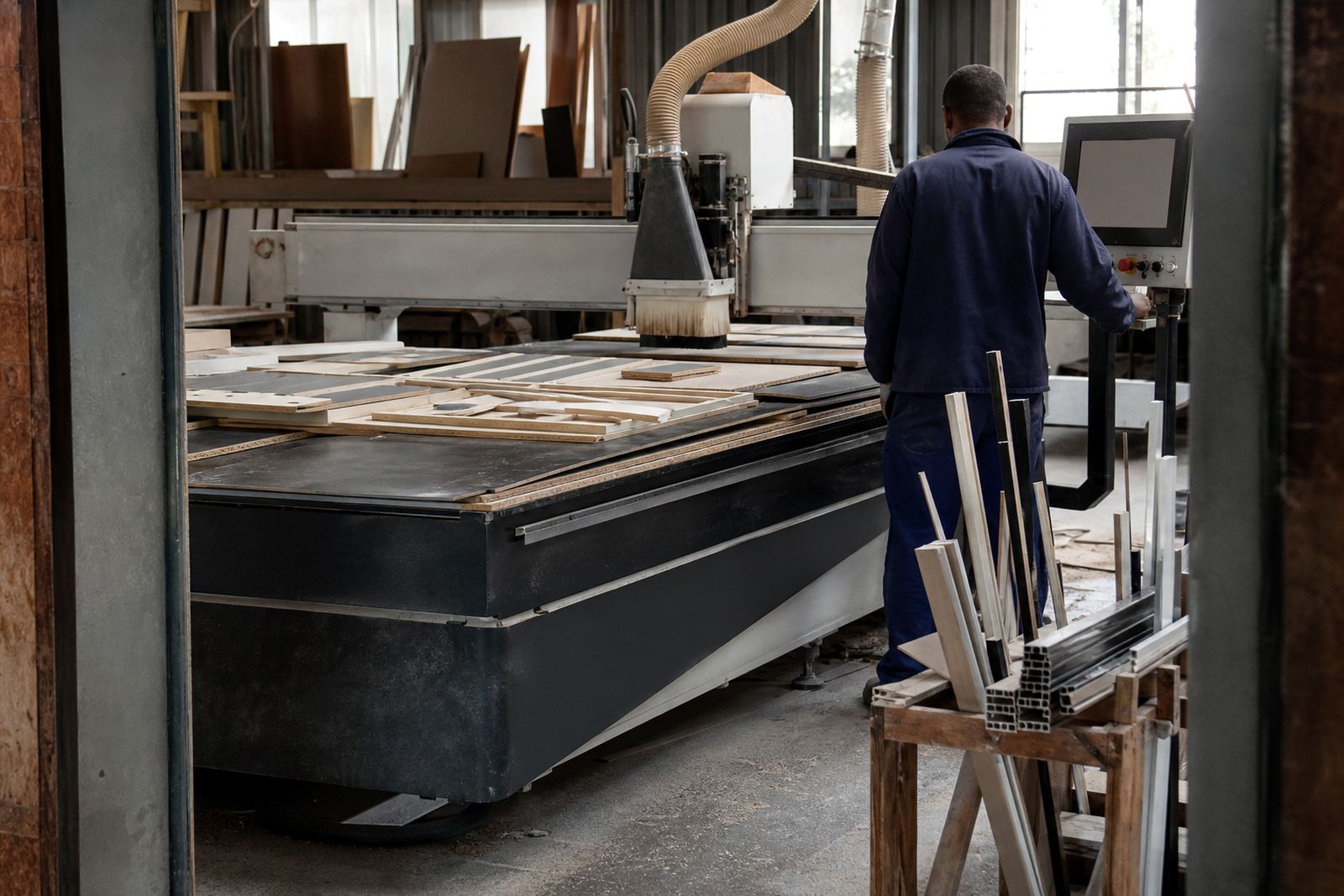
How extrusion trim machines in South Africa
Extrusion trim is lightweight, precise and often used for finishing or joining panels. South African workshops mill it for signage, cabinetry, shopfitting and display work.
Pair with the tool range and the feeds card.
Extrusion trim, most often made from aluminium or rigid plastics, is engineered to tight tolerances for fitting and joining panels, edges or frames. In sign shops, joinery, cabinetry and shopfitting, these profiles are milled for accurate mitres, cut-outs and notches. The precise geometry and thin walls can make chatter or burrs a risk with poor tool selection or excessive feed rates. Because extrusions are usually work-hardened and can spring under pressure, shops on the Highveld often find that fine feeds and sharp tools help to avoid deflection or surface tearing.
For school and college training workshops, extrusion trim is a popular stock for training on slotting, grooving and finish passes, since it shows tool marks clearly and responds well to correct cutter choice. Trophy and exhibition builders also use aluminium extrusions for framing and mounting applications.
CuTool cutters for milling extrusion trim
We recommend using polished single-flute or two-flute carbide end mills for aluminium extrusion trim, or uncoated tools with mirror-finish flutes for plastic trims. A slotting or finishing pass on 1 to 3 mm wall thickness often starts at 18 000 to 22 000 RPM, 1 000 to 2 200 mm per minute feed, and a chip load of 0.04 to 0.10 mm per tooth. Always begin with a test cut and adjust for rigidity, noise and chip extraction.
Compression or downcut spirals are not advised for most extrusions, as they can pull thin walls into the cutter and cause bending or chatter. For wider profiles or thicker sections, a three-flute rougher may help with controlled material removal. Keep cutter stick-out to a minimum and check runout with a dial indicator to avoid streaks or chatter. Use ER collets that feel tight and clean, and torque the nut to the holder maker's spec. Regrind end mills before the edge rounds off, and never force a dull cutter through thin metal or plastic trims.
- Single-flute or two-flute carbide end mills (uncoated for aluminium, polished)
- Typical feed: 1 000 to 2 200 mm/min, chip load 0.04 to 0.10 mm/tooth
- Avoid compression bits on thin-walled trims
- Check runout and collet cleanliness before each job
- Arrange regrind with CuTool partners by courier for extended tool life
Storage and hold-down for extrusion trim
Extrusion trim is prone to bending and denting if stored without support, especially for longer lengths over 2 metres. Coastal humidity in Durban and Cape winter damp can cause surface corrosion on exposed aluminium, so keep trims in original protective film or sleeves until use. Inland, on the Highveld, dry air helps prevent corrosion but can make static build-up and dust a problem, so cover stacks with a clean sheet and keep the area swept.
For best results in CNC machining, always check flatness before each cut. Use vacuum hold-down with sacrificial MDF spoilboard, or clamp trims gently with soft jaws or a caul strip to avoid crushing. Never remove the protective film from the trim face until after final machining to keep surfaces scratch-free. If moisture has crept in under the film, wipe down and allow trims to acclimatise before cutting, especially after cold transport in a bakkie.
What our Cutting Tool customers say
Verified Google reviews
Also worth a look
Tell us about the job you need to cut
Send a note through our contact form with your machine, spindle and collet size, the material and thickness, the finish you need and your area, and we will come back with practical cutter options and a quote.
Open the contact form