

PVC foam
Foam board feeds that keep edges cool.
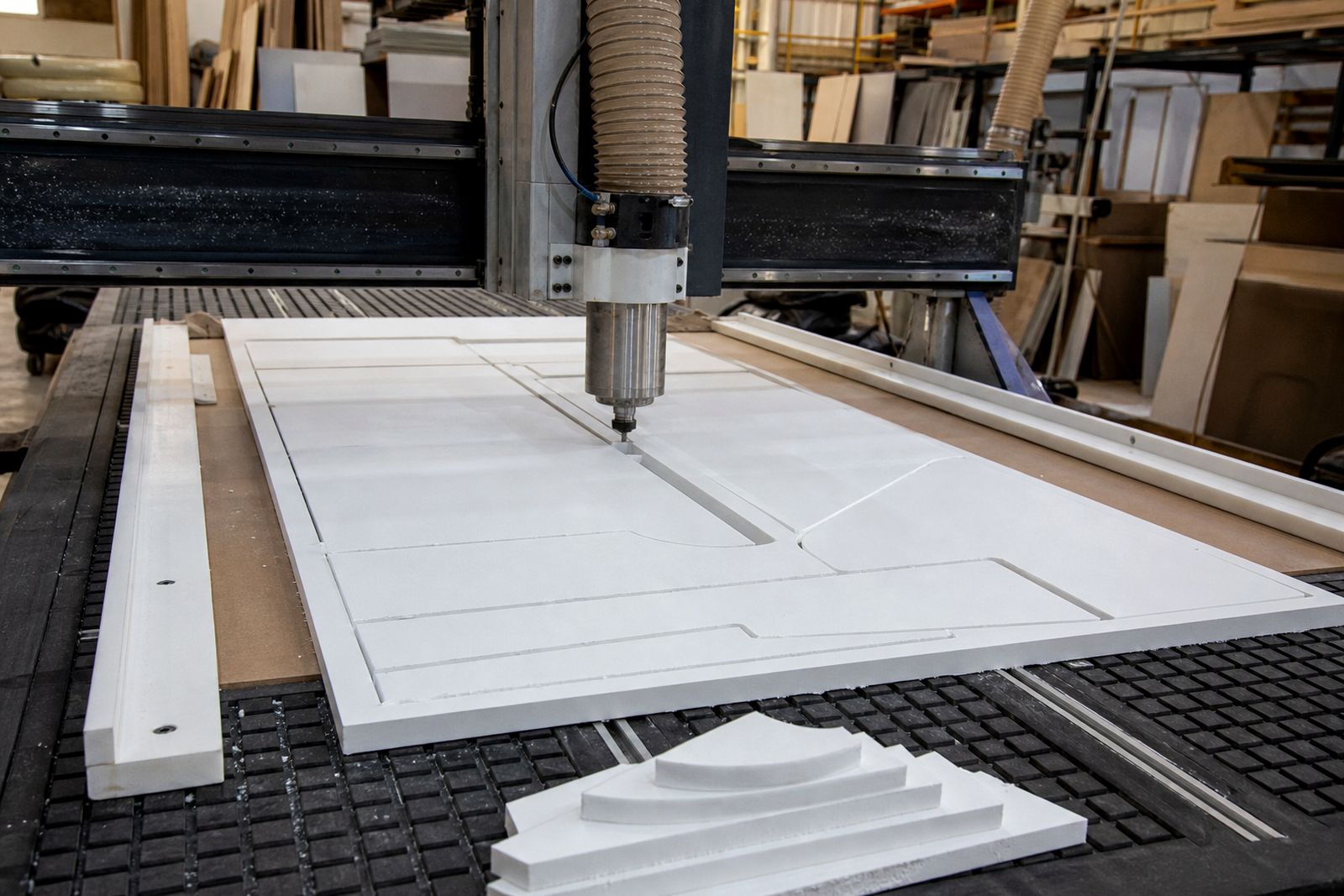
PVC foam board is light, stable and a staple for SA signage and displays
CuTool keeps sample offcuts at Sunnyrock for test-cuts and fit checks.
Pair with the tool range and the feeds card.
PVC foam board, sometimes called foam PVC, is a lightweight plastic sheet with a fine-cell structure. It is firm enough for flatbed CNC routing, yet soft enough to cut easily at high feed rates. Most sign shops use it for indoor and outdoor signs, shopfitting displays, exhibition panels, trophy backing, templates and routered letters. It can take digital printing, vinyl, paint and adhesives well.
The material machines with little dust and no grain tear-out. The main trick is keeping edges cool, since PVC can melt if the chip load is too low or the tool simply rubs instead of cutting properly. The edge finish is crisp when profiles are sharp, chips are cleared fully and the spindle speed matches the feed.
Tool choices and feeds that avoid melting or rough edges
CuTool recommends single-flute spiral upcut or straight-flute bits for most foam PVC jobs. Single flutes clear chips fast and let you run higher feed rates, so the cutter spends less time heating the edge. Compression spirals are suitable for double-sided visible panels or letters where top and bottom edges matter. Our chip-breaker spirals reduce edge burring on thicker boards, but the single-flute is the starting point for most shapes and profile cuts.
- Single-flute upcut spiral (3 to 6 mm): start at 2 to 3 m/min feed, 18,000 to 24,000 rpm, ramp in where possible.
- Straight-flute bit (3 to 12 mm): 1.5 to 2.5 m/min feed, 16,000 to 22,000 rpm, shallow peck ramp for holes.
- Compression spiral (6 to 12 mm): 2 to 3 m/min feed, 18,000 to 20,000 rpm, climb cut for best edge.
- Chip-breaker spiral (6 to 10 mm): 2 to 2.5 m/min feed, 16,000 to 20,000 rpm for thicker boards.
Storing, protecting and holding PVC foam board in South Africa conditions
Keep foam board flat by storing it on a level surface, ideally with the polythene film left on until just before cutting. Inland workshops on the Highveld do not usually see much warping, but on the coast, humidity and cold can make boards bend or curl if they are stacked upright or exposed to damp air like a wintery Durban or Cape Town morning.
Vacuum tables grip foam PVC well, but for smaller signs or letters, add a spoilboard to spread suction and avoid pulling marks. Avoid removing protective film from the bottom face until the board is on the router. For bigger panels, use edge clamps or tabs, but check that clamps never touch the cutter route. Wipe off condensation before loading and avoid leaving offcuts or full sheets exposed to rain or puddles near roller doors.
What our Cutting Tool customers say
Verified Google reviews
Also worth a look
Tell us about the job you need to cut
Send a note through our contact form with your machine, spindle and collet size, the material and thickness, the finish you need and your area, and we will come back with practical cutter options and a quote.
Open the contact form