

Plywood nests
Plywood nest cues and compression pairing.
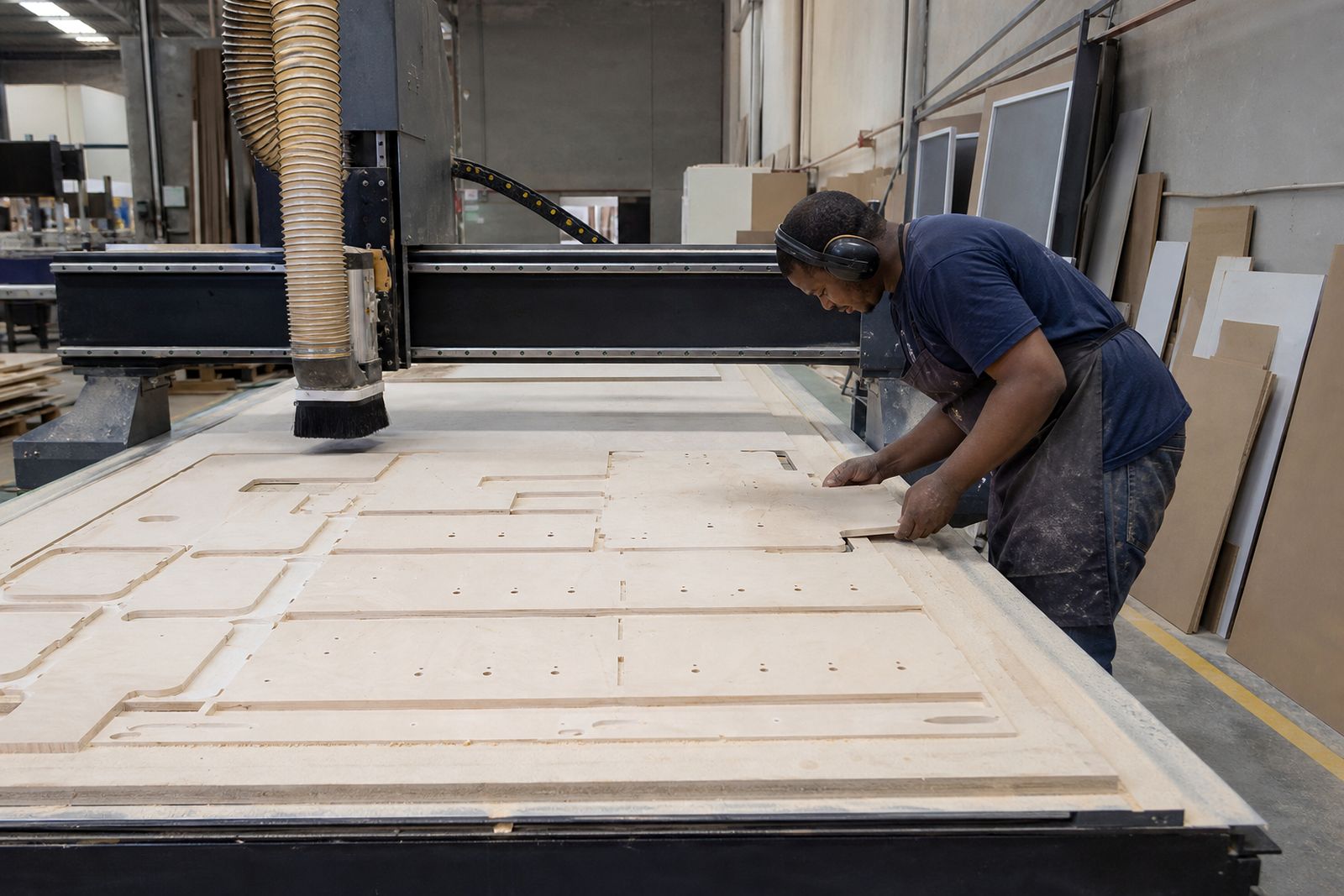
Plywood nests are a staple for nested-base CNC furniture and shopfitters
Plywood nests are dense, flat sheets stacked for efficient CNC routing, especially for furniture and cabinetry. Compression spirals are a key match, giving clean top and bottom edges without breakout.
Pair with the tool range and the feeds card.
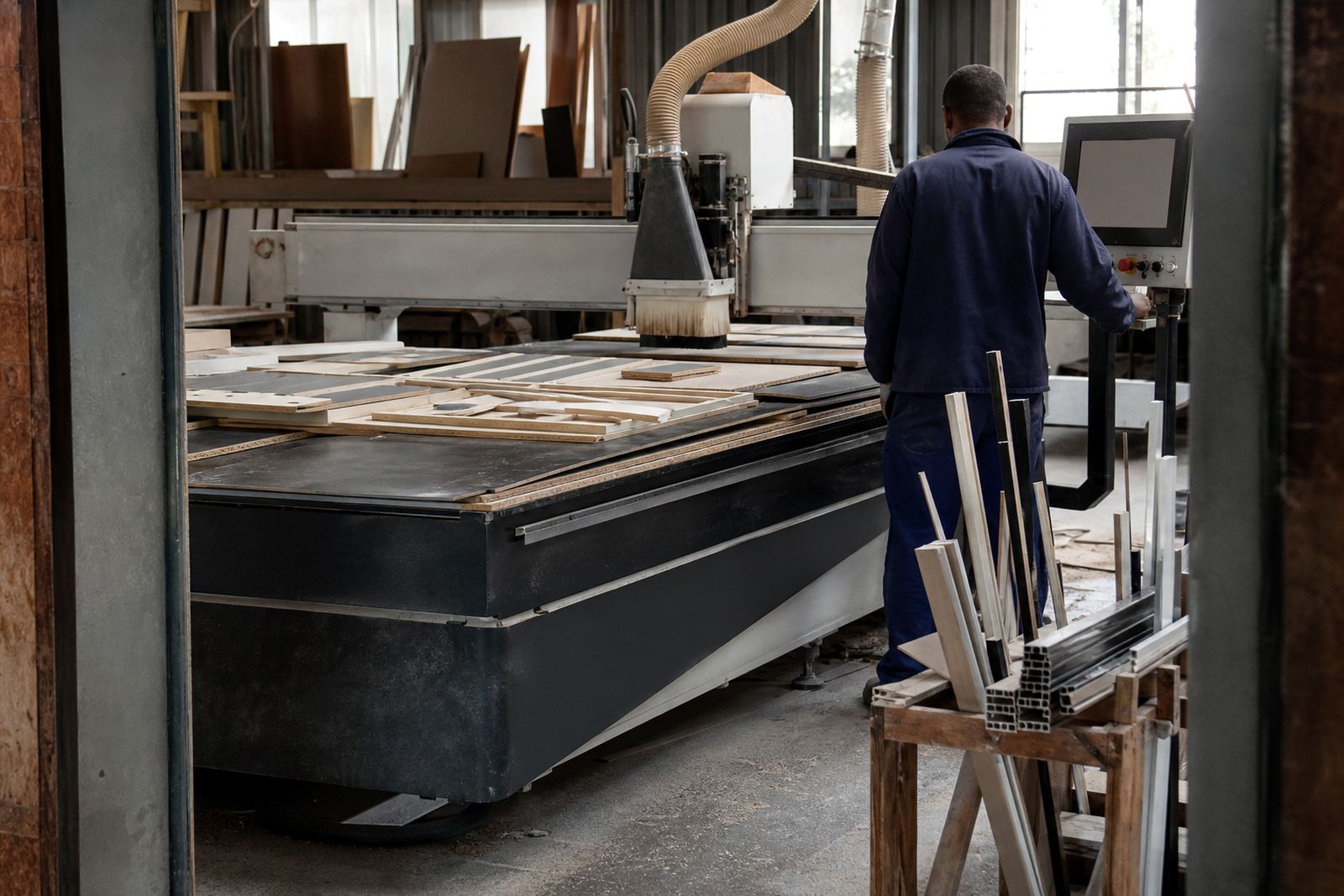
Plywood nests refer to full-sheet plywood blanks stacked or racked for batch CNC jobs, common in joinery, carcass, cabinetry, shopfitting and modular furniture manufacture. South African shops value them for accuracy, repeatability and material efficiency when cutting components for kitchens, built-ins and office sets. Multi-layer birch, supper-ply and pine-core sheets are all used, depending on strength and budget. Machining these nests means routing multiple parts with tight nesting and shared cut lines, so clean, splinter-free edges matter to avoid manual sanding or filler. The top and bottom faces often need to be presentable from the machine, especially for exposed joinery or visible panels.
Compression spirals are the top choice for plywood nests in batch routing
Compression spiral end mills are designed for plywood. Their unique geometry pulls chips up from the bottom and pushes down from the top, pressing both faces tight to the sheet and preventing splintering. For 18 mm birch or pine core, a 3 to 4 flute compression spiral in 6 or 8 mm diameter works well. Start with spindle speeds of 16,000 to 18,000 rpm and feed rates of 4 to 8 metres per minute, adjusting chip load to suit the sheet and tool. Stepdown should be 1 to 1.5 times cutter diameter per pass, with ramping entries to avoid tear-out. Onion-skin passes or tabs keep parts in place. For slots and mortises, downcut spirals or straight bits can be used, and for edge details, a shallow chamfer or V-bit is suitable.
- 3 flute 6 or 8 mm compression spiral (main nest cuts)
- 2 flute downcut for slotting and mortising (avoid top breakout)
- Straight cutter for rebates or grooves up to 12 mm
- Chamfer and V-bits for edge finishing
- Compression spiral ball nose for curved 3D features
Store plywood nests flat with airflow and control moisture for perfect CNC results
Plywood must stay flat for CNC work, especially when running entire nests where one twist can spoil an entire batch. Inland, on the Highveld, store sheets flat on bearers with a weight or another sheet on top, away from direct sun and drafts. In Durban and coastal regions, humidity swings can cause edges to lift or bow. Stickers or battens between sheets allow air to circulate, but don’t leave packs wrapped in plastic for too long, condensation will warp faces. Some shops use a temporary protective film on the good face until after machining. For vacuum hold-down, a clean, level spoilboard is essential, and adding masking tape to the underside of thin sheets helps seal leaks. Always check for bow or cup before starting a nest job and rotate sheets regularly if storage is longer than a week.
What our Cutting Tool customers say
Verified Google reviews
Also worth a look
Tell us about the job you need to cut
Send a note through our contact form with your machine, spindle and collet size, the material and thickness, the finish you need and your area, and we will come back with practical cutter options and a quote.
Open the contact form