

MDF letters
MDF blank habits for sign and trophy makers.
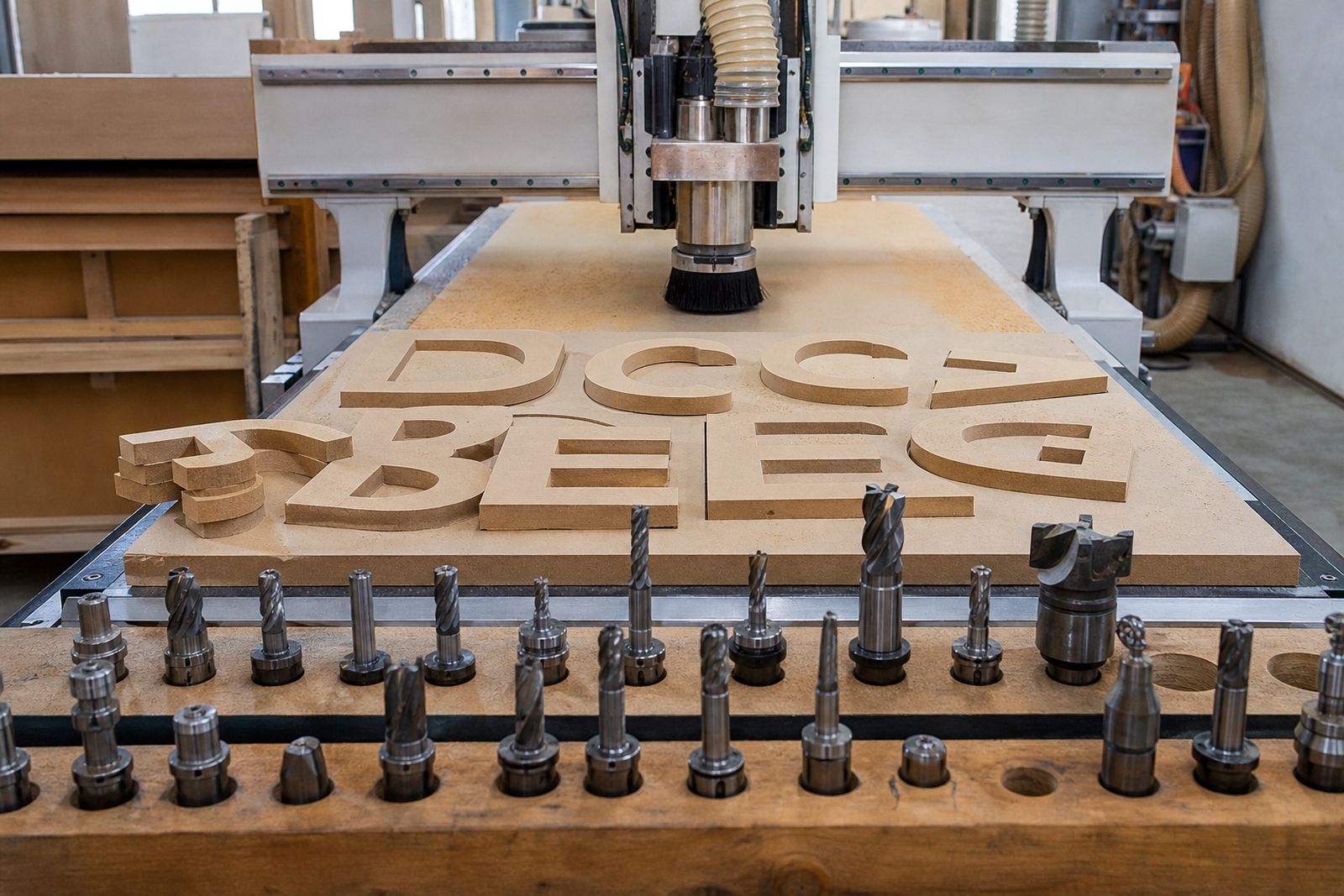
MDF letters for signage and displays
MDF lettering blanks are a staple for trophy and sign shops needing crisp, painted shapes or routed edges. The fine, uniform core of MDF cuts cleanly with the right spiral or straight tools and careful dust extraction.
Pair with the tool range and the feeds card.
Medium density fibreboard is popular for routed letters, trophies, decorative panels and templates. Its homogenous structure gives a smooth edge with minimal grain tearout, making it a favourite for painting or spray finishing. Sign makers, trophy shops, exhibition stand builders and shopfitters all reach for MDF when they need detailed profiles or layered shapes that take paint well.
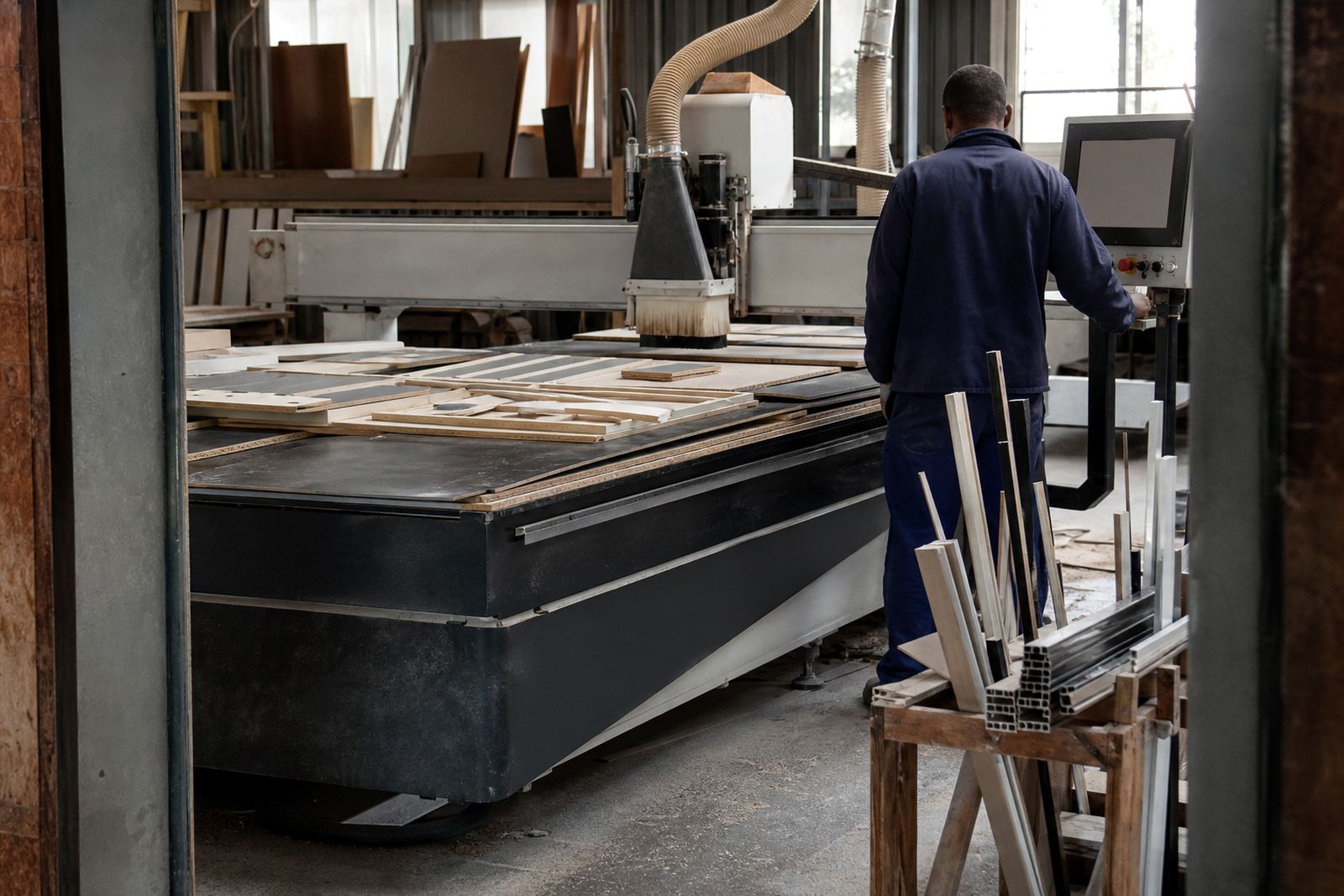
On the router or CNC mill, MDF generates very fine dust. This means you need reliable extraction and regular cleaning of rails and bearings. The material stays fairly consistent across batches, but it can blunt tools if feeds are too slow or the spindle lingers in one spot, so keep the cutter moving.
CuTool cutters and feeds for MDF
MDF is best tackled with sharp, solid-carbide spirals or straight bits, depending on the finish you want. Two-flute upcut spirals are great for pocketing and profiling, while compression spirals give a crisp top and bottom edge for cut-out letters. If you want a classic edge or basic slotting, our solid-carbide straight cutters also do the trick. For chamfered or V-groove details, reach for our carbide V-bits or chamfer mills. Always use sharp cutters and check the collet for dust before every job.
A good starting point for MDF routing is 3 to 6 metres per minute feed rate at spindle speeds between 18 000 and 22 000 rpm for a 6 mm two-flute spiral. Set 2.5 to 4 mm depth of cut per pass, and use the lowest feed rate for fine detail or small cutters. Adjust feeds and speeds based on your actual test cut and dust extraction strength. For compression spirals on a full-depth cut, use a slower feed and ramp in if your controller allows.
- Two-flute upcut spirals for pocketing and profiling
- Compression spirals for clean top and bottom edges
- Solid-carbide straight cutters for slots and rebates
- Carbide V-bits for engraving or chamfering
- Chipbreaker spirals for high-volume production
Store and hold MDF flat in workshops
MDF is hygroscopic and warps quickly with exposure to humidity, so always store blanks flat on a level surface with stickers between sheets for airflow. On the Highveld or in Joburg, MDF tends to stay flat if kept off the floor and away from windows, but coastal Durban and Cape winter damp can swell edges and lift corners overnight. Use old scrap or a plastic sheet as a moisture barrier under your stack if you are near the coast.
Before cutting, peel away any protective film and check for moisture by weighing a few blanks. For routing, vacuum hold-down gives the best support, but if you are using clamps, pad the jaws to avoid bruising the fibreboard. For large jobs, surfacing the spoilboard and using tabs or onion-skin passes prevents movement as the cut finishes. Always store offcuts flat to avoid bowing, and contact the contact form if you need sample blanks or advice.
What our Cutting Tool customers say
Verified Google reviews
Also worth a look
Tell us about the job you need to cut
Send a note through our contact form with your machine, spindle and collet size, the material and thickness, the finish you need and your area, and we will come back with practical cutter options and a quote.
Open the contact form