

Trophy depth stops
Chamfer and V-bit depth stops for a corporate trophy batch.
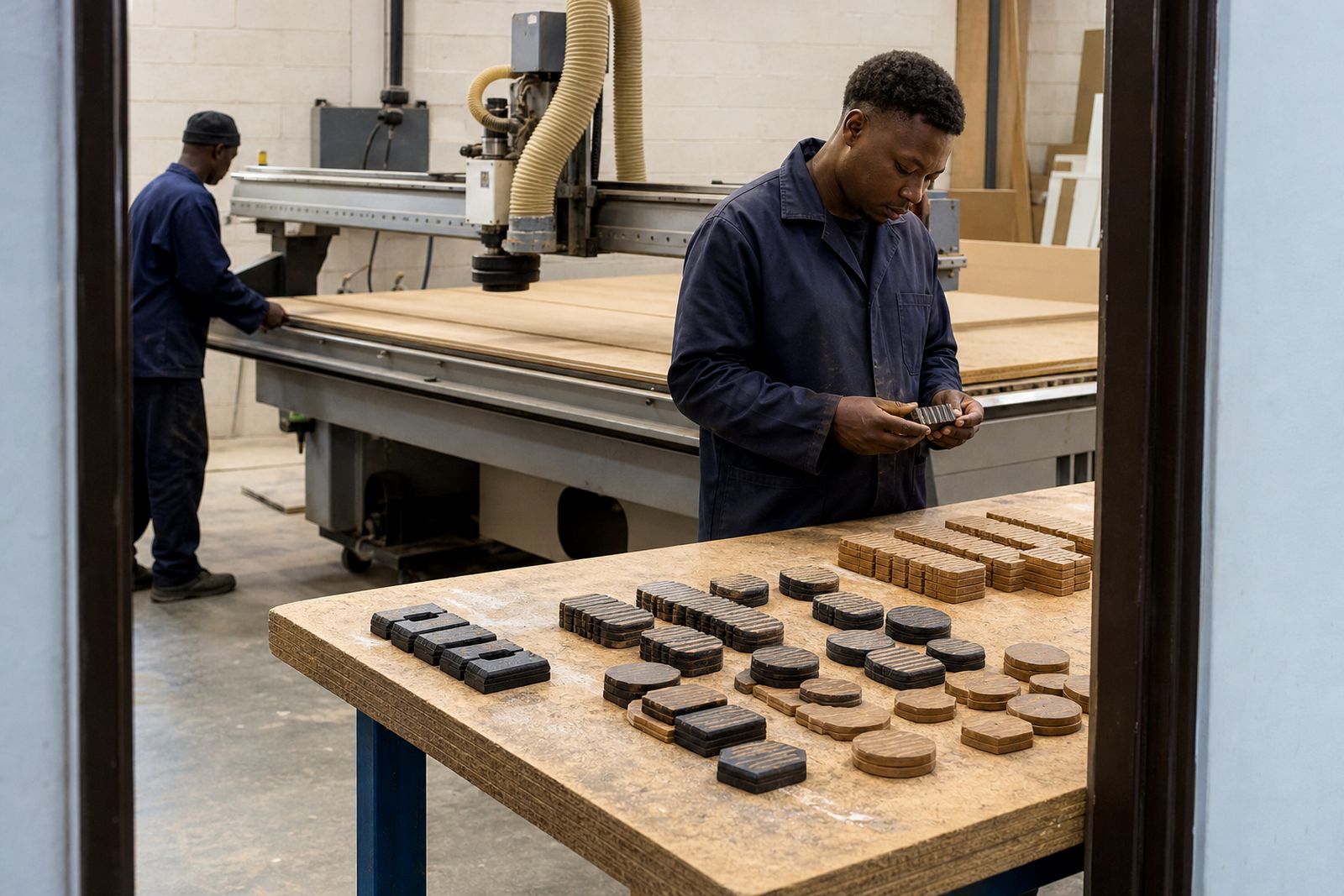
Workshop needed reliable depth control for crisp edges
A Sandton trophy workshop needed consistent chamfer and engraving depths for a big corporate award order. The customer's team dialled in their V-bits and chamfer tooling so every trophy looked sharp and finished, using our written guidance through the contact form.
Related: workshop guides and the tool range.
The trophy maker was preparing a run of acrylic and aluminium awards with detailed V-groove text and chamfered edges. They were struggling with inconsistent depths, especially on the V-bits, which led to uneven line weights in the engraving and some sharp edges that needed reworking. Depth stops were proving unreliable because collet grip and spindle runout were not being checked regularly, and spoilboard surfacing drifted between batches.
The team wanted a way to get predictable, repeatable cuts across fifty awards, using both their main mid-size CNC and a compact backup router in case of power cuts or interruptions.
We supplied precision chamfer and V-bits and improved their depth referencing
Our Sunnyrock team recommended a full set of carbide V-bits and 45-degree chamfer tools with shank rings for depth referencing. We replied with written guidance through the contact form on the basics: ensuring the collets were spotless, using a dial indicator to check for runout under 0.03 mm, and zeroing each tool to a known reference with the spoilboard freshly skimmed. We suggested a printable depth card to track offsets between tools and machines, and suggested a few machinist's shims for the backup router to match cut depths; their team fits them.
For engraving, we suggested slowing the feed to 300 to 450 mm/min with a light finish pass, and using short-stick-out to reduce chatter. With these changes, the chamfers and V-grooves came out uniform across the whole batch. The shop also sent regrind details for our written guidance to keep their best-performing cutters sharp for future runs.
- Carbide V-bits and chamfer bits with depth rings
- Print-friendly depth and tool-life cards
- Dial indicator for spindle runout checks
- Spoilboard surfacing guidance
The shop now follows best practice for every award batch
Since the changes, the trophy team has kept up regular collet maintenance and runs a short zero-check routine before each project. They surface their spoilboard weekly and stick to the depth card system for every cutter change, even with staff rotations. Their engraved lines are crisp and chamfers consistent, saving time on hand finishing.
If we were to do this again, we would suggest a torque wrench for the collet nuts, as a few of their cutters showed signs of slipping from under-tightening. Next time, we'd also suggest an air blast for acrylic jobs to clear chips and keep the cuts cool.
What our Cutting Tool customers say
Verified Google reviews
Also worth a look
Tell us about the job you need to cut
Send a note through our contact form with your machine, spindle and collet size, the material and thickness, the finish you need and your area, and we will come back with practical cutter options and a quote.
Open the contact form