

Bloemfontein prototype mill
Aluminium finish mill week with mist notes inland.
The workshop’s challenge with aluminium finishing
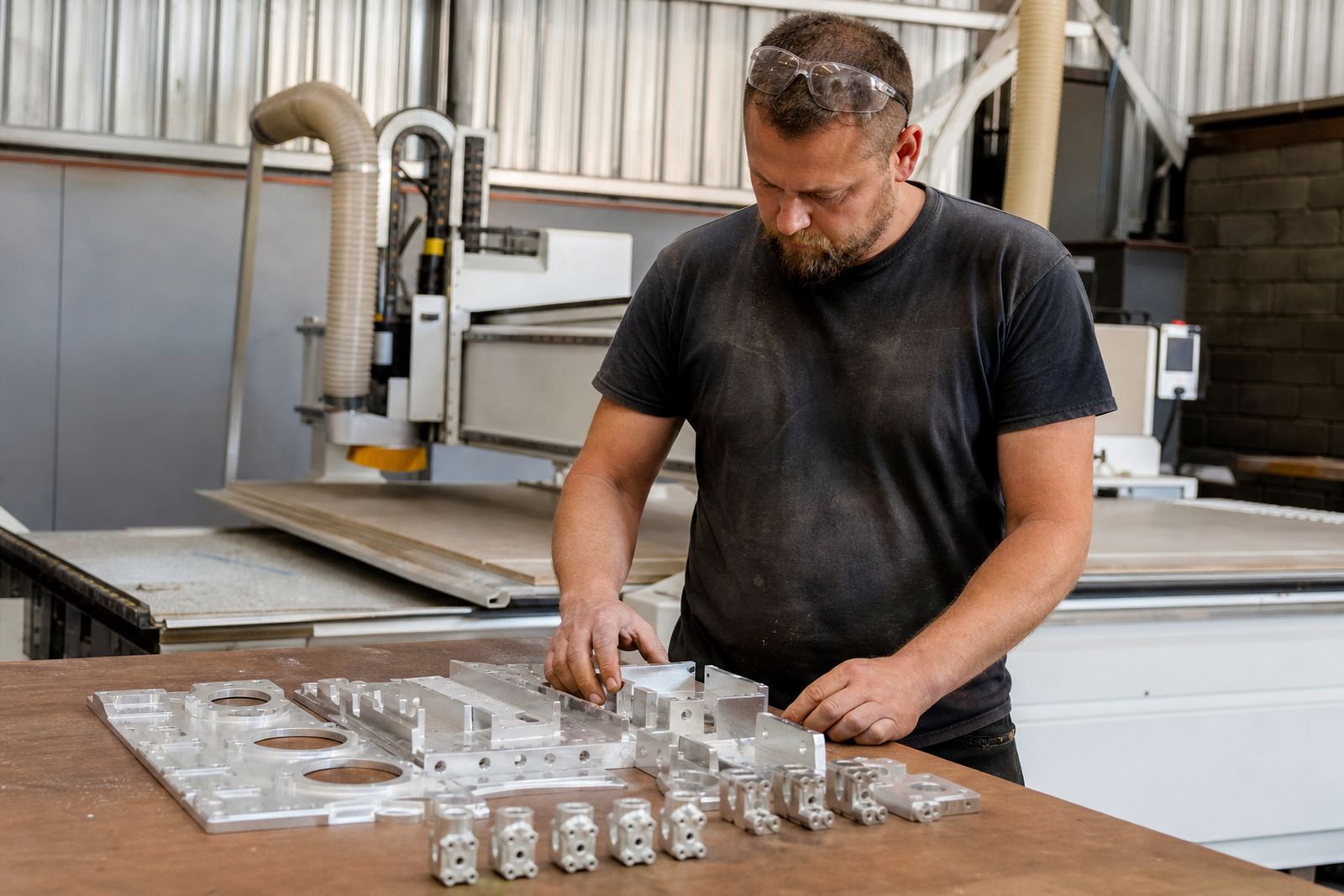
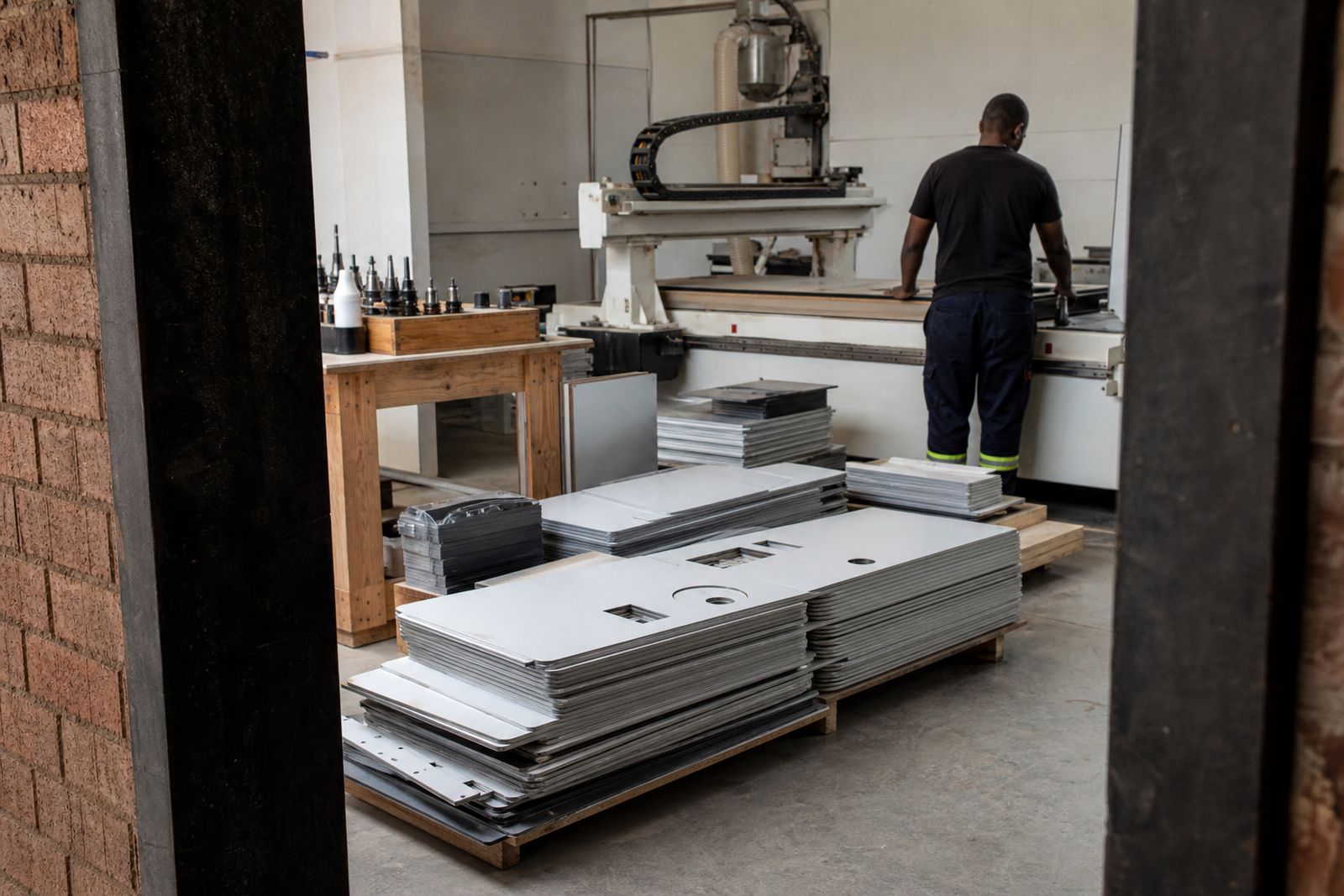
A Bloemfontein workshop needed crisp finishes on small aluminium parts for a prototype cell. Our written guidance supported their move to proper finish milling with carbide tools and mist cooling suited to inland conditions.
Related: workshop guides and the tool range.
The team in Bloemfontein were prototyping a batch of compact aluminium parts, all requiring tight dimensional tolerance and crisp edge finishes. Their CNC router, set up for general joinery, had been running mostly on wood and plastics, and they were struggling with edge burring and tool marks when shifting to 6082-T6 profiles. The usual air blast for chip clearing was drying out fast, especially with the Highveld’s winter air, which made tool heating and chip welding a real problem. Weekend power cuts meant the shop often had to finish a pass quickly and re-zero after a restart, so predictable setups mattered.
The operators were also noticing premature tool wear and occasional chatter, especially on steeper wall profiles and with shallow slotting, which pointed to a mismatch in cutter geometry and feed rates for this material.
Supplying finish mills and sorting out the mist cooling
Our Sunnyrock team recommended a low-helix, three-flute carbide end mill with uncoated micrograin, designed for aluminium. These offer a high-polish flute and open chip pocket, reducing the risk of chip recut or welding, and the three-flute geometry gives better finish than the single or double-flute upcuts they were using. We advised a starting point of 0.03 to 0.07 mm chip load per tooth and keeping the spindle speed in the 16 000 to 20 000 rpm range, while emphasising test passes to help their machine operators adjust for their machine’s rigidity.
Because the air is so dry in Bloem, we supplied a basic mist system using a small coolant reservoir and airline, with food-grade oil for light clean-up. We provided written guidance for their operators on how to fit the nozzle to direct mist along the flutes without flooding the workpiece. We also talked through keeping collets spotless, checking for runout with a dial indicator, and keeping stick-out to a minimum for stiffer cuts and less vibration.
- Three-flute, low-helix carbide end mills
- Uncoated for aluminium, mirror-polished flutes
- Mist cooling with adjustable nozzle
- Collet and runout checks each shift
Long-term improvements and lessons for future runs
After implementing the new cutters and mist, the workshop maintained the same setup for the rest of the prototype week, only swapping out for a small-diameter rougher on deeper pocket jobs. Their team kept up the habit of checking tool runout and cleaning out the ER collets before each job, which paid off in both tool life and surface quality. The finishing passes, run at lighter stepdowns and higher feed rates, brought the edge finish up noticeably, with much less burring and no visible chip welding.
Looking back, we’d suggest a dedicated spoilboard or sacrificial plate just for aluminium work, to prevent cross-contamination from wood resin. Next time we’d also recommend a torque wrench for the collet nuts, and possibly a longer flute cutter on thicker billets. For any shop dealing with power interruptions, a small UPS for the controller lets you re-home and finish a pass without losing position.
What our Cutting Tool customers say
Verified Google reviews
Also worth a look
Tell us about the job you need to cut
Send a note through our contact form with your machine, spindle and collet size, the material and thickness, the finish you need and your area, and we will come back with practical cutter options and a quote.
Open the contact form