

East London outdoor boards
ACM and chamfer week for coastal outdoor boards.
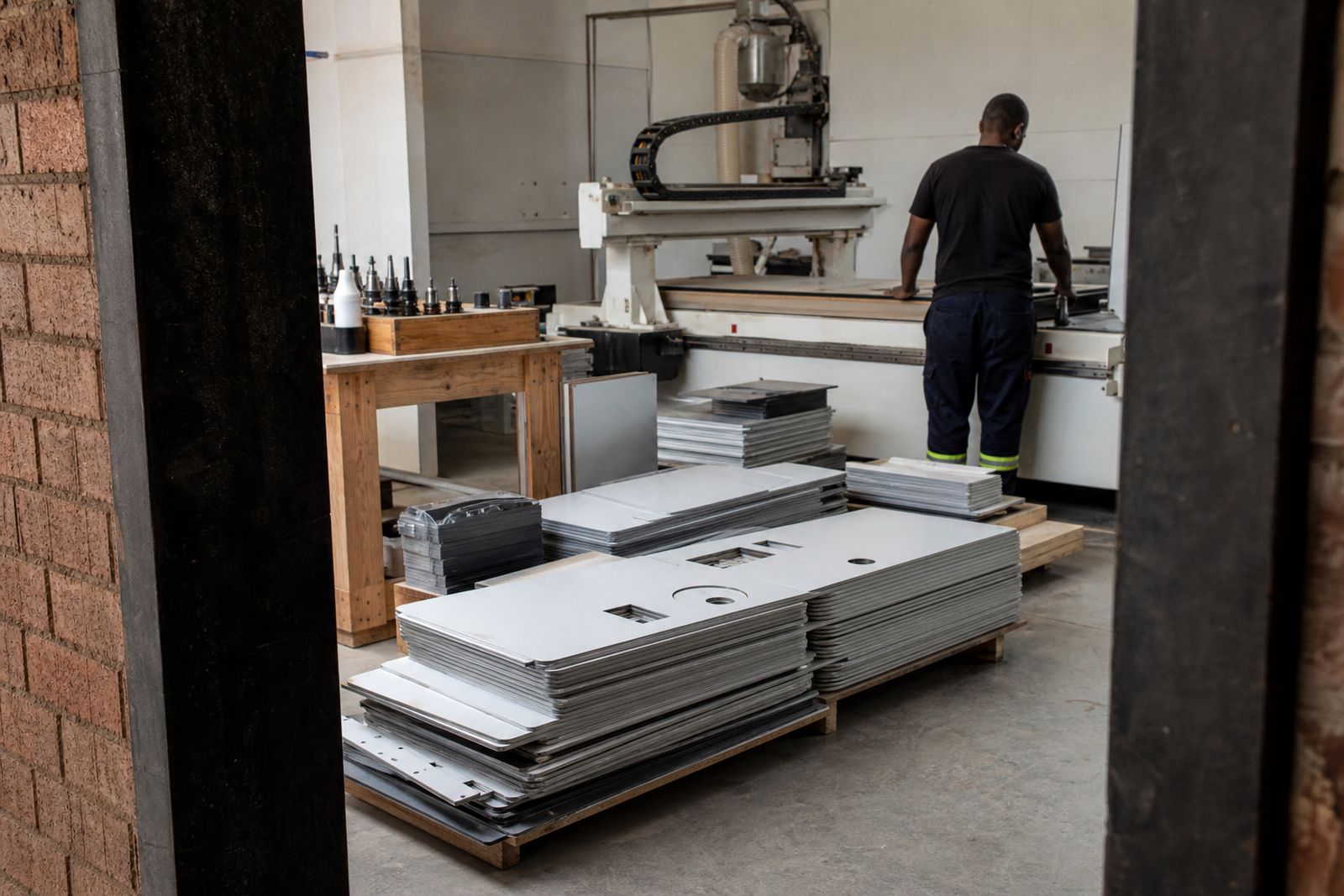
The workshop needed neat edges on ACM for exposed outdoor mounting
A sign shop in East London tackled a week of ACM boards and outdoor signage, pushing through coastal humidity and tricky chamfer edges. We review cutter options and advise the customer’s team so they can keep cuts clean and downtime low.
Related: workshop guides and the tool range.
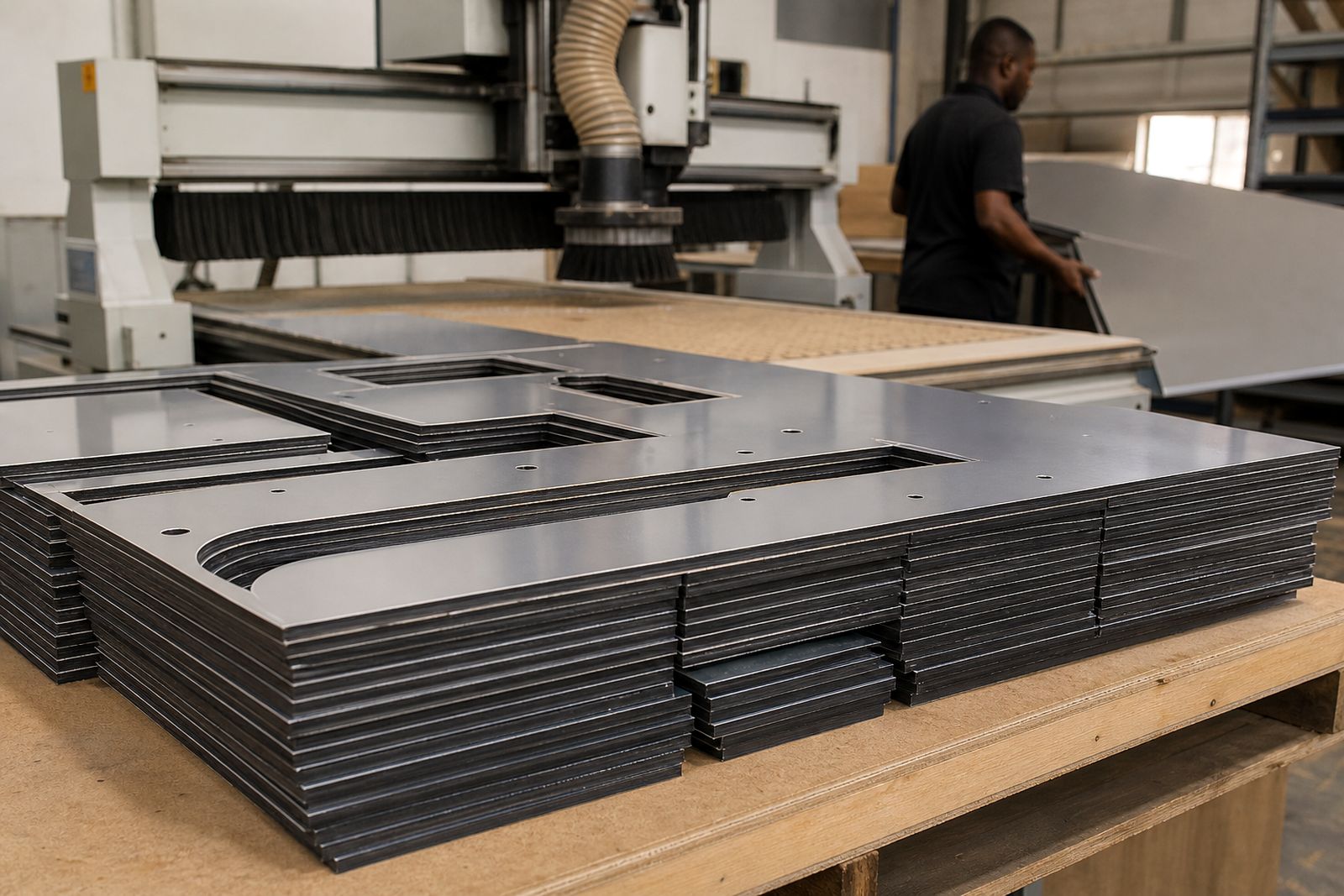
The shop had a flood of ACM panels lined up for outdoor signs, all needing crisp chamfers on the faces and edges visible to the public. Being East London, that winter week was humid enough to make dust management awkward, and the boards brought in plenty of salt residue and static. The team’s main challenge was to keep edge tear-out to a minimum, and avoid burring the aluminium faces, especially on long cuts across the panel.
Machines on hand were mostly 3 and 4 kW spindles, running a vacuum table that struggled with some warped ACM sheets. Between power cuts and the extra cleanup from static dust, it was important to get through each batch with as few passes as possible. They wanted to avoid sanding, so the finish from the tool itself had to be spot-on.
We recommended compression spirals and a solid-carbide chamfer cutter
Our Sunnyrock head office supplied 6 mm and 8 mm compression spiral cutters for through-cuts. The up/down geometry let the team keep both faces chip-free, and allowed a bit more feed per tooth than standard up-cut bits, which helped finish the boards before a fresh power cut came through. For the chamfers, we matched a 60-degree solid-carbide V-groove cutter, uncoated for clean aluminium edges without gumming.
We advised on the minimum stick-out needed, and noted how a quick dial indicator check on the ER32 collets can help reduce runout, which can improve cut quality. The team went with air blast to clear chips, rather than mist, to keep the table dry for vacuum hold-down. They started with 9 metres a minute feed and 2 mm stepdown, ramping into the sheets rather than plunging.
- Compression spirals kept both ACM faces clean
- Uncoated V-groove bit for burr-free aluminium
- Dial indicator checks tightened up runout
- Air blast cleared chips from the cut line
They stuck with our setup for future runs but adjusted feeds with each batch
The shop kept using the compression spirals and chamfer cutter for ACM work, swapping to single-flute up-cut tools for the odd acrylic job in between. Over time, they started scheduling maintenance to check ER collet wear and wipe down the spindle taper after each big batch, which kept cut finish reliable.
If we tackled a similar rush again, we’d bring a portable collet-cleaning kit and a dedicated torque wrench for the collet nuts, as the right torque made a difference to both tool life and finish. We’d also suggest a short nozzle anti-static air gun to help deal with the coastal static and dust on humid days.
- Regular collet checks improved reliability
- Upgraded to anti-static air for dust control
- Adjusted stepdown and feed to suit new ACM batches
What our Cutting Tool customers say
Verified Google reviews
Also worth a look
Tell us about the job you need to cut
Send a note through our contact form with your machine, spindle and collet size, the material and thickness, the finish you need and your area, and we will come back with practical cutter options and a quote.
Open the contact form