

Durban ACM panels
Coastal ACM nest with humidity-aware storage notes.
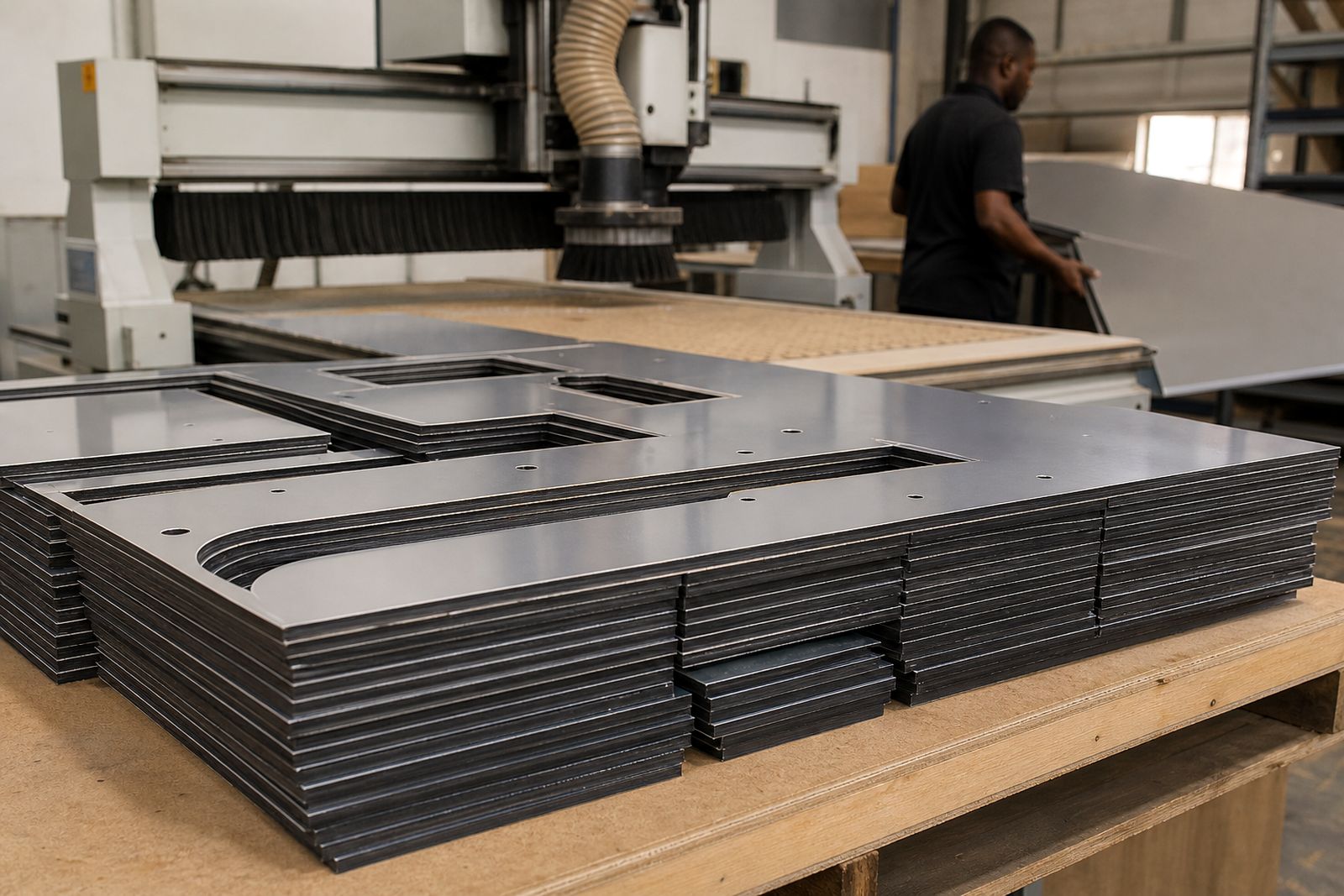
Keeping ACM flat and clean in Durban’s coastal workshop
Durban signmakers tackled a run of ACM outdoor panels just as coastal humidity hit its peak. Smart storage and tooling choices kept production consistent and downtime low.
Related: workshop guides and the tool range.
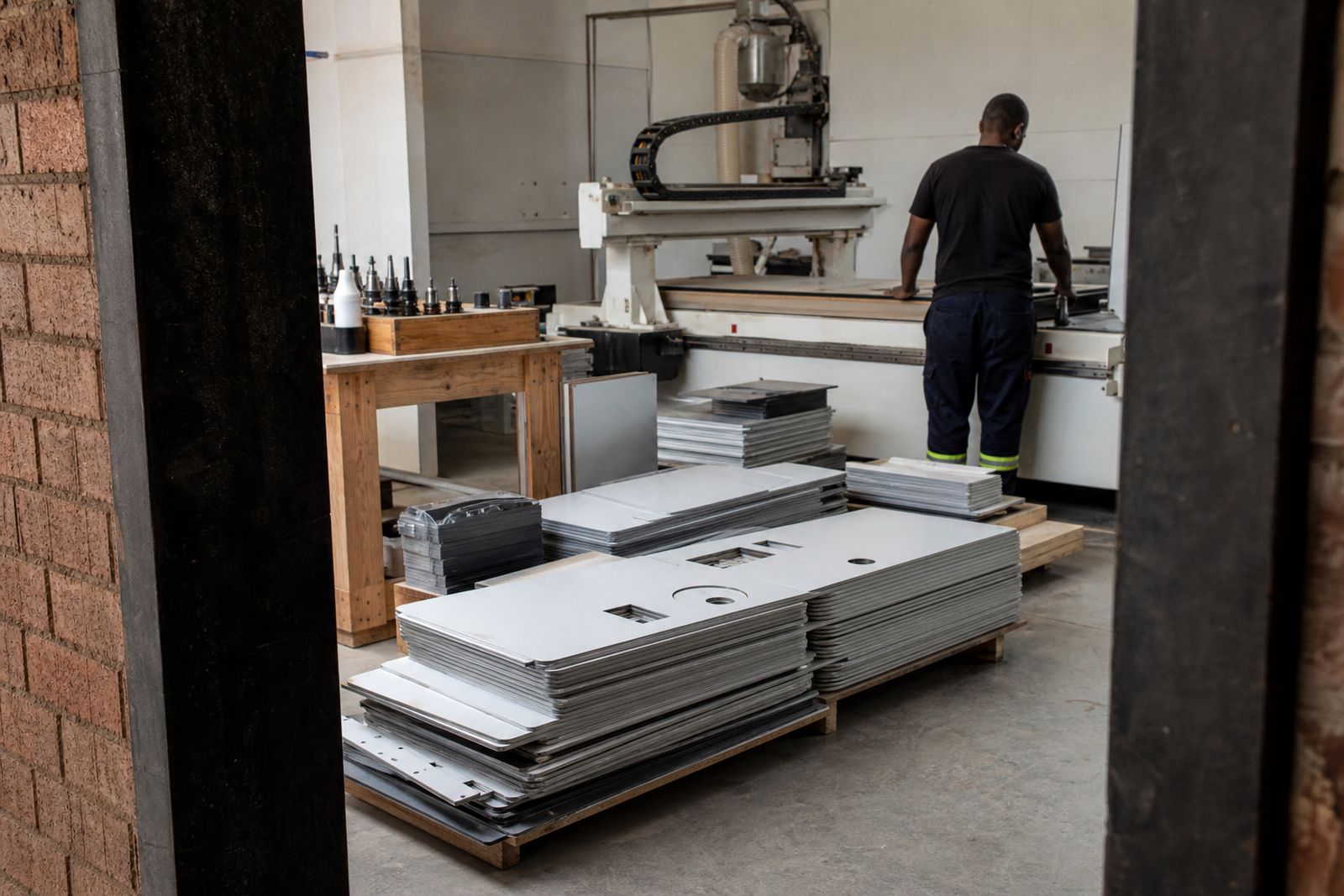
This Durban workshop needed crisp letter and shape cut-outs for a set of ACM signs bound for outdoor use. The team knew what coastal humidity can do to flat stock: panels can warp or attract surface moisture if not handled carefully.
They stored the panels upright on timber rails with spacers, well away from any open roller doors. Each panel got a quick wipe with a clean cloth before going onto the vacuum table. For smaller offcuts, they used a simple rack to keep everything off the floor and away from damp corners.
- Panels stored upright on timber rails
- Wiped with a clean lint-free cloth before cutting
- Offcuts stacked in a ventilated rack
Choosing downcut spirals and keeping chips out of the cut
We supplied 6 to 10 mm 2-flute solid-carbide downcut spirals for neat top edges and to hold the ACM skins together during the cut. The high downward force from a downcut flute kept the panel from lifting, avoiding chatter and delamination.
The workshop set up compressed air to blow chips away from the cutting area and prevent heat build-up, which especially matters in humid air. The team started with a chip load of 0.05 to 0.10 mm per tooth and ramped into profiles rather than plunging straight down. With regular stops to check for resin or aluminium build-up on the flutes, the tools cut consistently panel after panel.
All collets and nuts were cleaned and lightly oiled to prevent corrosion in the workshop’s salty air. After each job they checked stick-out and runout with a dial indicator, staying well within 0.02 mm for accuracy.
- 2-flute downcut spirals for crisp edges
- Compressed air cleared chips
- Chip load started at 0.05 mm per tooth
- Collets cleaned and checked for runout
Ongoing care for tools and panels in humid conditions
After delivery, the workshop kept up regular maintenance: drying and blowing down the vacuum table after shifts, inspecting the toolholder taper for any signs of corrosion, and always rechecking collet torque before starting a new panel.
We’d suggest they add a silica gel box near their most-used cutters and panel storage area. A small dehumidifier would also help when the coastal damp sets in. If the team ever moves to acrylic or does more fine engraving, we’d recommend a single-flute upcut for clean chip ejection and to keep the cut cool.
For tool questions or regrind arrangements, our team is ready to help through our contact form.
- Regular vacuum table drying and cleaning
- Collet torque and corrosion checks
- Silica gel and dehumidifier for tool storage
What our Cutting Tool customers say
Verified Google reviews
Also worth a look
Tell us about the job you need to cut
Send a note through our contact form with your machine, spindle and collet size, the material and thickness, the finish you need and your area, and we will come back with practical cutter options and a quote.
Open the contact form