

Centurion aluminium trim
Single-flute polish on extrusion faces before powder.
Extrusion finishing slowed by burrs and haze
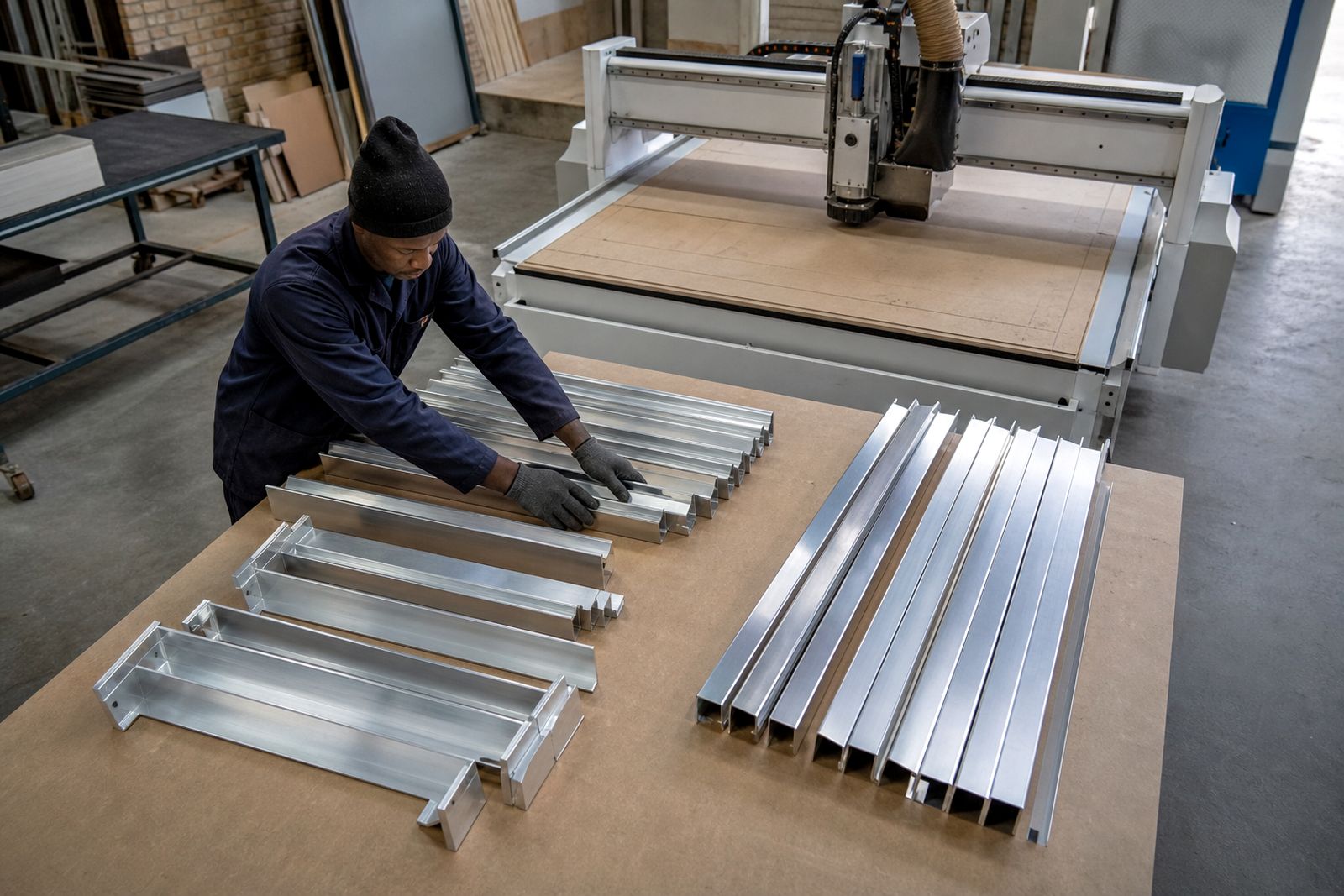
Aluminium window trim extrusions needed a mirrored finish on cut faces before heading to powder. A single-flute polish bit from CuTool made the difference in both speed and clarity.
Related: workshop guides and the tool range.
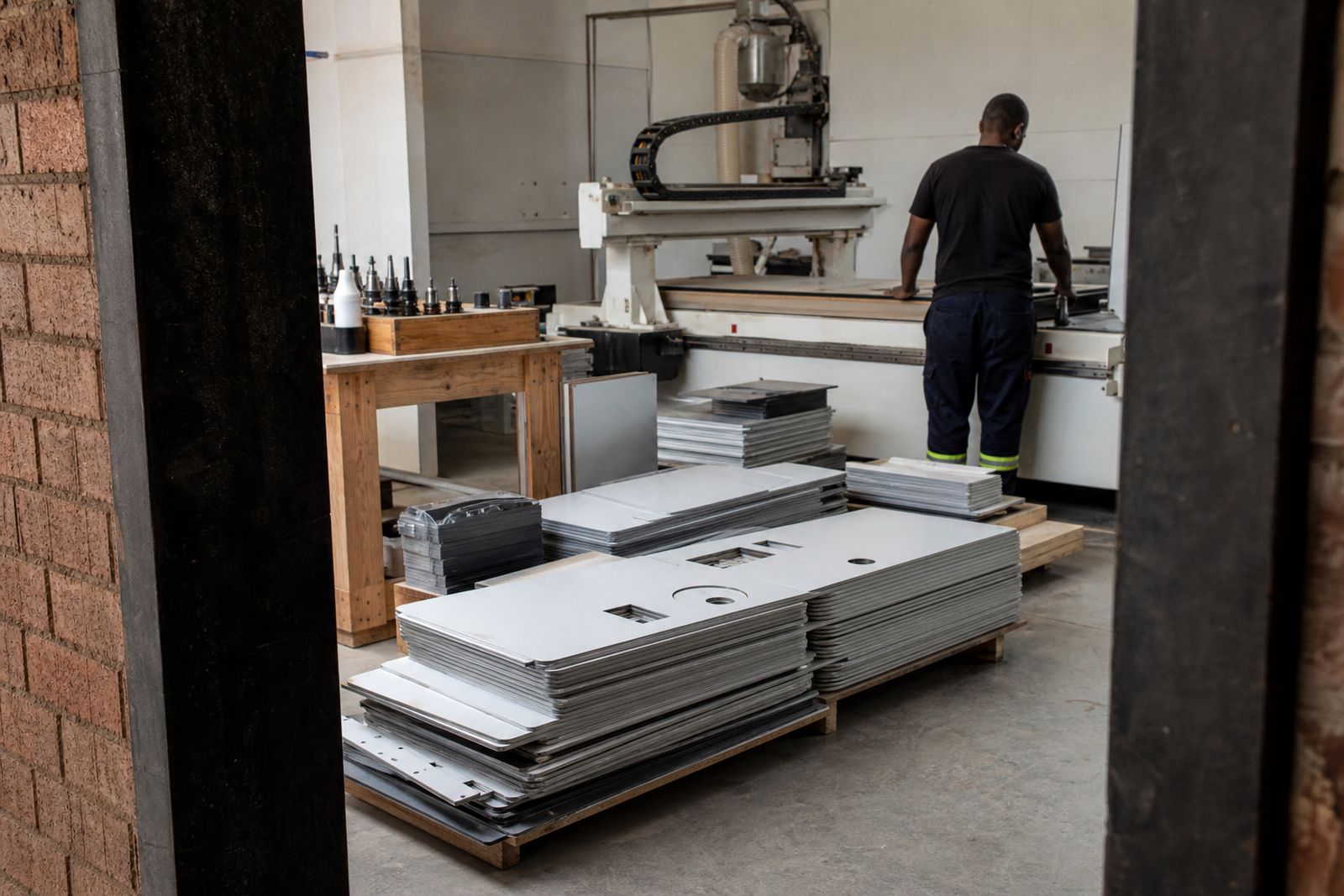
A trim shop in Centurion had taken on a contract for window and sliding door trims, running up to 4-metre aluminium extrusions through their CNC to size and mitre the ends. The old routine used a standard double-flute spiral, which left a faint haze and micro-burrs on the faces, needing extra time at the bench with files and scotchbrite before powder-coating.
Extruded aluminium is soft enough for quick cuts, but even with a vacuum table and surfacing the spoilboard, there was still chatter and some movement on longer stock. With each pass, the team found some faces catching light unevenly, which their client had started flagging as an issue.
- Burrs slowed down post-CNC bench finishing
- Surface haze showed up after powder-coating
- Long extrusions risked chatter and vibration
Switching to single-flute polish spirals and new hold-down steps
Our team recommended a single-flute upcut spiral with a polished flute, 6 mm diameter, purpose-made for aluminium. This geometry clears chips with less heat and leaves a clearer face. We stressed keeping the stick-out at a minimum, cleaning the collet and nut before tightening, and checking for runout using a dial indicator, aiming for under 20 microns.
They set feeds at 1800 to 2 300 mm/min with a light stepdown, and swapped conventional for climb cutting on finishing passes. The crew added extra clamps and checked vacuum suction along the full extrusion length, and kept compressed air on the cut. No mist coolant needed, just air blast was enough to clear chips and keep the bit cool.
All staff were reminded to wear eye and hearing protection, and to never reach near the cutter during operation. Torque wrenches were put in use for the ER collet nuts, and cutters were swapped out at any sign of dullness or aluminium pick-up.
- Single-flute polished spiral, 6 mm, upcut
- Checked runout and kept stick-out short
- Used air blast, not mist coolant
Better finish and less bench work for future batches
After the change, operators spent much less time cleaning up the mitres before powder. The powder-coater reported less bleed and bubbling at the edges. The trim shop logged the new tool and feed settings on printable cards from CuTool, kept at each CNC.
For the next project, we would suggest trialling a compression geometry if both faces need a polish, or a diamond mirror finish bit if the powder specification ever changes. If any power cuts affect pass completion, a UPS for the controller is worth considering to keep position between jobs.
For any other shops with similar requirements, our team is available to advise on bit selection and regrind options. We can be reached through our contact form.
What our Cutting Tool customers say
Verified Google reviews
Also worth a look
Tell us about the job you need to cut
Send a note through our contact form with your machine, spindle and collet size, the material and thickness, the finish you need and your area, and we will come back with practical cutter options and a quote.
Open the contact form