

Spindle care tray
Shared spindle tray and collet routine for a school cell.
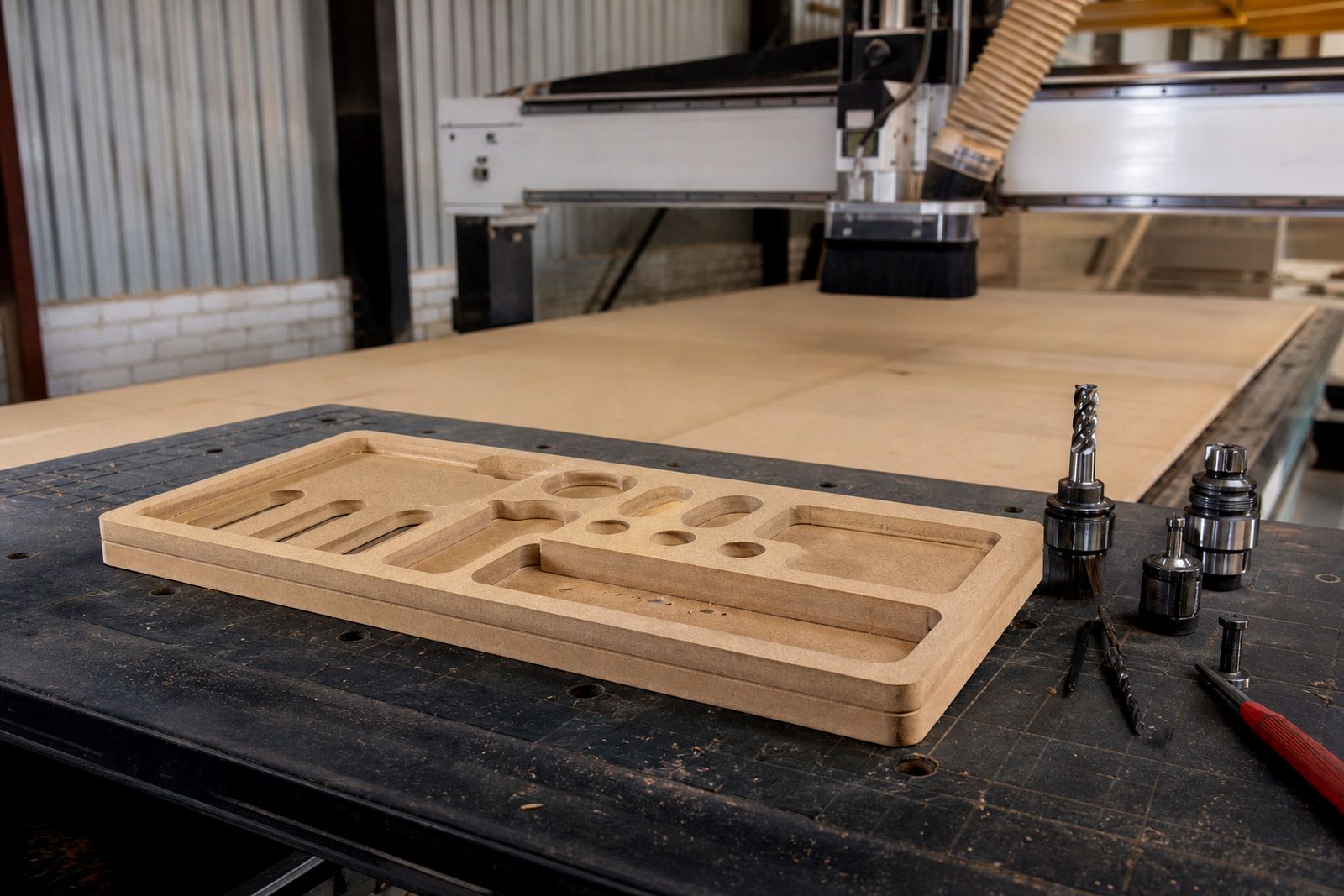
The workshop had students queuing and missing collet checks
A Pretoria school workshop needed a simple, reliable way for students to share CNC router tooling and look after spindle collets. We suggested a tray system and starter routine, with their own team setting it up and handling the swaps and cleaning.
Related: workshop guides and the tool range.
In the Pretoria school’s technical workshop, a single entry-level CNC router served rotating groups of students. With tight lesson times, collet and spindle checks often got skipped. Router bits ended up jumbled in a bakkie tub, some chipped from careless swapping or wiped on oily rags. The collet nut sometimes ran dry or collected dust and resin, and students rarely checked stick-out or if the collet was fully seated.
Guards and vacuum worked, but the actual tool changes were rushed. Instructors wanted better habits, faster swaps, and less risk of losing a tool or over-tightening a nut. School power cuts sometimes interrupted a pass, but the bigger challenge was keeping the routine safe and repeatable for all students.
We prepare a spindle tray and a written collet routine for your team to use.
The Sunnyrock head office supplied a foam lined tray labelled with cutter types, sizes and the ER11 and ER16 collets for the school’s two routers. We included a printable 'collet routine' card, with a short checklist for cleaning, inserting, torqueing and handling the spindle assembly, as well as a spot for cleaning brushes and a drop of oil (kept outside the tray).
Each tool had its position, so missing or damaged cutters were obvious. Students quickly learnt to check collet for resin, dust and correct torque using the supplied spanner. They followed a step-by-step routine: clean, check for runout (if a dial test indicator was available), seat the collet and nut, set stick-out, and return everything to the tray. Teachers could walk past and see at a glance if anything was out of place.
- Foam tray with labelled slots
- Collet and nut cleaning card
- Brushes for dry wipe-down
- Oil kept separately
- Visual spots for cutter check-in
A routine that stuck and what we would tweak for the next workshop
The shop kept the tray and routine, with students checking in and out cutters as part of their routine. Wear and breakage dropped, and the spindle ran smoother with fewer stuck collets and cleaner tapers. It became normal to talk about collet care as much as feeds and speeds.
Next time, if the budget allows, your team could add a small dial indicator to the tray, and we can review the setup and provide written guidance on checking runout as part of the routine. We’d also suggest one high-quality ER collet wrench with a torque reference mark, plus a laminated copy of the card for every CNC cell. For technical advice or regrind options, schools can always reach us through our contact form.
What our Cutting Tool customers say
Verified Google reviews
Also worth a look
Tell us about the job you need to cut
Send a note through our contact form with your machine, spindle and collet size, the material and thickness, the finish you need and your area, and we will come back with practical cutter options and a quote.
Open the contact form