

Packaging foam cutting
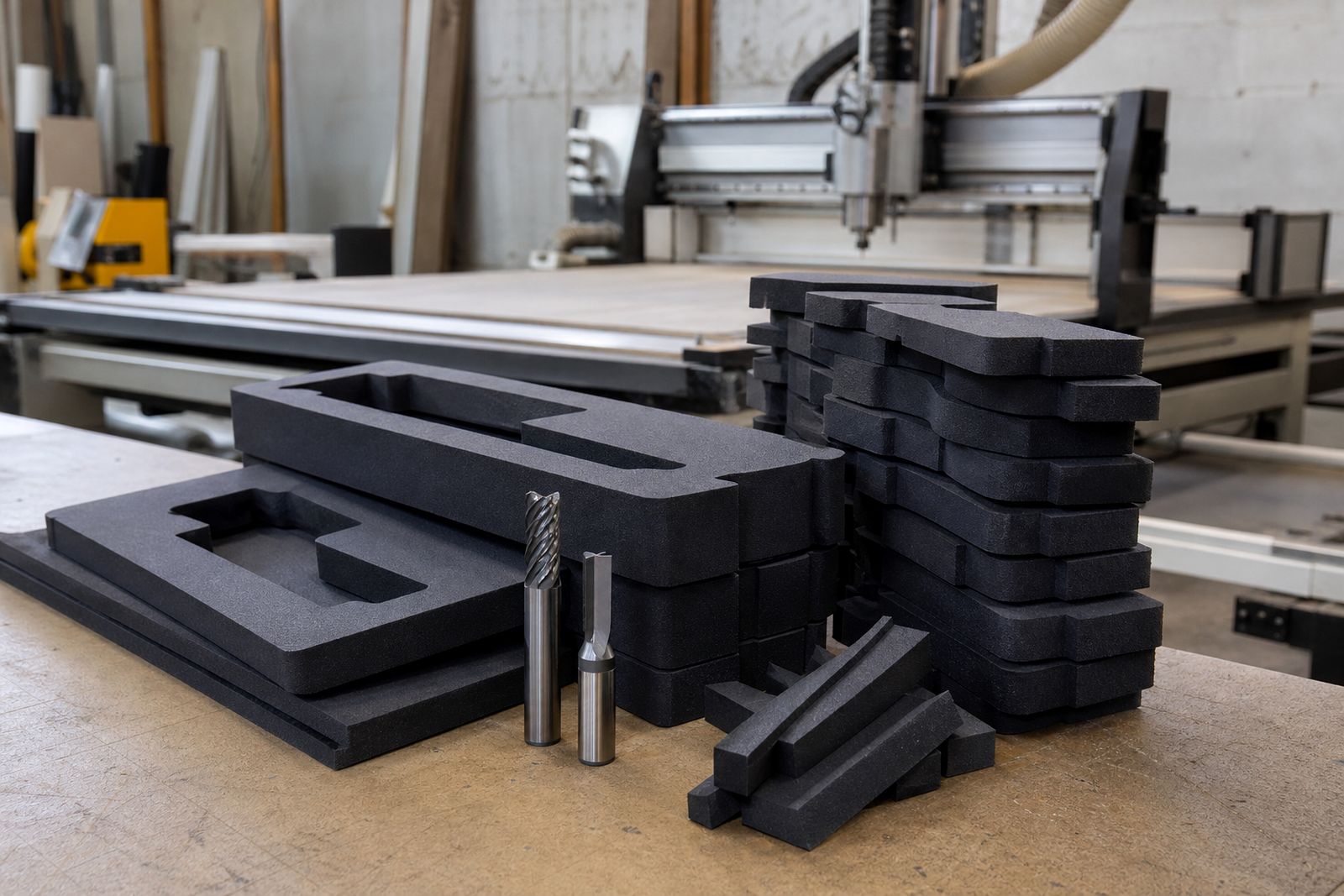
Foam cutters with tool-life cards through courier packaging work.
Foam shaping slowed by blade wear and ragged cuts
Packaging foam blanks needed better edge quality and more predictable tool life.
Related: workshop guides and the tool range.
The packaging cell in Gqeberha was running small-batch foam jobs with standard router bits and a few older hot-wire set-ups. Staff found the edge finish inconsistent, with tails and tear-out especially on the denser foam types. Blade wear was hard to track, leading to sudden drop-offs in quality and unplanned stops for tool changes.
The machines were running basic vacuum tables and MDF spoilboards, mostly with short-stick ER collet setups. The team manually recorded tool changes, but cutters were often run past their best due to lack of a clear system for when to retire or regrind a tool.
Supplying spiral foam cutters and practical tool-life cards
We recommended straight-flute and up-spiral foam cutters in 8 mm and 10 mm sizes for the main foam grades, each with an oversized shank for proper clamping in the ER32 holders. The team chose uncoated cutters to avoid static build-up, and we included a couple of single-flute up-spirals for the softer PE sheets where chip evacuation is critical.
We printed and laminated batch-specific tool-life cards, marked for expected cut length per tool and fields to log tool changes. Couriers delivered the lot to Gqeberha within a week, so the shop switched over during a planned foam run. After a quick test cut and small feed adjustment, the operators settled on a starting point of 6000 to 9 000 mm per minute at 2 to 3 mm stepdown, fine-tuning as needed.
- Spiral foam router bits in common sizes
- Laminated feeds and tool-life cards for tracking
- Advice on up-spiral vs straight flute by foam type
- Courier delivery direct to the packaging cell
- Guidance on vacuum hold-down for light foams
Longer tool life, cleaner blanks and lessons learnt
Since the switch, the packaging cell has kept up with regular foam runs and maintained cleaner cuts, with less edge picking and fewer rejects. Operators now mark off cuts per tool and swap before edge quality drops off, so downtime is more predictable.
If we could revisit the project, we’d suggest a dial-indicator check on collet runout and a quick refresher on nut torque. This would help get even more from the cutters. We’re ready to support the team again if they add thicker or more abrasive foams, or want to set up regrind through our local partner.
What our Cutting Tool customers say
Verified Google reviews
Also worth a look
Tell us about the job you need to cut
Send a note through our contact form with your machine, spindle and collet size, the material and thickness, the finish you need and your area, and we will come back with practical cutter options and a quote.
Open the contact form