

Melamine nest cutting
Melamine compression nests without laminate tearout.
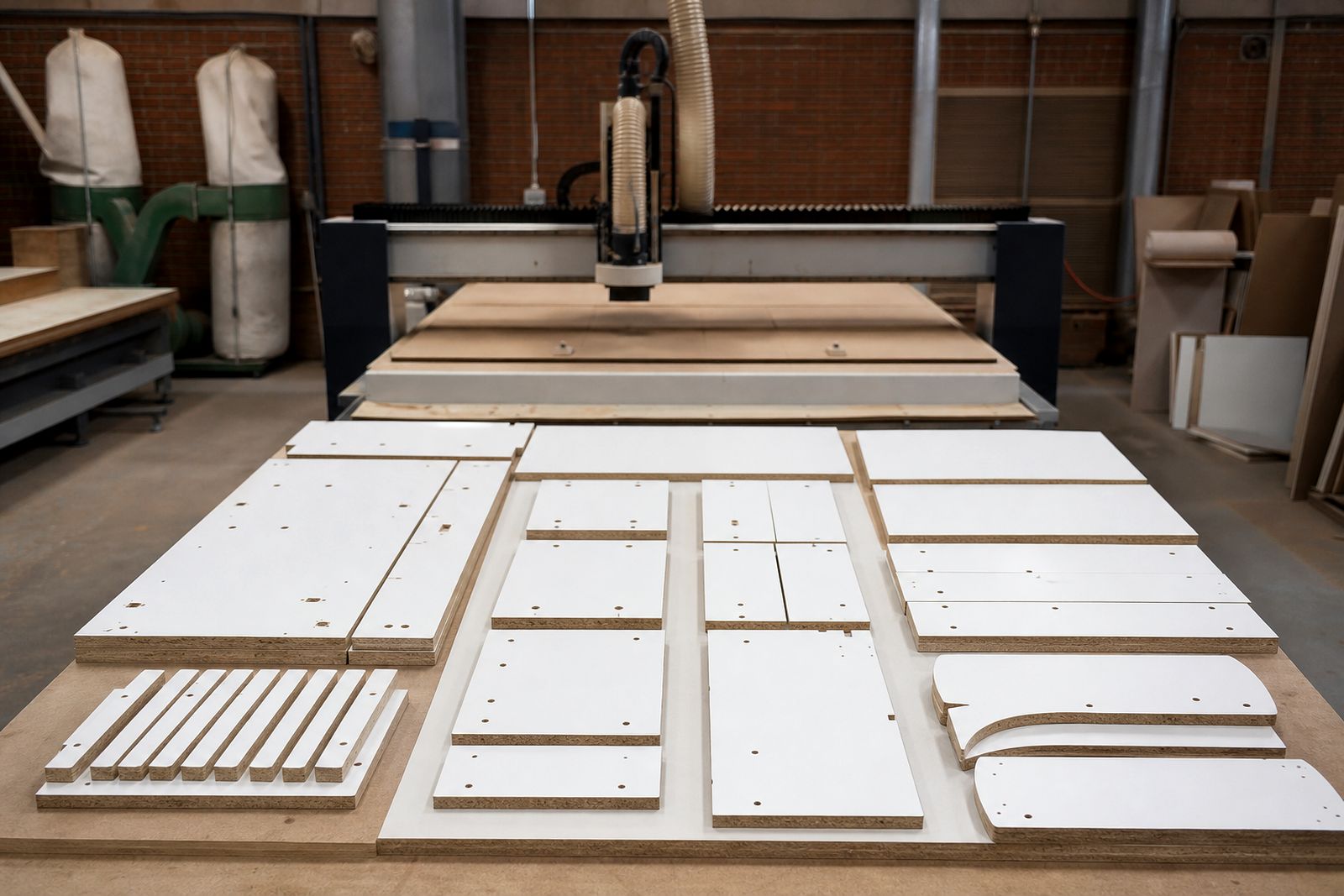
Melamine tearout was slowing down kitchen builds
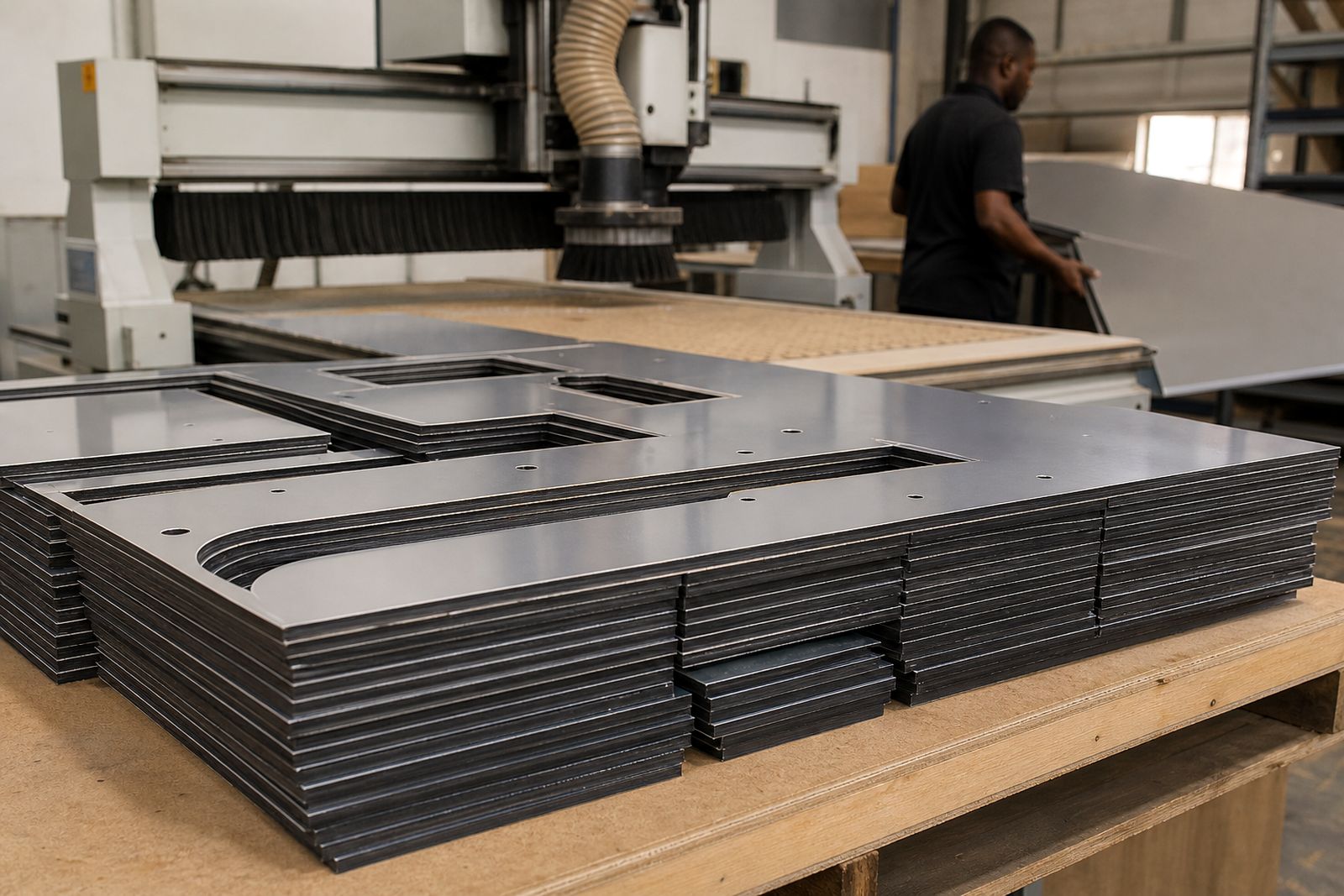
A Joburg kitchen manufacturer needed clean melamine nests, but struggled with laminate tearout on the exit side. Our compression spirals and written guidance helped them finish parts with crisp edges and minimal sanding.
Related: workshop guides and the tool range.
The shop was running a mix of local white melamine and imported décor boards on a mid-range CNC router. Even with sharp cutters, they saw chipping on the laminate face, especially around corners and when parts were close together. Most sheets were nested to maximise yield, but edges on the bottom sometimes needed hand finishing with a block plane or file.
Vacuum hold-down was good, though sometimes smaller parts would move slightly or pick up chips underneath. With several new staff joining, there were questions about feeds, tool life, and how to keep a consistent finish across batches, especially for panels cut in the afternoon when humidity rose in the Highveld summer.
We recommended compression spirals and setup tweaks for chip-free cuts
Our team supplied 3 to 12 mm carbide compression spirals, with the upcut and downcut sections dialled for typical melamine thicknesses. The geometry pulls the laminate down at the top and up at the bottom, closing both faces and stopping tears at the exit edge. We advised starting at 18 to 22 metres per minute feed, 16,000 to 18,000 rpm, and stepdowns of 6 to 8 mm per pass, checking the chip load and adjusting for board density.
To reduce movement, we suggested surfacing the spoilboard and checking for flatness, as well as using onion-skin passes for small parts. We reminded them to keep the ER collets clean, torque the nut properly, and check runout with a dial indicator to avoid chatter. The team appreciated our printable chip load cards and set up a regular regrind routine with one of our local partners.
- Compression spiral bits in main nesting sizes
- Feeds and stepdowns set for chip-free edges
- Spoilboard surfaced and vacuum hold-down checked
- Regular collet cleaning and runout checks
Consistent clean panels became the shop’s standard practice
Afterwards, the shop adopted compression spirals for all melamine jobs, only switching to upcuts for mass pocketing or when cutting thicker hardwoods. They kept the habit of checking the spoilboard for flatness weekly and used compressed air to clear dust from the collet and nut during each tool change.
With clean edges, assembly time dropped and there was much less need to sand or trim parts by hand. If we were to do this again, we would also run a dial test on each spindle to catch any runout before cutters went in, and set up a mist or air blast to keep chips clear on longer jobs, especially during late shifts when power cuts sometimes mean the shop lights are running on UPS only.
What our Cutting Tool customers say
Verified Google reviews
Also worth a look
Tell us about the job you need to cut
Send a note through our contact form with your machine, spindle and collet size, the material and thickness, the finish you need and your area, and we will come back with practical cutter options and a quote.
Open the contact form