

Germiston shopfit
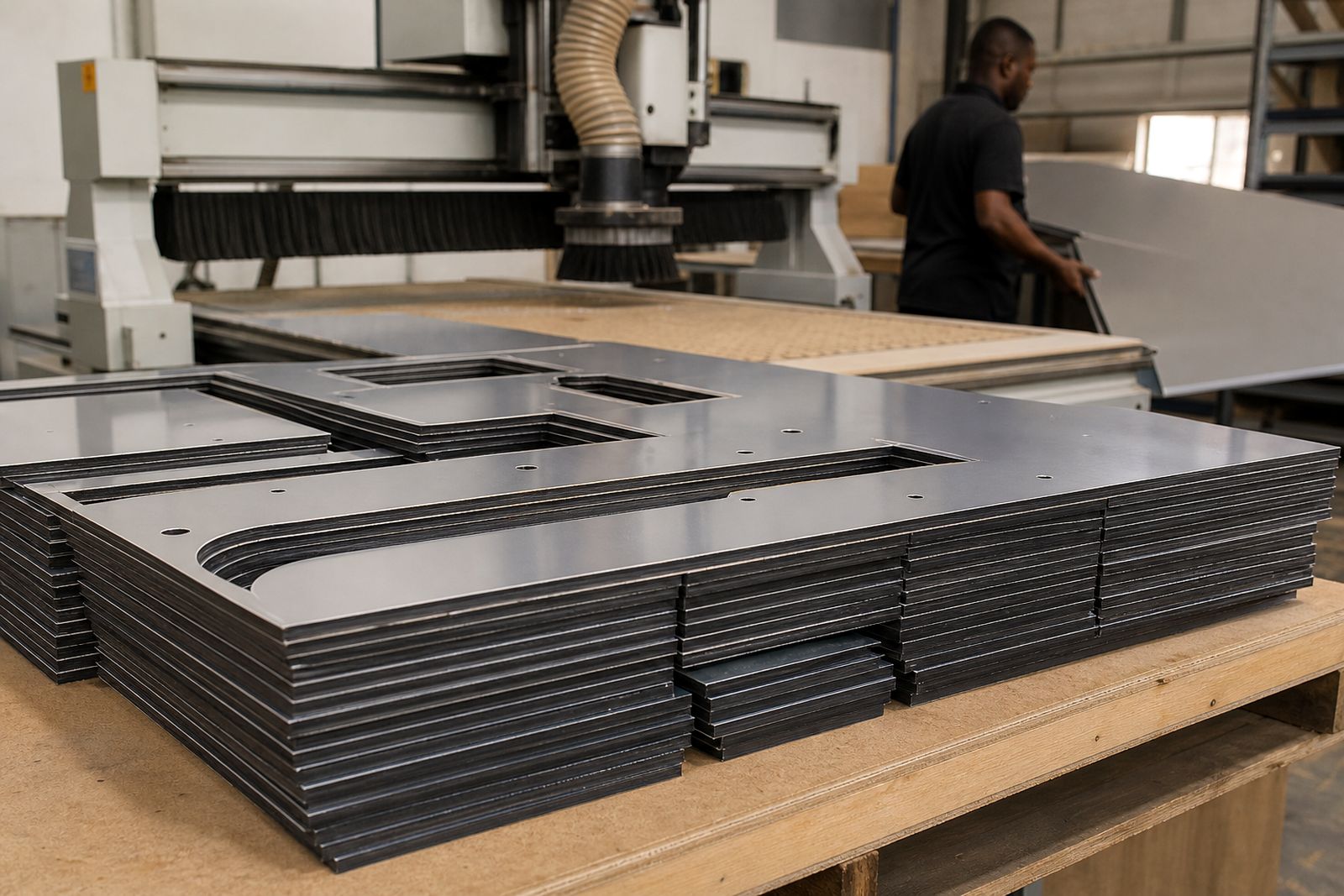
Slot set and compression nest for a shopfit job.
Getting the workshop ready for fast-paced production
Shopfitters working in Germiston needed a quick turnaround for a slot set and a compression nest, prepping for two weeks of non-stop joinery in a busy workshop build. CuTool supplied their router tooling and gave written guidance so they could start cutting crisp, chip-free panels from the first sheet.
Related: workshop guides and the tool range.
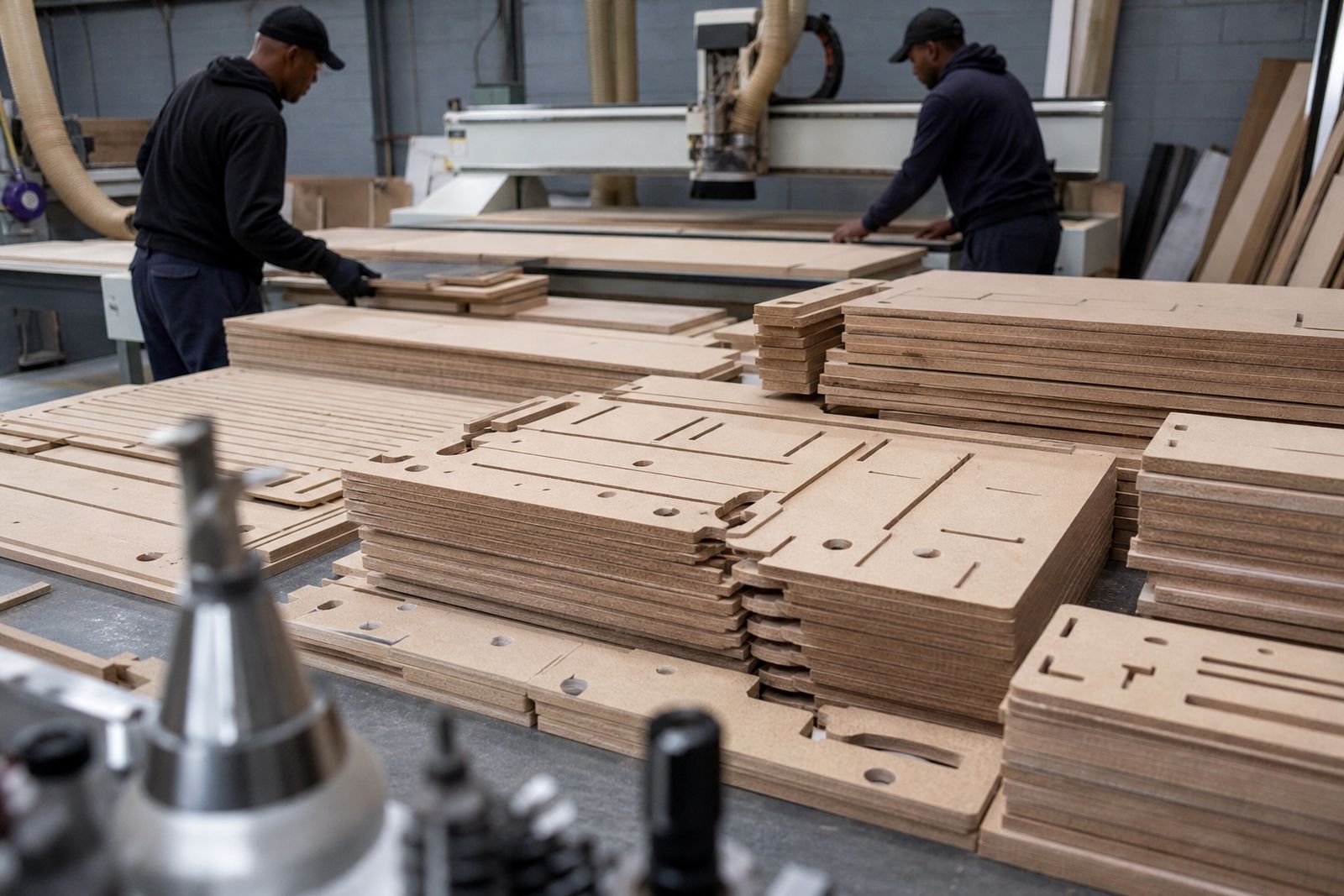
The shopfitting crew were setting up in Germiston for a tight installation, flatpack assembly, and panel finishing. Their CNC router needed to keep up with a continuous queue of boards in a space squeezed for time and dust control. They faced a mix of melamine and high-pressure laminate, with dados, slots, and full-sheet nests. Early on, they noticed some fibres tearing along the slot edges and occasional chip-out on the show faces, especially when the workshop humidity crept up after the rain.
Vacuum hold-down was reliable, but the spoilboard had a few low spots from previous jobs. Power cuts were rare, but they made sure the controller ran from a UPS so the machine wouldn’t lose its zero in the middle of a pass.
- Busy joinery bay with high sheet throughput
- Chip-out and edge tear on early test cuts
- Mix of melamine-faced and laminate boards
- Outages rare but controller on UPS for safety
Choosing slot cutters and compression spirals for clean edges
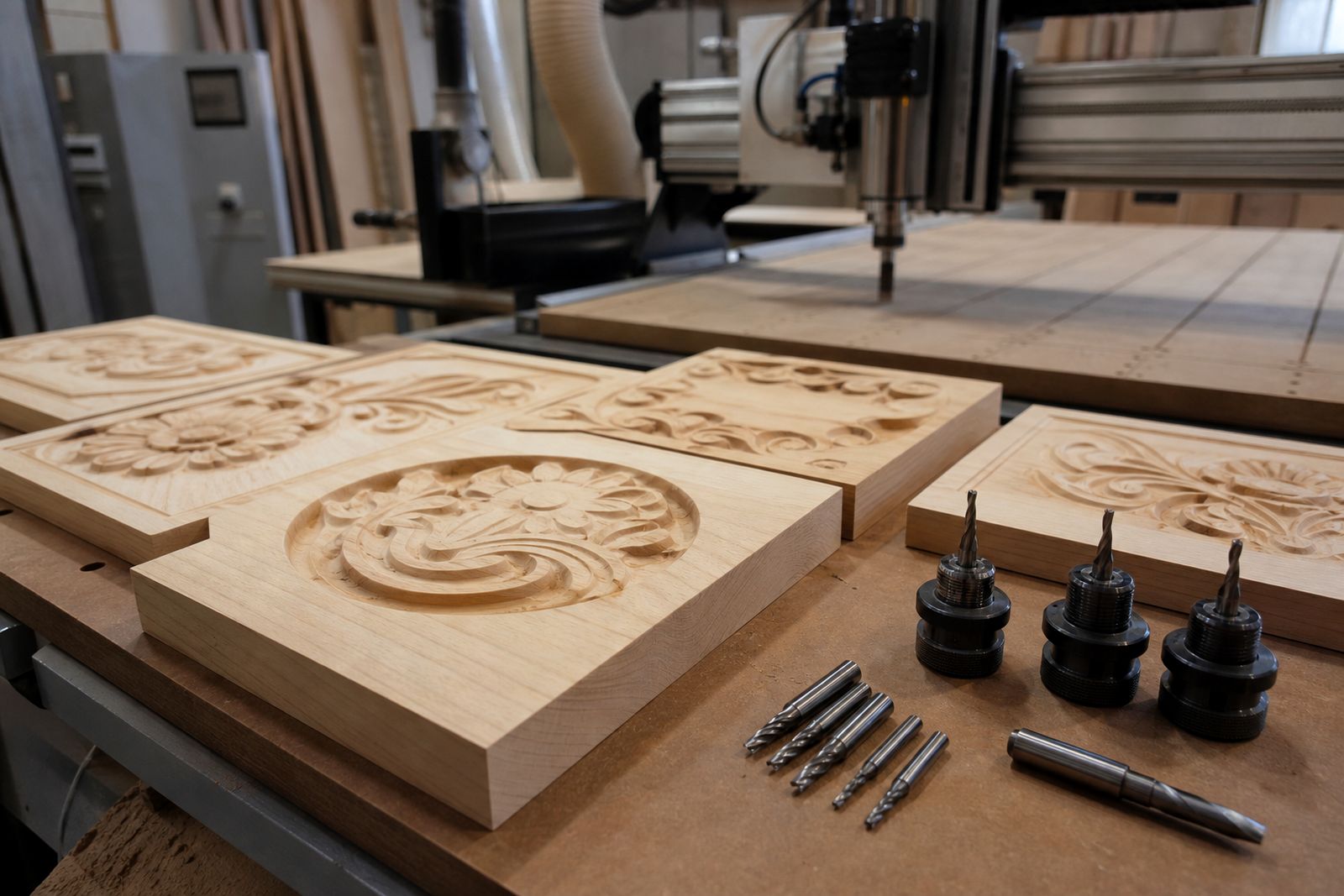
We supplied a slotting set with three winged cutters in 4, 6, and 8 mm sizes for quick change-overs between shelf grooves and cable runs. For sheet nesting, the crew ran a 12 mm compression spiral with upcut and downcut geometry so both surfaces came out smooth, even through double-sided melamine. We reviewed the ER32 collets and holders from the photos and notes, and can advise on cleaning, runout and setup before your team fits the new tools.
Our feed and speed suggestion started at 4 metres per minute with a 3 mm stepdown and 1.5 mm stepover for the compression spiral, chip load about 0.13 mm per tooth, then adjusted to suit their vacuum hold and board stability. They added onion-skin passes and tabs to keep parts in place, especially with smaller cut-outs. We reminded them to keep the collets clean every shift and to avoid leaving cutters in the spindle overnight.
- Slotting set with fast change wings
- Compression spirals for chip-free faces
- Feed, stepover and stepdown tailored per board
- Regular collet checks and tool cleaning
Keeping up momentum and what we’d improve next time
The crew kept the slotting set and compression spirals in rotation for the rest of the fit-out, only swapping to a new cutter after checking edge finish or when chip evacuation slowed. Their regular cleaning routine helped them keep the collet runout below 0.02 mm, and they started surfacing the spoilboard weekly to stay flat. They’ve since booked regrinds through our local partners to get another round out of their compression bits.
For the next project, we’d suggest trialling a coated (AlTiN) spiral for longer tool life if they run larger volumes, and possibly a mist or air blast for thicker composite panels, especially in coastal humidity. If you’re prepping for a similar job or want to organise a slot set, get in touch through our contact form.
What our Cutting Tool customers say
Verified Google reviews
Also worth a look
Tell us about the job you need to cut
Send a note through our contact form with your machine, spindle and collet size, the material and thickness, the finish you need and your area, and we will come back with practical cutter options and a quote.
Open the contact form