

Mall fit-out crews
Shopfitters rely on CuTool’s specialised cutters for tight deadlines and complex nesting jobs.
What fit-out crews typically cut
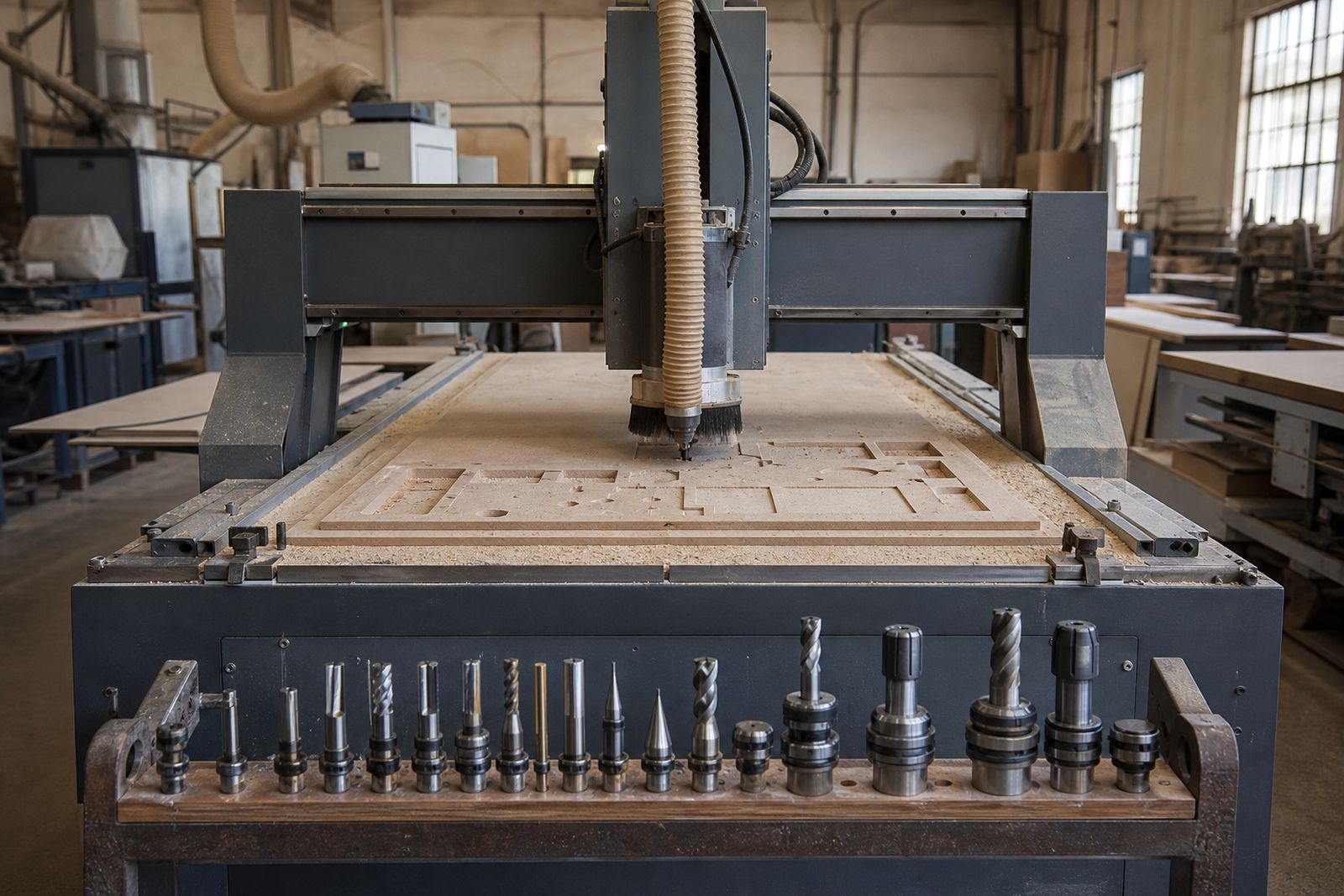
Fast-paced fitters tackle high-pressure projects with our compression nest bit, carbide slot set, and sign spiral kit. These tools keep board, laminate and acrylic jobs moving when time and finish matter most.
See also edge notes and printable cards.
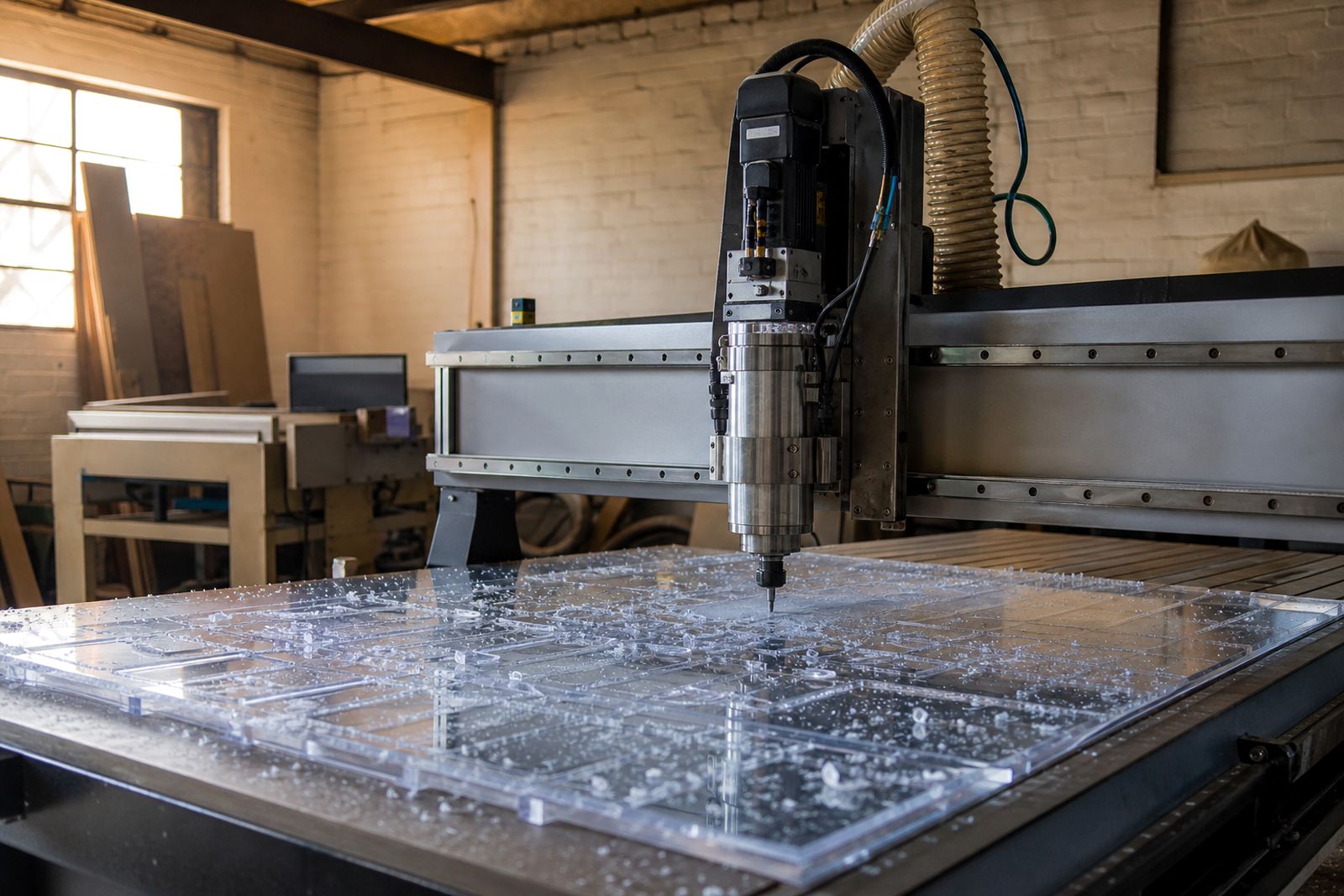
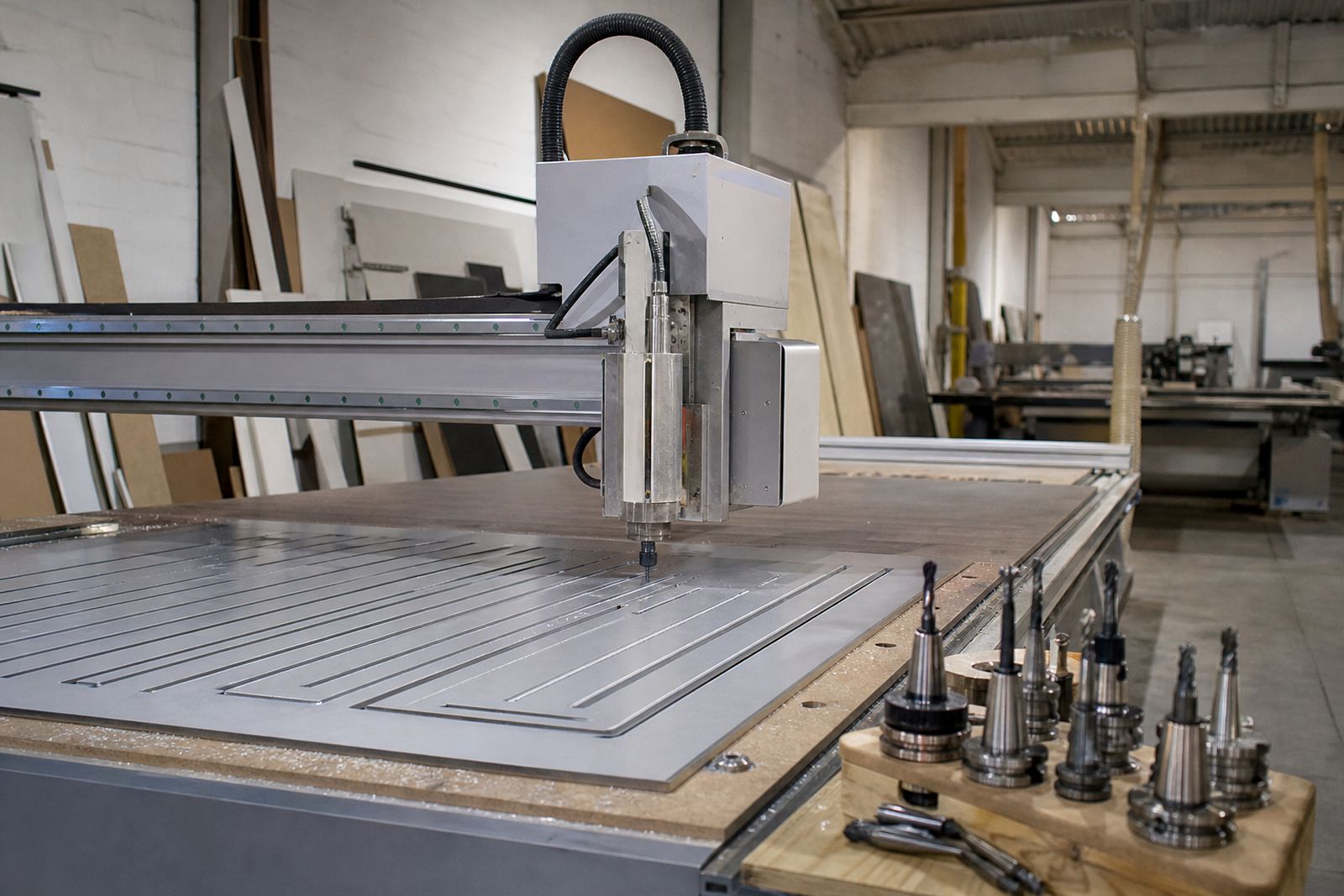
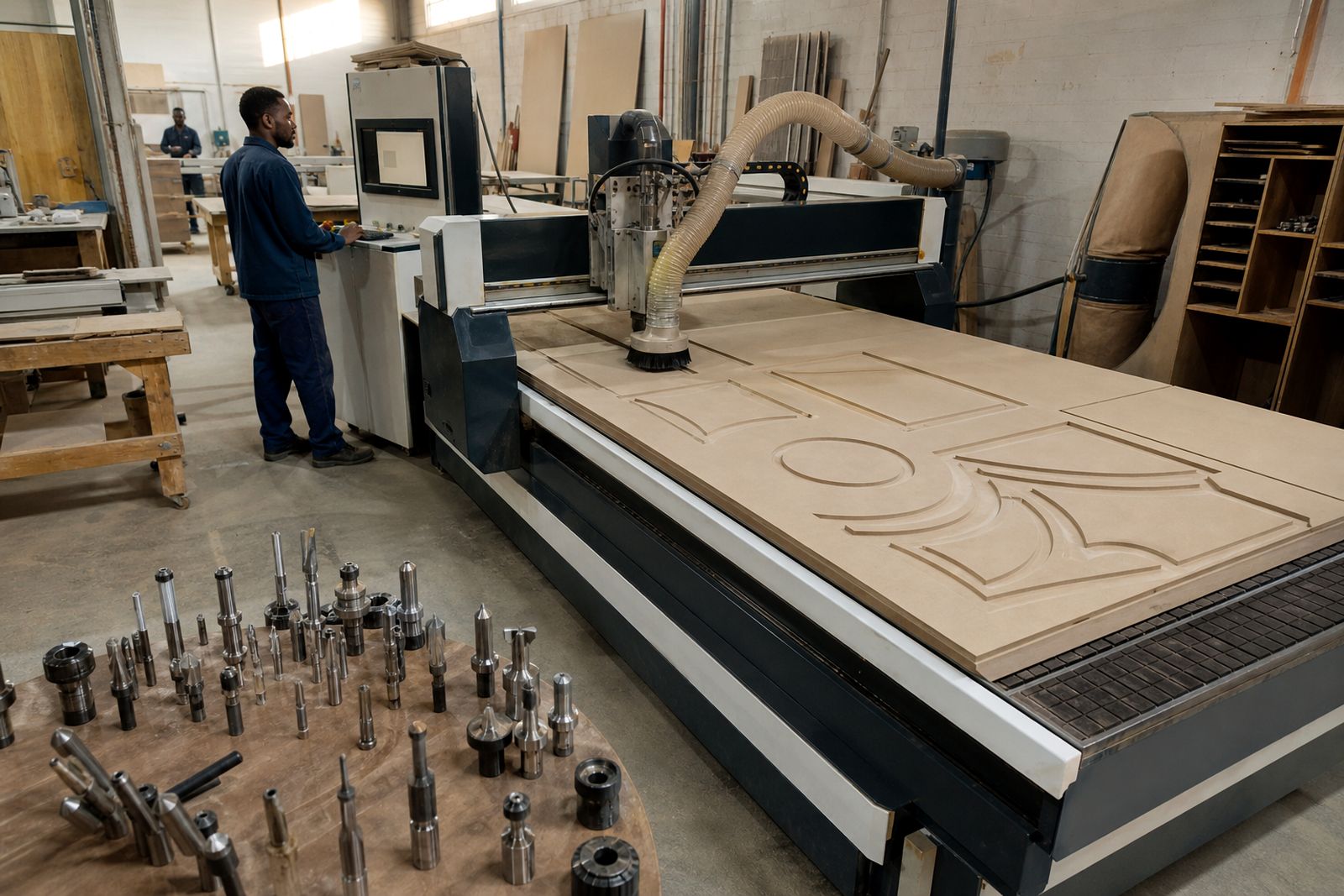
Fit-out workshops work long hours prepping for retail fit-outs, food court upgrades and kiosk rollouts. They mainly cut MDF, particleboard, melamine-faced chipboard, plywood, compact laminate, and often acrylic for illuminated features or branding. Some teams handle aluminium trims and backplates too, especially for signage and shopfronts.
Most of the volume is high-density board, in full sheets, nested for panels, counters and carcasses, with fast toolpath cycles and tight part tolerance. Time on site is expensive, so the goal is to get everything drilled, slotted and ready for the customer’s own team to assemble with minimal hand finishing.
Where cutting tools let shopfitters down
The biggest headaches are chipped melamine, poor edge quality and premature tool failure. High feed rates and long batch runs mean tools overheat, get packed with resin, or lose the edge, especially on board with glued particles or hard coatings. A slot cutter that’s blunt will burn or leave a wavy slot, ruining a perfectly good sheet.
Too much stick-out from the collet causes vibration and runout, which kills accuracy on fine panels and slots. If collets are gummed up or not torqued properly, tools can pull out mid-job. Dust extraction is vital, board dust kills bearings and can cause fires in panelsaw rooms. Lastly, the wrong upcut or downcut spiral leaves fuzz or chips the laminate face, which means handwork with a scraper and missed handover times.
The CuTool kit for fit-outs and how it runs
CuTool’s compression nest bit is the main board-cutter. Its up/down spiral compresses the board layers, downcut at the top, upcut at the bottom, so both faces are clean straight off the CNC. First, the sheet is nested or cut to outline with the compression nest bit, using a stepover of about 50 to 60 percent of the cutter diameter and feed rates from 5 to 12 metres per minute as a starting point. Keep chip load per tooth in the cutter maker’s range and adjust down for tight corners or thick coatings.
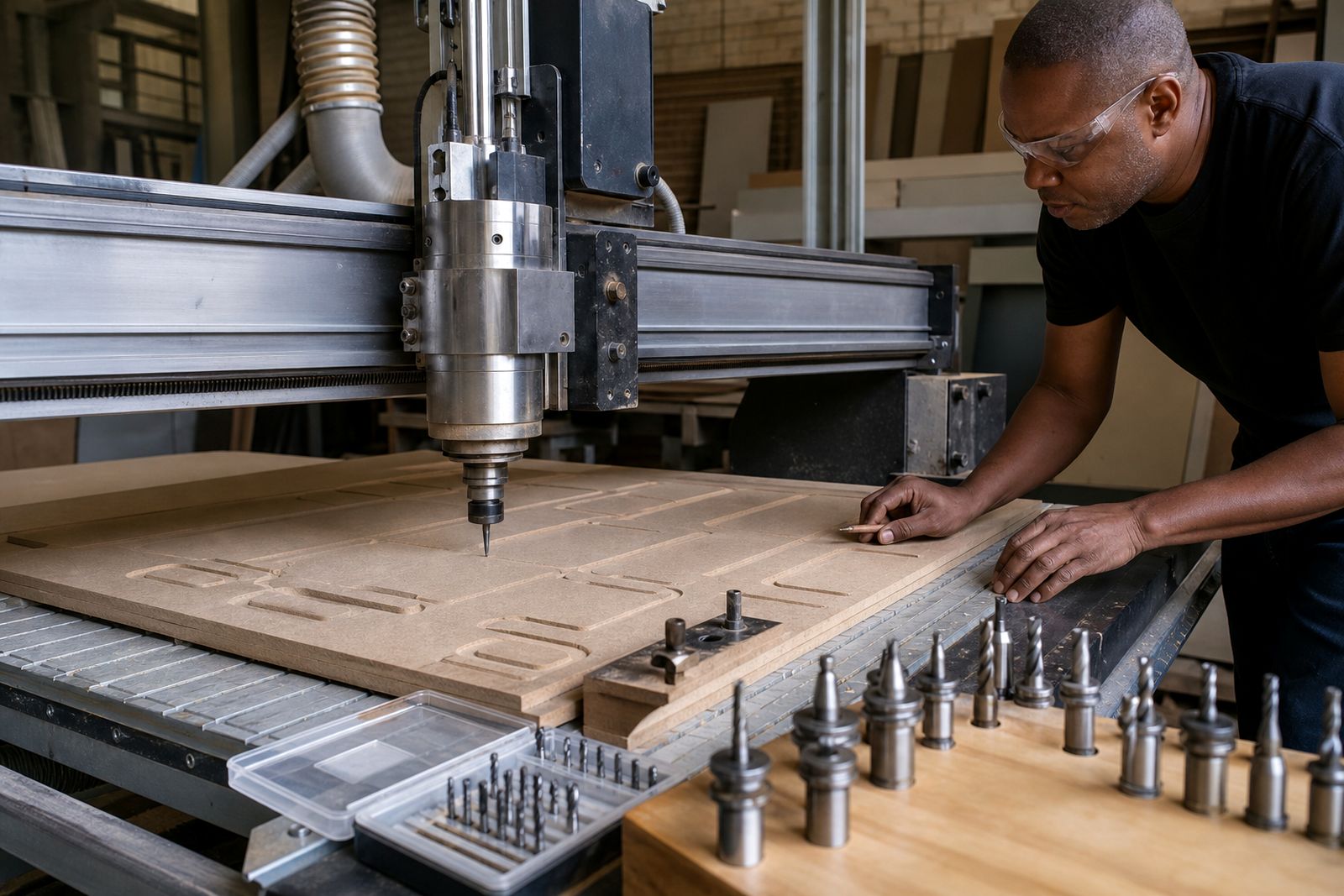
Next is the carbide slot set to plunge and profile slots for cabinet backs, shelving or slatwall. Select the slot width that matches the panel thickness, and always ramp in to reduce shock. Runout should be checked with a dial indicator before starting, and stick-out kept short for clean, accurate slots, especially on deep cabinets.
The final station uses the sign spiral kit for acrylic or aluminium trims, and for branded inlays. Here, single-flute spirals keep chips clear and cut cool, with an air blast or mist if needed for aluminium. Always keep the vacuum hold-down strong and finish with tabs to prevent small letters flying loose. Plan the order: nest and profile first, then slot, finally detail and trim.
- Compression nest bit for outline and panel nesting
- Carbide slot set for cabinet slots and grooves
- Sign spiral kit for acrylic, aluminium trims and branded features
- Always ramp in when slotting to prolong tool life
- Check collet and nut before every new board batch
Managing cutter stock and key deadlines in a fit-out week
Install weeks are short and often land right before school holidays, festive launches or anchor tenant handovers. Plan for at least two full Compression Nest Bits per CNC, with a regrind-ready spare and extra Carbide Slot cutters in the board thicknesses you run most. When a tool leaves a worn edge, swap immediately, don’t try to force one more batch out of it.
Book regrinds with plenty of lead time. Our Sunnyrock team sorts regrind arrangements with local partners and marks each tool with a code so you know what’s been serviced. For major runs, print CuTool’s feeds and tool-life cards to track usage per job and give the team a heads-up when something’s close to end-of-life.
If the workshop is in a part of Joburg or Durban with power cuts, keep a UPS on the controller to finish the pass and re-zero after a break. Have at least one full cutter change on hand for any overnight slotting batch. For courier orders of special cutters for unusual profiles, use our contact form early in the week before the install scramble starts.
What our Cutting Tool customers say
Verified Google reviews
Also worth a look
Tell us about the job you need to cut
Send a note through our contact form with your machine, spindle and collet size, the material and thickness, the finish you need and your area, and we will come back with practical cutter options and a quote.
Open the contact form